Laxmikanth Summary: Parliamentary Forums


Definition of Parliamentary Forums
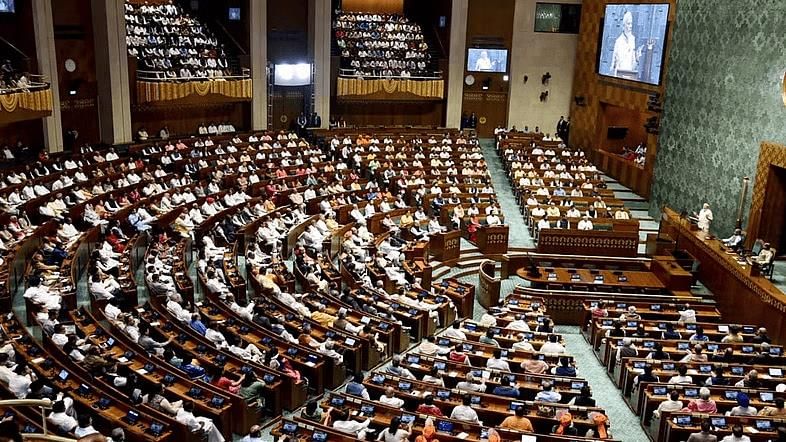
Parliamentary forums are informal, non-statutory platforms where Members of Parliament (MPs) come together to discuss specific topics of public importance. These forums enable MPs to deepen their understanding of complex issues, prepare for debates and committee work, and exchange views with experts, stakeholders and civil society. By facilitating focused discussions, expert briefings, workshops and field visits, parliamentary forums enhance the capacity of parliamentarians to contribute effectively to legislative scrutiny and policy formulation.
Composition and Membership Nomination
The composition and nomination process of parliamentary forums is designed to ensure representation and relevant expertise while keeping membership manageable.
- The Speaker of the Lok Sabha normally functions as the ex-officio President of parliamentary forums.
- Ex-officio Vice-Presidents often include the Deputy Chairman of the Rajya Sabha, the Deputy Speaker of the Lok Sabha, concerned Ministers and the Chairpersons of Departmentally Related Standing Committees where appropriate.
- Each forum is ordinarily limited to a maximum of 31 members, with no more than 21 members from the Lok Sabha and up to 10 members from the Rajya Sabha.
- Members are nominated by the Speaker of the Lok Sabha and the Chairman of the Rajya Sabha. Nominations typically include party leaders, interested parliamentarians and those with relevant domain expertise.
- Membership is intended to balance geographical representation, party composition and subject matter knowledge so that forums remain effective and manageable.
Functions and Objectives
Parliamentary forums are created with topic-specific goals. Their principal functions and objectives include:
- Facilitating focused deliberations on specific national and policy issues that require detailed discussion beyond the scope of routine parliamentary proceedings.
- Increasing awareness among MPs about technical, social and economic aspects of subjects so that debates and legislative scrutiny are better informed.
- Creating a platform for exchange of ideas, experiences and best practices among parliamentarians from different parties and regions.
- Encouraging engagement with civil society organisations, non-governmental agencies, experts, practitioners and affected communities.
- Strengthening collaboration with international organisations, multilateral agencies and foreign parliaments on transnational issues.
- Organising seminars, workshops, study visits and expert briefings to translate knowledge into actionable inputs for parliamentary debates and committee reports.
Notable Parliamentary Forums
Several topic-specific parliamentary forums have been constituted to address priority areas. The following are among the more prominent forums and their typical activities:
Parliamentary Forum on Water Conservation and Management
- Identify critical issues in water conservation and integrated water resource management.
- Suggest strategies for efficient water use, watershed management and groundwater conservation.
- Raise awareness among parliamentarians and constituencies through workshops, seminars and knowledge products.
Parliamentary Forum on Children
- Highlight and deliberate on child welfare, education, health and protection issues.
- Provide a forum to exchange experiences and policy options for improving child outcomes.
- Create partnerships with civil society organisations, child-rights groups and relevant agencies.
Parliamentary Forum on Youth
- Discuss strategies to harness the potential of youth for national development and employment generation.
- Enhance MPs' understanding of youth issues such as education, skill development, entrepreneurship and civic participation.
- Strengthen engagement between Parliament and youth groups, student organisations and alumni networks.
Parliamentary Forum on Population and Public Health
- Focus on population stabilisation, family planning policy and reproductive health.
- Deliberate public health priorities including preventive care, primary health systems and nutrition.
- Engage with public health experts, research institutions and international health organisations.
Parliamentary Forum on Global Warming and Climate Change
- Identify national and sectoral issues arising from climate change and global warming.
- Offer advice and policy recommendations for mitigation, adaptation and resilience building.
- Facilitate engagement with climate scientists, civil society, multilateral agencies and affected communities.
Parliamentary Forum on Disaster Management
- Address disaster risk reduction, preparedness, response and recovery measures.
- Engage parliamentarians with disaster-management experts, state agencies and first-responder organisations.
- Conduct capacity-building workshops and share best practices for prevention and mitigation.
Impact and Significance
- Parliamentary forums play a key role in educating MPs about specialised and complex issues that inform legislative work.
- They enable lawmakers to interact with domain experts, practitioners and stakeholders, helping MPs grasp technicalities and ground realities.
- By promoting knowledge sharing, consensus building and awareness, these forums increase the quality of parliamentary debates, committee recommendations and policy inputs.
- Forums often act as incubators for cross-party collaboration on non-contested national issues and for generating evidence-based policy suggestions.
Future Prospects and Expansion
- Given their demonstrated utility, there is scope to expand the number and thematic range of parliamentary forums to address emerging challenges such as digital governance, energy transition and urbanisation.
- New forums can help MPs remain informed about rapidly evolving domains and prepare Parliament to respond effectively to changing national and global concerns.
- Strengthening linkages between forums, parliamentary committees and government departments will improve follow-through on recommendations and policy implementation.
- Institutionalising good practices-regular reporting, stakeholder consultations and dissemination of findings-will increase the long-term impact of these forums.
Conclusion
Parliamentary forums are valuable, informal mechanisms that complement formal parliamentary institutions. By facilitating informed dialogue, expert engagement and cross-party cooperation on substantive policy issues, these forums contribute to better legislative scrutiny and evidence-based policymaking. As they evolve and expand to cover new themes, parliamentary forums will continue to strengthen the capacity of MPs to respond to complex national and global challenges.
FAQs on Laxmikanth Summary: Parliamentary Forums
| 1. What are Parliamentary Forums? |  |
| 2. What are the main functions of Parliamentary Forums? | |
| 3. What objectives do Parliamentary Forums aim to achieve? | |
| 4. Can you name some notable Parliamentary Forums? | |
| 5. What is the impact and significance of Parliamentary Forums? | |





