Worksheet Solutions: The Story of Indian Farming

Multiple Choice Questions (MCQs)
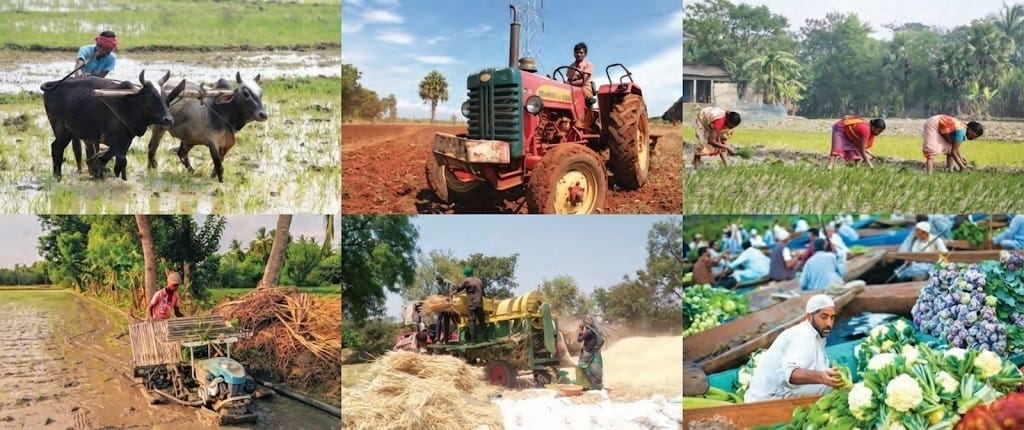
Q1: What does agriculture mainly include?
a) Only growing crops
b) Only rearing animals
c) Preparation of soil, growing crops, and rearing animals
d) Trade and transport
Ans: c) Preparation of soil, growing crops, and rearing animals
Agriculture includes preparing the soil, cultivating plants, and rearing livestock.
Q2: Which of the following correctly matches a crop season with its growing period?
a) Rabi crops - Crops grown during the monsoon
b) Kharif crops - Crops grown during winter
c) Zaid crops - Crops grown in summer
d) Alluvial soil - Thin and rocky soil
Ans: C
Zaid crops are grown during the summer season between the rabi and kharif seasons. The other options are incorrect matches.
Q3: Which ancient text gives detailed information on agriculture and irrigation?
a) Ramayana
b) Arthashastra
c) Manusmriti
d) Upanishads
Ans: b) Arthashastra
Kautilya's Arthashastra discusses land preparation, seeds, irrigation, and payments.
Q4: Which monsoon is most important for kharif crops in north India?
a) Northeast monsoon
b) Southwest monsoon
c) Winter rainfall
d) Summer winds
Ans: b) Southwest monsoon
Kharif crops depend on rainfall from the southwest monsoon.
Q5: Which cropping season is known as the winter season?
a) Kharif
b) Zaid
c) Rabi
d) Haimana
Ans: c) Rabi
Rabi crops are grown in winter and harvested in spring.
Q6: Which soil is best suited for cotton cultivation?
a) Red soil
b) Alluvial soil
c) Black soil
d) Laterite soil
Ans: c) Black soil
Black soil retains moisture and is ideal for cotton cultivation.
Q7: What is humus?
a) Rock particles in soil
b) Chemical fertiliser
c) Decomposed organic matter in soil
d) Underground water
Ans: c) Decomposed organic matter in soil
Humus is formed by the decomposition of plant and animal matter.
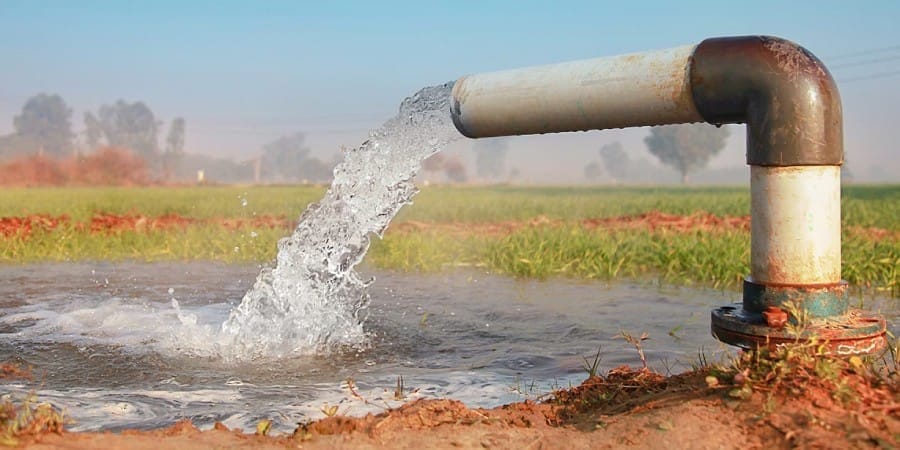
Q8: Which is an example of a traditional irrigation system in India?
a) Tube well
b) Phad system
c) Canal dam
d) Sprinkler system
Ans: b) Phad system
Phad systems are community-based irrigation systems used in Maharashtra.
Q9: Who is known as the architect of the Green Revolution in India?
a) C. V. Raman
b) Verghese Kurien
c) M. S. Swaminathan
d) A. P. J. Abdul Kalam
Ans: c) M. S. Swaminathan
M. S. Swaminathan played a key role in the Green Revolution.
Q10: Which state became the world's first 100% organic state?
a) Kerala
b) Sikkim
c) Uttarakhand
d) Assam
Ans: b) Sikkim
Sikkim adopted organic farming by banning chemical fertilisers and pesticides.
Fill in the Blanks
Q1: The practice of growing two or more crops together is called __________.
Ans: Intercropping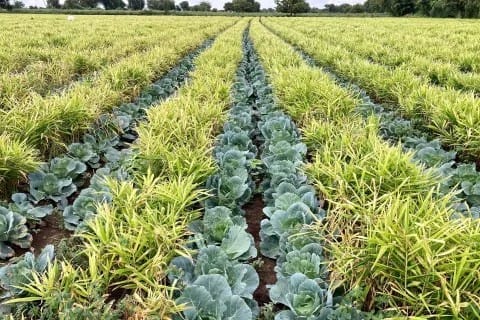
Q2: The two main monsoons affecting Indian agriculture are the southwest and __________ monsoon.
Ans: Northeast
Q3: __________ soil is formed from volcanic rocks.
Ans: Black
Q4: Panchagavya is a traditional __________ used to improve soil fertility.
Ans: Biofertiliser
Q5: Seeds passed down within families reduce farmers' dependence on __________.
Ans: Seed companies
Q6: Crops grown between rabi and kharif seasons belong to the __________ season.
Ans: Zaid
Very Short Answer Questions
Q1: Name one fibre crop grown in ancient India.
Ans: Cotton.
Q2: What does weathering mean?
Ans: The breaking down of rocks into soil particles.
Q3: Name one drought-resistant crop.
Ans: Bajra.
Q4: What is a landholding?
Ans: The area of land owned by a farmer.
Q5: Name one modern irrigation method.
Ans: Drip irrigation.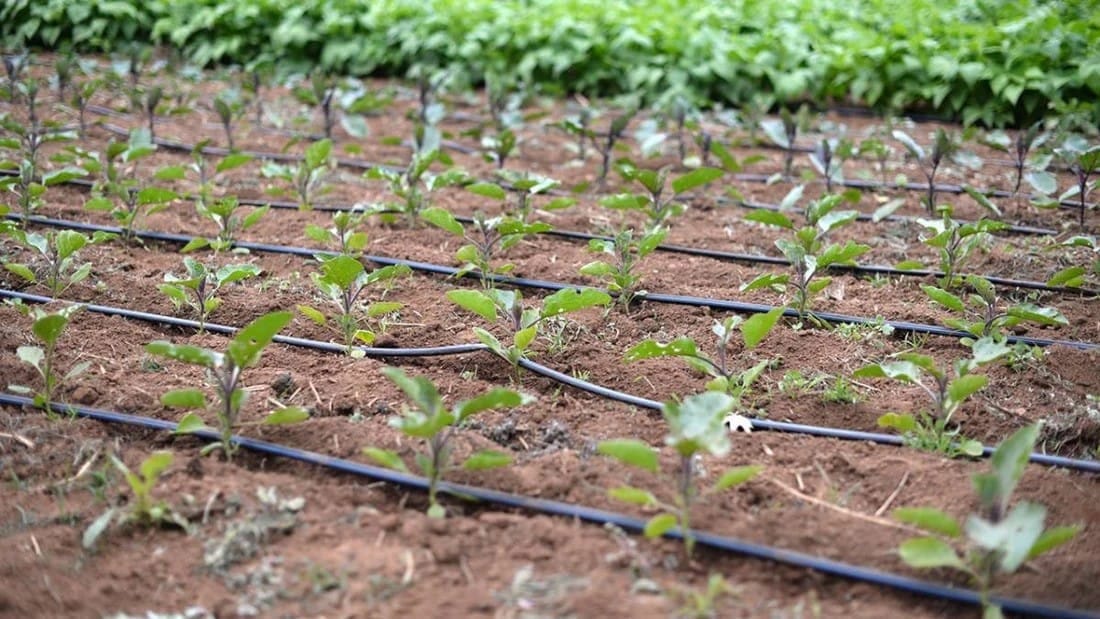
Short Answer Questions
Q1: Why is the monsoon called the backbone of Indian agriculture?
Ans: The monsoon provides most of the rainfall needed for farming in India. It is especially important for kharif crops and largely determines agricultural production.
Q2: What is alluvial soil? Mention two of its features.
Ans: Alluvial soil is formed by river deposits. It is very fertile and rich in nutrients, making it suitable for crops like rice and wheat.
Q3: What was the Green Revolution? Mention two of its major outcomes.
Ans: The Green Revolution was the introduction of modern farming methods in the 1960s, including HYV seeds and irrigation. It increased food grain production and made India self-sufficient in food.
Q4: What is meant by sustainable agriculture? Why is it necessary?
Ans: Sustainable agriculture uses farming practices that protect natural resources. It is necessary to conserve soil and water and ensure long-term food security.
Q5: Mention any two challenges faced by Indian farmers today.
Ans: Indian farmers face problems such as small landholdings, which limit production, and climate change, which causes irregular rainfall and crop failure.
Match the Following
Match Column A with the correct option in Column B
| Column A | Column B |
|---|---|
| 1. Kharif crops | a) Community-based irrigation system in Maharashtra |
| 2. Black soil | b) Crops grown during the monsoon season |
| 3. Phad system | c) Suitable for cotton cultivation |
| 4. Beejamrit | d) Traditional seed treatment using cow dung and urine |
| 5. Zaid crops | e) Crops grown during the summer season |
Ans:
- 1 → b: Kharif crops are grown during the monsoon season.
- 2 → c: Black soil retains moisture and is ideal for cotton.
- 3 → a: Phad system is a traditional community irrigation method.
- 4 → d: Beejamrit is used to protect and strengthen seeds.
- 5 → e: Zaid's crops are grown in the summer season.
FAQs on Worksheet Solutions: The Story of Indian Farming
| 1. What are the main types of farming practised in India? |  |
| 2. How does monsoon affect Indian agriculture? | |
| 3. What are the challenges faced by farmers in India? | |
| 4. What role does technology play in Indian farming? | |
| 5. Why is crop rotation important in farming? | |





