Chapter Notes: Housing & Clothing

What is a House?
A house is a building where people live. It's like a home that can have different rooms, like bedrooms, a kitchen, a living room, and sometimes even a yard. It's a place where you can feel safe, sleep, eat, and spend time with your family.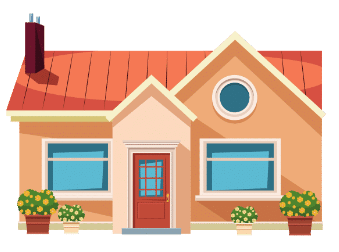
Why do we need a House?
We need a house because it gives us a safe and comfortable place to live. It protects us from bad weather, like rain, snow, and hot sun. A house also keeps us safe from animals and gives us privacy. Inside a house, we can sleep, eat, play, and spend time with our family. It's our own special space where we can feel cozy and secure.
There are two types of Houses
Kuccha House: This type of house is made from natural materials like mud, straw, and bamboo. These houses are often found in villages and are not as strong or durable as pukka houses.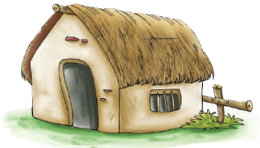 A kutcha house
Pukka House: This type of house is made from strong materials like bricks, cement, steel, and concrete. Pukka houses are very durable and are usually found in cities and towns. They can withstand bad weather better than kuccha houses.
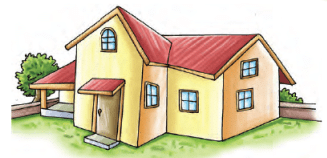 A pucca house
Do you know
The mixture of cement, sand, broken stones and water used to build a house is called concrete.
Temporary and Permanent Houses
Some people do not live at one place. They keep on moving to different places. So, they build houses that can be moved from one place to another. Such houses are called temporary houses. Permanent houses, on the other hand, are very strong and last for a long time.
Temporary Houses
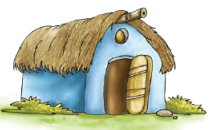
Ramu is a farmer. He lives in a hut with his family. It is made of mud and thatch.
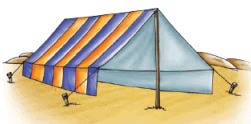
Hari belongs to the desert of Kutch. His grandparents are nomads, that is, people who do not stay long in the same place. They live in a tent. A tent is made of a fabric like the canvas or the nylon.
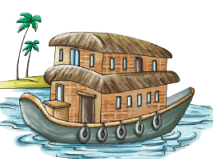
Ajay lives in Kashmir in a houseboat. It is a beautiful house built on a huge boat. It floats on water.
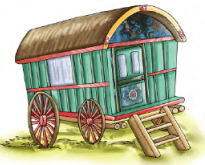
Rehana is a gypsy girl. She lives in a caravan with her family. It is a house on wheels.
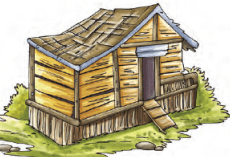
Somu is a beggar. He has no money to build a proper house. He lives in a shack. It is a shelter made of waste materials, such as wood pieces, broken drums, cloth pieces, etc.
Permanent Houses
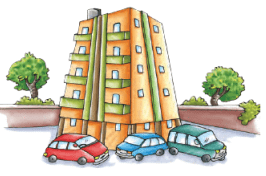
Tanya lives in a flat in a multistoreyed building in Bengaluru. It is made of concrete, wood, steel, etc.
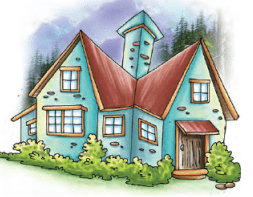
Deepa lives in a cosy cottage in Shimla. It has a sloping roof for the rain and snow to slide down. It is made of cement, stone and wood.
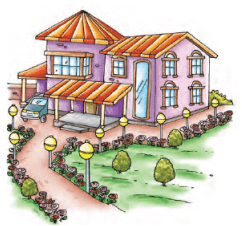
Anuj lives in a bungalow in Mumbai. It is a large house. Most bungalows have a garden also.
Special Houses
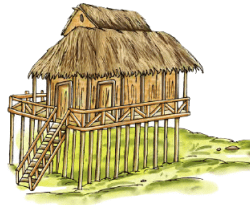
Harish lives in a stilt house in Assam. It is built on a platform supported on stilts (or wooden poles).
Stilt houses are made in areas where there is heavy rainfall. As these houses are made at a height, water cannot reach the houses during the rainy season.
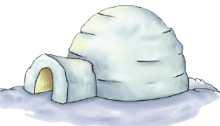
Oki lives in a very cold place in Canada. She lives in a special type of house called the igloo. It is made of snow.
A Clean House
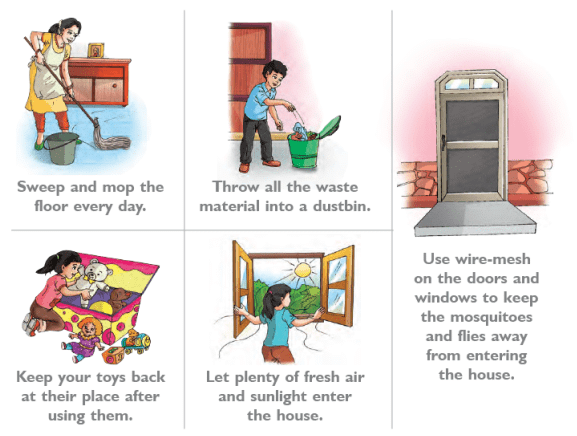
All of us should work together to keep our house clean and free from mosquitoes. Here are a few ways to keep our house neat and clean.
What are Clothes?
Clothes are things we wear on our bodies to keep us covered and protected. They help us stay warm when it's cold, cool when it's hot, and they protect our skin from the sun and bugs. Clothes can also be a way to show our style and personality.
Different Clothes in Different Seasons
We need different clothes in different seasons to stay comfortable and protect our bodies from the weather. Here's why:
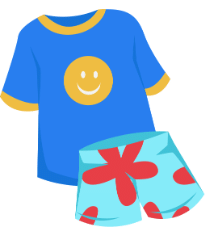
Summer: It's hot in summer, so we wear light and airy clothes like t-shirts and shorts to stay cool and let our skin breathe.
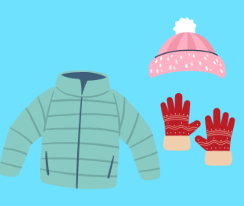
Winter: It's cold in winter, so we wear warm clothes like jackets and sweaters to keep our bodies warm and prevent us from getting too cold.
Spring: The weather changes a lot in spring, so we wear layers like light jackets and long-sleeve shirts that we can add or take off as needed.
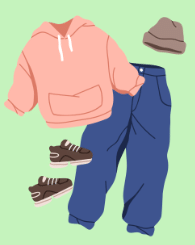
Autumn (Fall): It starts to get cooler in autumn, so we wear warmer clothes like sweaters and hoodies to stay comfortable as the temperature drops.
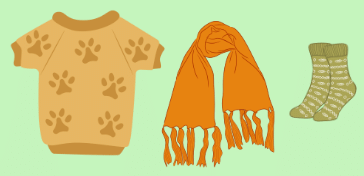
Different clothes help us adapt to the weather and stay healthy and comfortable throughout the year.
FAQs on Chapter Notes: Housing & Clothing
| 1. What are the different types of houses and why do people live in them? |  |
| 2. How does climate affect the kind of house people build? | |
| 3. What's the difference between traditional clothes and modern clothes for Class 2? | |
| 4. Why do we need different types of clothes for different seasons? | |
| 5. How do people in different countries dress differently, and what does it tell us? | |