CBSE Class 2  >  Class 2 Notes  >  Science  >  Chapter Notes: Light & Shadow

Chapter Notes: Light & Shadow

Light

We cannot see anything in the dark. Light helps us to see the things around us. 

During the daytime, the sunlight helps us to see things around us.
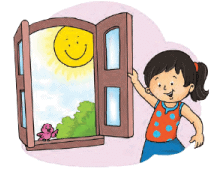
Light

During the night, when there is no sunlight, we can see things due to the moonlight. At home, we use an electric bulb, tubelight or candle to see things.

Sometimes, when it is dark, we use a torch to find our way. Also when electricity goes off, we use a torch to look for things around us. All such things that give us light are called sources of light.
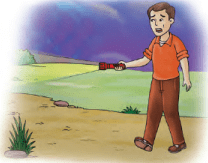
Light

Do you know

The moon does not have its own light. It shines because the sunlight falls on it.

An insect called the glow worm also gives out light.

Shadow

Many a times, while playing in a park during daytime, you might have sat under a tree to take some rest under its shade. Did you ever wonder where this shade was produced from?

Well, the shade was produced when the tree blocked the sunlight. The shade was actually the shadow of the tree.
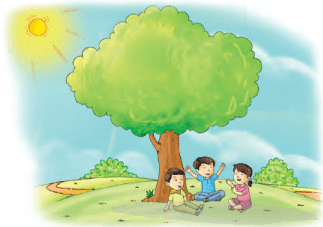
The shadow of the tree is formed when it blocks the sunlight.The shadow of the tree is formed when it blocks the sunlight.

A shadow is formed when light is not able to pass through something. Though a shadow is a dark patch, its shape resembles that of the object.
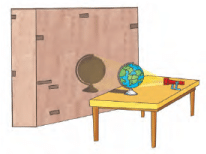
Shadow

The size of the shadow of an object depends on how far it is from the source of light.
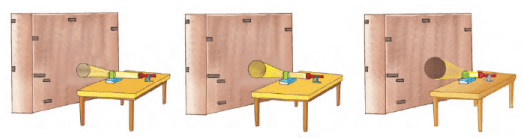
Shadow

The size of our shadow keeps changing, from morning to evening. In the morning and evening, the shadow is long. At noon, when the sun is just above our head, the shadow is the shortest.
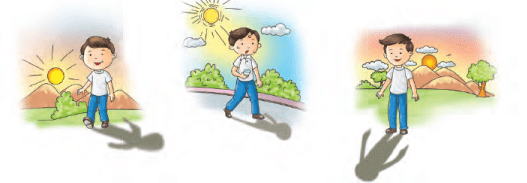
The size of our shadow changes with timeThe size of our shadow changes with time

The document Chapter Notes: Light & Shadow is a part of the Class 2 Course Science for Class 2.
All you need of Class 2 at this link: Class 2

FAQs on Chapter Notes: Light & Shadow

1. What is the difference between light sources and objects that reflect light?
Ans. Light sources produce their own light energy, like the sun, bulb, or candle, while reflecting objects bounce light from other sources without making their own. Understanding this distinction helps students grasp how we see shadows and why certain things glow while others don't.
2. How does a shadow form and why does it appear dark?
Ans. Shadows form when an opaque object blocks light from reaching a surface behind it, creating a dark area. The darkness occurs because light cannot pass through the solid object, leaving that region without direct illumination. This blocking of light rays is fundamental to understanding shadow formation in Class 2 Science.
3. Why do shadows change shape and size during different times of the day?
Ans. Shadow length and direction depend on the sun's position in the sky. When the sun is high overhead at noon, shadows appear shorter and directly beneath objects. As the sun moves lower during morning and evening, shadows become longer and stretch sideways. This continuous change demonstrates how light direction affects shadow properties.
4. Can shadows exist without light, and what role does distance play in shadow formation?
Ans. Shadows cannot exist without light-they only appear when light is blocked by an object. Distance between the light source, object, and surface affects shadow size; closer objects cast larger shadows, while distant ones cast smaller shadows. This relationship shows how light behaves in practical, observable ways for young learners.
5. What are transparent, translucent, and opaque materials, and how do they affect light and shadow formation?
Ans. Transparent materials like clear glass allow light to pass straight through with no shadow. Translucent materials like frosted glass let some light through, creating faint shadows. Opaque materials like wood block all light, forming dark shadows. These material properties determine whether shadows appear and how distinct they become in real-world situations.
Explore Courses for Class 2 exam
Get EduRev Notes directly in your Google search
Related Searches
Semester Notes, Important questions, Chapter Notes: Light & Shadow, Chapter Notes: Light & Shadow, pdf , Free, practice quizzes, Viva Questions, Chapter Notes: Light & Shadow, Summary, shortcuts and tricks, Sample Paper, past year papers, video lectures, Objective type Questions, Exam, Previous Year Questions with Solutions, study material, ppt, mock tests for examination, MCQs, Extra Questions;