Worksheet Solutions: Our Rights and Duties - 1

Q1: Fill in the blanks.
(i) The ______ are people who are less in number.
Ans: minorities
Minorities are groups that are fewer in number and may have a different language, culture or religion from the majority. They coexist with the larger group but often need protection to keep their rights and culture.
(ii) The right to ______ allows citizens to travel wherever they want.
Ans: freedom
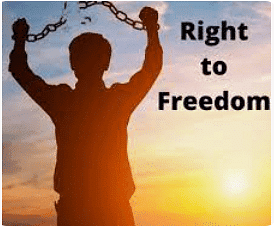
The Right to Freedom allows citizens to move, travel and live in any part of the country. It helps people go where they wish and choose where to live.
(iii) The ______ Day is celebrated on 26 January.
Ans: Republic
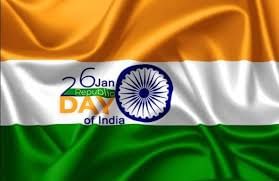
26 January is celebrated as Republic Day because the Constitution of India came into force on 26 January 1950.
(iv) The right to freedom of religion allows individuals to follow any _____ of their choice.
Ans: any religion
This right guarantees that people may choose and practise any religion or belief without being forced or treated badly for their choice.
(v) Cultural and educational rights protect the interests of _____ in the country.
Ans: minorities
These rights protect the culture and educational interests of minority communities so that their language, culture and schools can be preserved and developed.
(vi) The right to constitutional remedies enables citizens to seek redressal if their _____ are denied.
Ans: rights
This right lets citizens go to court and ask for help when their fundamental rights are taken away or violated.
(vii) The Constitution expects citizens to show respect to the _____ and the national anthem.
Ans: the national flag and the national anthem
Showing respect for the national flag and the national anthem helps to build unity and a feeling of pride in the nation.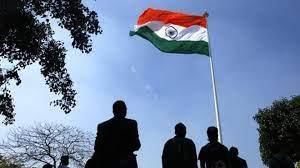
(viii) _____ are guidelines for the government to ensure the welfare of the people.
Ans: Directive Principles
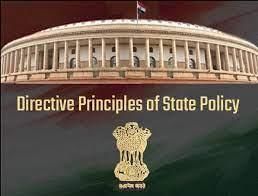
Directive Principles give the government broad guidelines to make laws and policies that promote the welfare and good of all people.
(ix) Directive Principles in the Indian Constitution were adopted from the Constitution of _____.
Ans: Ireland
The idea of Directive Principles in our Constitution was influenced by the Constitution of Ireland.
(x) Parents or guardians must ensure that their children go to _____.
Ans: school
Parents and guardians should make sure their children attend school so they can learn and grow for a better future.
Q2: Tick (✓) the correct answers.
(i) What are Directive Principles?
(a) requests
(c) commands
(b) instructions
(d) guidelines ✓
Ans: (d)
Explanation: Directive Principles are broad guidelines for the government. They tell the government how to make laws and policies that work for the welfare of the people.
(ii) Which country has the longest-written constitution?
(a) India ✓
(b) England
(c) Japan
(d) Turkey
Ans: (a)
Explanation: The Constitution of India is the longest written constitution in the world. It contains many articles and detailed rules for how the country is run.
(iii) In which age group should free education be given?
(a) 0 - 6 years
(b) 6 - 14 years ✓
(c) 10 - 16 years
(d) 16 - 18 years
Ans: (b)
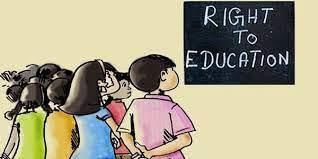
Explanation: The Constitution (Eighty-sixth Amendment) Act, 2002, inserted Article 21-A to make free and compulsory education a Fundamental Right for all children aged six to fourteen years.
Q3: True or False.
(i) The Constitution allows the rich to exploit the poor.
Ans: False
Explanation: The Constitution forbids exploitation. It gives rights like the Right against Exploitation and the Right to Equality to protect people from being treated unfairly.
(ii) If our Fundamental Rights are denied, we can move to court.
Ans: True
Explanation: If someone's fundamental rights are taken away or hurt, they can go to the courts to ask for help and justice.
(iii) Fundamental Rights are the basic rights given to citizens for their well-being.
Ans: True
Explanation: Fundamental Rights are basic rights given to all citizens so they can live with dignity, freedom and equality.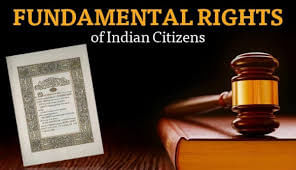
(iv) The right to equality ensures that citizens are not treated differently based on their characteristics.
Ans: False
Explanation: The right to equality means everyone should be treated the same before the law and not be discriminated against because of their caste, religion, gender or other features.
(v) The right to freedom includes the right to speak freely and choose any occupation.
Ans: True
Explanation: The right to freedom includes freedoms such as speech, choosing a job and moving freely within the country.
(vi) The right against exploitation prevents child labour and ensures fair wages for all workers.
Ans: True
Explanation: True. The right against exploitation aims to stop child labour and forced labour, and it protects workers from unfair treatment.
(vii) The right to freedom of religion means that people can only follow the majority religion in the country.
Ans: False
Explanation: This right lets every person follow any religion they wish, not only the religion followed by the majority.
(viii) Fundamental Duties are expectations that the Constitution has of citizens.
Ans: True
Explanation: Fundamental Duties are the responsibilities that the Constitution expects citizens to follow, such as respecting the national symbols and protecting the environment.
(ix) Directive Principles provide specific guidelines for the implementation of Fundamental Rights.
Ans: False
Explanation: Directive Principles give general guidelines to the government on how to make laws for the welfare of the people; they do not directly enforce Fundamental Rights.
(x) The right to constitutional remedies allows citizens to seek legal action if their rights are denied.
Ans: True
Explanation: The right to constitutional remedies lets citizens ask the courts for help when their fundamental rights are violated.
Q4: Multiple Choice Questions (MCQs).
(i) Which of the following rights ensures that all citizens are treated as equals, regardless of their characteristics?
(a) Right to freedom
(b) Right to equality
(c) Right against exploitation
(d) Right to freedom of religion
Ans: (b)
Explanation: The Right to Equality ensures that every citizen is equal before the law and must not be discriminated against because of their caste, religion, gender or other features.
(ii) The right against exploitation aims to prevent _____.
(a) Discrimination based on religion
(b) Children under 14 years of age
(c) Denial of education
(d) Unfair treatment for the benefit
Ans: (d)
Explanation: The right against exploitation stops forced labour and unfair treatment that benefits others at the expense of workers. It also includes rules to prevent child labour.
(iii) What does the right to freedom of religion allow individuals to do?
(a) Choose any occupation
(b) Follow any religion
(c) Move anywhere within the country
(d) Protect their cultural heritage
Ans: (b)
Explanation: The right to freedom of religion allows people to choose, practise and change their religion freely without pressure from others.
(iv) Which fundamental duty expects citizens to send their children to school?
(a) Abiding by the Constitution
(b) Respecting the national flag
(c) Taking care of public property
(d) Parents or guardians must send their children to school
Ans: (d)
Explanation: This duty asks parents and guardians to make sure their children go to school so they can get an education and grow up to be responsible citizens.
(v) Directive Principles in the Indian Constitution aim to provide _____.
(a) Fundamental Rights of citizens
(b) Guidelines for the government to ensure citizens' welfare
(c) Powers to the President
(d) Rights to minority groups
Ans: (b)
Explanation: Directive Principles give the government general guidelines to make laws and policies that promote welfare, social justice and better living conditions for all people.
Q5: Answer these questions.
(i) What are Fundamental Rights? List them.
Ans: Fundamental Rights are basic rights given to all citizens by the Constitution of India under Part III (Articles 12-35). The main Fundamental Rights are: Right to Equality, Right to Freedom, Right against Exploitation, Right to Freedom of Religion, Cultural and Educational Rights, and Right to Constitutional Remedies.
(ii) What are Directive Principles? Write any two.
Ans: Directive Principles are guidelines in the Constitution that tell the government how to make laws and policies for the welfare of the people. Two examples are:
(i) Provision of free and compulsory education for children up to the age of 14, and
(ii) Promotion of the welfare and economic interests of weaker sections such as the scheduled castes and the scheduled tribes.
(iii) What is a constitution?
Ans: A constitution is a set of rules that explains how a country is to be governed. It tells what the different parts of government are, what powers they have, and what rights the citizens enjoy.
Q6: Think and Answer.
Millions of small children in India work in shops, in factories, and in homes. Is it allowed by the law? Do you think these children know about their Fundamental Rights? Can we consider the people who employ small children as good citizens?
Ans: No, employing small children in work is not allowed by the law, especially for children below 14 years. Many of these children may not know about their Fundamental Rights or that they should be in school. People who make children work instead of sending them to school are not being good citizens because they harm the child's future and break the rules. We should tell teachers, elders or the proper authorities so that children can get help and go to school.
FAQs on Worksheet Solutions: Our Rights and Duties - 1
| 1. What are the main differences between rights and duties in Class 4 Social Studies? |  |
| 2. How do fundamental rights protect students in school and at home? | |
| 3. What are examples of duties students should follow according to CBSE Social Studies curriculum? | |
| 4. Why do we need both rights and duties to create a fair society? | |
| 5. Which constitutional rights guarantee that all children have access to free education? | |