Long Answer Question - Iswaran the Storyteller

Q1. Iswaran was a master storyteller. Describe his amazing capacity of narrating stories and anecdotes.

Ans: Iswaran had a rare gift for turning ordinary incidents into gripping tales. His love for Tamil thrillers shaped his narration: he used measured pauses, changes in tone, and well-timed gestures to build suspense. He could make a common event sound mysterious by choosing suggestive details and dramatic expressions. For instance, he would describe an uprooted tree as if it were a giant beast and reveal the truth only at the end. He often delayed the conclusion, keeping listeners eager for the next sentence. His blend of suspense, surprise endings, mild exaggeration, and comic timing made even implausible events entertaining. Above all, his warmth and confidence kept his audience engaged and willing to enjoy the story.
Q2. Describe Iswaran's encounter with the elephant.
Ans: Iswaran narrated an incident about a tusker that escaped from a timber yard and caused havoc in the town. The elephant smashed fences, overturned stalls, entered a school playground, and frightened everyone. Children ran into classrooms while teachers watched helplessly from the terrace. Iswaran claimed that as a junior student, he boldly faced the elephant with only a stick. He said he struck the elephant on its sensitive third toenail, after which the animal collapsed and a veterinarian was called. Later, he added exaggerated details, suggesting that he had used martial-arts techniques. The episode combined danger, bravery, and comic exaggeration, made vivid by his dramatic narration.
Q3. What did Iswaran tell Mahendra about a ghost? Describe Mahendra's horrible experience one night. Why did he resolve to leave that place?
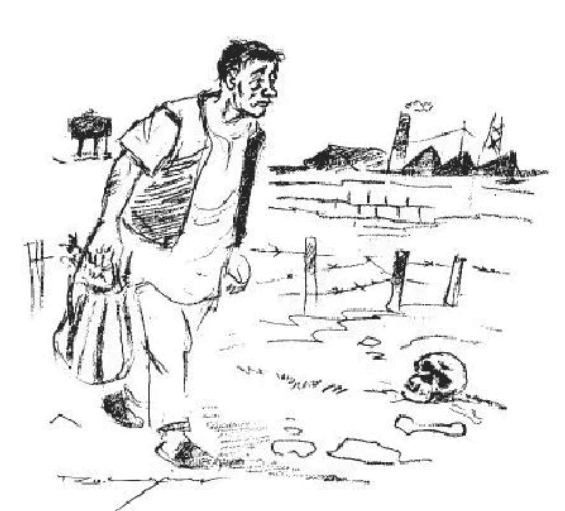
Ans: Iswaran told Mahendra that the factory area had once been a burial ground and that he sometimes saw ghosts, especially a frightening woman carrying a bundle resembling a foetus. Mahendra initially dismissed these stories as superstition. One night, however, Mahendra heard a low moaning sound outside his window. When he looked out, he saw what appeared to be a dark, cloudy form holding a bundle. The sight terrified him. Though he later tried to convince himself it was imagination, Iswaran claimed he had also heard the sound, which strengthened Mahendra's fear. Deeply disturbed, Mahendra decided that the place was haunted and submitted a transfer request to leave.
Q4. How does Iswaran describe the uprooted tree on the highway? What effect does he want to create on his listeners?
Ans: Iswaran described the uprooted tree in a deliberately suspenseful and dramatic way. He spoke of a lonely stretch of road and the feeling of an enormous presence ahead, so that listeners pictured danger rather than a common fallen tree. Only when he came close did he reveal the truth - a dry, uprooted tree - turning initial fear into relief and amusement. His intention was to captivate listeners' attention, to make them imagine danger and then surprise them. This technique of building suspense and then releasing it kept his audience absorbed and entertained.
Q5. How does Iswaran narrate the story of the tusker? Does it appear to be plausible?
Ans: Iswaran narrated the tusker episode with his usual flair for dramatization. He set the scene of an escaped elephant rampaging through the town and frightening children, then placed himself at the centre of action as the brave young hero who, armed only with a stick, brought the animal down. The account of an elephant causing damage is plausible, since such incidents can happen. The part where a schoolboy subdues a full-grown tusker with a single blow is highly unlikely. That exaggeration serves a comic and boastful purpose and makes the tale memorable rather than strictly factual.
Q6. Mahendra calls ghosts or sprits a figment of the imagination. What happens to him on a full-moon night?
Ans: Mahendra initially dismissed ghosts as products of imagination, but one full-moon night he was disturbed by a low moaning sound. At first he thought it might be an animal, but curiosity forced him to look out. He saw what he believed to be a shadowy woman clutching a bundle, an image that filled him with terror. The experience shook his scepticism. When Iswaran confirmed he had also heard the noise, Mahendra's fear deepened and he resolved to leave, convinced that the place was haunted and unsafe for him.
Q7. What human values form the essence of Iswaran's character?
Ans: Iswaran displayed several admirable human qualities: loyalty to his employer, cheerfulness in daily life, and a willingness to shoulder household responsibilities without complaint. He was inventive and lively, using his imagination to enliven the home with tales. He was also dependable in practical matters - cooking, serving and looking after the house - and he took pleasure in serving others. These traits of faithfulness, resourcefulness and a warm, cheerful nature made him both useful and much liked.
Q8. What are the qualities of a good storyteller? How can you say that Iswaran was a fascinating storyteller?
Ans: A good storyteller creates interest by using clear language, vivid images, well-timed pauses and a sense of surprise. They know how to build suspense, personalise events and add touches of humour or exaggeration where appropriate. Iswaran showed all these qualities. He used dramatic description, expressive tones and gestures, and left listeners wanting more by delaying endings. His imagination turned ordinary incidents into exciting episodes, and his warm, confident delivery made his tales especially engaging. For these reasons he was a fascinating storyteller.
Q9. Iswaran, the story-teller, had a sensational way of telling his stories. Do you think he did the right things by adding sensation to his stories?
Ans: Iswaran's addition of sensation and exaggeration suited his purpose of entertaining and amusing his listeners. For casual storytelling, such embellishment is acceptable and often expected, since it heightens interest. However, if sensational tales cause real distress or lead others to make harmful decisions, then that is wrong. In this case his exaggerations were mostly harmless entertainment, but when his tales increased Mahendra's fear and helped persuade him to leave, that consequence suggests a responsibility to avoid causing undue alarm.
Q10. Right from childhood, we hear ghost stories. What should be our opinion about ghosts? Answer with reference to the story `Iswaran the Storyteller'.
Ans: Children often accept ghost stories and are easily frightened by them; this is a normal response to vivid tales. In Iswaran the Storyteller, Iswaran recounts an eerie woman-figure, and Mahendra, though initially sceptical, becomes frightened enough to believe he has seen a ghost. This episode shows how suggestible people can be when frightened or tired. A sensible opinion is to remain critical and look for ordinary explanations before accepting the supernatural. At the same time, one should understand why such stories endure: they satisfy a need for excitement and can teach caution, but belief should be guided by reason rather than fear alone.
Q11. Iswaran narrated ghost stories to his master, Mahendra, which created fear in Mahendra's mind. Was it right on the part of Iswaran to create fear in Mahendra's mind?
Ans: Iswaran's tales were meant as entertainment, and in that sense some harmless fright can be acceptable. However, deliberately causing another person real distress is not right. In Mahendra's case the fear became intense enough to affect his peace of mind and prompt him to leave his job. A storyteller should be considerate of the listener's temperament; when a tale causes genuine anxiety rather than light amusement, the storyteller bears responsibility for that harm.
Q12. Even an educated person sometimes realises the existence of a ghost. Illustrate this with reference to Iswaran the Storyteller.
Ans: Education does not make a person immune to fear or suggestion. Mahendra, who had studied and was sensible, initially dismissed ghosts as mere imagination. Yet after a frightening night and Iswaran's confirmation of the noise, Mahendra's rationality gave way to deep unease. This shows that strong emotions, a tense atmosphere and persuasive accounts can overwhelm reason. The example demonstrates how human psychology - illness, fatigue, darkness and suggestion - can make even educated people experience and believe in the supernatural. It underlines the need to remain calm and seek rational explanations before concluding that an unexplained event is paranormal.
FAQs on Long Answer Question - Iswaran the Storyteller
| 1. Who is Iswaran in the story "Iswaran the Storyteller"? |  |
| 2. What role does storytelling play in the narrative of "Iswaran the Storyteller"? | |
| 3. How does Iswaran's storytelling influence Mahendra's character? | |
| 4. What are some themes explored in "Iswaran the Storyteller"? | |
| 5. What is the climax of the story "Iswaran the Storyteller"? | |