NCERT Solution - Rulers & Buildings

Q1 : How is the "trabeate" principle of architecture different from the "arcuate"?
Ans: In the 'trabeate' style of architecture a horizontal beam was placed across two vertical columns.
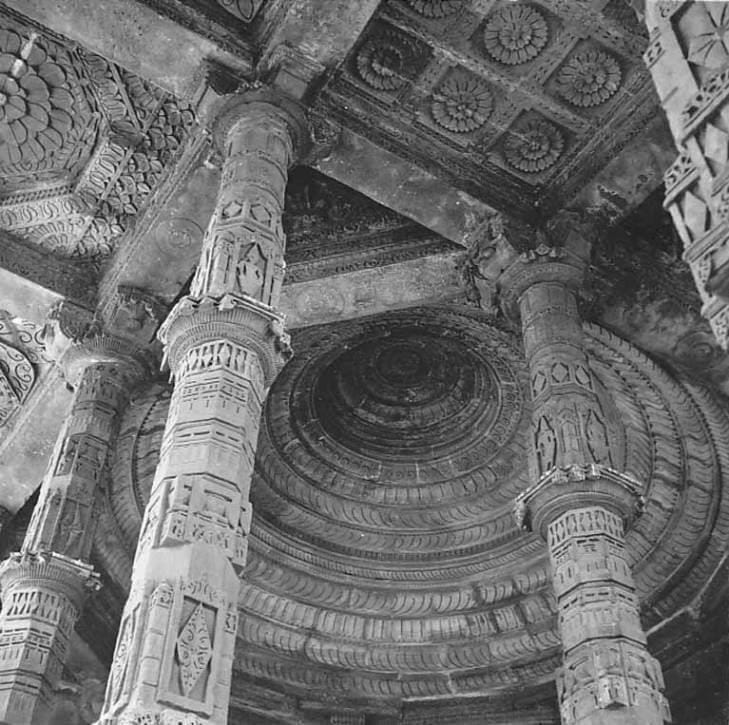 Fig: Trabeate
In the 'arcuate' style arches are utilized.
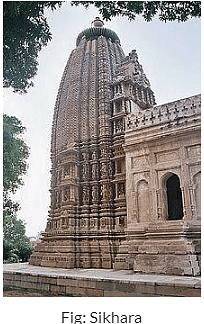
Q.2 : What is a shikhara?
Ans: A shikhara is a tower-like structure on top of a temple.
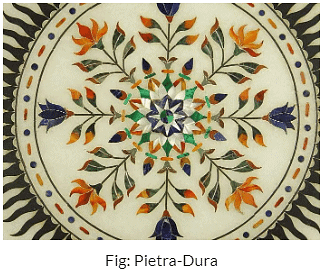
 Q.3 : What is pietra-dura?
Ans: Pietra-Dura is a technique where coloured, hard stones were placed in depressions carved into marble or sandstone, thereby creating beautiful and ornate patterns.
Q4: What are the elements of a Mughal chahar bagh garden?
Ans: The major element of a Mughal Chahar-Bagh garden was the symmetric division of the garden into quarters.
Q5: How did a temple communicate the importance of a king?
Ans: Construction of a temple emphasized the king's moral right to rule. Constructing places of worship provided rulers with a chance to proclaim their close relationship with god.
Q6: An inscription is Shah Jahan's diwan-I khas in Delhi stated: "If there is Paradise on Earth, it is here, it is here, it is here." How was this image created?
Ans: The image of Paradise on Earth was created through the construction of audience halls, which were modeled like a mosque. 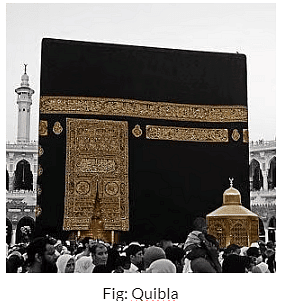
The pedestal of Shah Jahan's throne was frequently described as the Quibla, the direction which Muslims face while praying. These architectural features communicated a sense of divine justice and the idea that the king was the representative of God on earth.
Q.7 : How did the Mughal court suggest that everyone - the rich and the poor, the powerful and the weak - received justice equally from the emperor?
Ans: The construction of the royal court in Red Fort emphasized the connection between the imperial court and royal justice. Behind the emperors' throne were a series of inlays which pictured Orpheus playing the lute. It was believed that Orpheus' music calmed ferocious beasts and made them co-exist in harmony. All this gave the impression that the king's justice would treat the high and the low as equals, creating a world in which all could live in harmony.
Q.8 : What role did the Yamuna play in the layout of the new Mughal city at Shahjahanabad?
Ans: In the new Mughal city of Shahjahanabad, the king's palace commanded the riverfront view of the Yamuna. Only special nobles like the emperor's oldest son were given access to the river.
FAQs on NCERT Solution - Rulers & Buildings
| 1. What is the significance of rulers and buildings in history? |  |
| 2. How did rulers use buildings to establish their dominance? | |
| 3. What can we learn about a civilization from its architectural structures? | |
| 4. How did the construction of buildings impact the economy of a civilization? | |
| 5. Can you provide examples of famous rulers and their iconic buildings? | |





