Worksheet Solutions: Building With Bricks - 1

Q1: Multiple Choice Questions (MCQs).
(i) Bhajan decided to buy the new bricks from Brickabad. He bought three thousand bricks. How much did he pay?
(a) ₹4000
(b) ₹5000
(c) ₹6000
(d) ₹7000
Ans: (c)
Explanation: The price of 1,000 new bricks from Brickabad is ₹2,000. Bhajan bought 3,000 bricks, which is 3 × 1,000 bricks. So total = 3 × ₹2,000 = ₹6,000.
(ii) Choose the longest brick.
(a)
(b)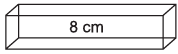
(c)
(d)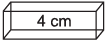
Ans: (b)
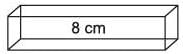
Explanation: The brick shown in option (b) is visibly longer than the others, so (b) is the correct choice.
(iii) Bricks are made from? Tick the correct answer.
(a) Stone
(b) Soil
(c) Wood
(d) Glass
Ans: (b)
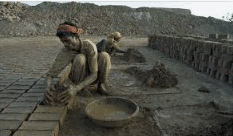
Explanation: Bricks are made from clay and soil. The clay is shaped into bricks and then dried or baked to make them hard for building.
(iv) There are four very old cave paintings. Which one is the oldest?

(a) 4200 years old
(b) 8500 years old
(c) 1500 years old
(d) 5800 years old
Ans: (b)
Explanation: Among the given ages, 8,500 years is the largest number, so the painting is the oldest.
(v) Which of these are the faces of a brick which is used for wall construction?
(a)
(b)
(c)
(d)
(e)
Ans: (c, e)
Explanation: The faces shown in (c) and (e) are rectangular, which are the faces used when laying bricks for walls. A brick has rectangular faces that fit together to make a flat wall surface.
Q2: Fill in the Blanks.
(i) One hundred thousand bricks = 1 ______ bricks.
Ans: 1 lakh (1,00,000)
(ii) A brick has __________ faces.
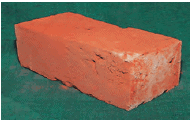
Ans: 6
The shape of a brick is like a cuboid, and it has 6 faces.
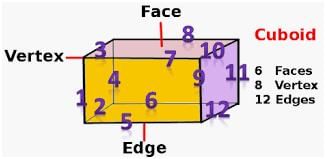
Q3: Answer the following Questions.
(i) One brick costs ₹ 15/-
20 bricks cost ₹
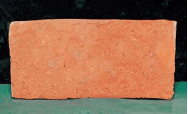
Ans: ₹300
Sol: Cost of one brick = ₹15.
Cost of 20 bricks = 20 × 15 = ₹300.
(ii) Muniya wants to make a wall 1 meter long. If the length of a brick is 20 cm, then tell how many bricks she will need to put in a line?
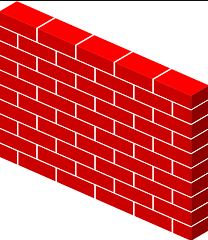 Ans: 5
Length of wall = 1 m = 100 cm.
Length of one brick = 20 cm.
Number of bricks = 100 ÷ 20 = 5.
(iii) A contractor pays ₹ 5000 for 500 bricks. Find out the cost of 1 brick?
Ans: ₹10
Sol: Total cost = ₹5,000 for 500 bricks.
Cost of one brick = 5,000 ÷ 500 = ₹10.
(iv) Bhajan went to buy bricks. The price was given for one thousand bricks. The prices were also different for different types of bricks. Old bricks - Rs 1200 for one thousand bricks new bricks from Intapur - Rs 1800 for one thousand bricks, new bricks from Brickabad - Rs 2000 for one thousand Bricks.
What is the price of 1000 new bricks from Intapur?
Ans: ₹1,800
(v) Bhajan went to buy bricks. The price was given for one thousand bricks. The prices were also different for different types of bricks. Old bricks - Rs 1200 for one thousand bricks new bricks from Intapur - Rs 1800 for one thousand bricks, new bricks from Brickabad - Rs 2000 for one thousand Bricks.
Bhajan decided to buy the new bricks from Brickabad. He bought three thousand bricks. How much did he pay?
Ans: ₹6,000
Sol: Price of 1,000 new bricks from Brickabad = ₹2,000.
For 3,000 bricks: 3 × ₹2,000 = ₹6,000.
(vi) Bhajan went to buy bricks. The price was given for one thousand bricks. The prices were also different for different types of bricks. Old bricks - Rs 1200 for one thousand bricks new bricks from Intapur - Rs 1800 for one thousand bricks, new bricks from Brickabad - Rs 2000 for one thousand Bricks.
Tell me what he will pay if he buys 2000 new bricks from Intapur.
Ans: ₹3,600
Sol: Price of 1,000 new bricks from Intapur = ₹1,800.
For 2,000 bricks: 2 × ₹1,800 = ₹3,600.
(vii) Which of the two walls is stronger?

Ans: Wall 1 is stronger than Wall 2.
Explanation: In Wall 1, the bricks are arranged in a staggered way so the joints do not line up. This overlap makes the wall stronger. In Wall 2, the joints are aligned, which weakens the wall.
(viii) If a brick costs ₹ 5/-, then what is the cost of 350 bricks?
Ans: ₹1,750
Sol: Cost of one brick = ₹5.
Cost of 350 bricks = 5 × 350 = ₹1,750.
(ix) Draw the smallest face of a brick.
Ans: The smallest face of a brick looks like this:
(x) Which of the following patterns is/are symmetrical in nature?
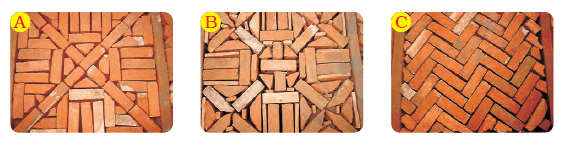
Ans: All of the above patterns are symmetrical.
Explanation: Each pattern has at least one line of symmetry; you can draw a line so that both sides match.
(xi) In the given wall, how many bricks are used?
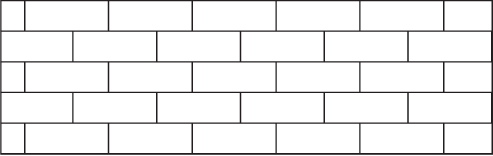
Ans: 30 bricks
Explanation: Count the bricks row by row (or columns) to get a total of 30 bricks used in the wall.
FAQs on Worksheet Solutions: Building With Bricks - 1
| 1. How do I count the number of bricks needed to build a wall or structure? |  |
| 2. What's the difference between counting bricks in 2D shapes versus 3D structures? | |
| 3. How do I solve brick-building problems when some bricks are hidden or removed? | |
| 4. Why do brick-building questions ask about different perspectives or viewpoints? | |
| 5. How can I check my brick-counting answers to make sure they're correct? | |