CBSE Class 10 > Class 10 Notes > Social Studies (SST) > Map: Minerals and Energy Resources
Map: Minerals and Energy Resources

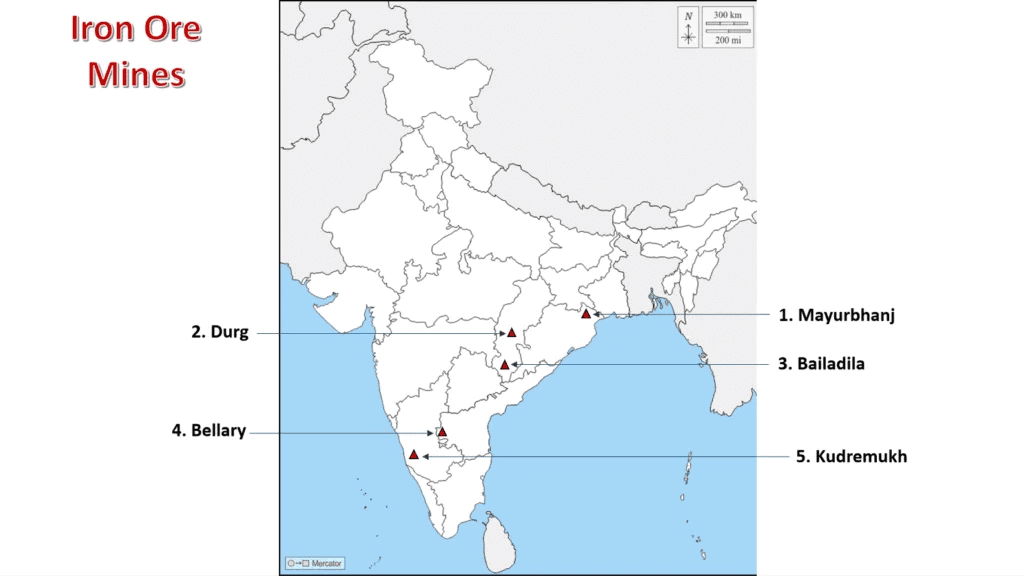
A. Iron Ore mines
- Mayurbhanj
- Durg
- Bailadila
- Bellary
- Kudremukh
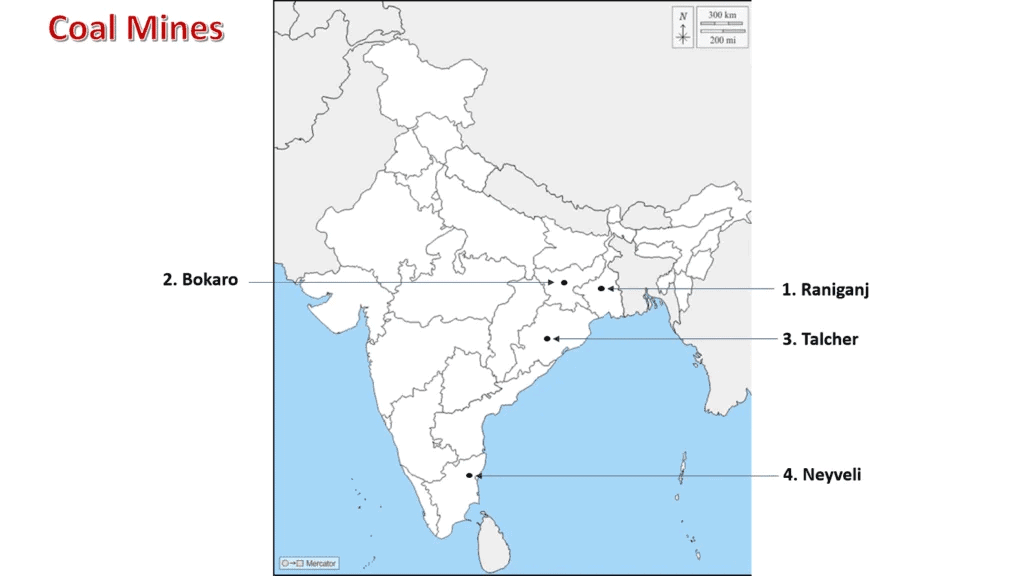
B. Coal Mines
- Raniganj
- Bokaro
- Talcher
- Neyveli
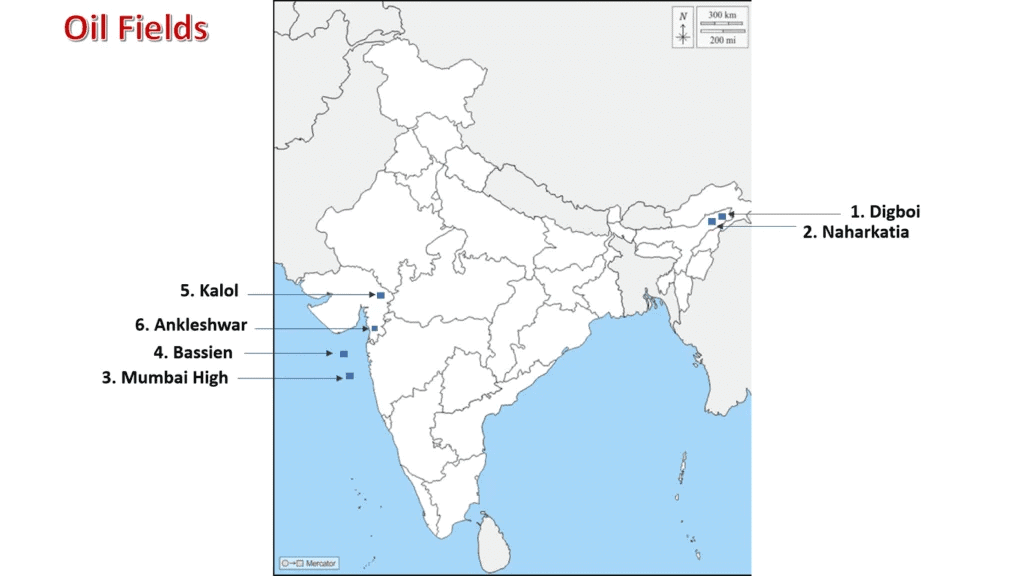
C. Oil Fields:
- Digboi
- Naharkatia
- Mumbai High
- Bassien
- Kalol
- Ankleshwar
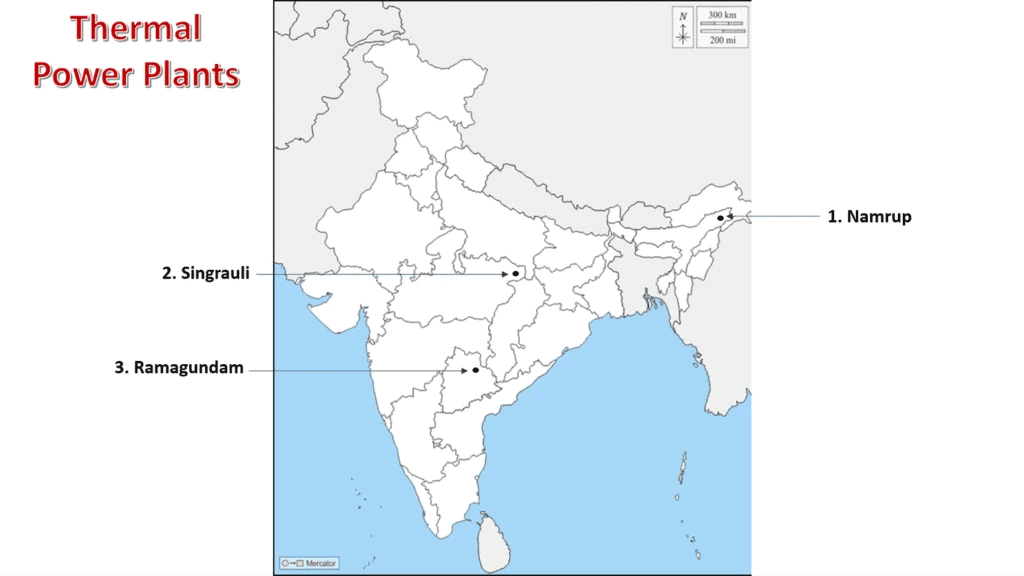
Power Plants (Locating and Labelling only)
A. Thermal
- Namrup
- Singrauli
- Ramagundam
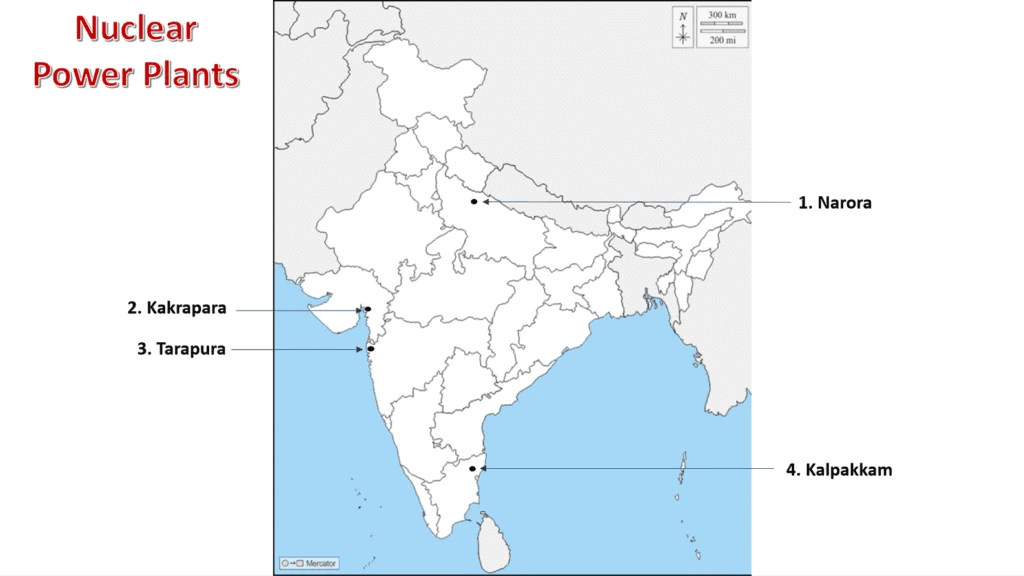
B. Nuclear
- Narora
- Kakrapara
- Tarapur
- Kalpakkam
The document Map: Minerals and Energy Resources is a part of the Class 10 Course Social Studies (SST) Class 10.
All you need of Class 10 at this link: Class 10
FAQs on Map: Minerals and Energy Resources
| 1. What are the main types of minerals and energy resources studied in Class 10? |  |
Ans. In Class 10, students learn about various minerals such as metallic minerals (like iron ore, copper, and bauxite) and non-metallic minerals (like limestone and mica). Additionally, energy resources such as fossil fuels (coal, petroleum, and natural gas), renewable energy sources (solar, wind, and hydro), and nuclear energy are also covered.
| 2. How do minerals and energy resources impact the economy? | |
Ans. Minerals and energy resources are crucial for economic development as they provide raw materials for industries, generate employment, and contribute to national income. The mining and energy sectors can drive infrastructure development and improve living standards, making them vital components of a country's economy.
| 3. What are the environmental impacts of mining minerals? | |
Ans. Mining activities can lead to several environmental issues, including deforestation, soil erosion, water pollution, and loss of biodiversity. The extraction process can disrupt ecosystems, and improper waste disposal can contaminate local water sources, affecting both wildlife and human populations.
| 4. Why is renewable energy important in the context of energy resources? | |
Ans. Renewable energy is essential because it provides a sustainable alternative to fossil fuels, which are finite and contribute to environmental pollution and climate change. Renewable sources, such as solar, wind, and hydro power, offer cleaner energy options that reduce greenhouse gas emissions and promote energy independence.
| 5. How can students prepare for their exams on minerals and energy resources? | |
Ans. Students can prepare for exams by reviewing their class notes, understanding key concepts and definitions, practicing previous years' question papers, and engaging in group study sessions. Additionally, using visual aids like charts and maps can help in retaining information related to the distribution and importance of various minerals and energy resources.
About this Document

2.6K Views

4.89/5 Rating

Apr 25, 2026 Last updated
Related Exams
Document Description: Map: Minerals and Energy Resources for Class 10 2026 is part of Social Studies (SST) Class 10 preparation. The notes and questions for Map: Minerals and Energy Resources have been prepared according to the Class 10 exam syllabus. Information about Map: Minerals and Energy Resources covers topics like and Map: Minerals and Energy Resources Example, for Class 10 2026 Exam. Find important definitions, questions, notes, meanings, examples, exercises and tests below for Map: Minerals and Energy Resources.
Introduction of Map: Minerals and Energy Resources in English is available as part of our Social Studies (SST) Class 10 for Class 10 & Map: Minerals and Energy Resources in Hindi for Social Studies (SST) Class 10 course. Download more important topics related with notes, lectures and mock test series for Class 10 Exam by signing up for free. Class 10: Map: Minerals and Energy Resources
Description
Map: Minerals & Energy Resources of SST covers all the important topics, helping you prepare for the Class 10 exam on EduRev. Start for free!
Information about Map: Minerals and Energy Resources
In this doc you can find the meaning of Map: Minerals and Energy Resources defined & explained in the simplest way possible. Besides explaining types of Map: Minerals and Energy Resources theory, EduRev gives you an ample number of questions to practice Map: Minerals and Energy Resources tests, examples and also practice Class 10 tests



Related Searches
Map: Minerals and Energy Resources, Semester Notes, video lectures, Extra Questions, Summary, MCQs, Previous Year Questions with Solutions, Objective type Questions, Map: Minerals and Energy Resources, Map: Minerals and Energy Resources, Free, pdf , past year papers, Exam, mock tests for examination, Sample Paper, study material, practice quizzes, Important questions, ppt, shortcuts and tricks, Viva Questions;