CBSE Class 1  >  Class 1 Notes  >  Science  >  Worksheet: Weather - 1

Worksheet: Weather - 1

Fill in the Blanks

(Pick the correct word from the options in brackets)

(i) The sun is bright on a _____ day. (cold/sunny)

(ii) Flowers bloom in the _____ season. (winter/spring)

(iii) The leaves on trees turn yellow in _____ season. (autumn/spring)

(iv) During the _____ season, the roads are wet. (winter/rainy)
Fill in the Blanks

TRUE or FALSE

(Write TRUE or FALSE for given statements)

(i) When the snowfalls, it becomes very hot.

(ii) We like to drink cold water in winters.

(iii) We wear cotton clothes in summer.

(iv) We put on coolers in winter.
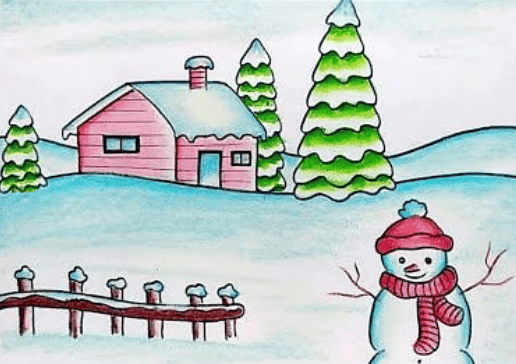
Winter SeasonWinter Season

Look at the Pictures and Name

(Which Season is it?)

(i)
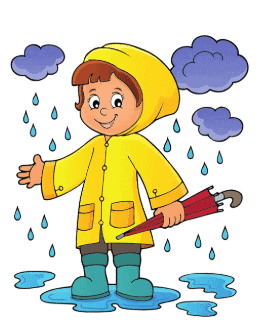
Look at the Pictures and Name

(ii) 
Look at the Pictures and Name

(iii) 

Look at the Pictures and Name

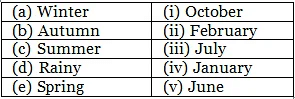
Match the Following


Match the Following

Match the Following

Answer the Following Questions

(i) What happens on a sunny day?

(ii) Name the five seasons of the year.

(iii) Why do we wear cotton clothes during hot weather?

(iv) Why do we wear woolen clothes during cold weather?

(v) What do you like to do on a cold day?

The solutions of the worksheet "Weather - 1"

The document Worksheet: Weather - 1 is a part of the Class 1 Course Science for Class 1.
All you need of Class 1 at this link: Class 1

FAQs on Worksheet: Weather - 1

1. What are the different types of weather and how do I identify them?
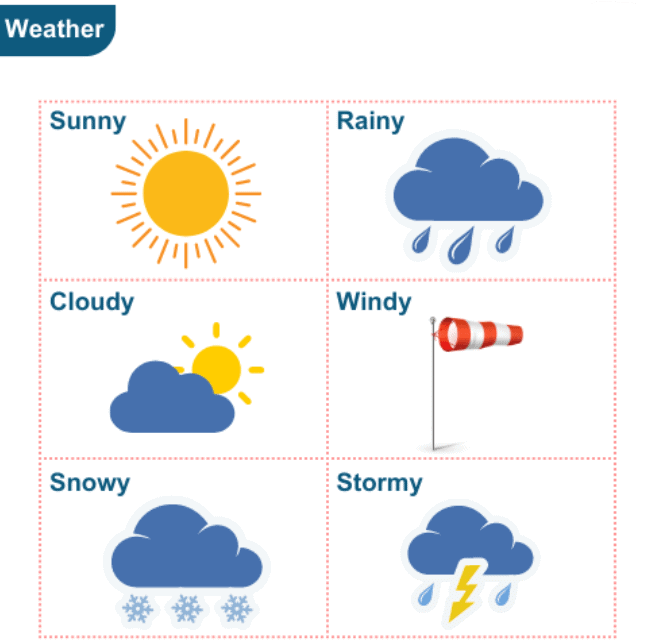
Ans. Weather types include sunny, rainy, cloudy, windy, and snowy conditions. Sunny weather brings bright light and warmth; rainy weather brings water falling from clouds; cloudy weather means clouds cover the sky; windy weather involves moving air; snowy weather occurs in cold places with ice crystals falling. Students can observe and describe these weather patterns daily by looking outside and noticing sky conditions, temperature, and precipitation.
2. How does temperature affect weather and what should I wear in different weather conditions?
Ans. Temperature measures how hot or cold the air is and directly influences the type of weather experienced. Hot temperatures bring sunny, dry conditions; cold temperatures cause snow or frost. Students should wear light cotton clothes in hot weather to stay cool, warm jackets and sweaters in cold weather to retain heat, and waterproof raincoats during rainy seasons. Dressing appropriately helps the body adapt to temperature changes.
3. What causes wind and how is it connected to weather changes?
Ans. Wind occurs when air moves from one place to another due to temperature differences and air pressure variations. Moving air can bring weather changes-strong winds often arrive before rainstorms or can indicate approaching cold fronts. Wind speed and direction help meteorologists predict weather patterns. Students observe wind effects through moving leaves, dust, and flying objects, which indicate air movement and shifting atmospheric conditions.
4. Why do clouds form and what do different cloud shapes tell us about upcoming weather?
Ans. Clouds form when water vapour rises, cools, and condenses into visible water droplets around dust particles. Fluffy white clouds typically indicate fair weather; dark grey clouds suggest rain is approaching; wispy high clouds may signal weather changes within hours. Cloud observation helps predict rainfall and temperature shifts. Understanding cloud formation and appearance teaches students to anticipate weather conditions and plan outdoor activities accordingly.
5. What activities should I avoid during different weather conditions and why is weather safety important?
Ans. During rainy weather, avoid outdoor play to prevent slipping and waterborne illness. Avoid direct sun exposure in extremely hot weather to prevent heatstroke. During storms with strong winds, stay indoors away from windows and falling branches. Weather safety prevents injuries and health problems like dehydration, hypothermia, and accidents. Students learning weather awareness develop habits that protect themselves and others by respecting nature's conditions and planning activities wisely.
Explore Courses for Class 1 exam
Get EduRev Notes directly in your Google search
Related Searches
pdf , mock tests for examination, Semester Notes, shortcuts and tricks, Summary, Objective type Questions, practice quizzes, past year papers, Free, Exam, Important questions, Previous Year Questions with Solutions, ppt, study material, Extra Questions, MCQs, Viva Questions, video lectures, Worksheet: Weather - 1, Sample Paper, Worksheet: Weather - 1, Worksheet: Weather - 1;