Short & Long Question - In the Kingdom of Fools

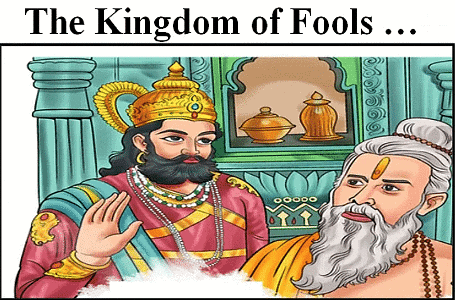
Short Answer Questions
Q1. Why were the people of the kingdom confused when they saw the dead bodies of the king and his minister?
Ans: The people were confused because they had expected to find the Guru and his disciple dead. They could not understand that the Guru had tricked their rulers. This deception upset the usual order of events and caused panic and bewilderment among the citizens.
Q2. When does the disciple remember the words of the Guru?
Ans: The disciple remembered his Guru's warning when he faced execution. He had earlier ignored the Guru's advice to leave the Kingdom of Fools, but the moment the king decided he was fit for death, the disciple realised the truth of the Guru's words: "This is a city of fools. You don't know what they will do next."
Q3. How was the kingdom of Fools different from any other place?
Ans: The Kingdom of Fools was unusual because day and night were treated in reverse. People and animals were often awake at night and slept by day. Another oddity was that everything, no matter how valuable, could be bought for a single duddu.
Q4. Why did the Guru want that he and his disciple should die first?
Ans: The Guru pretended that he and his disciple should be executed first as part of a clever plan to save them. By telling the king that the first to die would be reborn as king, he played on the ruler's superstition and caused the king to take actions that eventually protected both the Guru and his disciple.
Q5. On what conditions did the Guru and his disciple agree to rule that kingdom?
Ans: They agreed to accept the throne on the condition that they could reform the foolish laws. They planned to restore normal day and night routines and to set fair prices so that goods would cost according to their real value rather than everything being sold for a duddu.
Q6. Why did the Guru not want to stay in the Kingdom of Fools?
Ans: The Guru did not want to remain because the people were irrational and unpredictable. He feared that such foolishness could threaten his safety and that of his disciple, so he advised leaving the place.
Q7. Why does the disciple not want to leave the Kingdom of the fools?
Ans: The disciple stayed because life there seemed easy and comfortable. Everything was cheap and food was plentiful, so he preferred the convenience and immediate pleasures of the place despite his Guru's warning about its dangers.
Q8. Why did the king decide to postpone the execution of the Guru and his disciples?
Ans: The Guru told the king that whoever died first would be reborn as king, a claim that appealed to the ruler's superstitions. Fearing that someone else might become king in the next life, the king postponed the execution so that he and his minister could secretly plan to die first themselves.
Q9. What was so strange about the Kingdom of Fools?
Ans: The strange features were that people and animals slept during the day and were active at night, so normal daily life was reversed. Another oddity was that everything, whether cheap or expensive, was sold for the same price of one duddu.
Q10. Who is the real culprit, according to the king? Why does he escape from the punishment?
Ans: The king blamed the rich merchant for the death caused when a wall from his house fell on a thief; he believed the merchant had inherited his father's sins along with his wealth. However, the merchant escaped execution because he was too thin to be properly impaled on the stake, so the king decided to find a fatter man instead.
Q11. What advice did the Guru give to the disciple before going out of the city?
Ans: The Guru warned his disciple that the kingdom was ruled by fools and advised him to leave immediately. He said that such a place was dangerous and unpredictable, and that it was unsafe for wise people to remain there.
Q12. What is the Guru's wisdom? When does the disciple realize this?
Ans: The Guru's wisdom was his understanding of how dangerous a place without justice and reason could be. The disciple realises this wisdom only when he faces execution and recognises that ignoring his teacher's advice has put him in grave danger.
Q13. Why did the king want to punish the merchant?
Ans: The king blamed the merchant because a wall from the merchant's house fell and killed a thief. Since the merchant had inherited his father's wealth and, in the king's view, his father's sins, the ruler held him responsible for the accident and wanted to punish him.
Q14. Who became the king and the prime minister of the kingdom?
Ans: After the previous rulers were removed, the people invited the Guru and his disciple to govern. The Guru became the king, and his disciple became the minister, both agreeing that they would change the foolish laws of the land.
Q15. What two things were different in the kingdom of fools?
Ans: Two main differences were that people worked at night and slept during the day, and that everything was sold at the same low price - for example, a duddu could buy either rice or bananas regardless of value.
Long Answer Type Questions
Q1. Disciple in the story didn't look into the depth of the matter and made a hasty decision to not leave the kingdom of fools. What light does the story throw on the importance of good decision-making in one's life?
Ans: The disciple made a hasty choice to stay because he was tempted by cheap comforts, and he ignored his Guru's warning. This single poor decision nearly cost him his life when he was selected for execution. The incident shows that quick, unthinking choices can have serious consequences. It underlines the importance of thinking ahead, weighing risks against short-term benefits, and listening to wise advice before deciding.
Q2. Do you believe in the fact that our prayers are often heard and answered? There are miracles which change the course of life. Which miracle took place in the story? 'In the Kingdom of Fools? What lesson do you learn from the Guru's word of wisdom?
Ans: Many people believe that sincere prayers can bring help in desperate times. In 'In the Kingdom of Fools', a remarkable turn of events occurs when the Guru appears to save his disciple from execution. The Guru uses a clever plan and the king's superstitions to protect them both. From the Guru's words we learn the value of foresight and experience; his warning to leave that place was rooted in understanding how dangerous a rationally upside-down society can be. The lesson is to respect wise counsel and not be blinded by present comforts.
Q3. You are the disciple in the story, "Kingdom of the Fools". You are in trouble as you are about to be hanged. You decide to write a letter to your Guru regretting your decision to stay in the kingdom of fools and requesting him to help you. Write the letter in 80 words.
Ans:
Respected Guru ji,
I write in deep regret for staying in this Kingdom of Fools. I was tempted by cheap food and comfort and ignored your warning. Now I am imprisoned and will soon be hanged. I beg you to help me; only your guidance can save me. Please come quickly and forgive my foolishness. I promise to follow your counsel always if you spare my life.
Your disciple.
Q4. How did the Guru and his disciple become the king and the minister of the kingdom?
Ans: The Guru convinced the gullible rulers that those who died first would be reborn as king and minister. The foolish king and his minister believed this and arranged events so that they themselves appeared to be executed. With the throne vacant, the people chose the Guru and his disciple to rule, and they accepted on condition that they could reform the kingdom's silly customs and laws.
Q5. How did the Guru manage to save his disciple?
Ans: The disciple prayed for help when facing execution. The Guru then acted cleverly: he presented a plan that played on the king's superstitions and suggested that he himself should be executed first. This led the king to change his mind and, ultimately, the king and his minister agreed to take the place of those to be executed. Through this trick, the Guru and his disciple were freed and the rulers sacrificed themselves instead.
Q6. "Guru was a wise man" - how does the story "The Kingdom of Fools" reflect it?
Ans: The story shows the Guru's wisdom in several ways. He recognised the dangers of a place where reason did not rule and advised his disciple to leave. When his disciple ignored the advice and faced death, the Guru used intelligence and knowledge of human nature to save them both. His foresight about the kingdom's foolishness and his clever handling of the king's superstitions prove that he was truly wise, and his wisdom ultimately led to their becoming the new rulers who could correct the kingdom's errors.
FAQs on Short & Long Question - In the Kingdom of Fools
| 1. What is the central theme of "The Kingdom of Fools"? |  |
| 2. Who are the main characters in the story? | |
| 3. How does the clever thief outsmart the king and the people of the kingdom? | |
| 4. What role does satire play in "The Kingdom of Fools"? | |
| 5. What lesson can readers learn from "The Kingdom of Fools"? | |





