CBSE Class 1  >  Class 1 Notes  >  EVS  >  Worksheet: Precious Water - 1

Worksheet: Precious Water - 1

Q1: Fill in the blanks

(i) Water is precious, so we must not _____ it.

(ii) We cannot _____ without water.

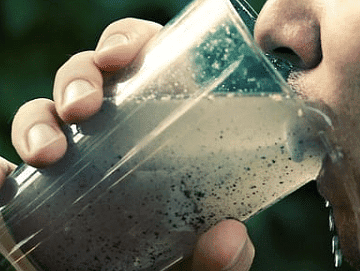
(iii) Drinking dirty water is bad for our _____.
Q1: Fill in the blanks

(iv) We should _____ water to make it germ free.

(v) _____ is stored in tanks.

(vi) Ponds and lakes are filled by _____ water.

(vii) _____ bring rain on earth.

Q2: True or False

(i) Water in a river comes from mountains.

(ii) All living things need water.

(iii) Water is precious.

(iv) Water is needed only for drinking.

(v) Plants and animals do not need water to live.

(vi) Rainwater fills up wells, rivers and lakes.
Q2: True or False

Q3: Multiple Choice Questions (MCQs)

(i) At home, you can store drinking water in a:
(a) dustbin
(b) flowerpot
(c) bottle
(d) small cup

(ii) We use water for:
(a) dancing
(b) drinking
(c) throwing
(d) wasting

(iii) We can store water in:
(a) buckets
(b) tubes
(c) cups
(d) spoons

(iv) People in villages use water from:
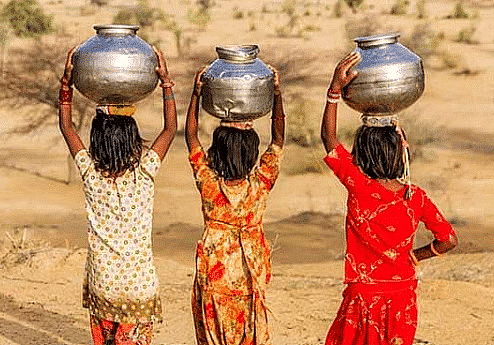
Q3: Multiple Choice Questions (MCQs)(a) wells
(b) drains
(c) pots
(d) glass

(v) Rainwater fills:
(a) lakes
(b) glasses
(c) wells
(d) tubes

Q4: Match the Column
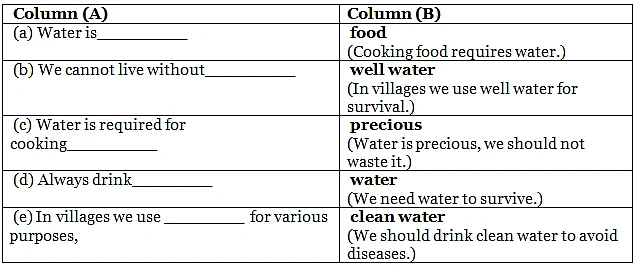
Q4: Match the Column

Q5: Answer the following Questions

(i) Why do we need water?

(ii) What do plants need water for? 

(iii) How can water be stored?

(iv) Write three uses of water in our daily life.

(v) Why should we not waste water?


You can find Worksheets Solutions here: Worksheet Solutions: Precious Water - 1

The document Worksheet: Precious Water - 1 is a part of the Class 1 Course EVS for Class 1.
All you need of Class 1 at this link: Class 1

FAQs on Worksheet: Precious Water - 1

1. Why is water called precious and how do we use it every day?
Ans. Water is precious because all living things depend on it to survive-plants, animals, and humans need it for drinking, cooking, bathing, and growing food. In Class 1 EVS, students learn that water is limited on Earth, so we must use it carefully and not waste it. Every drop counts because fresh water is not available everywhere, making conservation essential for our future.
2. What are the different sources of water that we drink and use at home?
Ans. Water comes from natural sources like rivers, lakes, wells, and rain that fill underground reserves called groundwater. Tap water in homes comes from these sources after treatment at water purification plants. For Class 1 EVS, understanding water sources helps children recognise that water doesn't magically appear from taps-it travels from nature to our homes through pipes and systems we depend on daily.
3. How can Class 1 students help save water and reduce wastage at school and home?
Ans. Students can save water by turning off taps while brushing teeth, using buckets instead of running water, and telling adults about leaks. Simple habits like taking shorter baths and watering plants wisely reduce water wastage significantly. The Precious Water worksheet emphasises that even small actions by children protect this vital resource, teaching responsibility and environmental awareness from an early age.
4. What happens to water when it rains and where does rainwater go?
Ans. Rainwater flows into rivers, lakes, and soil, where it either evaporates back into the air or seeps underground to refill water reserves called aquifers. Some rainwater is collected in tanks for later use. Understanding the water cycle in EVS helps Class 1 students realise that rain replenishes our water supply, connecting nature's processes to daily life and emphasising why protecting water sources matters.
5. Why do some places have clean water while others don't, and what causes water pollution?
Ans. Clean water availability depends on location, rainfall, and access to treatment facilities; some areas lack these resources or face contamination from waste and chemicals. Pollution occurs when factories, farms, and homes release harmful substances into water bodies. EVS for Class 1 teaches that polluted water spreads diseases, making water protection and cleanliness crucial for community health and environmental responsibility.
Explore Courses for Class 1 exam
Get EduRev Notes directly in your Google search
Related Searches
Semester Notes, Objective type Questions, MCQs, Free, video lectures, mock tests for examination, study material, pdf , past year papers, Exam, Worksheet: Precious Water - 1, Important questions, Viva Questions, Worksheet: Precious Water - 1, Sample Paper, Summary, shortcuts and tricks, Worksheet: Precious Water - 1, ppt, Previous Year Questions with Solutions, Extra Questions, practice quizzes;