IGCSE Class 2  >  Class 2 Notes  >  Year 2 Mathematics (Cambridge)  >  Worksheet: Patterns

Worksheet: Patterns

Q.1. Count by 1 from 5 to 13
 __ , __ , 7,8, __ , __ ,11, __ , __

(a) 1,2,3,4,5, 6
(b) 2,4,6,8,10,12
(c) 5,6,9,10,12,13
(d) 5,7,9,11,13,15

Q.2. Circle the picture that is different:

Worksheet: Patterns

Q.3. Observe the pattern below and draw the picture to continue the pattern:

Worksheet: Patterns

Q.4. Observe the pattern in each row and draw and colour the picture that continues the pattern:

Worksheet: Patterns

Q.5. Complete the pattern:
Worksheet: Patterns

Q.6. Observe the pattern below and draw the picture to continue the pattern:

Worksheet: Patterns

Q.7. Observe the pattern in each row and draw and colour the picture that continues the pattern:

Worksheet: Patterns

Q.8.Complete the pattern:
Worksheet: Patterns

Q.9. Complete the counting series patterns:
____ , 5 , 7 , ____ , 11 , _____
 

Q.10. Circle the odd one out:

Worksheet: Patterns

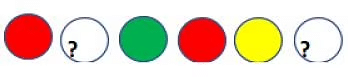
Q.11. Complete the pattern:
Worksheet: Patterns

Q.12. 5th Triangle is before ____ Triangle.

Worksheet: Patterns

Q.13. Count by 3 from 7 to 31
- , - ,- , - , 19, - ,- , 28,31

(a) 7, 10, 13, 16, 22, 25
(b) 3, 6, 9, 12, 15, 18

Q.14. Observe the pattern in each row and draw and colour the picture that continues the pattern:

Worksheet: Patterns

Q.15. Observe the pattern below and draw the picture to continue the pattern:

Worksheet: Patterns

Q.16. Complete the pattern:
Worksheet: Patterns

Q.17. Look carefully at the sequence of symbols to find the pattern. Select the correct pattern:

Worksheet: Patterns

(a)Worksheet: Patterns

(b)Worksheet: Patterns

(c)Worksheet: Patterns

(d)Worksheet: Patterns

Q.18. Circle the picture that is different:

Worksheet: Patterns

Q.19. Circle the picture that is different:

Worksheet: Patterns

Q.20. Observe the pattern below and draw the picture to continue the pattern:

Worksheet: Patterns

The solutions of the worksheet "Patterns"

The document Worksheet: Patterns is a part of the Class 2 Course Year 2 Mathematics IGCSE (Cambridge).
All you need of Class 2 at this link: Class 2

FAQs on Worksheet: Patterns

1. What are patterns in math?
Ans.Patterns in math are sequences or arrangements that follow a specific rule or structure. They can be found in numbers, shapes, colors, and more. Recognizing patterns helps us understand relationships and predict what comes next.
2. How can I teach my child to recognize patterns?
Ans.You can teach your child to recognize patterns by using everyday objects, like toys or fruits, and arranging them in sequences. You can also use coloring activities or simple crafts to create patterns and encourage your child to identify and continue them.
3. What are some examples of patterns for Class 1 students?
Ans.Examples of patterns for Class 1 students include alternating colors (red, blue, red, blue), shapes (circle, square, circle, square), or numbers (1, 2, 1, 2). These simple examples help children grasp the concept of patterns easily.
4. Why are patterns important in early education?
Ans.Patterns are important in early education because they help develop critical thinking and problem-solving skills. Recognizing patterns also enhances a child's ability to understand mathematical concepts and prepares them for more complex ideas in the future.
5. How can worksheets help in learning patterns?
Ans.Worksheets are a great tool for learning patterns as they provide structured activities that reinforce the concept. They often include tracing, coloring, or filling in the blanks, which makes learning engaging and helps children practice identifying and creating their own patterns.
Explore Courses for Class 2 exam
Get EduRev Notes directly in your Google search
Related Searches
study material, Worksheet: Patterns, Exam, Extra Questions, Semester Notes, Free, Previous Year Questions with Solutions, practice quizzes, Important questions, Summary, Worksheet: Patterns, past year papers, ppt, shortcuts and tricks, video lectures, Viva Questions, MCQs, Worksheet: Patterns, mock tests for examination, pdf , Objective type Questions, Sample Paper;