Notes: Time and Calender


What is Time?
Time helps us know when things happen.
 Clock and Calender
It can be:
- Past - things that already happened.
- Present - things happening right now.
- Future - things that will happen later.
We use clocks and calendars to keep track of time.
Day and Night
- The Earth is like a big ball moving in space.
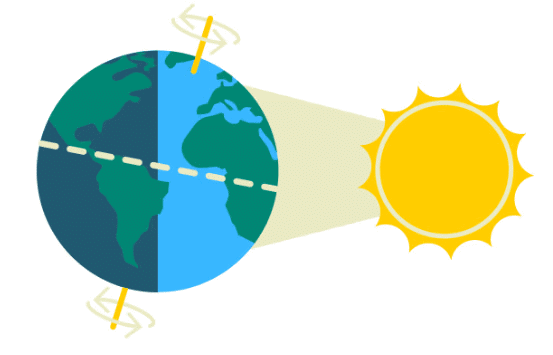 Rotation of earth causes Day and Night
- One side gets sunlight - that is daytime.
- The other side is dark - that is nighttime.
The Earth spins around slowly. This spinning gives us day and night.
Sunrise and Sunset
- When the Sun comes up in the morning, it is called sunrise. It is the start of a new day.
 Sunrise
 - When the Sun goes down in the evening, it is called sunset. That means the day is ending, and night is beginning.
 Sunset
What is a Clock?
A clock tells us the time.
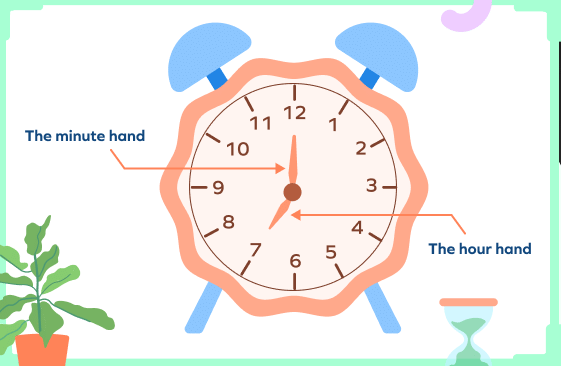 Hands of Clock
It has two hands:
- The short hand is the hour hand.
- The long hand is the minute hand.
There are:
- 60 minutes in 1 hour
- 60 seconds in 1 minute
- 24 hours in a day
When the minute hand goes all the way around the clock, 1 hour has passed.
We measure time in:
- Seconds
- Minutes
- Hours
- Days
- Weeks
- Months
- Years
What is a Calendar?
A calendar is a chart that shows us days, weeks, and months of a year.It helps us:
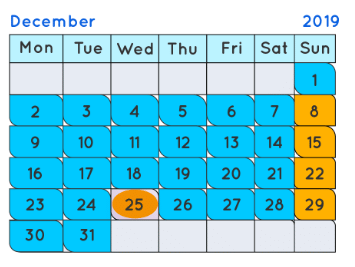 Calender
- Plan birthdays, holidays, festivals, and school events
- Remember important dates
Days of the Week
- There are 7 days in a week:
Monday
Tuesday
Wednesday
Thursday
Friday
Saturday
Sunday
Monday is the first day and Sunday is the last.
Months of the Year
There are 12 months in a year.
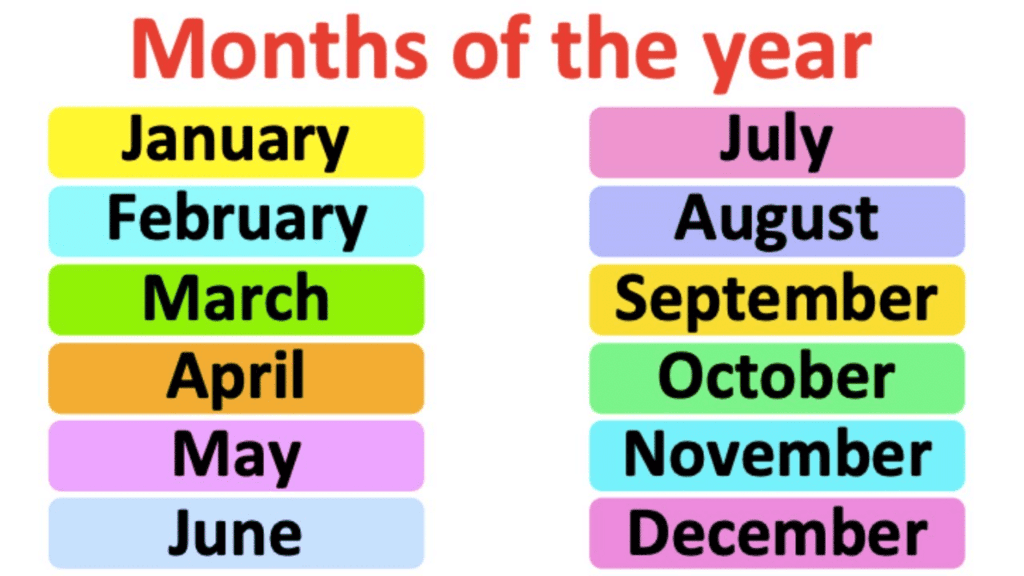
Each month has 30 or 31 days, except February, which has:
- 28 days in most years
- 29 days in a leap year (comes every 4 years)
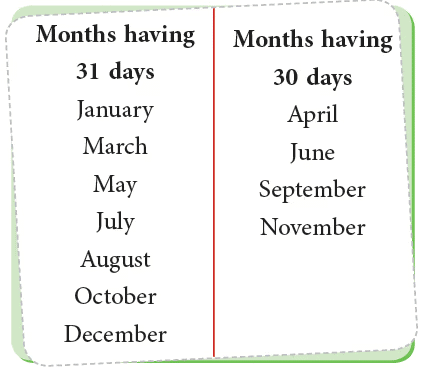
That's why:
- A normal year has 365 days
- A leap year has 366 days
Writing a Date
We write dates in different ways: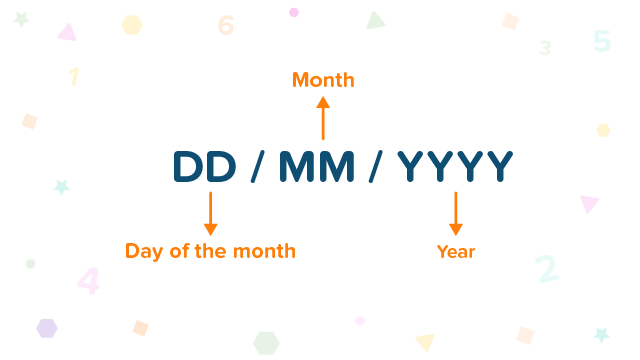 Date Writing Format
- 15/01/2024
- 15-01-2024
- 15th January 2024
Try writing your birthday in all three ways!
How to Read a Calendar
To read a calendar: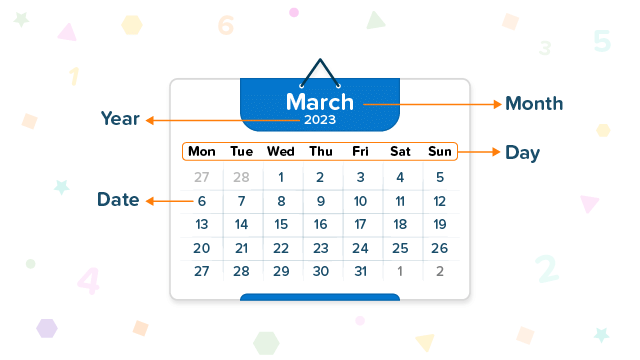 Reading a Calender
- Find the month and year at the top
- Look for the date (like 6)
- Check the day it falls on (like Monday)
- Write it like this: 06/03/2023
Summary
- Time tells us when things happen - past, present, and future.
- Day and night happen because the Earth spins.
- A clock tells us the time using hour and minute hands.
- We measure time in seconds, minutes, hours, days, weeks, months, and years.
- A calendar helps us remember days, months, and plan events.
- There are 7 days in a week and 12 months in a year.
- February has 28 or 29 days. A leap year has 366 days.
- We can write dates in different formats and read them using a calendar.
FAQs on Notes: Time and Calender
| 1. How do I read and understand a calendar for Class 2? |  |
| 2. What's the difference between AM and PM, and when do I use them? | |
| 3. How do I tell time on an analog clock with hour and minute hands? | |
| 4. Why do we have 7 days in a week, and what are they called in order? | |
| 5. What months have 30 days and which have 31 days-how do I remember this for exams? | |