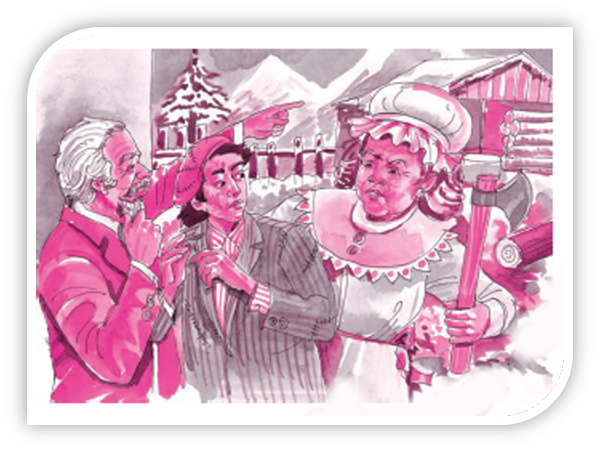
The Beggar is a story about a drunkard beggar named Lushkoff. Sergei, an advocate, gives him work at his house so that he can feed himself and stop begging. Although he agrees, he is not willing to work. The work given to him is done by Ogla as she feels pity for his miserable condition. He goes to another place for work, as Sergei recommends, and becomes a notary. Sergei meets him after two years and is happy to know about his job. He thinks that he is responsible for changing him and that it was Ogla's kindness and unconditional help that had made his way.
Detailed Summary
This is a story about a beggar, Lushkoff, who used to beg as a school teacher or student. He met an advocate named Sergei, who offered him a job at his house. Sergei asked Lushkoff to chop wood for him. He asked his servant, Olga, to look after him. Lushkoff was very weak. He could not do any work. Olga found him incapable of chopping the wood. She rebuked him, but she was very sympathetic to him. She wept for him. Olga decided to help him. She worked in his place and informed Sergei that he had done his work. She made him get half a rouble. Sergei asked Lushkoff to come to work on the first of every month. Lushkoff was always rebuked by Olga for his inefficiency. But it was Olga who helped him in his work. Once Sergei asked Lushkoff to help in the shifting of the house, he looked weak and unhealthy. Sergei thought that he should not put him to hard work and decided to send him to his friends for an easier job. Lushkoff got a more respectable job. After two years, Sergei met Lushkoff in a theatre. He was well-dressed and looked healthier. He had become a notary and was earning thirty-five roubles a month. Sergei felt good. Lushkoff thanked Sergei for his kind words and deed. He disclosed that it was Olga who helped and set him right. He would never forget her. Olga's words and actions had brought a change in him. She made him quit drinking. Lushkoff expressed his gratitude towards Sergei and Olga. He bade him goodbye and departed for work.
MULTIPLE CHOICE QUESTION
Try yourself: What job did Lushkoff eventually get after leaving Sergei's house?
A
Carpenter
B
Notary
C
Teacher
D
Servant
Correct Answer: B
After leaving Sergei's house, Lushkoff found a more respectable job as a notary. This job allowed him to earn thirty-five roubles a month. Sergei, upon meeting Lushkoff after two years, was pleased to hear about his new job as it showed that Lushkoff had made positive changes in his life. The story highlights how the kindness and unconditional help of Olga, Sergei's servant, played a significant role in guiding Lushkoff towards a better path.
Report a problem
Value Points
The story opens with a beggar named Lushkoff begging alms to an advocate named Sergei.
The beggar said that he was a school teacher who had lost his job due to a conspiracy by his colleagues.
While seeing the beggar's appearance, Sergei remembered that he had seen him previously at Savodiya Street, claiming that he was a student who was expelled from school.
Sergei became angry after hearing his lies and told him that he would call the cop.
Then Lushkoff admitted that he had told the lies, and he was a member of a Russian choir and was expelled due to his drunkenness.
After hearing the truth, Sergei asked him whether he would like to chopwood for him.
Then Lushkoff accepted the offer and went along with Sergei.
Sergei asked his cook Olga to make the beggar chop wood.
The beggar was unable to chop the wood because of the overconsumption of vodka.
After some time, Olga informed Sergei that he had chopped all the wood.
Lushkoff was paid after his job. Later, Sergei decided to move his house.
He asked Lushkoff to help him in packing the furniture.
After that, he offered him some work in his friend's company.
Two years later, Sergei met Lushkoff outside the theatre.
Sergei felt happy to see his changes. Lushkoff said that he was changed because of the kind words and good deeds of the cook, Olga.
1. Who is the beggar in Maxim Gorky's story and why does he beg?
Ans. The beggar is Lushkoff, a man who claims poverty forces him to beg on the streets. However, he's actually a former actor avoiding honest work, using begging as an excuse for idleness. The story reveals that his circumstances stem from laziness and dependence rather than genuine hardship or misfortune.
2. What does the wealthy man offer to the beggar and what happens because of it?
Ans. The wealthy man offers Lushkoff a job chopping wood instead of giving him money for begging. This practical solution tests whether the beggar genuinely needs help or simply wants easy charity. The beggar's reluctant acceptance and subsequent struggle with hard labour expose his true character and lack of real commitment to improving his situation.
3. Why does the beggar refuse money and accept the job offer in The Beggar story?
Ans. The beggar appears to accept the job because he's confronted with a genuine alternative rather than sympathy. Initially, his refusal of money stems from pride or manipulation. However, the wealthy man's firm stance forces Lushkoff to reconsider, revealing that begging relied on guilt-tripping rather than actual necessity or worthy intentions behind seeking assistance.
4. What's the main lesson or theme Gorky explores through the beggar's character?
Ans. Gorky examines how charity without purpose enables dependency and laziness rather than solving poverty. The beggar's story critiques superficial sympathy and emphasises that meaningful help requires effort and dignity from the recipient. True assistance demands work, responsibility, and personal transformation-not passive handouts that perpetuate helplessness and deception.
5. How does the beggar's transformation during the story challenge our understanding of poverty?
Ans. Lushkoff's shift from begging to reluctant labour reveals that poverty isn't always about lack of opportunity but often reflects personal choice and attitude. His initial resistance to work exposes how assumed victimhood masks unwillingness to contribute. The narrative pushes readers to question assumptions about beggars and recognise that genuine change requires internal motivation beyond external charitable gestures.
Objective type Questions, video lectures, pdf , shortcuts and tricks, Summary - The Beggar, Semester Notes, past year papers, Extra Questions, Summary - The Beggar, Important questions, ppt, Summary - The Beggar, Viva Questions, Exam, mock tests for examination, study material, Previous Year Questions with Solutions, practice quizzes, Summary, Free, MCQs, Sample Paper;