CBSE Class 1  >  Class 1 Notes  >  Science  >  Worksheet: Air Around Us - 1

Worksheet: Air Around Us - 1

Fill in the Blanks

(Pick the correct word from the options in brackets)

(Wind, space, light, air, plants, weight, feel)
(i) We can  _____ air but not see it.

(ii) _____ all around us.

(iii) Air takes up  _____.

(iv) Moving air is called _____.

(v) We need air to _____ a fire.

(vi) Animals and _____ need air to live.

(vii) Air has _____.
Fill in the Blanks

TRUE or FALSE

(Write TRUE or FALSE for given statements)

(i) Air is not present inside a room.

(ii) All animals need air to breathe.

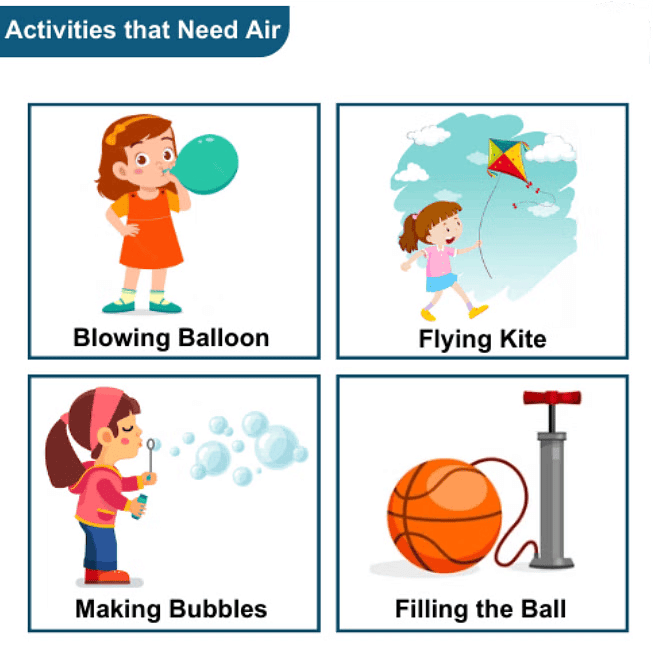
(iii) Air helps ships to sail.

(iv) We do not need air to fly a kite.

(v) To burn anything, we need air.

(vi) Plants and animals will die without air.
TRUE or FALSE

Multiple Choice Questions (MCQ)

(Choose the correct answer)

(i) Which of the following moves with the help of air?
(a) A Boy
(b) A Dog
(c) A Boat
(d) A Bat

(ii) Which of the following does not breathe in air?
(a) Cat
(b) Rose plant
(c) Toy aeroplane
(d) Parrot

(iii) Burning of paper needs:
(a) Water
(b) Air
(c) Wood    
(d) Sand

(iv) You can find air in a:
(a) football
(b) newspaper    
(c) tree
(d) glass
Multiple Choice Questions (MCQ)

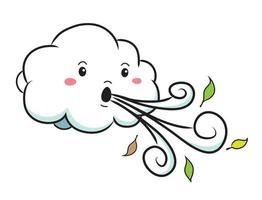
(v) Moving air is called:
(a) storm    
(b) heat
(c) wind    
(d) wave

(vi) Which of the following does not need air?
(a) Windmill 
(b) Swimming tube
(c) Sailboat 
(d) Reading a book

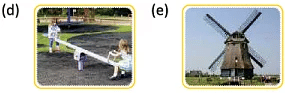
Multiple Choice Questions (MCQ)Wind Mill

Answer the following questions

(i) What is wind?

(ii) Name any two uses of air.

(iii) Why is a burning candle put out when you cover it with a glass jar?

(iv) Can you see air?

(v) Why does a balloon become large in size when we blow air inside it?

(vi) How does fish breathe in water?

(vii) Few pictures are given below. Tick the ones which need air to work:
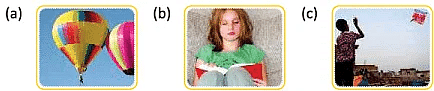
Answer the following questions

Answer the following questions

(vii) Complete the puzzle given below:
Down:
1. Air moves the wind mill
2. Air occupies
Across:
3. All living things need air to
4. Air has
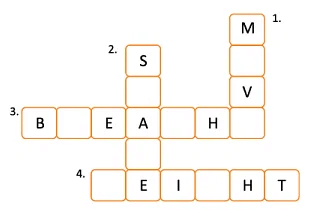
Answer the following questions

The solutions of the worksheet "Air Around Us - 1"

The document Worksheet: Air Around Us - 1 is a part of the Class 1 Course Science for Class 1.
All you need of Class 1 at this link: Class 1

FAQs on Worksheet: Air Around Us - 1

1. What are the different ways air moves around us in everyday life?
Ans. Air moves through wind, which occurs when warm air rises and cool air sinks, creating circulation patterns around us. Students learn that air movement happens during weather changes, when fans operate, and even during breathing. Understanding air circulation helps explain why we feel breezes near windows or how weather patterns develop daily.
2. How can we prove that air is all around us if we can't see it?
Ans. Air's presence can be demonstrated through its effects rather than direct observation. When inflating a balloon, students feel air resistance; when blowing on paper, it moves due to air force; underwater bubbles prove air exists in water too. These practical experiments with air show its invisible yet powerful nature without needing to see it directly.
3. Why does air have weight even though we can't feel it pressing down on us?
Ans. Air exerts pressure equally in all directions, so the downward force balances perfectly with upward force from below, making us unaware of it. The atmosphere's weight creates air pressure, which scientists measure using instruments like barometers. This balanced pressure around our body is why we don't feel crushed despite air's weight.
4. What happens to the air when we compress it inside a balloon or pump?
Ans. When air is compressed, its particles get pushed closer together into a smaller space, increasing air density and pressure inside the container. This compressed air pushes back against the balloon's walls, making it inflate and feel firm. Releasing this pressure allows compressed air to expand rapidly back to its original volume.
5. How does understanding air composition help us in daily activities like breathing and staying healthy?
Ans. Oxygen makes up about 21% of air, which our lungs need for survival through the breathing process. Nitrogen comprises 78%, while other gases complete the remaining percentage of air composition. Learning about air's components helps students understand why clean, pollution-free air is essential for healthy respiration and overall wellness.
Explore Courses for Class 1 exam
Get EduRev Notes directly in your Google search
Related Searches
Exam, practice quizzes, shortcuts and tricks, Sample Paper, mock tests for examination, Important questions, pdf , Semester Notes, Summary, Extra Questions, Free, Viva Questions, MCQs, Worksheet: Air Around Us - 1, video lectures, Objective type Questions, study material, past year papers, ppt, Previous Year Questions with Solutions, Worksheet: Air Around Us - 1, Worksheet: Air Around Us - 1;