CBSE Class 1  >  Class 1 Notes  >  Worksheet: Shapes and Space

Worksheet: Shapes and Space

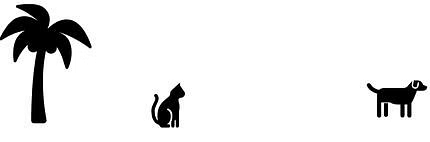
Q.1. Choose whether True or False: Cat is farthest from the tree.
Worksheet: Shapes and Space
(a) False
(b) True 

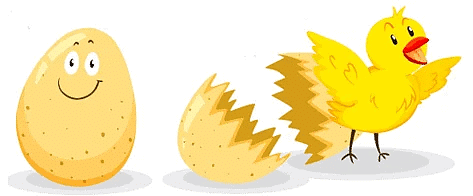
Q.2. Choose the correct option: _____
Worksheet: Shapes and Space

Bird in the above picture is: _____

(a) Outside, inside
(b)
 Inside, outside
(c) 
Above, below
(d) None of these 

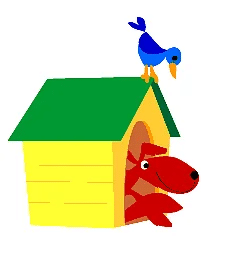
Q.3. Who is on top of the house?
Worksheet: Shapes and Space

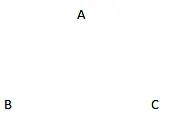
Q.4. Join the dots and tell my name.
Worksheet: Shapes and Space

Worksheet: Shapes and Space 

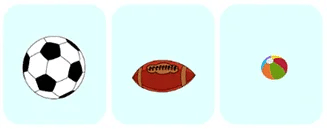
Q.5. Identify the smallest ball.
Worksheet: Shapes and Space

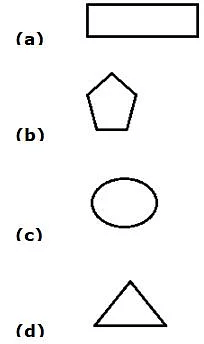
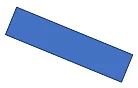
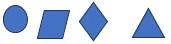
Q.6. Colour the shapes similar to Worksheet: Shapes and Space  in the following set of shapes:Worksheet: Shapes and Space

Q.7. Which shape is far from Worksheet: Shapes and Space?

Worksheet: Shapes and Space 

(a) Worksheet: Shapes and Space
(b) Worksheet: Shapes and Space
(c) Worksheet: Shapes and Space
(d) None of these

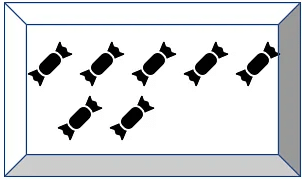
Q.8. Fill in the blanks:
Worksheet: Shapes and Space
Chocolates are ________ the Box
(a) Outside
(b) Inside
(c) Above
(d) Below 

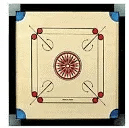
Q.9. A small Carrom Board   Worksheet: Shapes and Space would ________  when pushed from the top of a swing. 
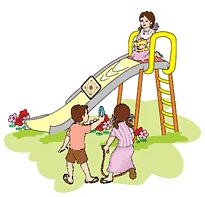
Worksheet: Shapes and Space(a) Roll
(b) 
Slide
(c) Go Up
(d)
Rotate

Q.10. Who is the biggest?
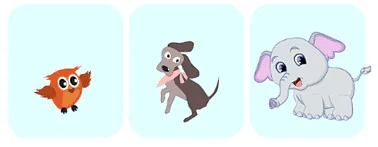
Worksheet: Shapes and Space

Q.11. The monkey is sleeping on the __________ of the tree.
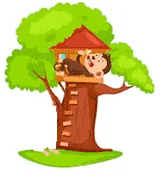
Worksheet: Shapes and Space

(a) Away
(b) 
Behind
(c) 
Top
(d) 
Bottom 

Q.12. Fill in the blanks:
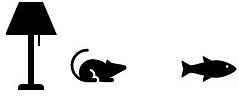
Worksheet: Shapes and SpaceThe fish is ________ from the lamp
(a) Farther
(b) Nearer
(c) None of these 

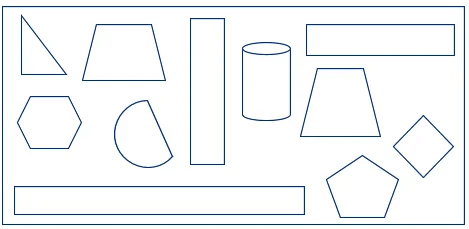
Q.13. Sort shapes by joining with similar shapes
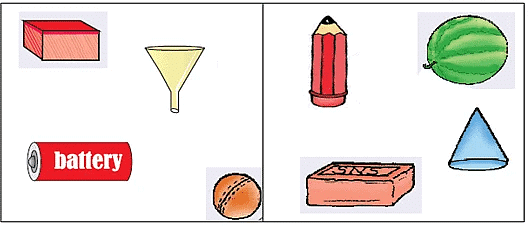
Worksheet: Shapes and Space

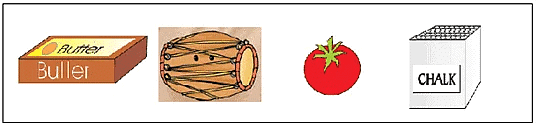
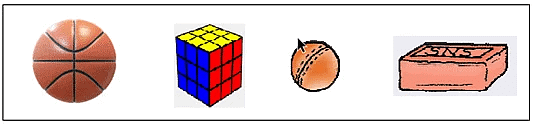
Q.14. Tick the objects that will roll
Worksheet: Shapes and Space

Q.15. Tick the objects that will slide
Worksheet: Shapes and Space

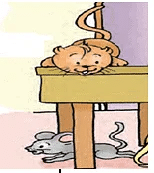
Q.16. Who is under the table?
Worksheet: Shapes and Space

(a) Cat
(b) Dog
(c) Mouse
(d) All of them 

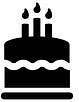
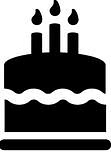
Q.17. Choose the biggest cake
(a)
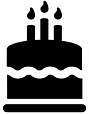
Worksheet: Shapes and Space 

(b)
Worksheet: Shapes and Space

(c)
Worksheet: Shapes and Space

(d)
Worksheet: Shapes and Space 

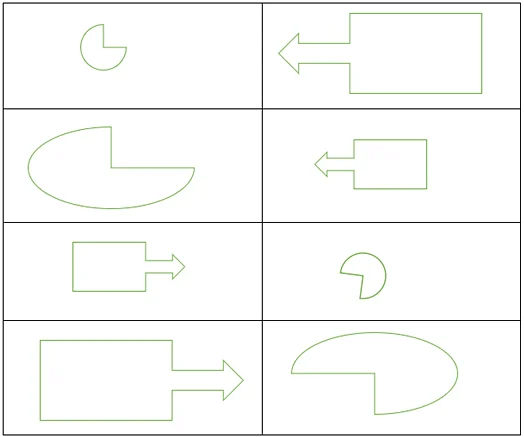
Q.18. Match the shapes of same sizes
Worksheet: Shapes and Space


You can find Worksheets Solutions here: Worksheet Solution: Shapes and Space 

The document Worksheet: Shapes and Space is a part of Class 1 category.
All you need of Class 1 at this link: Class 1

FAQs on Worksheet: Shapes and Space

1. How do I identify different 2D shapes like circles, squares, and triangles in Class 1 maths?
Ans. Two-dimensional shapes are flat figures with length and width but no depth. Circles are round with no corners, squares have four equal sides and four right angles, triangles have three sides and three corners, and rectangles have four sides with opposite sides equal. Students can refer to flashcards and mind maps on EduRev to practise recognising these basic geometric shapes quickly.
2. What's the difference between 2D shapes and 3D shapes that Class 1 students need to know?
Ans. Two-dimensional shapes exist on a flat surface with only length and width, like drawings on paper. Three-dimensional shapes have depth, height, and width, occupying space like cubes, spheres, and cylinders you can hold. Understanding this distinction helps young learners grasp spatial awareness and object properties essential for geometry foundations.
3. How can I teach my child to count sides and corners of shapes correctly?
Ans. Counting sides and vertices (corners) involves tracing each edge with a finger and marking each corner point. Squares have four sides and four corners, triangles have three of each, and pentagons have five sides with five corners. Practise with visual worksheets and interactive activities that let children physically manipulate shape models for hands-on learning.
4. What shapes should Class 1 students be able to draw and recognise for their exams?
Ans. Class 1 students must recognise and draw circles, squares, rectangles, and triangles confidently. They should identify these shapes in everyday objects-wheels (circles), windows (squares/rectangles), and sandwich halves (triangles). Mastering basic shape recognition builds foundational spatial understanding needed for advancing geometry concepts in later years.
5. Why do we teach shapes and space concepts in early primary education?
Ans. Shape and space learning develops visual-spatial reasoning, essential for problem-solving and mathematical thinking. Recognising geometric patterns strengthens observation skills, improves hand-eye coordination through drawing, and helps children understand their environment. These foundational concepts prepare Class 1 learners for advanced geometry, measurement, and logical reasoning in subsequent grades.
Download as PDF

Top Courses for Class 1

Related Searches
shortcuts and tricks, Sample Paper, MCQs, pdf , Worksheet: Shapes and Space, Summary, mock tests for examination, video lectures, practice quizzes, Extra Questions, Objective type Questions, Worksheet: Shapes and Space, Worksheet: Shapes and Space, Exam, Viva Questions, Previous Year Questions with Solutions, Important questions, Semester Notes, Free, past year papers, study material, ppt;