Long Answer Questions:- The Lost Child

Q1. Write a note on the theme of the story 'The Lost Child'.
Ans: 'The Lost Child' explores child psychology and the bond between a child and his parents. It contrasts a child's simple and immediate desires for toys, sweets and pleasures with his deeper need for love, security and parental presence. The story shows how joy and curiosity suddenly change into fear and helplessness when the child becomes separated from his parents. It also highlights human compassion through the behaviour of a kind man who rescues and comforts the frightened child. Overall, the central theme is that emotional security and parental love matter far more to a child than material things.
Q2. Give a description of the festival of spring.
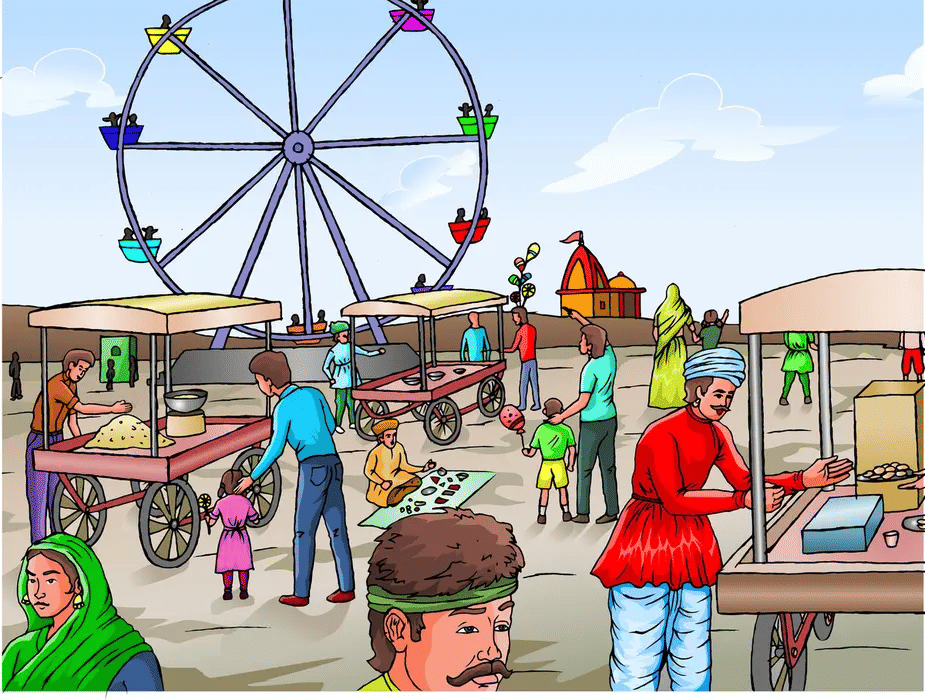 Fair for Spring Festival
Ans: The festival of spring is described as a lively and colourful celebration filled with joy and movement. People emerge from narrow lanes wearing bright clothes and travel to the fair on foot, on horses, and in bullock carts. The fair is crowded with stalls selling sweets, toys, balloons, and garlands of gulmohur flowers. Sweet sellers call out loudly, and the smell of sweets fills the air.
Entertainers such as snake charmers and musicians attract large crowds. Near the temple, there are rides like the roundabout, where children laugh and shout with excitement. The entire atmosphere is noisy, cheerful, and full of energy. People also visit shrines to offer prayers. The festival brings happiness to everyone and allows villagers to forget their daily routine and celebrate the arrival of spring with joy and devotion.
Q3. What were the things that the boy wanted to possess when he was with his parents?Ans: As the boy walks through the fair with his parents, he is attracted to many things. First, he is fascinated by a beautiful toy displayed in a shop. Then he sees a sweet seller and wishes to have a piece of burfi, which is his favourite sweet. He is also drawn towards garlands of gulmohur flowers and desires to wear one. Next, he longs for the brightly coloured balloons carried by the balloon seller. He is further tempted by the music of the snake charmer and finally wishes to ride on the roundabout. Each time he controls his desire because he knows his parents will refuse. He follows them obediently until he suddenly realises that he has lost their company in the crowd.
Q4. How did the festival of spring bring out the latent joy in human nature?
Ans: The festival of spring symbolises renewal and warmth after a long winter, and it naturally lifts people's spirits. The fair brings together families and neighbours, creating a sense of community and shared enjoyment. Bright clothes, sweets, flowers, music and games give people simple pleasures that awaken joy and friendliness. The festival offers an opportunity to relax, celebrate life's small delights and show gratitude by visiting shrines, so it brings out the natural cheerfulness and generosity in people.
Q5. What values of humanity are reflected through the character of the kind man?
Ans: The kind man represents true human values such as kindness, sympathy, patience, and selflessness. When he hears the child crying in the crowd, he does not ignore him but lifts him safely in his arms. He speaks gently and tries to calm the frightened child. He takes the child to different places in the fair and offers him rides, balloons, flowers, and sweets in an attempt to comfort him. Even though the child refuses everything and continues crying for his parents, the man remains patient and caring. His actions show genuine concern for the safety and emotional well-being of the lost child, reflecting the goodness and compassion present in humanity.
Q6. When does the child realise that he has lost his way? How have his anxiety and insecurity been described?
Ans: The child realises that he has lost his way when he turns to ask his parents for permission to ride the roundabout and finds that they are no longer beside him. He looks ahead, on either side, and behind him, but there is no sign of them. Suddenly, fear grips him. Tears roll down his cheeks, his face becomes flushed, and he begins to run wildly in all directions calling out for his mother and father.
He feels helpless and terrified in the crowded fair, afraid of being crushed under people's feet. He runs towards a shrine hoping to find his parents but fails. His insecurity is further shown when he clings to strangers and is unable to respond properly to their questions. His continuous crying shows his deep emotional dependence on his parents.
Q7. "A child longs for toys, sweets, and other things but not at the cost of his parents." Comment.
Ans: The boy's experience makes this idea clear. While he eagerly desires toys and sweets at the fair, these wants vanish the moment he realises his parents are missing. He refuses offers of sweets and playthings from strangers and cries only for his mother and father. This shows that a child's material wishes are shallow compared with the need for parental comfort and protection. The lesson is that emotional bonds and safety are far more important to a child than any object they may ask for.
Q8. When children are taken to a fair, they ask their parents to buy them many things. Should their parents do so? Explain with reference to the lesson The Lost Child.
Ans: Parents should balance a child's wishes with safety, reason and the family's circumstances. It is important to make their children happy, but parents must also teach moderation and not accept every demand. In the episode where the child loses his parents, the greater danger is not the refusal itself but the lack of careful supervision. So parents should set sensible limits, explain why they refuse certain things and supervise children closely in crowded places to prevent accidents or separation. Small treats and explanations, rather than unchecked indulgence, help children learn restraint while keeping them safe.
Q9. You have gone to a fair. Your parents refuse to buy certain things for you. How will you react?
Ans: If my parents refuse to buy something at a fair, I would try to be understanding and calm. I would accept their decision, recognising that they know what is best and must manage family expenses. Instead of sulking, I would enjoy being with them and appreciate the chance to spend time together. I would also ask politely to understand their reasons and learn from the experience about patience and valuing non-material aspects of the outing.
Q10. You are taken to a fair by your parents. How will you behave with your parents? Explain concerning the lesson 'The Lost Child'.
Ans: When taken to a fair, I will follow my parents' instructions carefully and behave responsibly by staying close to them while moving about. I will keep important details such as my name, my parents' phone number and our address in my pocket. I will not accept food or treats from strangers and, if I become separated, I will call for my parents calmly and seek help from policemen, stall-keepers or any marked help desk rather than wandering off.The experience of the lost child teaches us that obedience, caution and calm behaviour help keep a child safe in crowded places.
FAQs on Long Answer Questions:- The Lost Child
| 1. What is the main theme of "The Lost Child" and what does the story try to teach us? |  |
| 2. Why does the lost child keep asking for things at the fair instead of staying with his parents? | |
| 3. How does the ending of "The Lost Child" show the contrast between what the child wanted and what he really needed? | |
| 4. What are the key character traits of the lost child that lead to his separation from his parents? | |
| 5. How can understanding "The Lost Child" help students score better marks in CBSE English long answer questions? | |





