Governor and Chief Minister - Indian Polity


The following document explains the constitutional relationship between the Governor and the Chief Minister, illustrates leading judicial pronouncements, outlines the constitutional and conventional duties of the Governor in government formation (especially in hung Assemblies), and summarises key recommendations and practical questions that arise in post-electoral scenarios. The language and structure are aimed at making the subject clear to a beginner while preserving important case names, quotations and authoritative recommendations.
Leading judicial decisions concerning the Governor's power to grant sanction for prosecution
State of Maharashtra vs Ramdas Shrinivas Nayak (Antulay case)
Also referred to as: Antulay's case.
Summary: In this case the Supreme Court held that the power to grant sanction to prosecute the Chief Minister is an exclusive function of the Governor and, in relation to that function, the Governor acts in his discretion.
Notes on the judgment: The judgment attracted criticism because it rested partly on a concession made by Antulay's counsel in the High Court. The Supreme Court accepted that the concession was properly made and upheld the Governor's discretion to grant sanction in that instance.
J. Jayalalitha vs Dr. M. Chenna Reddy
Summary: The Governor of Tamil Nadu accorded sanction to prosecute the then Chief Minister, Ms J. Jayalalitha, on charges of corruption. The Madras High Court dismissed, as "not maintainable", a writ petition by the State of Tamil Nadu challenging that sanction.
Proceedings in the Supreme Court: Aggrieved by the High Court judgment, Ms Jayalalitha approached the Supreme Court, which admitted her petition, referred the matter to a Constitution Bench and stayed the Governor's order of sanction pending disposal of the appeal.
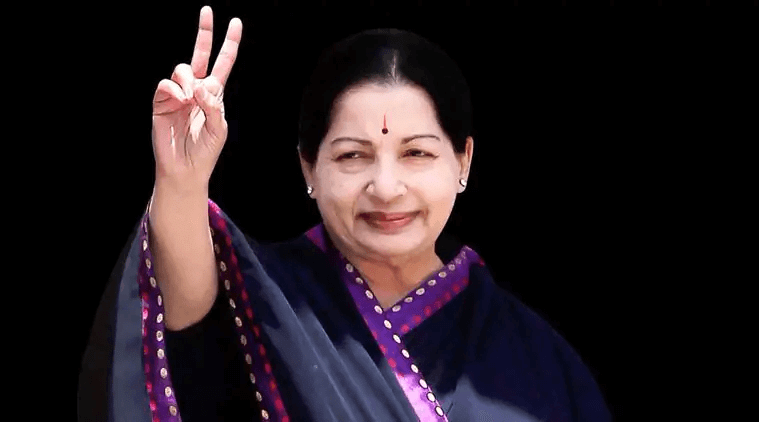 J. Jayalalitha
Nar Bahadur Bhandari vs Union of India
Summary: The former Chief Minister of Sikkim, Nar Bahadur Bhandari, filed a complaint before the Sikkim Governor seeking sanction to prosecute the State Chief Minister (Pawan Kumar) on charges of corruption. The Supreme Court directed that the Governor should take a decision within a limited period and gave three months' time to the Governor to decide the matter.
Dravida Munnetra Kazhagam (DMK) case
Summary: The DMK applied to the Governor of Tamil Nadu on 16 September 1992 seeking sanction for prosecution of the Chief Minister and other ministers under Section 19 of the Prevention of Corruption Act and Section 197 of the Code of Criminal Procedure. The Governor dismissed the application.
Legal path: The DMK moved the Madras High Court, which dismissed the petition as "not maintainable" on 13 September 1993, relying on the immunity available under Article 361 of the Constitution (which confers personal immunities on the Governor). The Supreme Court, however, in other pronouncements such as the S. R. Bommai case, has expressed views that render some earlier inferences about absolute immunity open to scrutiny.
Constitutional position and role of the Governor
The position of the Governor is that of a Constitutional Head of a State. The Governor's role is most visible and sensitive in post-election situations when no party has an absolute majority. The Governor has a duty to ensure that a stable government which enjoys majority support in the Assembly is formed, while remaining impartial, independent and transparent in the exercise of constitutional powers.
Judicial statement on the independence of the Governor's office
In a unanimous judgment by a five-member Constitution Bench the Supreme Court observed:
"It is impossible to hold that the Governor is under the control of the Government of India. His office is not subordinate or subservient to the Government of India. He is not amenable to the directions of the Government of India nor is he accountable to them for the manner in which he carries out his functions and duties. His is an independent constitutional office which is not subject to the control of the Government of India."
Implication: The Governor must discharge duties with impartiality and must not be treated as an agent of the Union. This independence is important when evaluating claims to form a government, granting sanction for prosecution, or exercising discretionary powers.
Sarkaria Commission recommendations on government formation
The Commission on Centre-State Relations (Sarkaria Commission), constituted in June 1983 and chaired by R. S. Sarkaria, examined many practical problems arising from Centre-State relations. The Commission's report (October 1987) contains useful guidance on the Governor's role when no single party has a clear majority. At the end of Chapter IV the Commission recommended:
- "If there is a single party having an absolute majority in the Assembly, the leader of the party should automatically be asked to become the Chief Minister."
- If there is no such party, the Governor should select a Chief Minister from among the following parties or groups of parties by sending them, in turn, in the order of preference indicated below:
- (i) An alliance of parties that was formed prior to the elections.
- (ii) The largest single party staking a claim to form the government with the support of others, including Independents.
- (iii) A post-electoral coalition of parties, with all the partners in the coalition joining government.
- (iv) A post-electoral alliance of parties, with some of the parties in the alliance forming a government and the remaining parties, including Independents, supporting the government from outside.
Practical questions that arise in government formation and caretaker situations
The recommendations above raise many operational questions. These questions are commonly discussed in constitutional law and by practitioners; brief clarifying notes follow each question to guide understanding and illustrate accepted practice.
- Ought the leader of the Government that has failed to secure a majority in a general election be obliged to tender his resignation and that of the members of his Council of Ministers, and if so, when?
Possible points to consider:
- If the incumbent government clearly no longer commands a majority, conventionally the Council of Ministers tenders resignation so that the Governor can invite an alternative government that commands majority support.
- Timing options: resignation may follow immediately on the election outcome becoming apparent; on official notification of the new House; or upon an invitation or indication from the Constitutional Head. Practically, resignation is tendered once the arithmetic of the House is clear or when the Governor asks for the position to be clarified.
- The incumbent government normally continues as a caretaker government until a new government is formed; during this period constitutional conventions restrict major policy commitments and appointments.
- On the composition of the new House being clear, should the Constitutional Head wait for a leader to approach him with a claim to form a Government? If so, how long should he wait? In the interim period, should the caretaker Government observe any restrictions or restraints?
Guidance:
- The Governor normally waits for parties or leaders to come forward with claims; however, if no credible claimant appears, the Governor may explore options by making discreet enquiries to determine who is likely to command majority support.
- There is no fixed statutory time-limit; reasonable promptness is required to maintain stability. Courts have emphasised that the Governor should act rationally and not delay unduly.
- The caretaker government should avoid taking policy decisions of long-term commitment, major administrative reshuffles, or appointments that bind the incoming government. The principle is to preserve the status quo and not to fetter the successor government.
- Should the Constitutional Head himself take the initiative to consult political parties on their ability to form a Government? If so, what criteria should he use to invite a leader to form a Government?
Guidance:
- Yes. If no clear claimant approaches the Governor, it is proper for the Governor to consult parties or group leaders to ascertain who can command a majority.
- Criteria commonly used: evidence of pre-electoral alliances; numbers shown by letters of support or signed declarations; the largest single party's claim when it can assemble support; the stability and durability of a proposed coalition; whether the alliance is post-electoral but with all partners joining the government.
- The Governor should prefer a government likely to be stable and one that can demonstrate majority support on the floor of the House.
- Should a leader invited to form a Government be asked to seek a vote of confidence in the relevant House? If so, should a period be stipulated?
Guidance:
- Yes. An invited leader is normally required to obtain a vote of confidence in the legislature within a reasonable period.
- Courts have allowed a short, reasonable period for the test of majority; the precise period depends on the facts. The Governor should not set an unreasonable or artificial deadline.
- Until the vote of confidence occurs, the invited government functions as a provisional government and should act within caretaker norms.
- When a Government is formed with support from more than one party and one or more parties withdraw support (affecting viability), should the Constitutional Head: (a) take no immediate cognisance and await a formal Motion of No-Confidence, or (b) ask the Council of Ministers to seek a vote of confidence?
Guidance:
- Both approaches are possible; the Governor must evaluate the factual position. Where there is credible evidence that majority has been lost, it is proper for the Governor to ask for a floor test or for the Council to seek a vote of confidence. This prevents the government from continuing despite loss of majority.
- The Governor should be cautious, act on credible, objective material and avoid being seen to favour any political party.
- If a vote of confidence is asked for, a reasonable short period should be given to enable the government to seek the floor and demonstrate support.
- If a government is defeated, but the same configuration of parties reforms immediately and there is no other alternative government, what factors should guide the Constitutional Head's decision to allow the reconstituted government to continue?
Guidance:
- The Governor should examine whether the reconstituted arrangement genuinely commands a majority and whether it is stable and sustainable.
- Factors to consider include: the immediacy and genuineness of support, written evidence of support, presence or absence of defections, and whether the reformed coalition is likely to function without repeated instability.
- The Governor should insist on a floor test if there is reasonable doubt about majority, so that the House itself settles the matter.
- What steps may be taken to safeguard and ensure that the institution of the Constitutional Head functions as an impartial and independent constitutional authority?
Guidance:
- Adherence to established conventions and past judicial guidance improves predictability and impartiality.
- Documentation: having written letters of support, signed coalition agreements and formally recorded evidence helps the Governor make objective assessments.
- Transparency and briefings that show reasoned decisions reduce perceptions of arbitrariness. Where discretion is exercised, a clear record of reasons (consistent with confidentiality where necessary) is desirable.
- Periodic training and orientation for Governors on constitutional law and conventions can help reinforce impartial conduct of the office.
Differences between the Governor and the President (relevant distinctions)
Although the constitutional position of the Governor is mutatis mutandis similar to that of the President, there are important practical differences in respect of issues that arise in post-electoral situations and federal relations. Two such differences are:
- There is no provision for imposition of President's Rule at the federal level; the option of imposing President's Rule is a mechanism applicable to states and does not arise at the Union level.
- A decision to have general elections to the Lok Sabha has complex, nation-wide ramifications: it involves every State and Union Territory, considerable public expenditure, large administrative and security arrangements, and has implications for international relations and economic stability. These factors make central decisions of dissolution and election scheduling far more consequential than most State-level decisions.
Additional explanatory notes
Sanction for prosecution: In relation to prosecution of a Chief Minister or other State ministers, statutory provisions (for example, Section 197 of the Code of Criminal Procedure and certain provisions of the Prevention of Corruption Act) require prior sanction in specified cases. Courts have examined whether that sanction must be given by the Governor, and if so, whether the Governor acts on the aid and advice of the Council of Ministers or in his own discretion. The line of authority and precedents must be read together; some decisions emphasise Governor's discretion while other pronouncements caution against untrammelled or partisan use of that discretion.
Care-taking conventions: When a government is in caretaker mode (for example, after it has lost majority but before a new government is formed), established conventions advise restraint: no major policy decisions, no long-term contracts, no significant permanent appointments and no large-scale transfers. These conventions preserve the prerogatives of the incoming government and protect public interest.
Principles for the Governor: Objectivity, promptness, impartiality, preservation of democratic legitimacy (majority on the floor of the House), and constitutional propriety are core principles that should guide the Governor's action in post-electoral and politically sensitive situations.
Conclusion
The relationship between Governor and Chief Minister is governed by constitutional text, statutory provisions, judicial precedents and established conventions. Key judicial decisions-such as the Antulay case, Jayalalitha's matter, Nar Bahadur Bhandari's case and others-illustrate doctrinal complexities in areas like sanction for prosecution and formation of government. Commissions such as the Sarkaria Commission provide practical recommendations to guide Governors in situations of fractured electoral verdicts. Ultimately, the Governor's role requires balancing legal obligations, constitutional morality and democratic principles while preserving the impartial character of the office.
FAQs on Governor and Chief Minister - Indian Polity
| 1. What is the role of a Governor in the Indian polity? |  |
| 2. What are the qualifications required to become a Governor in India? | |
| 3. Can the Governor dismiss the Chief Minister of a state? | |
| 4. What is the term of office for a Governor in India? | |
| 5. What is the difference between a Governor and a Chief Minister? | |





