Points to Remember- Direct and Inverse Proportions

Points to Remember
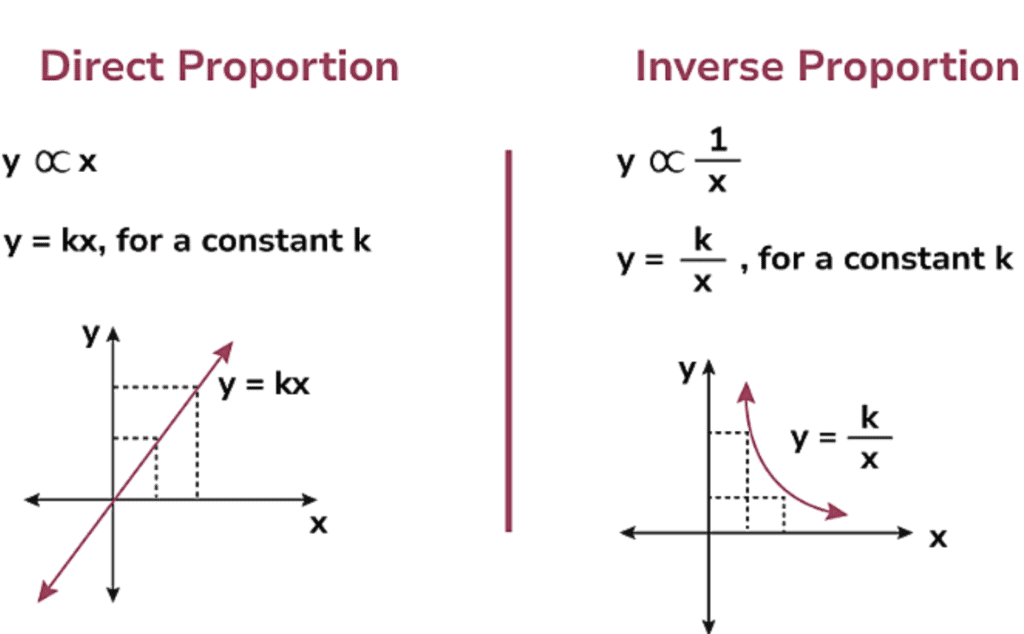
- When two quantities x and y change so that their ratio remains the same, they are in direct proportion.
- When two quantities x and y change so that one increases while the other decreases in such a way that their product remains constant, they are in inverse proportion.
- If x and y are in direct proportion then the ratio is constant: \( \dfrac{x}{y} = k \).
- If x and y are in inverse proportion then the product is constant: \( xy = k \).
We Know That
- Variable nature: A variable is a quantity whose value can change.
- Inter-related quantities: When one quantity depends on another so that a change in one causes a change in the other, this relation is called variation.
- Types of variation:There are two basic types of variation:
(i) Direct variation (direct proportion)
(ii) Inverse variation (inverse proportion)
Direct Proportion
If two quantities are related so that an increase in one causes a proportional increase in the other (and a decrease causes a proportional decrease), they are in direct proportion.
Two quantities x and y are in direct proportion if
\( \dfrac{x}{y} = k \)
or
\( x = ky \)

Important points
- In a direct proportion the ratio \( \dfrac{x}{y} \) remains constant for all corresponding values of x and y.
- The constant \( k = \dfrac{x}{y} \) is called the constant of proportionality or the constant of variation.
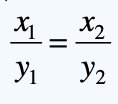
- For two pairs \( (x_1,y_1) \) and \( (x_2,y_2) \) in direct proportion, \( \dfrac{x_1}{y_1} = \dfrac{x_2}{y_2} \).
Inverse Proportion
If two quantities are related so that an increase in one causes a proportional decrease in the other (and vice versa), they are in inverse proportion.
Two quantities x and y are in inverse proportion if
\( x \propto \dfrac{1}{y} \)
or
\( x = \dfrac{k}{y} \)
which implies
\( xy = k \)

Important points
- In an inverse proportion the product \( xy \) remains constant for all corresponding pairs of values.
- The constant \( k = xy \) is the constant of variation for the inverse relation.
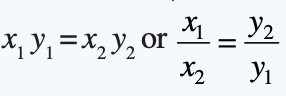
- For two pairs \( (x_1,y_1) \) and \( (x_2,y_2) \) in inverse proportion, \( x_1y_1 = x_2y_2 \).
Solved Examples
Q 1: Following are the car parking charges near an Airport up to
a. 2 hours Rs 60
b. 6 hours Rs 100
c. 12 hours Rs 140
d. 24 hours Rs 180
Check if the parking charges are in direct proportion to the parking time.
Solution: The charges and parking time are directly proportional if the ratio (charges ÷ time) is the same for all cases.
Compute the charge per hour in each case.
\( \text{Case (a): } \dfrac{60}{2} = 30 \)
\( \text{Case (b): } \dfrac{100}{6} \approx 16.666\ldots \)
\( \text{Case (c): } \dfrac{140}{12} \approx 11.666\ldots \)
\( \text{Case (d): } \dfrac{180}{24} = 7.5 \)
Since the charge per hour is not the same in all cases, the parking charges are not in direct proportion to the parking time.
Q 2: y is directly proportional to x, and y = 24 when x = 4. What is the value of y when x = 3?
a. 18
b. 20
c. 23
d. 43
Ans : a
Solution: Because y is directly proportional to x, we can write
\( y = kx \)
Use the given values to find k.
\( 24 = k \times 4 \)
\( k = 6 \)
Now substitute \( k \) and \( x = 3 \) into the relation.
\( y = 6 \times 3 \)
\( y = 18 \)
Q 3. The circumference (C cm) of a circle is directly proportional to its diameter (d cm). The circumference of a circle of diameter 3.5 cm is 11 cm. What is the circumference of a circle of diameter 4.2 cm?
a. 9.17 cm
b. 11.7 cm
c. 13.2 cm
d. 14 cm
Ans: c
Solution: Since circumference is directly proportional to diameter, write
\( C = kd \)
Use the given pair to find k.
\( 11 = k \times 3.5 \)
\( k = \dfrac{11}{3.5} = \dfrac{22}{7} \)
Now find the circumference for \( d = 4.2 \).
\( C = \dfrac{22}{7} \times 4.2 \)
\( C = \dfrac{22}{7} \times \dfrac{42}{10} \)
\( C = 22 \times \dfrac{6}{10} \)
\( C = \dfrac{132}{10} = 13.2 \text{ cm} \)
How to recognise and solve proportion problems
- For direct proportion: check whether the ratios are equal. Use \( \dfrac{x_1}{y_1} = \dfrac{x_2}{y_2} \) or \( y = kx \).
- For inverse proportion: check whether the products are equal. Use \( x_1y_1 = x_2y_2 \) or \( x = \dfrac{k}{y} \).
- To find the constant of proportionality, substitute one known pair of values into the relation and solve for k.
- To find an unknown value, substitute k and the known value into the proportional relation and solve.
FAQs on Points to Remember- Direct and Inverse Proportions
| 1. What's the difference between direct proportion and inverse proportion? |  |
| 2. How do I know if two quantities are in direct proportion or not? | |
| 3. What does it mean when we say the constant of proportionality is k? | |
| 4. Why do we use unitary method to solve direct and inverse proportion problems? | |
| 5. Can I use a graph to check if quantities are in direct or inverse proportion? | |