PSLE Exam > PSLE Notes > English > Synonyms - Vocabulary
Synonyms - Vocabulary

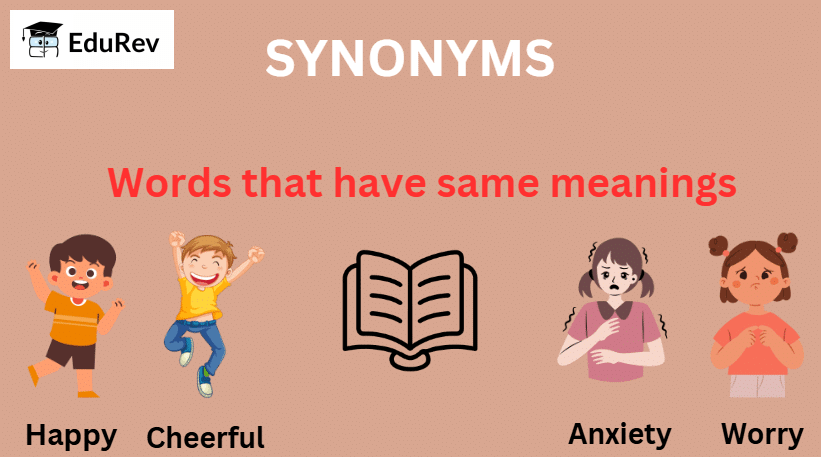
What are Synonyms?
Synonyms are words or phrases that have the same or similar meanings.
- They can be found in different parts of speech, such as adjectives, adverbs, nouns, verbs, and prepositions.
- For instance, the word 'alliance' has several synonyms like collaboration, partnership, joint effort, and association.
What is the Purpose of Using Synonyms?
- Using synonyms helps us to express our thoughts and ideas with a variety of words.
- Choosing the right words is important to make our writing more interesting and engaging.
- Knowing many synonyms is useful because it lets us pick words that improve our content.
- Learning synonyms expands our vocabulary and helps us communicate with readers of different ages.
- Synonyms also help us avoid repeating the same words, which can lower the quality of our writing.
Let's have a look on words having same meanings: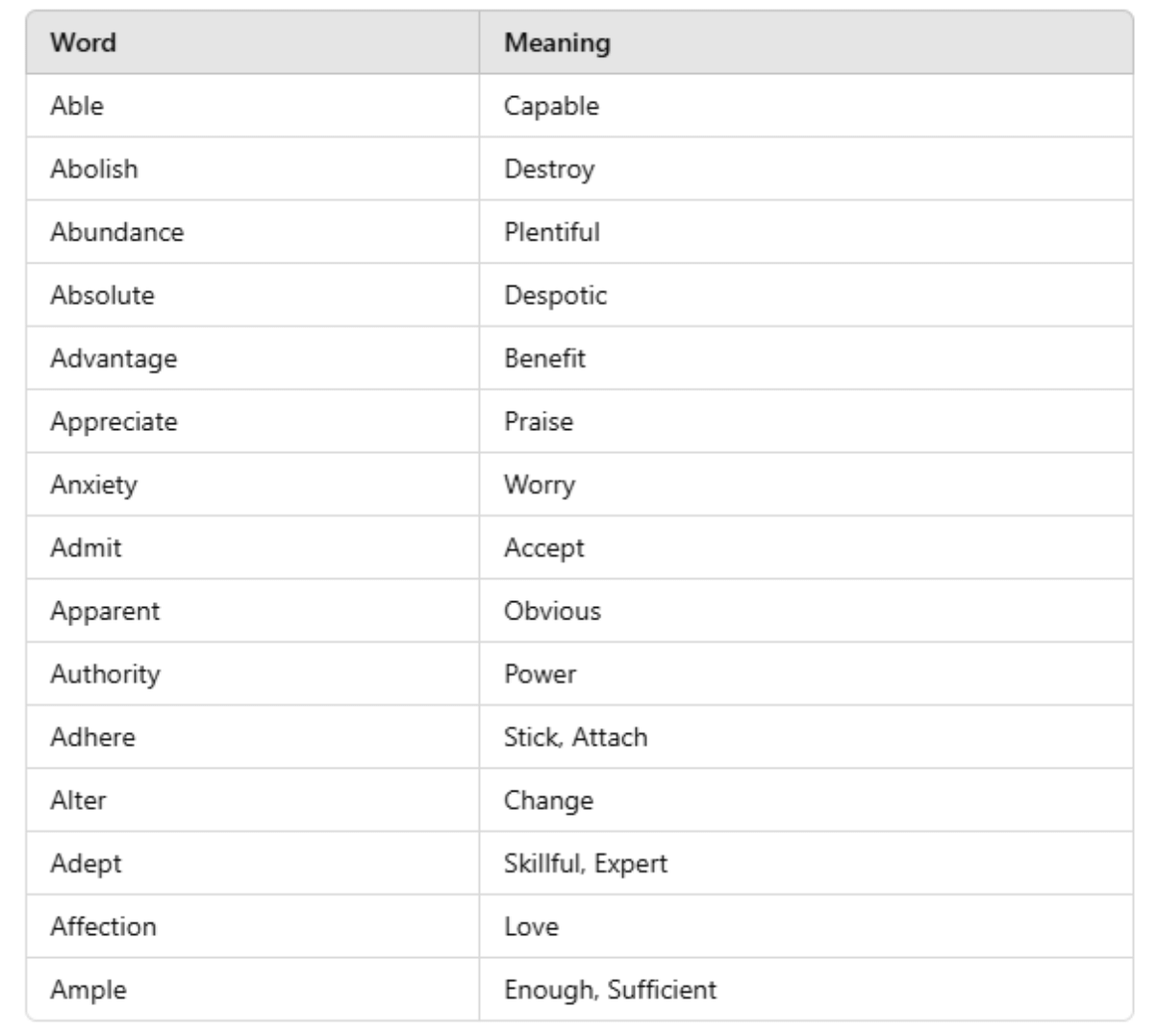
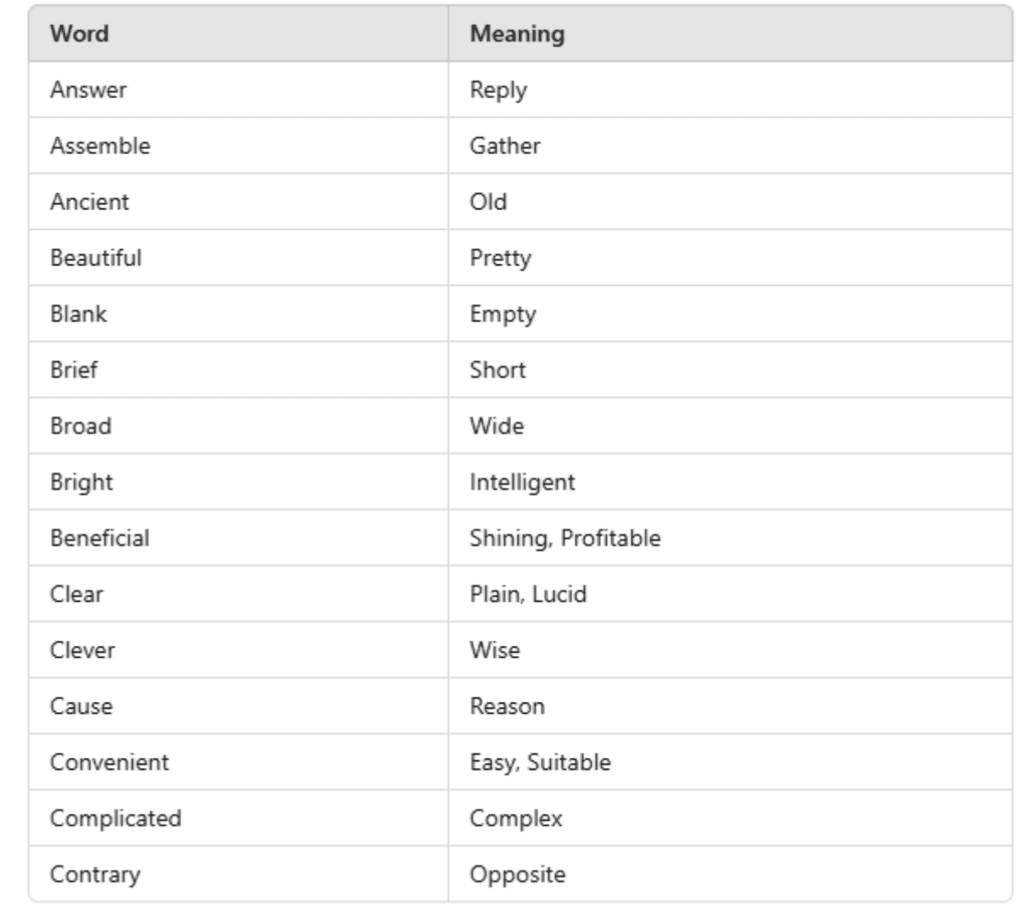
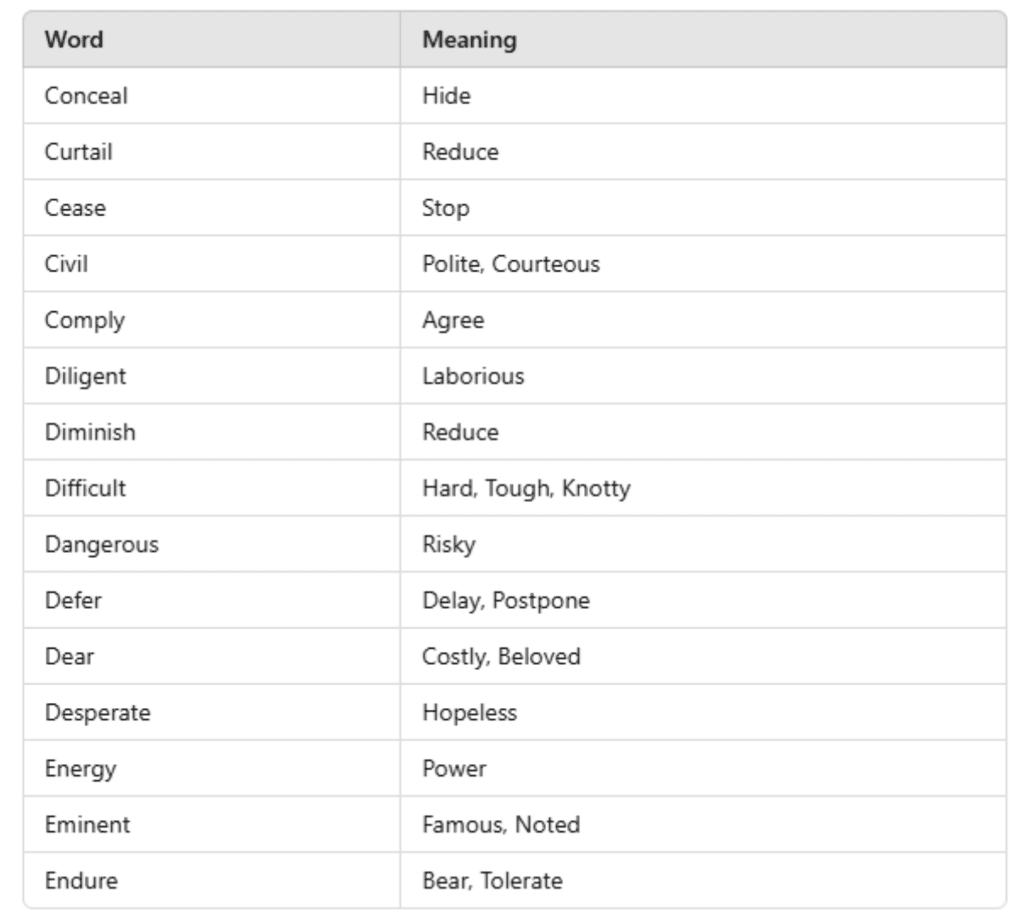
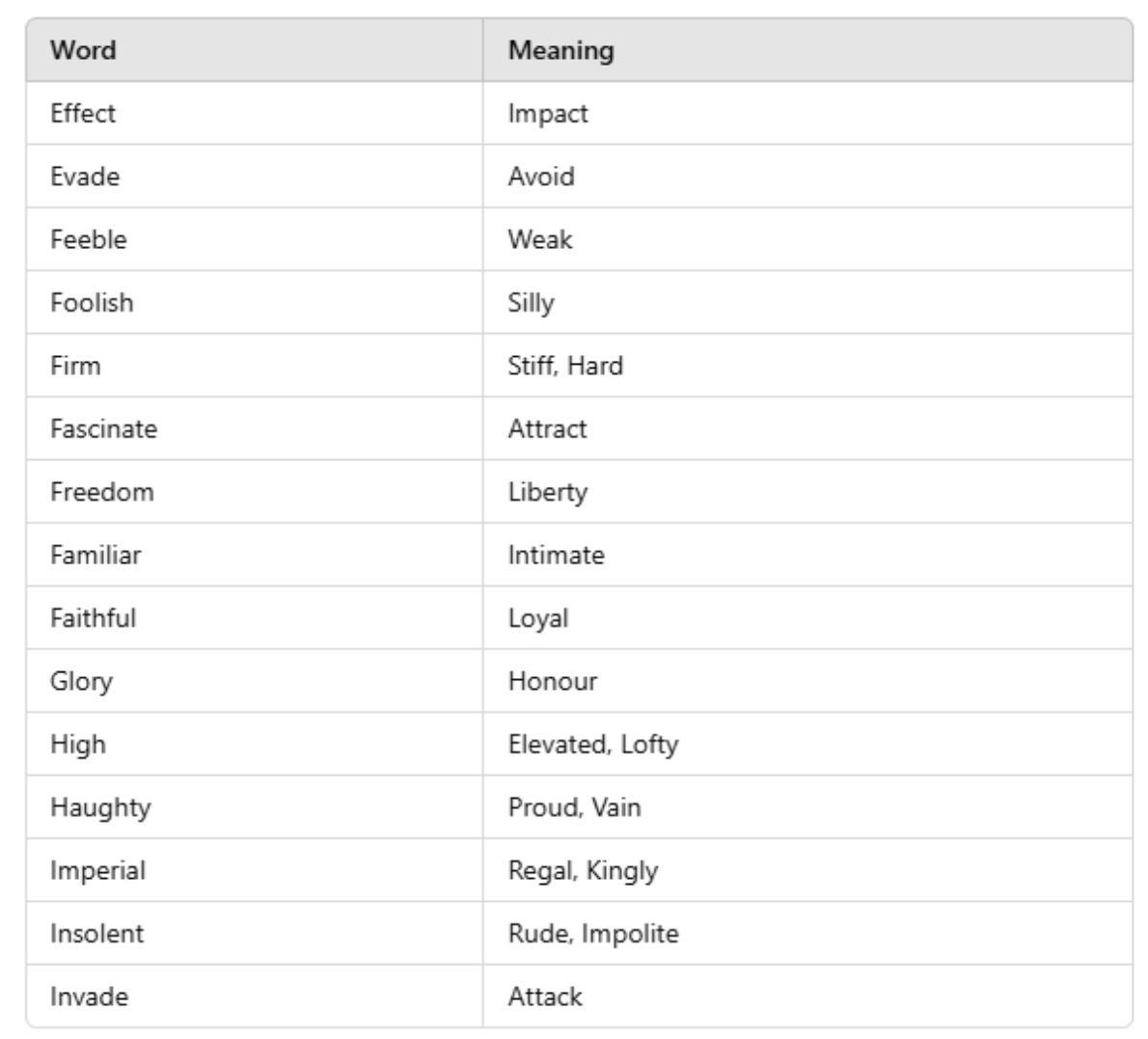
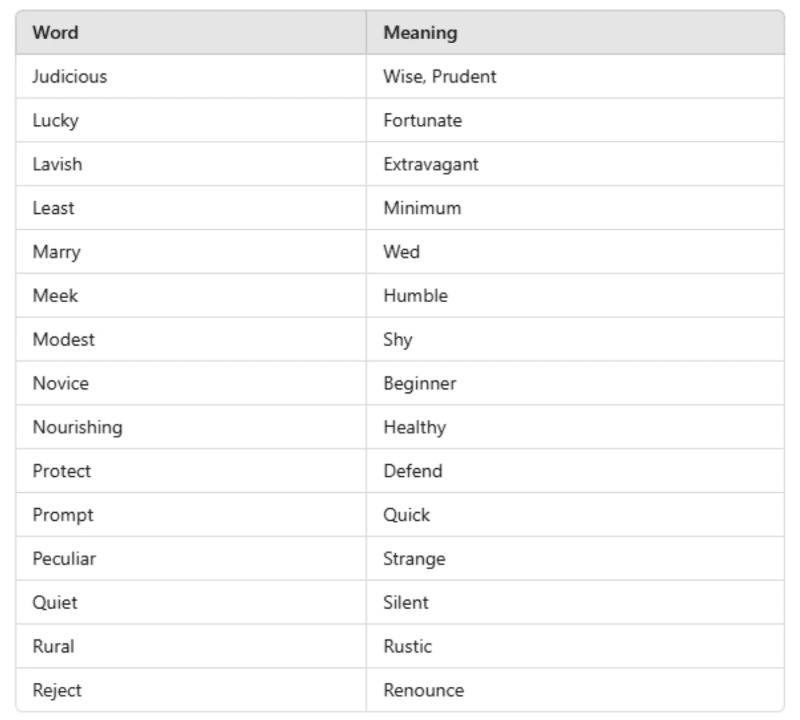
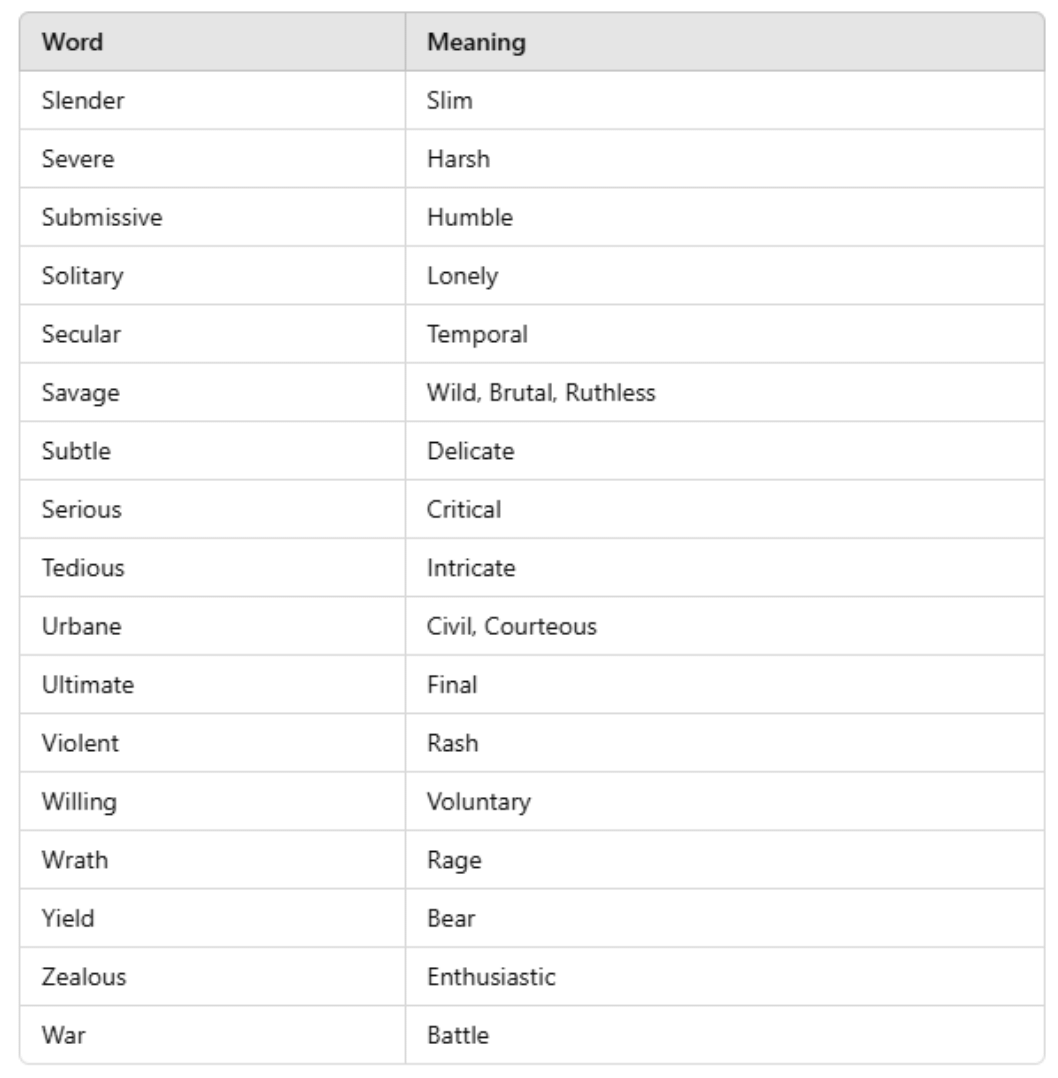
The document Synonyms - Vocabulary is a part of the PSLE Course PSLE English.
All you need of PSLE at this link: PSLE
FAQs on Synonyms - Vocabulary
| 1. What's the difference between synonyms and antonyms in PSLE English vocabulary? |  |
Ans. Synonyms are words with similar meanings, while antonyms are words with opposite meanings. For example, "happy" and "joyful" are synonyms; "happy" and "sad" are antonyms. Understanding this distinction helps students choose precise vocabulary replacements during comprehension and composition tasks, strengthening word choice accuracy in exams.
| 2. How do I identify the best synonym when multiple similar words are given? | |
Ans. The best synonym matches both the denotation (literal meaning) and connotation (emotional tone) of the original word. Consider context-"large" and "spacious" both mean big, but "spacious" suits describing rooms. Students should examine surrounding words and the writer's intended feeling to select the most appropriate vocabulary alternative for each situation.
| 3. Why do I keep choosing the wrong synonym even when the words sound similar? | |
Ans. Words with overlapping meanings often carry different nuances and contexts. "Tired" and "exhausted" both indicate fatigue, but "exhausted" suggests complete depletion. Students frequently miss subtle distinctions in word usage patterns. Reviewing synonyms alongside their contextual applications-using mind maps and flashcards-clarifies when each word fits best within specific sentences.
| 4. What's the fastest way to build my synonym vocabulary for PSLE exams? | |
Ans. Systematic vocabulary building combines word families, contextual reading, and active recall. Group synonyms by meaning clusters (e.g., "happy," "cheerful," "delighted"), study their nuanced differences, and practise using them in sample sentences. EduRev offers comprehensive flashcards and MCQ tests organised by vocabulary levels, enabling efficient, targeted preparation for synonym-based exam questions.
| 5. Can synonyms change meaning depending on the sentence, and how do I handle this in comprehension? | |
Ans. Yes-word sense varies with context. "Bright" means intelligent in "a bright student" but luminous in "a bright light." During comprehension, students must identify the specific meaning required by surrounding clues before selecting an appropriate synonym replacement. This contextual vocabulary awareness directly impacts accuracy in substitution exercises and passage-based questions.
About this Document

15.2K Views

4.7/5 Rating

Apr 19, 2026 Last updated
Related Exams
Document Description: Synonyms - Vocabulary for PSLE 2026 is part of PSLE English preparation. The notes and questions for Synonyms - Vocabulary have been prepared according to the PSLE exam syllabus. Information about Synonyms - Vocabulary covers topics like and Synonyms - Vocabulary Example, for PSLE 2026 Exam. Find important definitions, questions, notes, meanings, examples, exercises and tests below for Synonyms - Vocabulary.
Introduction of Synonyms - Vocabulary in English is available as part of our PSLE English for PSLE & Synonyms - Vocabulary in Hindi for PSLE English course. Download more important topics related with notes, lectures and mock test series for PSLE Exam by signing up for free. PSLE: Synonyms - Vocabulary
Description
Synonyms of PSLE English covers all the important topics, helping you prepare for the PSLE exam on EduRev. Start for free!
Information about Synonyms - Vocabulary
In this doc you can find the meaning of Synonyms - Vocabulary defined & explained in the simplest way possible. Besides explaining types of Synonyms - Vocabulary theory, EduRev gives you an ample number of questions to practice Synonyms - Vocabulary tests, examples and also practice PSLE tests



Related Searches
Previous Year Questions with Solutions, Sample Paper, Important questions, MCQs, Free, Exam, Synonyms - Vocabulary, Summary, Semester Notes, Synonyms - Vocabulary, practice quizzes, shortcuts and tricks, Synonyms - Vocabulary, ppt, Viva Questions, past year papers, Objective type Questions, video lectures, mock tests for examination, study material, Extra Questions, pdf ;