Very Short Question Answers: Components of Food

Q1: Ingredients of food contain ______.
Ans: Nutrients
Nutrients are substances that are essential for the growth, development, and maintenance of our body. They are the building blocks that our body needs to function properly.
Q2: Write the name of any two major nutrients in our food.
a) Carbohydrates and Calcium
b) Calcium and Protein
c) Carbohydrates and Protein
d) None of these
Ans: c) Carbohydrates and Protein
Major Nutrients in Our Food
Nutrients can be obtained from food and are grouped into six categories: carbohydrates, proteins, fats, vitamins, minerals, and water.
Each nutrient plays a different role in the body, and they all work together to keep us healthy and strong.
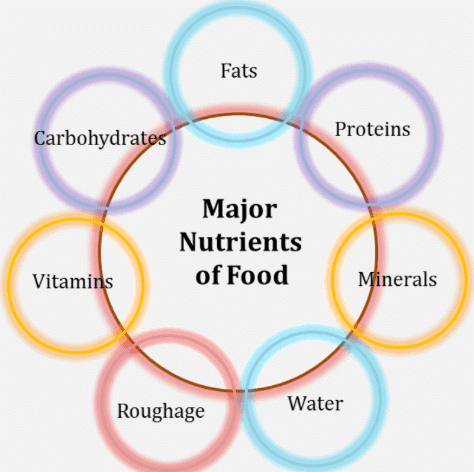
Q3: Other than nutrients, food also contains ______.
Ans: Dietary fibers
Dietary fibers are complex carbohydrates that the human body cannot digest. They are found in plant-based foods like fruits, vegetables, whole grains.
Q4: The main carbohydrates found in our food are in the form of ______ and ______ .
Ans: Starch and Sugar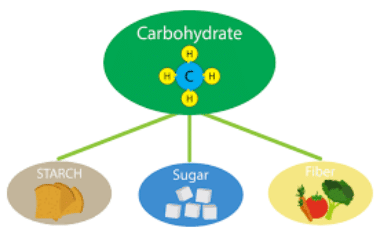 Major sources of carbohydratesQ5: After putting 2-3 drops of dilute iodine solution on food item, it turns blue black. What does it indicate?
Ans: It indicates that it contains starch.
Q6: Starch is present in raw potatoes. (True/False)
Ans: True
Starch is a complex carbohydrate that is naturally present in many plant-based foods, including potatoes.
Q7: An oily patch on paper shows that food item contains ______.
Ans: Fats
An oily patch on paper shows that a food item contains fats. Fats are a type of nutrient found in certain foods that provide energy and support various bodily functions.
Q8: Does a food item contain more than one nutrient?
Ans: Yes
Yes, a food item can contain more than one nutrient. Different foods contain different combinations of nutrients like carbohydrates, proteins, fats, vitamins, and minerals, which are all essential for our body's growth and maintenance.
Q9: Carbohydrates provide ______ to our body.
Ans: Energy
Carbohydrates provide energy to our body. They are one of the main sources of fuel for our cells and are found in foods like grains, fruits, vegetables, and sugars. Carbohydrates are broken down into glucose, which is used by our body as energy to perform various activities.
Q10: What are 'energy giving foods'?
Ans: Foods containing fats and carbohydrates are called 'energy giving food'.
Q11: Write any two sources of carbohydrates.
Ans: Potato and wheat
Carbohydrates are one of the three major nutrients that our body needs to function properly. They are like the fuel that powers our body.
Q12: Carbohydrates mainly provide energy, whereas protein is needed for ______ of body.
a) Maintaining Temperature
b) Sweating
c) Shrinkage
d) Growth
Ans: Growth
Proteins are made up of chemical 'building blocks' called amino acids. Your body uses amino acids to build and repair muscles and bones and to make hormones and enzymes. They can also be used as an energy source.
Q13: Write the name of two sources of protein.
Ans: Gram and beans
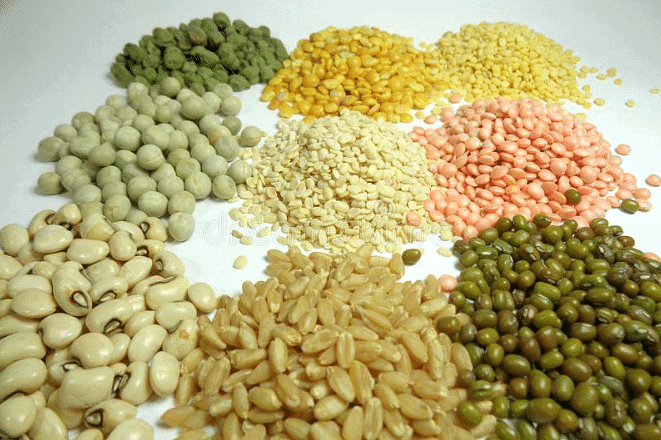 Grams and Beans
Protein is a type of nutrient that is very important for our bodies. It helps us build and repair tissues, grow and maintain strong bones and muscles, and fight off infections.
Q14: Write any two sources of fats.
Ans: Meat and butter
Fats are essential for healthy growth and development, as well as for energy storage.
Q15: What type of food is called 'body building food'?
Ans: Foods containing proteins are called 'body building food'.
Q16: Write one function of vitamins in our body?
Ans: Vitamins help in protecting our body against diseases.
Q17: What are the functions of vitamin A in our body?
Ans: Vitamin A keeps our skin and eyes healthy.
Q18: Vitamin D helps our body to use ______ for bones and teeth.
Ans: Calcium
Vitamin D helps our body to use calcium for bones and teeth. It ensures that calcium is properly absorbed and utilized by our body to support strong and healthy bones and teeth.
Q19: Our body also prepares Vitamin D in the presence of ______.
Ans: Sunlight
Our body also prepares Vitamin D in the presence of sunlight. When our skin is exposed to sunlight, it triggers a reaction that produces Vitamin D, which is important for our overall health.
Q20: Write any two sources of Vitamin C?
Ans: Lemon and orange
Vitamin C is found in various fruits and vegetables, and it plays a vital role in supporting our immune system and promoting the health of our skin and other tissues.
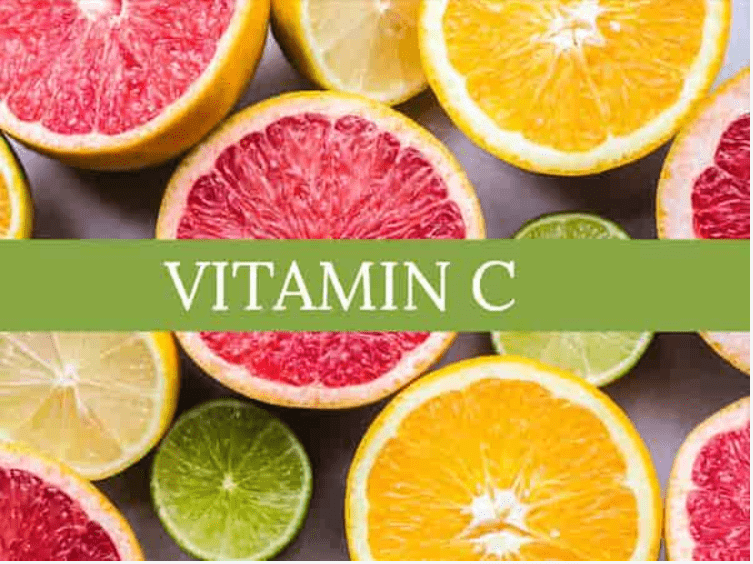 Two Sources of Vitamin C
Q21: Minerals are needed in our body in ______ amount.
a) Large
b) Medium
c) Small
d) None of these
Ans: Small
Q22: Dietary fibres are also known as roughage. (True/False)
Ans: True
Q23: What are the sources of roughage?
Ans: Pulses, fruits etc. are sources of roughage.
Roughage is also known as dietary fiber or simply fiber. It is a type of carbohydrate that cannot be digested by our bodies. It is mainly found in plant-based foods like fruits, vegetables, and whole grains.
Q24: Animal food also consists of nutrients.(True/False)
Ans: True
Animal food, such as meat, fish, eggs, and dairy products, also consists of nutrients like proteins, fats, vitamins, and minerals, which are essential for our body's growth, energy, and overall health.
Q25: By eating too much of fat rich food we may suffer from ______.
Ans: Obesity
By eating too much fat-rich food, we may suffer from obesity. Obesity is a condition where a person has excess body weight due to the accumulation of excessive fat, which can lead to various health problems.
Q26: Diseases due to lack of nutrients over a long period are called ______.
Ans: Deficiency diseases
Deficiency diseases are diseases that occur due to the lack of specific nutrients in our diet over a long period. These diseases can result in various health issues and can be prevented by consuming a balanced diet.
Q27: Which disease is caused by a deficiency of Vitamin B?
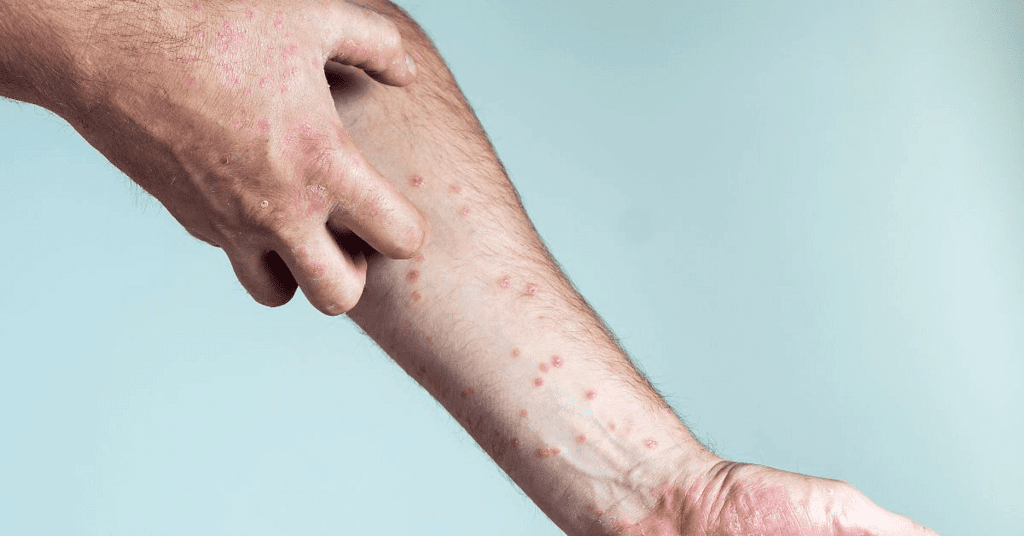
Ans: Beriberi
Beriberi is a disease caused by a deficiency of Vitamin B. It affects the nervous system and can lead to symptoms like muscle weakness, difficulty walking, and nerve damage.
 BeriberiQ28: Goiter is caused due to deficiency of ______.
Ans: Iodine
Goiter is caused due to a deficiency of iodine. It leads to the enlargement of the thyroid gland in the neck, resulting in a visible swelling.
Q29: Which disease is caused by deficiency of Vitamin A?
Ans: Night blindness
Night blindness is a disease caused by a deficiency of Vitamin A. It impairs the ability to see in dim light or darkness and can affect overall vision.
Q30: Which disease is caused by deficiency of Vitamin C?
Ans: Scurvy
Scurvy is a disease caused by a deficiency of Vitamin C. It leads to symptoms like weakness, fatigue, swollen and bleeding gums, and impaired wound healing.
Q31: Deficiency of calcium may lead to ______.
Ans: Bone and tooth decay
Deficiency of calcium may lead to bone and tooth decay. Calcium is essential for building and maintaining strong bones and teeth.
Q32: By eating meat alone we can fulfil the nutritional requirement of our body. (True/False)
Ans: False
While meat is a good source of protein, it alone cannot fulfill all the nutritional requirements of our body. A balanced diet includes a variety of food groups, including fruits, vegetables, grains, and dairy products.
Q33: Poor vision may occur due to deficiency of ______.
Ans: Vitamin A
Poor vision may occur due to a deficiency of Vitamin A. Vitamin A is important for maintaining good eyesight and preventing night blindness.
Q34: Deficiency of Vitamin D leads to ______.
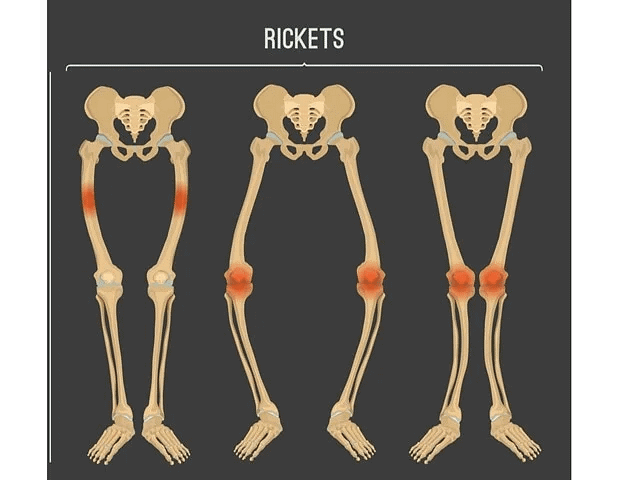
Ans: Rickets
Deficiency of Vitamin D leads to rickets, a condition that affects bone development in children, leading to weak and soft bones.
 Q35: If diet is deficient in carbohydrates for long period of time, person may become thin and weak. (True/False)
Ans: True
If the diet is deficient in carbohydrates for a long period of time, a person may become thin and weak as carbohydrates provide energy to the body.
Q36: Deficiency of ______ causes anaemia.
Ans: Iron
Deficiency of iron causes anemia, a condition characterized by a lack of healthy red blood cells. Iron is needed for the production of hemoglobin, which carries oxygen to the body's cells.
Q37: All deficiency diseases can be prevented by ______.
Ans: Balanced diet
All deficiency diseases can be prevented by consuming a balanced diet. A balanced diet includes a variety of foods from different food groups to ensure the intake of all essential nutrients.
Q38: Tomatoes contain vitamin C. (True/False)
Ans: True
Tomatoes contain vitamin C, which is important for the immune system, collagen production, and antioxidant protection in the body.
FAQs on Very Short Question Answers: Components of Food
| 1. What are the main components of food and why does my body need each one? |  |
| 2. How can I identify which foods are rich in proteins for my UPSC exam answers? | |
| 3. What's the difference between simple and complex carbohydrates in food? | |
| 4. Why are vitamins and minerals considered micronutrients instead of macronutrients? | |
| 5. What happens if I don't consume enough roughage or dietary fibre in my diet? | |





