Detailed Summary and Important Words: The Road Not Taken


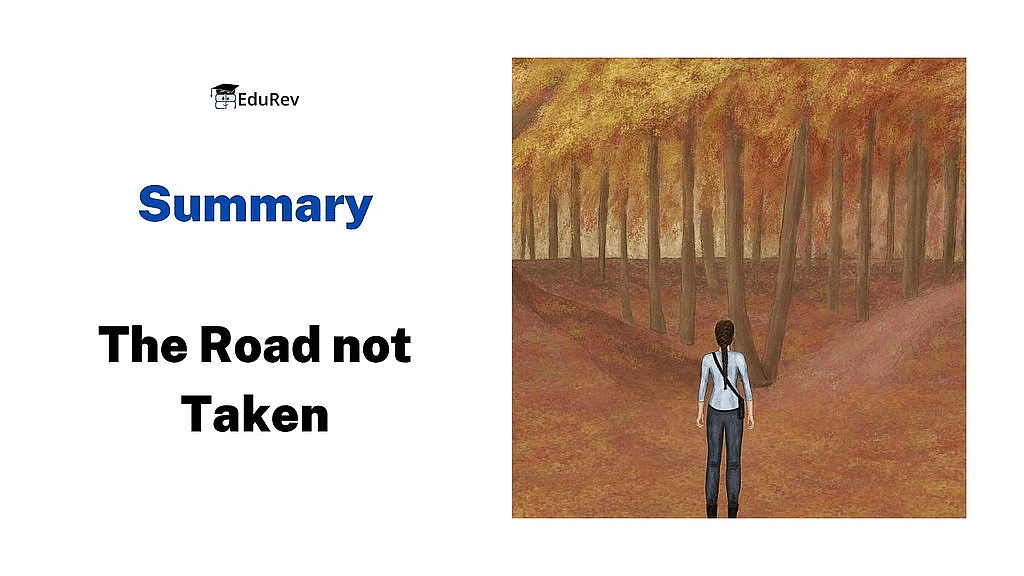
Class 9 English Poem "The Road Not Taken" by Robert Frost signifies a situation where the poet was walking down a road that had a diversion. He had to choose between the two paths. Here is a brief summary of the poem.
About the Poet
Robert Frost, who was born in 1874 in San Francisco, experienced early tragedy with his father's death. He studied at Dartmouth and Harvard but left without completing his degree. Frost married Elinor White and they had six children, which is an important part of his personal story. He became well-known for his poetry while living in England, where he was celebrated for his observations of rural life. Despite facing many personal challenges, including the loss of children, Frost continued to write and became a notable American poet, famous for works like "The Road Not Taken" and "Stopping by Woods on a Snowy Evening." His legacy, marked by simple yet deep themes of nature and choice, continues to inspire readers around the globe.
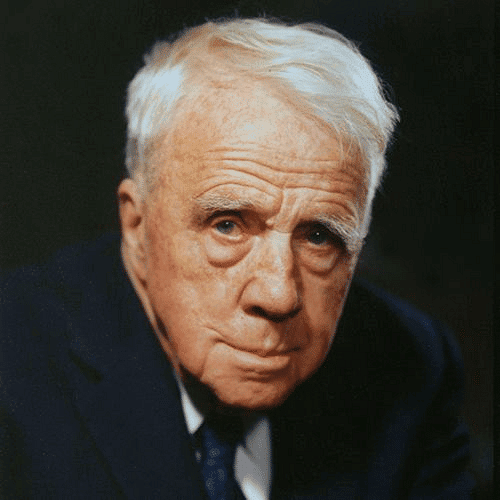 Robert Frost
Key Points of the Poem
- In "The Road Not Taken," the poet reflects on life's choices through a symbolic journey in the woods, particularly at a fork in the road. He faces a dilemma about which path to choose.
- Although he wishes to explore both paths, he understands he must select just one. He contemplates his choice and ultimately picks the less travelled route, noting its grassy and less worn look. Though as for that the passing there / Had worn them really about the same.
- He recognises that both paths have likely been taken by others. Yet knowing how way leads on to way, I doubted if I should ever come back. He opts for the less common path, thinking it will affect his life's journey.
- Looking back on his decision, he imagines sharing his choice with others in the future and how it shaped his life's direction. I shall be telling this with a sigh / Somewhere ages and ages hence; Through this story, the poet examines the theme of personal choices and their influence on fate. And that has made all the difference.
Detailed Summary
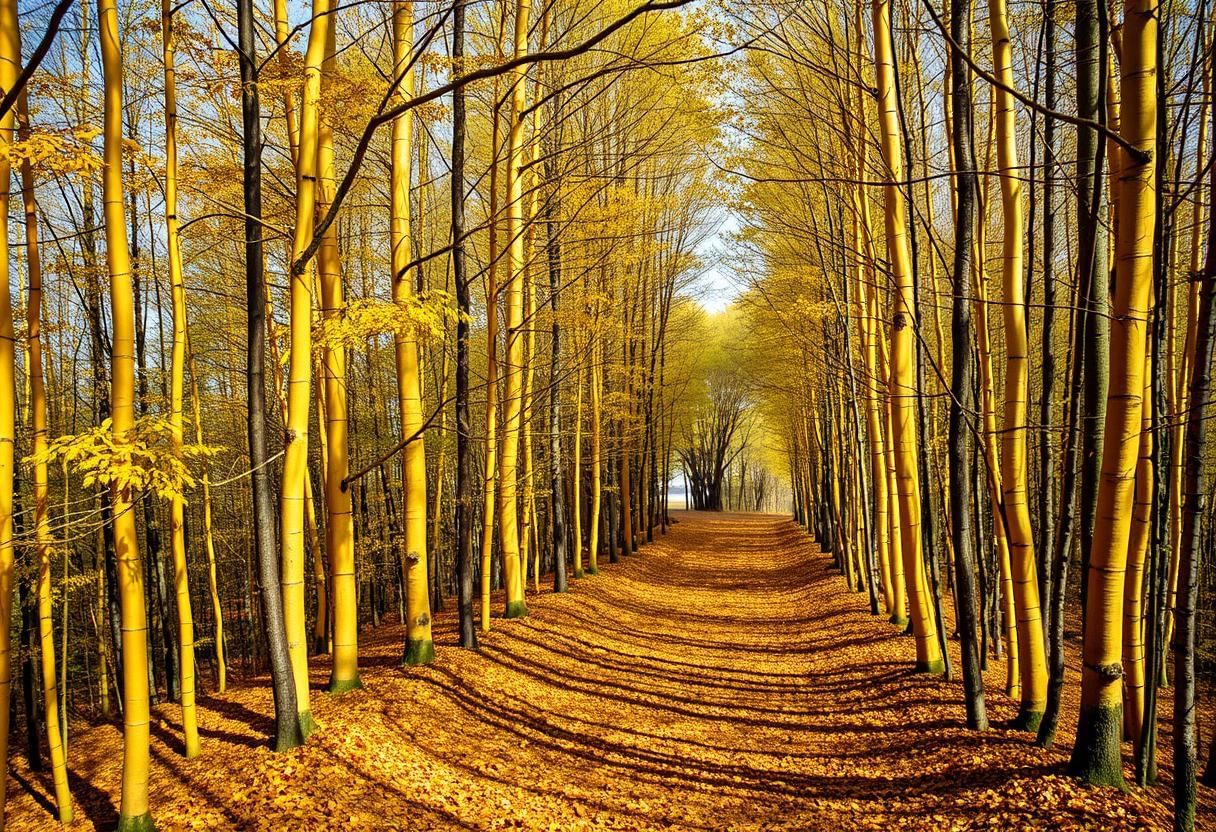
Two roads diverged in a yellow wood,
And sorry I could not travel both
And be one traveler, long I stood
And looked down one as far as I could
To where it bent in the undergrowth;
The speaker walks through a forest with yellow leaves in autumn and reaches a fork in the road. Regretting that he cannot travel both paths (as he is only one person), he stands at the fork for a long time, trying to see where one path leads. However, he cannot see far because the forest is thick and the path is not straight.
Then took the other, as just as fair,
And having perhaps the better claim,
Because it was grassy and wanted wear;
Though as for that the passing there
Had worn them really about the same,
The speaker takes the other path, judging it to be just as good a choice as the first, and supposing that it may even be the better option of the two, since it is grassy and looks less worn than the other path. Though, now that the speaker has actually walked on the second road, he thinks that in reality the two roads must have been more or less equally worn-in.
And both that morning equally lay
In leaves no step had trodden black.
Oh, I kept the first for another day!
Yet knowing how way leads on to way,
I doubted if I should ever come back.
Reinforcing this statement, the speaker recalls that both roads were covered in leaves, which had not yet been turned black by foot traffic. The speaker exclaims that he is in fact just saving the first road, and will travel it at a later date, but then immediately contradicts him or herself with the acknowledgement that, in life, one road tends to lead onward to another, so it's therefore unlikely that he will ever actually get a chance to return to that first road.
I shall be telling this with a sigh
Somewhere ages and ages hence:
Two roads diverged in a wood, and I-
I took the one less traveled by,
And that has made all the difference.
The speaker imagines him or herself in the distant future, recounting, with a sigh, the story of making the choice of which road to take. Speaking as though looking back on his or her life from the future, the speaker states that he was faced with a choice between two roads and chose to take the road that was less traveled, and the consequences of that decision have made all the difference in his or her life.
Theme/Message
Theme
- The theme of Robert Frost's poem "The Road Not Taken" focuses on the importance of choices in life, the challenges of making decisions, and the uncertainty that comes with them.
- It examines the struggles of decision-making and how our choices affect our future.
Message
- The poem's message highlights the need for careful decision-making and the understanding that our choices carry significant consequences.
- It warns readers that once a decision is made, it is hard to go back and start over.
- Moreover, it conveys that the speaker realises the difficulty of returning to make another choice, as shown in the line, "Yet knowing how way leads on to way, I doubted if I should ever come back."
- Key imagery, such as "Two roads diverged in a yellow wood" and "In leaves no step had trodden black," is vital for grasping the themes of choice and consequence.
- In the end, the poem concludes with the line, "I took the one less travelled by, and that has made all the difference," underscoring the lasting effects of our choices on life.
Try yourself: What is the central theme of Robert Frost's poem "The Road Not Taken"?
Literary Devices
- Assonance and Consonance -Repetition of vowel sounds (assonance) and consonant sounds (consonance) in nearby words. For example, in "The Road Not Taken," Frost uses both to create a balanced and rhythmic effect.
- Extended Metaphor -An extended metaphor is developed over several lines and serves as a central theme. In "The Road Not Taken," Frost's metaphor of a forked path represents decision-making. This allows readers to connect with the speaker's dilemma and reflect on their own choices.
- Repetition -Frost uses anaphora (the repetition of a word or phrase at the start of successive clauses) and thematic repetition. Examples include phrases like "way leads on to way" and the repeated opening line, which emphasise the poem's rhythm and themes.
- Alliteration -Alliteration involves the repetition of consonant sounds at the beginning of words, which can be observed in various phrases throughout the poem.
- Anaphora -The word 'and' is repeated at the beginning of lines 2, 3, and 4.
- Rhyme Scheme -abaab
- Symbolism -The two roads represent choices in life. The line "Two roads diverged in a yellow wood" establishes the poem's context.
- Emotional Implications -The line "I took the one less travelled by, And that has made all the difference" captures the essence of the speaker's reflection on choices.
Difficult Words
- Diverged = branched off, took different directions
- Wood = forest, dense group of trees
- Travel = to journey, move from one place to another
- Traveller = one who journeys, an explorer
- Undergrowth = Where clarity ends and uncertainty begins, the hidden segment of a choice or path
- Fair = unbiased, equitable, just
- Claim = assertion, a declaration of truth or belief
- Grassy = covered with grass, verdant
- Wanted wear = had not been crushed or worn out under human feet, has not been used and worn so frequently
- Trod = walked upon, stepped on
- Equally= Similarly, in the same manner, or measure
- Lay = was situated or placed
- Sigh = deep breath of sorrow, regret
- Kept = reserved, saved for later
- Telling = narrating, recounting
- Difference = distinction, variation in outcome or results
- Bent = curved, turned
- Doubted = questioned, was uncertain about
You can practice questions from this chapter here: Short Answer Type Questions: - The Road Not Taken
FAQs on Detailed Summary and Important Words: The Road Not Taken
| 1. What's the main message behind "The Road Not Taken" by Robert Frost? |  |
| 2. Why does the speaker say one road was "perhaps" less travelled-what's the significance of that word? | |
| 3. What do the two roads symbolise in this CBSE Class 9 poem, and why can't the speaker take both? | |
| 4. How does the ending of "The Road Not Taken" connect to the poem's central theme about choices? | |
| 5. What are the important literary devices Frost uses to develop the metaphor of roads and choices? | |





