Summary - The Happy Prince


Key Points of the Story
- The story centres on a statue known as the Happy Prince, which is gilded with a thin layer of gold and adorned with sapphires for eyes and a ruby on his sword; it stands on a tall pedestal overlooking the city.
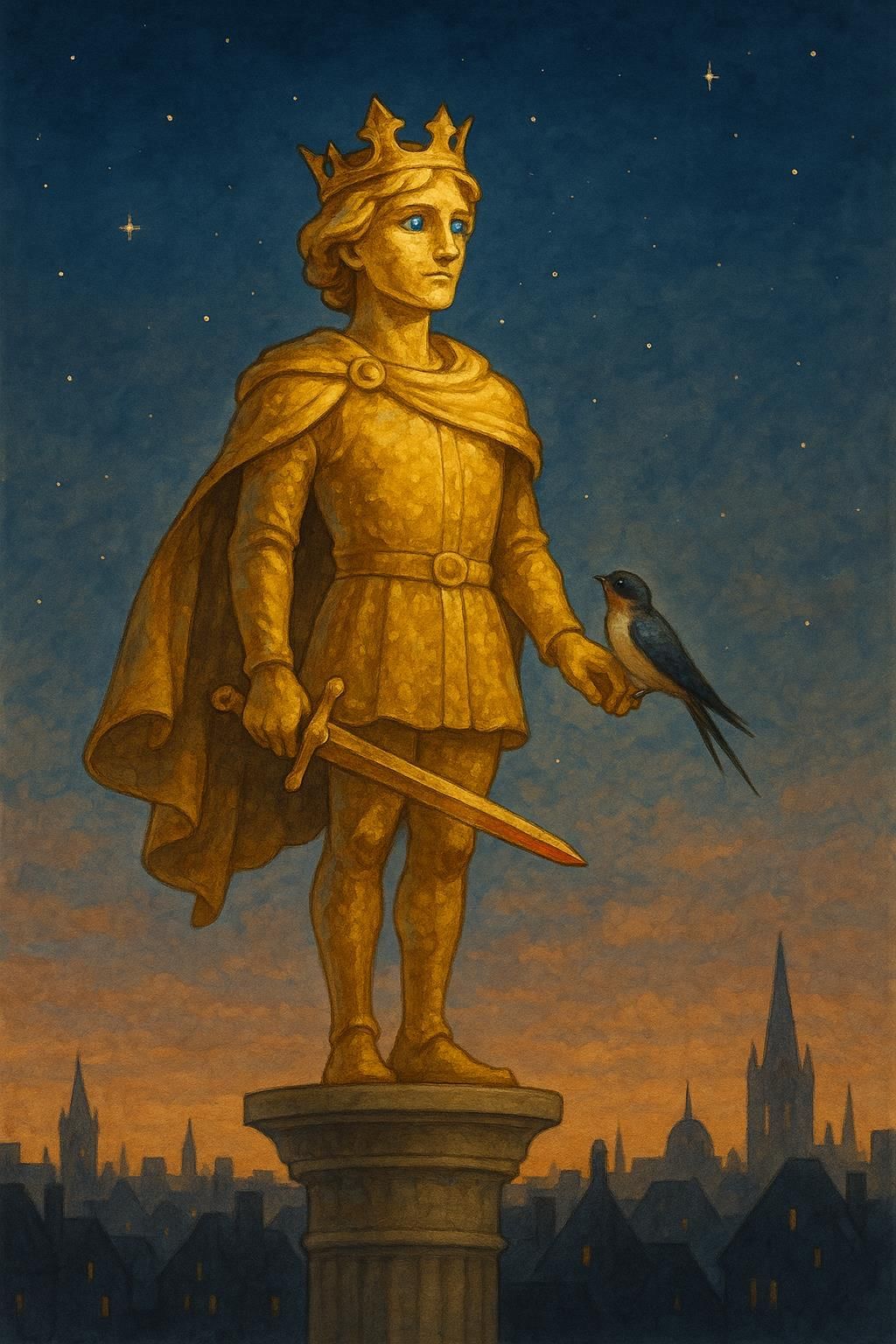
- A swallow sees the prince's sadness and agrees to help him assist the needy people in the city.
- The prince asks the swallow to give his jewels to those in need:
A ruby to a poor seamstress.
Sapphires to a struggling writer and a little match girl. - Even after losing his beautiful eyes, the prince keeps helping the poor through the swallow's efforts.
- The swallow stays loyal to the prince, but later the swallow grew weaker due to extreme cold and eventually died of frost.
- After the swallow's death, the prince's statue is torn down, but his lead heart does not melt in the furnace.
- God honors the prince and the swallow for their selflessness, showing that true happiness lies in helping others.
Detailed Summary
The Happy Prince was once a living prince who had known luxury, but as a statue he stood high above the city, covered in a thin layer of gold leaf, with two bright sapphires for eyes and a ruby on the hilt of his sword. He looked like a joyful ornament, and he was called the Happy Prince by his courtiers during his lifetime because he lived in luxury and knew no sorrow. One evening a travelling swallow, delayed on his migration to Egypt, settled at the base of the statue to rest. While the bird slept, warm drops fell on him and woke him. He discovered that the drops were tears coming from the statue.
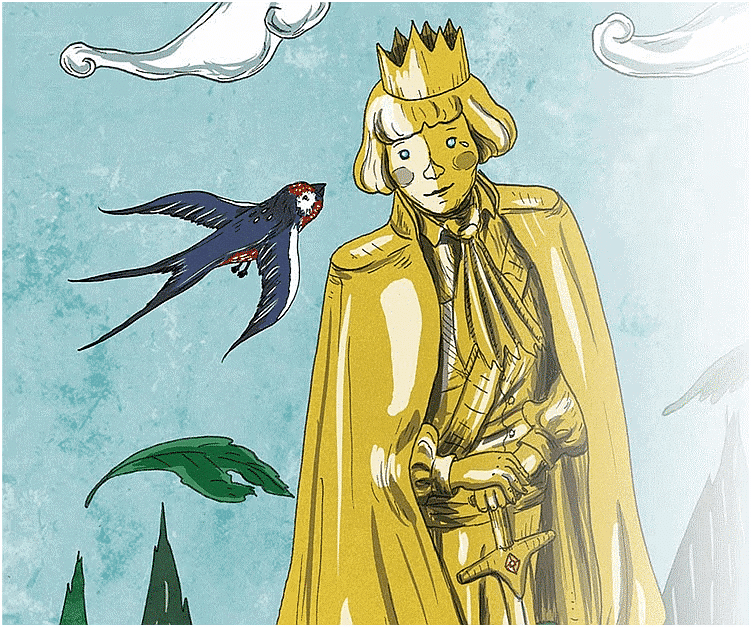
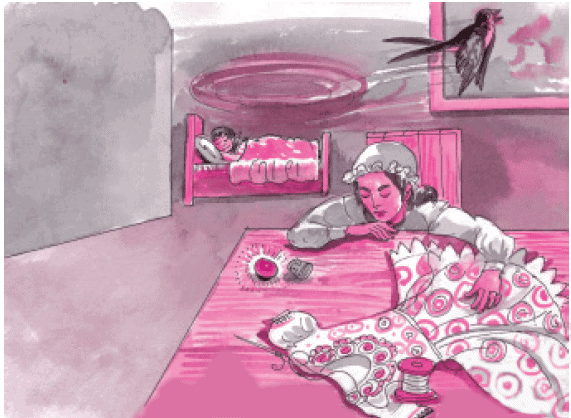
The Happy Prince spoke to the swallow and told him that his tears flowed from sorrow at the sight of the city's misery which he had never seen while alive. He begged the swallow to help him relieve the suffering of the poor. The prince asked the swallow first to take the ruby from his sword and give it to a poor seamstress whose son lay ill and who was struggling to finish a dress for the queen's maid. Although the swallow wanted to continue his journey, he agreed to stay one night to carry out the prince's wish. He gave the ruby to the seamstress and comforted the sick child.
The next night the prince noticed a young playwright working in a cold, garret room, unable to work because of hunger and cold. The prince told the swallow to take one of his sapphires and give it to the playwright. The swallow plucked out one sapphire and delivered it; the playwright was able to sell it for food and warmth and continue his work. On the following night the prince saw a little match-girl crying because her matches had fallen into the gutter and she feared her father's anger. The swallow was sent to give the second sapphire to the girl. Although the removal of the second eye would leave the prince blind, the swallow obeyed and gave the jewel to the girl, the girl rejoiced, thinking it was a lovely piece of glass, and ran home laughing..
After losing his sapphires the prince could no longer see. The swallow, having grown attached and sympathetic, chose to remain and act as the prince's eyes. He flew over the city by day and night reporting what he saw: the comforts and parties of the rich, the cold hunger of the poor, families in need, and a playwright who could now work because of the help. The prince's pity deepened; he asked the swallow to strip the gold leaf from his body leaf by leaf and to give the pieces to the needy. The swallow carried out these requests, bringing happiness and relief to many poor people.
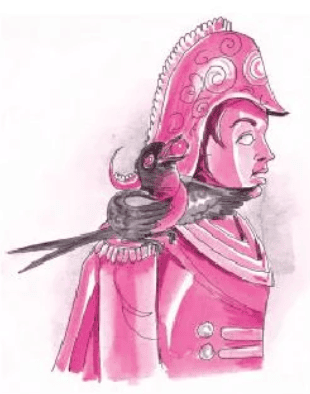
Winter came and the swallow grew weak in the cold. Although warned that he must fly to Egypt to survive, the bird refused to abandon the prince, who had become his closest companion.. One evening, as the swallow lay dying from the cold, he kissed the prince's lips and fell dead at his feet. At the very moment the swallow died the prince's leaden heart snapped in two.
The next morning, the townspeople saw the statue, now stripped and dull. Thinking it ugly and useless, they decided to pull it down. They melted the body in a furnace to make room for a new statue, but the lead heart would not melt. The workmen threw the heart away with the dead swallow on a rubbish heap. God, however, told His angels to bring him the two most precious things in the city. They brought the little dead bird and the broken lead heart. God welcomed them, and the swallow would sing for ever in Paradise while the Happy Prince would praise God.
Characters and Their Significance
- Happy Prince - A statue that symbolises compassion and moral beauty. Though outwardly splendid, he feels anguish on seeing human suffering; his acts of giving reveal that true nobility is shown through kindness.
- Swallow - Initially motivated by migration and survival, he becomes the prince's helper and friend. The swallow represents loyalty, sacrifice, and the capacity for moral change.
- Seamstress - A poor working woman whose difficulties highlight the social problems of poverty and illness in the city.
- Playwright - A young artist whose talent is nearly destroyed by hunger and cold; his recovery after receiving help shows how small acts of charity can restore hope and creativity.
- Match-girl - A vulnerable child whose distress emphasises the helplessness of the poorest in society.
- Townspeople - Represent the blind materialism of society: they value outward beauty and utility over inner goodness and fail to recognise true worth.
- God and Angels - Provide moral closure by recognising the spiritual worth of the prince's love and the swallow's sacrifice, rewarding them with eternal happiness.
Themes and Message
The central themes of the story are compassion, selflessness, and the contrast between external wealth and inner goodness. Oscar Wilde uses the statue-a figure of ornamental splendour-to reveal how appearances can hide ignorance of suffering. The prince's decision to give away his jewels and gold illustrates that real happiness is not possession but generosity. The swallow's loyalty shows how even small, seemingly insignificant beings can perform great moral deeds.
The moral message is that acts of kindness and love, even when costly or unnoticed by society, have lasting value. Wilde suggests that spiritual richness-empathy, sacrifice and charity-are the true measures of worth and that divine justice will ultimately recognise such virtues, even if human society does not.
Language, Style and Symbols
Wilde's style in the story is simple and poignant, combining fairy-tale elements with social criticism. Key symbols include the gold leaf and precious stones, which represent material wealth; the leaden heart, which represents real feeling and moral worth; and the swallow, a symbol of humble devotion and sacrifice. The contrast between the glittering statue and the suffering city emphasises the central moral conflict of appearance versus compassion.
Study Notes and Possible Questions
- Why is the statue called the Happy Prince even though he weeps? Consider the contrast between outer appearance and inner feeling.
- How does the swallow's character change during the story? Trace his moral development from self-interest to self-sacrifice.
- Discuss the social criticism in the story. What does Wilde say about the attitudes of the rich and the poor?
- Explain the symbolism of the leaden heart and why it is important that it does not melt in the furnace.
- How does Wilde create sympathy for the poor characters (seamstress, playwright, match-girl)?
Difficult Words
- Gilded: Covered with a thin layer of gold.
- Sapphires: Precious blue gemstones.
- Ruby: A valuable red gemstone.
- Alighted: Landed or settled after flying.
- Seamstress: A woman who sews for a living.
- Embroidering: Sewing decorative patterns on fabric.
- Pedestal: The base supporting a statue.
- Garret: A small, cramped room under a roof (an attic room).
- Withered: Dried up or shrivelled.
- Listlessly: Without energy or enthusiasm.
- Courtiers: People who serve in a royal court.
- Feverishly: In a restless or frantic manner, often due to fever or excitement.
- Swooped: Flew down quickly and suddenly.
- Furnace: A very hot oven used to melt or heat materials.
- Proclamation: An official public announcement.
FAQs on Summary - The Happy Prince
| 1. What is the main message of "The Happy Prince"? |  |
| 2. Who are the main characters in "The Happy Prince"? | |
| 3. What do the symbols in "The Happy Prince" represent? | |
| 4. How does the story of "The Happy Prince" end? | |
| 5. What themes are explored in "The Happy Prince"? | |





