CBSE Class 9 > Class 9 Notes > English > Summary - The Last Leaf
Summary - The Last Leaf

Key Points of the Story
- Setting: Sue and Johnsy, two young artists, live together in a small flat on the third floor of an old house.
- Johnsy's Illness: Johnsy falls gravely ill with pneumonia and becomes despondent, believing she will die when the last ivy leaf outside their window falls.
- Doctor's Advice: The doctor informs Sue that Johnsy's recovery depends on her will to live, emphasizing that medicine alone will not help.
- Sue's Care: Sue devotes herself to looking after Johnsy, trying to cheer and distract her by talking about art, painting beside her and doing small things to keep her hopeful.
- Johnsy's Fatal Belief: Johnsy becomes fixed on the idea that she will die when the last ivy leaf falls from the vine outside her window; she counts the leaves and believes her life is tied to them.
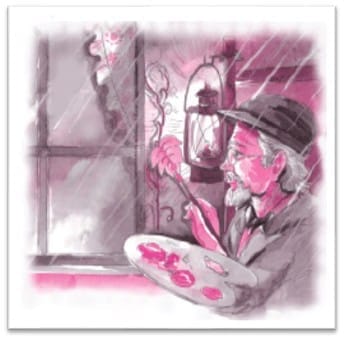
- Behrman's Role: Behrman, an elderly, unsuccessful painter who lives in the same building, learns of Johnsy's belief. To restore her hope he paints a perfectly realistic leaf on the wall so that the "last leaf" appears never to fall.
- Outcome: Seeing the leaf hold fast through bad weather, Johnsy regains the will to live and begins to recover. Later it is discovered that Behrman caught pneumonia after a night in the cold painting the leaf and died; his painted leaf becomes his final, selfless masterpiece.
Detailed Summary
- Introduction of Sue and Johnsy: Sue and Johnsy are two young women who share a flat and earn their living by painting. In November, Johnsy contracts pneumonia and becomes very ill. She lies in bed and watches an ivy vine climbing the wall outside her window, growing steadily more depressed as leaves fall in the blustery weather.
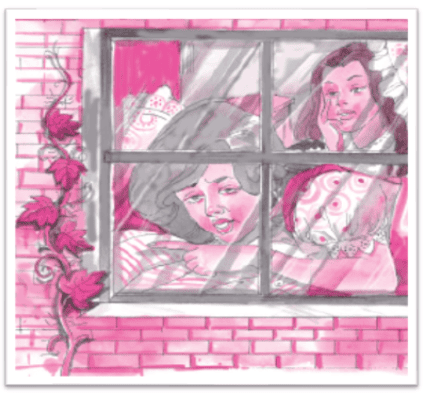
- Sue's Efforts and the Doctor's Advice: Sue sends for a doctor who, after examining Johnsy, tells Sue that the patient is physically weak but would probably recover if she had the will to live. The doctor emphasises that morale and hope are as important as medicine in this case. Sue tries to keep Johnsy's mind occupied by talking about art, fashion and small daily things, and by painting beside her to create a cheerful atmosphere.
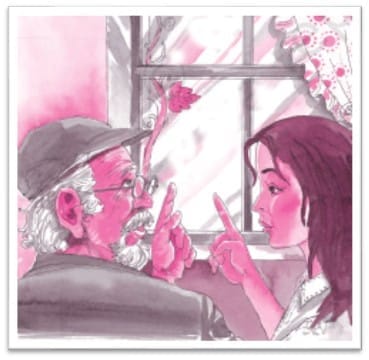
- Johnsy's Belief in the Last Leaf: One day, a turning point arrived when Johnsy, quietly counting down the remaining leaves on a vine outside, expressed her belief that her life was tied to the falling of the last leaf. Sue, in disbelief, tried to reason with her, emphasising the doctor's optimism about her recovery. However, Johnsy's conviction remained unshaken, leading to a poignant moment of reflection and realisation.
- Behrman's Intervention: Behrman, an old, unsuccessful artist living in the same building, hears of Johnsy's belief. Behrman, initially critical of Johnsy's perspective, eventually showed empathy upon learning the gravity of her condition. As days passed and the lone leaf on the vine persisted despite harsh weather conditions, Johnsy's outlook gradually shifted.
- Johnsy's Recovery and Behrman's Sacrifice: Because the leaf appears to endure the weather, Johnsy's hope is restored; she decides to live and begins to improve. Later, Sue tells Johnsy that Behrman caught pneumonia and died. The doctor reveals that Behrman had become ill after being out in the cold; he had painted the leaf during that night. Behrman's last act, painting the leaf, becomes his masterpiece and the means by which he saves Johnsy's life.
- Resolution: The story ends by showing how a small, selfless act of art and human kindness transformed despair into hope. The painted leaf stands as a symbol of endurance, creativity and sacrifice.
MULTIPLE CHOICE QUESTIONTry yourself: What is the symbolic significance of the last leaf painted by Behrman in the story?
Theme of the Story
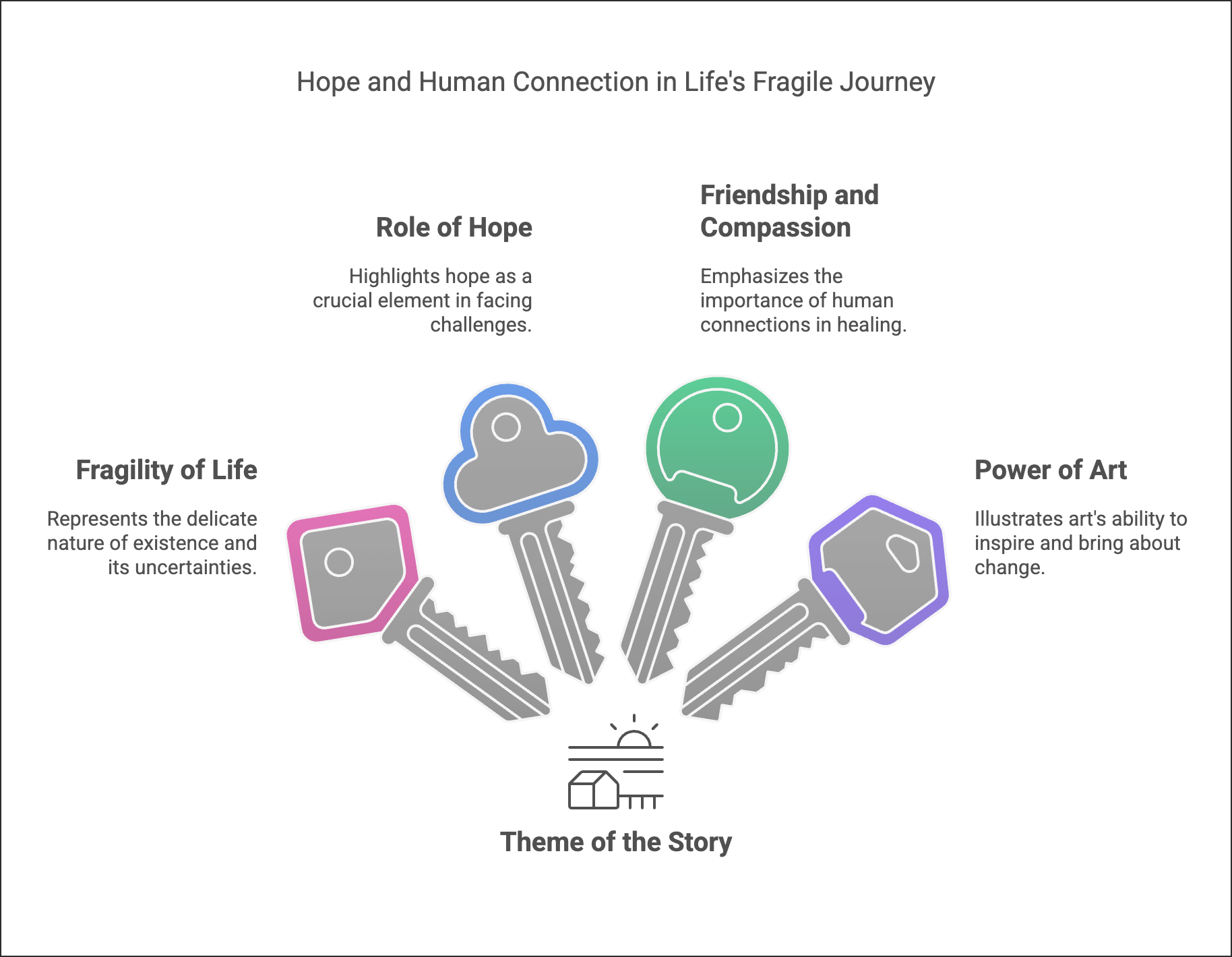
- The fragility of life and the importance of hope are central themes. Johnsy's physical condition is closely linked to her mental state; when hope returns, so does the possibility of recovery.
- Friendship and compassion are shown as powerful forces for healing. Sue's devotion and Behrman's sacrifice demonstrate how caring actions can restore a person's will to live.
- The story emphasises the transformative power of art. Behrman's "masterpiece" is not created for fame but as an act of love; through art he gives life back to another human being.
Difficult Words
- Pneumonia: an inflammatory condition of the lungs affecting the tiny air sacs (alveoli). Example: "Pneumonia makes breathing painful and can be dangerous if left untreated."
- Despondent: showing profound hopelessness or dejection. Example: "After repeated failures he felt despondent and gave up trying for a while."
- Anxiously: with great unease or worry about what may happen. Example: "She waited anxiously for the test results."
- Energetically: with great energy, vigour or determination. Example: "He worked energetically to finish the painting before dawn."
- Gloomy: dark, sad or depressing in mood. Example: "The rainy weather made the whole room feel gloomy."
- Adversity: difficulties or misfortune. Example: "She faced adversity bravely and did not lose hope."
- Realisation: the act of becoming fully aware of something. Example: "The realisation that he had made a mistake came late."
- Janitor: a person who looks after a building; caretaker. Example: "The janitor keeps the school clean and helps with small repairs."
- Desperately: in a way that shows despair or urgency. Example: "They searched desperately for a doctor."
- Uplift: to raise spiritually or morally; to improve mood. Example: "A kind word can uplift a person who is feeling low."
- Renewed: revived or restored after interruption. Example: "She felt renewed strength after a good night's sleep."
- Contingency: a possible future event or circumstance that cannot be predicted. Example: "They prepared for every contingency during the trip."
- Profound: very great or intense; showing deep insight. Example: "The poem left a profound impression on him."
Character Sketches
- Johnsy: A young, talented artist who becomes physically ill and mentally hopeless. Her belief about the ivy leaf shows how fragile human hope can be when a person is ill. Her eventual recovery shows the importance of willpower and renewed faith.
- Sue: Loyal, caring and practical, Sue acts as caregiver and emotional support for Johnsy. Her steady kindness, patience and attempts to cheer Johnsy play a vital role in the story.
- Behrman: An elderly, unsuccessful artist who yearns to create a masterpiece. Though gruff and imperfect, he is capable of great compassion. His final act-painting the last leaf in a storm-reveals nobility and self-sacrifice. Behrman dies as a result of his action, but his deed saves Johnsy's life and becomes his true masterpiece.
- The Doctor: Practical and realistic, the doctor recognises that recovery depends on Johnsy's mental state as much as on medicine. He advises Sue about the psychological aspect of healing.
The document Summary - The Last Leaf is a part of the Class 9 Course English Class 9.
All you need of Class 9 at this link: Class 9
FAQs on Summary - The Last Leaf
| 1. What is the main theme of "The Last Leaf"? |  |
Ans. The main theme of "The Last Leaf" is hope and the power of selfless love. It illustrates how the will to live can be influenced by the actions of others and the importance of perseverance in the face of despair.
| 2. Who are the main characters in "The Last Leaf"? | |
Ans. The main characters in "The Last Leaf" are Johnsy, a young woman suffering from pneumonia; Sue, her caring friend and roommate; and Behrman, an elderly artist who ultimately makes a significant sacrifice for Johnsy's sake.
| 3. What literary devices are used in "The Last Leaf"? | |
Ans. The story employs various literary devices, including symbolism, with the last leaf representing hope and resilience. It also utilizes foreshadowing and imagery to enhance the emotional impact of the narrative.
| 4. How does Behrman's sacrifice impact the story? | |
Ans. Behrman's sacrifice is pivotal as it illustrates the theme of selflessness. He paints the last leaf on the wall to give Johnsy hope and the will to live, ultimately leading to her recovery, while he himself succumbs to illness as a result of his exposure to the cold.
| 5. What message does "The Last Leaf" convey about life and death? | |
Ans. "The Last Leaf" conveys that life is precious and that hope can be a powerful motivator. It suggests that love and sacrifice can profoundly impact others, highlighting that sometimes, the act of giving can be more important than one's own life.
About this Document

23K Views

4.73/5 Rating

Apr 20, 2026 Last updated
Related Exams
Document Description: Summary - The Last Leaf for Class 9 2026 is part of English Class 9 preparation. The notes and questions for Summary - The Last Leaf have been prepared according to the Class 9 exam syllabus. Information about Summary - The Last Leaf covers topics like and Summary - The Last Leaf Example, for Class 9 2026 Exam. Find important definitions, questions, notes, meanings, examples, exercises and tests below for Summary - The Last Leaf.
Introduction of Summary - The Last Leaf in English is available as part of our English Class 9 for Class 9 & Summary - The Last Leaf in Hindi for English Class 9 course. Download more important topics related with notes, lectures and mock test series for Class 9 Exam by signing up for free. Class 9: Summary - The Last Leaf
Description
Summary of English Class 9 - covers all the important topics from the book, explained in easy language for better understanding. Free PDF available for download.
Information about Summary - The Last Leaf
In this doc you can find the meaning of Summary - The Last Leaf defined & explained in the simplest way possible. Besides explaining types of Summary - The Last Leaf theory, EduRev gives you an ample number of questions to practice Summary - The Last Leaf tests, examples and also practice Class 9 tests



Related Searches
Summary - The Last Leaf, MCQs, mock tests for examination, Summary - The Last Leaf, Semester Notes, video lectures, Free, ppt, Sample Paper, Previous Year Questions with Solutions, Objective type Questions, Extra Questions, Important questions, practice quizzes, past year papers, shortcuts and tricks, Viva Questions, Exam, pdf , study material, Summary - The Last Leaf, Summary;