Important Question Answers - If I Were You

Very Short Answer Type Questions
Q1. Who entered Gerrard's cottage?Ans: An intruder entered Gerrard's cottage.
Q2. Why did the intruder enter Gerrard's cottage?
Ans: The intruder entered Gerrard's cottage because he was a criminal wanted for petty crimes and murder. His plan was to kill Gerrard and assume his identity so that he could evade capture by the police and live without arousing suspicion.
Q3. How did Gerrard react to find the intruder in his room?
Ans: Gerrard was shocked and scared to find an armed stranger in his cottage. Despite his fear, he attempted to hide his emotions and acted as if he welcomed the intruder
Q4. What did Gerrard tell the intruder about his childhood?
Ans: Gerrard told the intruder ironically that he had been kidnapped by gypsies during his childhood.
Q5. What was Gerrard's Christian name?
Ans: Gerrard's Christian name is Vincent Charles.
Q6. What did the intruder tell Gerrard about his specialty?
Ans: The intruder said his speciality was jewel robbery. He expressed a particular interest in Gerrard's car, describing it as a dandy bus.
Q7. What did the intruder want to know of Gerrard?
Ans: The intruder wanted to learn how Gerrard communicated and interacted with others. He asked about Gerrard's name, whether he lived alone, if he had a car and whether he received visitors - all information useful for assuming Gerrard's identity.
Q8. Why did the intruder want to hurt but not to kill Gerrard?
Ans: The intruder intended to hurt Gerrard rather than kill him immediately because he wanted to extract information first. He believed that keeping Gerrard alive for a short time would help him learn details essential for successfully taking on Gerrard's identity.
Q9. What is Gerrard's profession?
Ans: Gerrard is a playwright who is closely connected with theatre work and supplies props and make-up.
Q10. What crime had the intruder committed?
Ans: The intruder had committed murder; he had killed a policeman and was on the run from the law.
Q11. Where did Gerrard imprison the intruder?
Ans: Gerrard imprisoned the intruder in a cupboard. He pushed the intruder inside, knocked the revolver from his hand, and then locked the door, buying time to call the police.
Short Answer Type Questions
Q1. Describe Gerrard's appearance.Ans: Gerrard is of medium height and wears horn-rimmed glasses. At the beginning of the play, he is dressed in a lounge suit and a great coat. He speaks in a cultured tone, and his demeanour is self-assured.
Q2. What did Gerrard tell the intruder about himself? Was he telling the truth? Why/Why not?
Ans: Gerrard joked with the intruder, claiming he had been kidnapped by gypsies as a child and was now alone in life. He was not telling the truth; his remarks were meant to unsettle and mislead the intruder. By inventing strange details, Gerrard aimed to appear unpredictable and to prevent the intruder from acting rashly.
Q3. What sort of information does the intruder want from Gerrard?
Ans: The intruder seeks personal details from Gerrard, such as whether Gerrard lives alone, his Christian name, whether he owns a car, and whether he receives visitors. This information is vital for the intruder's plan to escape the police by assuming Gerrard's identity.
Q4. What made Gerrard ask the intruder, Are you an American?
Ans: Gerrard asked the intruder if he was an American because the intruder addressed him as a 'wise guy'. This term is a casual American expression for a man, prompting Gerrard to question the intruder's nationality based on his choice of words.
Q5. What sort of a person is the intruder? Give examples to illustrate.
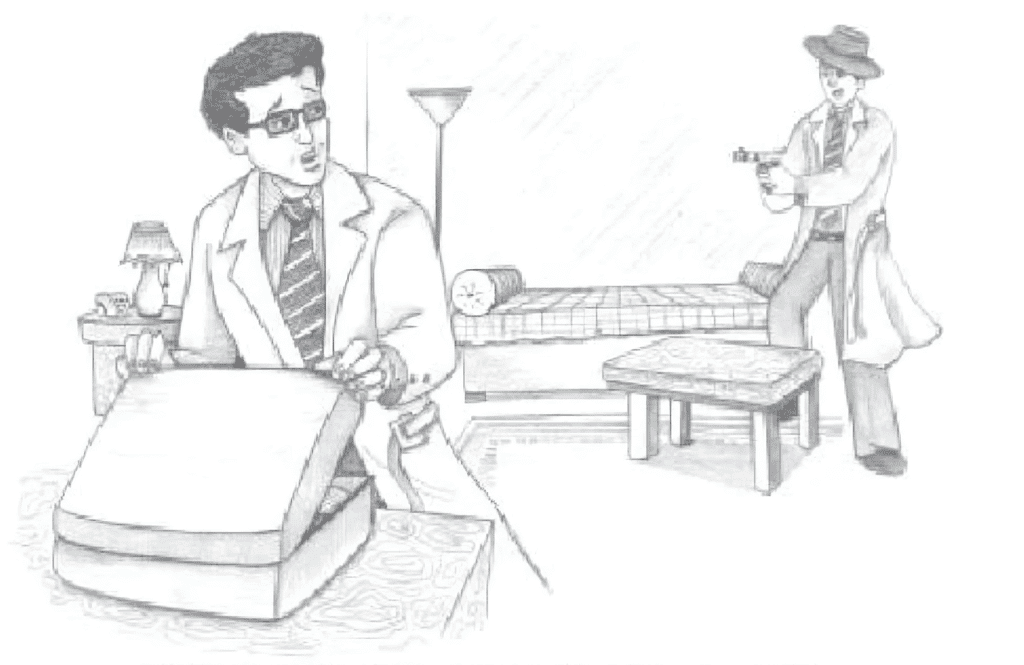
Ans: The intruder is a dangerous man. He carries a pistol and and claims to have killed a police officer. He is mean, heartless, and crafty; he plans to kill Gerrard and take on his identity to escape the police. His overconfidence is evident when he asserts that Gerrard is no match for him. Additionally, he displays a boastful and uncouth nature, as shown by his crude remark, "Put up your paws."
Q6. The intruder announced, "I'm going to kill you". Was Gerrard nervous? How would you describe Gerrard's reactions?
Ans: Gerrard did not appear nervous. He remained calm and nonchalant. His quiet replies and light humour annoyed the intruder. This calm behaviour was a deliberate strategy to gain time and find a way to outwit him.
Q7. Why does the intruder intend to kill Gerrard?
Ans: The intruder is a criminal wanted by the police for having murdered a police officer. He intends to kill Gerrard so that he can assume Gerrard's identity and thereby escape arrest. He thinks that living as Gerrard will help him avoid detection and punishment.
Q8. Who was the intruder in Gerrard's house? Why did he break into his house?
Ans: The intruder who broke into Gerrard's house was a criminal on the run. He had committed murder, specifically killing a police officer, and was being pursued by law enforcement. He broke in intending to kill Gerrard and take his identity so that he could avoid capture by the police.
Q9. How did Gerrard behave on seeing a gun-toting stranger in his cottage?
Ans: Gerrard remained calm and unfazed when he saw the armed stranger. He did not panic but spoke to the intruder in a composed and casual manner, using wit and steadiness to keep control of the situation.
Q10. Why does the intruder not kill Gerrard immediately?
Ans: The intruder delays killing Gerrard because he needs to gather all the necessary information that will let him pass as Gerrard later. Without this information, his plan to disguise himself and assume Gerrard's identity will not be successful.
Q11. Where did Gerrard live? Why was it a suitable place for the intruder's plan?
Ans: Gerrard lived in a lonely cottage in a secluded area of Essex. The lack of nearby population made it easy for someone to commit a crime without being noticed. Additionally, the cottage was rarely visited, making it an ideal location for the intruder to successfully execute his plan.
Q12. Why does the intruder call himself 'a poor hunted rat'?
Ans: The intruder calls himself 'a poor hunted rat' because he is being pursued by the police and lives in constant fear of capture. The phrase shows how trapped and desperate he feels as he tries to avoid punishment.
Q13. Why did the intruder choose Gerrard as the man whose identity he wanted to take on?
Ans: The intruder chose Gerrard because they had a similar physical appearance. Additionally, Gerrard lived alone and had an isolated lifestyle. The intruder believed that by killing Gerrard and assuming his identity, he could lead a peaceful life, free from the law and its consequences.
Q14. Why has the criminal been called an intruder all through the play?
Ans: The term intruder describes someone who enters without permission. Throughout the play, the man is called an intruder because he forcibly enters Gerrard's cottage and refuses to give his name, remaining secretive about his identity and intentions.
Q15. Bring out the contrast between Gerrard and the intruder.
Ans: The intruder is rude, boastful and selfish. He is overconfident and thinks he is the smartest person in the room. On the other hand, Gerrard is calm, sensible, polite and witty. Gerrard uses his intelligence and humour instead of force, and his quick thinking finally defeats the intruder.
Q16. Why did very few people come to Gerrard's house? Who were the few people who visited him?
Ans: Gerrard lived alone in a secluded cottage and followed an irregular routine due to his theatrical work. Therefore, very few people visited him. Only tradespeople like the baker, the greengrocer and the milkman came occasionally.
Q17. "They cannot hang me twice." Who says this and why?
Ans: The intruder says this because he is already wanted for having murdered a police officer. He believes that if he succeeds in killing Gerrard too, he cannot be executed twice, and so he feels there is nothing more to lose.
Q18. "A mystery I propose to explain." What is the mystery the speaker proposes to explain?
Ans: Gerrard refers to his own unusual life and habits as a mystery. He promises to explain why his routine is irregular, why few people visit him, and other curious details of his solitary, theatrical existence.
Q19. "This is your big surprise". Who says these words in the play? When and where? What is the surprise?
Ans: Gerrard says, "This is your big surprise." He speaks these words during the confrontation in his cottage when he reveals to the intruder that things are not as the intruder expects. The surprise is that Gerrard, whom the intruder thought to be an easy victim, is actually clever and able to outwit him.
Q20. Why and how did Gerrard persuade the intruder to get into the cupboard?
Ans: Gerrard created a convincing story about his own criminal past. He made the intruder believe that the police were searching for him and that he was expecting a call from a friend who would inform him of their arrival. When the phone rang, Gerrard quickly urged the intruder into the cupboard, claiming it was a passage to the garage, which would serve as an escape route.
Q21. How does Gerrard propose to use the intruder's episode?
Ans: Gerrard, as a theatre person, finds the episode amusing and dramatic. He plans to use the incident as material for his next play, seeing how an ordinary man can outwit a criminal as good theatrical material.
Q22. Gerrard describes this encounter with the intruder as an amusing spot of bother. What light does this attitude reflect on Gerrard?
Ans: Gerrard's phrase 'amusing spot of bother' shows his humour, composure and theatrical outlook. Gerrard's calm demeanour during the confrontation indicates that he is not overly frightened. It indicates that he treats the danger with a sense of irony and stagecraft rather than panic. His calm and playful attitude helped him think clearly and trap the intruder.
Q23. What is Gerrard's profession? Quote the parts of the play that support your answer.
Ans: Gerrard is a playwright associated with theatre. This is evident when he refers to a "sympathetic audience," comments on melodramatic acting, notices voice inflection, supplies props and make-up, and plans to use the incident in his next play.
Q24. Why was Gerrard's schedule so irregular?
Ans: Gerrard's schedule was irregular because of his theatre work. Writing, producing and supplying props to different companies requires flexible hours and sudden trips, which explain his odd comings and goings.
Q25. Gerrard said, 'You have been so modest'. Was Gerrard being ironic or truthful?
Ans: Gerrard was being ironic. He mocked the intruder's boastful attitude with that remark, inviting him to reveal more about himself while actually exposing the intruder's arrogance.
Q26. Why did the intruder want Gerrard to speak to him?
Ans: The intruder wanted Gerrard to speak so he could learn Gerrard's manner of speaking and behaviour. Hearing Gerrard talk would help the intruder imitate him convincingly if he planned to take on Gerrard's identity.
Q27. Why did he send for the sergeant?
Ans: After pushing the intruder into the cupboard and locking him, Gerrard called the police so that the man could be arrested. He asked for the sergeant to ensure the criminal was taken into custody immediately.
Q28. How does Gerrard imprison the intruder and save his life?
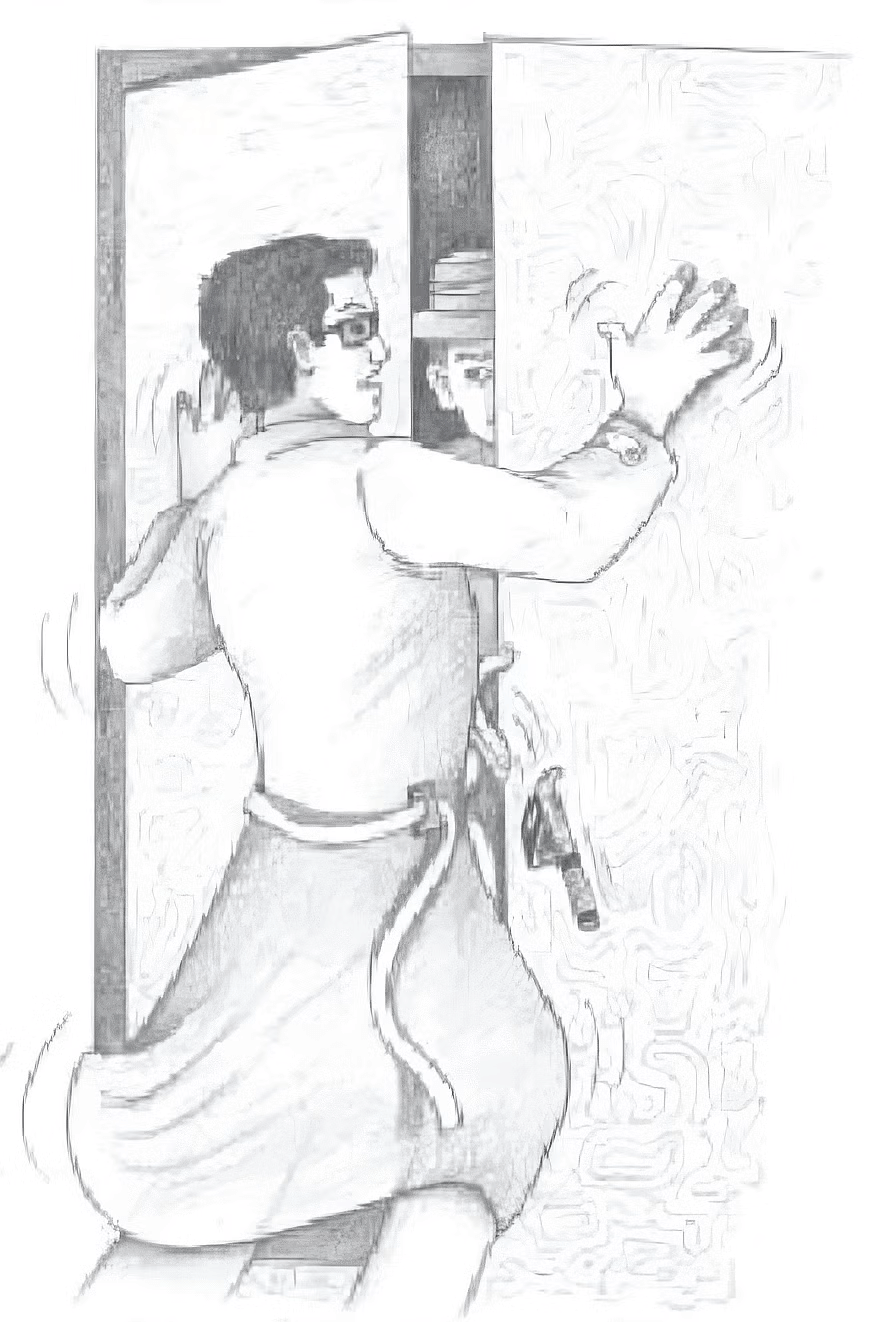
Ans: Gerrard tricks the intruder by pretending there is an escape route through a cupboard that leads to the garage. When the intruder leans in to look, Gerrard pushes him inside, knocks the revolver from his hand, and quickly locks the cupboard, thereby capturing him and ensuring his own safety.
Q29. How does Gerrard use the telephone call to trap the intruder?
Ans: When the telephone rings, Gerrard pretends that it is a warning call from his man on the main road about the police. He tells the intruder that they must escape quickly through the cupboard which he claims leads to the garage. Believing him, the intruder leans forward to check, and Gerrard pushes him inside, locks the cupboard, and traps him.
Q30. How does Gerrard turn the intruder's confidence into his weakness?
Ans: The intruder is very confident and thinks he is smarter than Gerrard. Gerrard takes advantage of this by remaining calm and telling him a false story about being a criminal who is wanted by the police. The intruder believes this story and starts trusting Gerrard. Because of this, he becomes careless and follows Gerrard toward the cupboard, thinking it is an escape route. Gerrard then pushes him inside and locks the door, trapping him. In this way, the intruder's overconfidence becomes his weakness.
Long Answer Type Questions
Q1. Gerrard talks pleasantly with the intruder. Was he really pleased to see the criminal?
Ans: No, Gerrard was not really pleased to see the intruder. He only pretended to be calm and friendly to protect himself. When the intruder entered his cottage with a revolver and threatened him, Gerrard did not panic. He spoke pleasantly and even used light humour, which surprised and confused the intruder. The intruder noticed his calm behaviour and remarked on it. This calm attitude helped Gerrard gain time and understand the intruder's plan. He knew that fighting back could cost him his life, so he hid his fear and thought clearly. Using his intelligence and presence of mind, Gerrard tricked the intruder into the cupboard, locked him inside, and informed the police. Thus, Gerrard's calm thinking and smart behaviour helped him defeat the intruder safely.
Q2. The intruder is boastful. He threatens Gerrard, "I'll make you crawl" Was he able to carry out his threat? What happened to him?
Ans: An intruder suddenly enters Gerrard's cottage with a revolver and threatens to kill him. Gerrard stays calm and talks to the intruder, which surprises him. The intruder thinks Gerrard is only trying to act smart and proudly says, "I'll make you crawl." During their talk, he admits that he is a jewel thief who has killed a policeman and is hiding from the police. He plans to kill Gerrard and live under his identity. However, instead of frightening Gerrard, the intruder is fooled by Gerrard's cleverness. Gerrard tricks him into entering a cupboard, locks him inside, and calls the police. In this way, the intruder's threat proves to be false.
Q3. Gerrard says, "In most melodramas, the villain is foolish enough to delay his killing long enough to be frustrated. Does this statement holds good for the play 'If I Were You'?
Ans: In many melodramas, the villain delays his action and this delay causes his own failure. The same idea is clearly seen in the play If I Were You. In this play, the intruder plans to kill Gerrard and take his identity. However, his foolish behaviour becomes clear because he keeps putting off the act of killing. Although the intruder has gathered information about Gerrard, he does not realise that Gerrard is intelligent and witty. When the intruder meets Gerrard, he talks to him instead of acting quickly. This gives Gerrard enough time to control the situation and think of a smart plan. Gerrard uses this time wisely and tricks the intruder into moving toward the cupboard. He then pushes him inside and locks the door. In the end, the intruder's plan fails because he did not act at the right moment. This shows that the villain's delay and poor judgement lead to his own defeat, just as happens in most melodramatic stories.
Q4. The best way to deal with a crisis is not to lose your calm. Discuss this statement with reference to the behaviour of Gerrard in the play.
Ans: A calm person is often more successful than someone who loses their temper or acts rashly. In the play, Gerrard demonstrates this by saving his life through his composed behaviour. When faced with an intruder armed with a gun, most people would panic and act foolishly out of fear for their safety. However, Gerrard maintains his calmness and patience. He pretends to be pleased to see the intruder and engages him in friendly conversation. This approach allows Gerrard to learn more about the intruder and buy time to plan his next move. By not succumbing to fear, Gerrard's cool demeanour ultimately saves his life and enables him to outsmart the criminal.
Q5. Why was Gerrard packing a bag at the beginning of the play? How did it help him to outwit and trap the intruder?
Ans: Gerrard was packing a bag at the beginning of the play because he needed to deliver some props to a theatrical company. When the intruder broke into his cottage and threatened him, Gerrard remained calm. He quickly made up a story, claiming that he himself was a criminal who was constantly on the move to avoid the police .This story was supported by the items in his bag, such as a gun and disguise materials like false moustaches, which misled the intruder into believing Gerrard's tale. The intruder became so convinced that he was ready to escape with Gerrard and no longer doubted him. Consequently, he followed Gerrard's instructions, which led to his eventual capture. Thus, the bag played a crucial role in convincing the intruder that Gerrard was also a criminal preparing to flee.
Q6. Bring out Gerrard's intelligence, the presence of mind, and sense of humour. How did these traits help him outwit the intruder?
Ans: Gerrard displayed remarkable intelligence and presence of mind when confronted by a gun-wielding intruder. He remained completely calm, which not only helped him manage the situation but also unnerved the intruder, who himself began to feel afraid. To lighten the mood, Gerrard used his sense of humour and made up a convincing story about his own criminal past. He suggested that the police would arrive shortly, urging the intruder to escape quickly.Gerrard cleverly directed the intruder's attention to a cupboard, claiming that it was a way out. As the intruder leaned in to check, Gerrard seized the moment to push him inside, knocking the revolver from his hand. He then locked the cupboard door, effectively trapping the intruder. Thus, Gerrard's intelligence, quick thinking, and humour enabled him to turn the tables and outsmart the intruder.
Q7. Why did the intruder find Gerrard's cooked-up account of his criminal background convincing?
Ans: The intruder was not gullible; he was cautious and suspicious of Gerrard's every move. When Gerrard tried to engage him in conversation about his identity, the intruder dismissed him and insisted that he answer only direct questions. Despite this, the intruder eventually fell into Gerrard's trap. Gerrard remained calm and used his quick thinking to make up a convincing story about being wanted by the police himself, which caught the intruder off guard.
Q8. Imagine you are Gerrard. Write a letter to your friend describing what happened when the intruder broke into your house.
You may describe:
- The intruder's appearance
- his way of speaking, mannerism, and movement
- his plan to evade the law
- your success in outwitting him
Ans: (Address)
(Date)
Dear ..........
Today I am feeling extremely excited to share with you a very interesting experience which I think may form the plot for my next play.
It so happened that today, in the afternoon, when I was about to leave my cottage with my bag to supply props and make-up at the Globe Theatre, I heard somebody hit against the table in my room. On turning, I saw a man with a physique like mine, wearing a very gaudy overcoat. Aiming his gun at me, he told me in an uncultured manner to put my "paws up". He did not shoot me at once because he needed some information about me. He told me that he had killed a cop and was having a difficult time dodging the police. He wanted to kill me and take up my identity to escape arrest.
But will you believe it that I foiled his plan by outwitting him through a concocted account? I maintained my cool and told him that I myself was a criminal charged with murder. I warned him that if he assumed my identity after killing me, he would still be arrested and executed. I told him that I was expecting an alert call from one of my friends, and just then the phone rang. Actually, the call was from one of my clients at the theatre who wanted confirmation about the props that I had assured to supply.
My claim worked perfectly and when I offered the man to escape with me in my car, he agreed readily. I asked him to peep into the cupboard which I claimed was connected to the garage and the secret escape route. When he leaned in to peep, I pushed him in the cupboard, snatched his gun, and locked him.
I then answered the phone and asked the caller to send the sergeant to arrest the criminal.
I'm sure you too will find this a smart enough act to be used as a plot for the next play. We can plan the details when we meet on Sunday.
Your loving friend
Gerrard
Q9. The intruder's plan was clever but not feasible. Do you agree? Give reasons in support of your answer.
Ans: At first, the intruder's plan to kill Gerrard and live under his identity appears smart. However, in reality, this plan is not practical. First of all, if Gerrard were killed, hiding or disposing of his body would be very difficult, which would increase the chances of being caught by the police. Even if the intruder somehow managed to solve this problem, Gerrard's theatre contacts would soon become doubtful when they could not reach him. This suspicion could make them inform the police, which would again put the intruder in danger of being arrested. Therefore, although the plan seems simple and perfect in thought, it would be very hard to carry out successfully in real life. The intruder's idea, in spite of his overconfidence, would fail because of the many risks and problems involved.
FAQs on Important Question Answers - If I Were You
| 1. What is the main theme and message of "If I Were You" by Douglas James? |  |
| 2. Who are the main characters in "If I Were You" and what are their roles? | |
| 3. How does the impersonator use his mimicry skills to escape danger in this story? | |
| 4. What is the significance of the twist ending in "If I Were You"? | |
| 5. What important life lessons does "If I Were You" teach students in Class 9 English? | |