CBSE Class 8  >  Class 8 Notes  >  Social Studies (SST)   >  Important Questions: Law and Social Justice

Important Questions: Law and Social Justice

Ques 1: How do government certifications like the ISI certification help the consumer?
Ans: When a product has the ISI mark the consumer can be certain that the product is of good quality and it is safe. Hall mark certification assures the consumer of the purity of gold they buy.
ISO certification assures the consumer that a company has a good Quality Management System.
Consumers might be put to risk by the poor quality of products such as electrical appliances, food, medicines if the government had not set up the Bureau of Indian Standards.

Ques 2: How can the government ensure social justice?
Ans: Through making, enforcing and upholding certain laws, the government can control the activities of individuals or private companies so as to ensure social justice.

Ques 3: Write a brief note on the Bhopal gas tragedy.
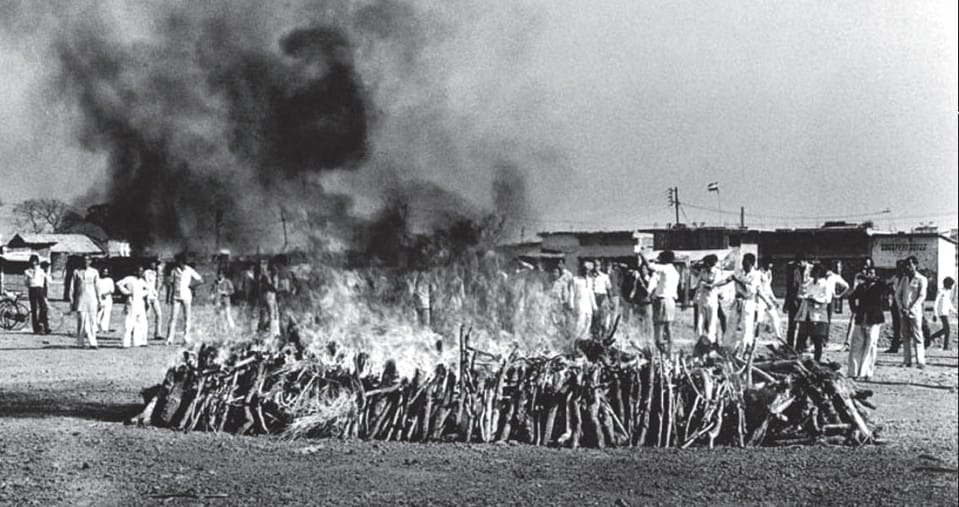
Ans: Union Carbide was an American Company which had a factory in Bhopal, Madhya Pradesh, India, which produced pesticides. At midnight on 2nd December, 1984, methyl-isocyanides - a highly poisonous gas - started leaking from the factory plant.
Within three days, more than 8,000 people were dead. Hundreds of thousands were maimed. Most of those exposed to the poison gas came from poor, working-class families.
There are nearly 50,000 people today who are too sick to work. Among those who survived, many developed severe respiratory disorders, eye problems and other disorders. Children developed peculiar abnormalities.
The Bhopal disaster is frequently cited as the world's worst industrial disaster.Important Questions: Law and Social Justice
Ques 4: What were the reasons for the Bhopal tragedy?
Ans: The Union Carbide tank's alarms had not worked for 4 years. The steam boiler, intended to clean the pipes, was out of action and water sprays designed to "knock down" gas leaks were poorly designed. No action plans had been established to cope with incidents of this magnitude. The local authorities were not informed of the quantities or dangers of chemicals used and manufactured at the factory. These were the reasons for the Bhopal tragedy.

Ques 5: What are the reasons for the sharp differences in safety standards between the 2 Union carbide factories in the USA and India?
Ans: India has a high rate of unemployment and due to this workers are willing to work in unsafe conditions. One worker can easily replace another due to over population. Ignorance and the vulnerability of Indian workers is also another reason why the safety standards in the Indian factory were very much lower than the factory in USA.

Ques 6: In what way was the Government responsible for the Bhopal tragedy?
Ans: Safety laws were lax in India and these weak safety laws were not enforced.
Government officials refused to recognise the plant as hazardous and allowed it to come up in a populated locality. Though there was some objection regarding the safety violation, the government allowed the factory to start production as it was providing jobs for the local people.
The government did not take the initiative to ask the Union Carbide Company to shift to cleaner technology or safer procedures. Government inspectors continued to approve the procedures in the plant, even when there were repeated incidents of poisonous gas leaks. So the government has to bear certain responsibility for the tragedy.

The document Important Questions: Law and Social Justice is a part of the Class 8 Course Social Studies (SST) Class 8.
All you need of Class 8 at this link: Class 8

FAQs on Important Questions: Law and Social Justice

1. What is the difference between civil law and criminal law in social justice?
Ans. Civil law deals with disputes between individuals or organisations regarding property, contracts, and compensation, while criminal law addresses offences against society like theft or violence. Criminal cases involve the state prosecuting offenders, whereas civil cases focus on resolving disputes and awarding damages. Understanding this distinction helps students grasp how the justice system protects both individual rights and social order through different legal frameworks.
2. How do fundamental rights protect citizens under the Indian Constitution for Class 8?
Ans. Fundamental rights guarantee equality, freedom, and justice to all citizens, protecting them from discrimination and ensuring dignity. These rights-including freedom of speech, religion, and assembly-are enforceable through courts. Articles 14-32 outline these protections in the Indian Constitution. They form the foundation of social justice by ensuring no person is treated unfairly based on caste, gender, or socioeconomic status, creating a framework for equality before law.
3. What are the main causes of inequality in Indian society that affect social justice?
Ans. Inequality stems from caste systems, gender discrimination, poverty, and unequal access to education and healthcare. Historical social hierarchies have created systemic barriers preventing marginalised communities from accessing opportunities. These structural inequalities undermine social justice by denying equal treatment and dignity. Addressing these root causes requires legislative reforms, awareness campaigns, and enforcement of constitutional protections. Understanding these causes helps students recognise how law functions as a tool for combating discrimination and promoting equitable society.
4. Why do we need constitutional safeguards against exploitation and injustice?
Ans. Constitutional safeguards prevent powerful groups from exploiting vulnerable populations by establishing legal protections and accountability mechanisms. Without these safeguards, individuals lack recourse against discrimination, abuse, and denial of basic rights. The Constitution empowers courts to intervene when fundamental rights are violated, ensuring justice is accessible to all. These protections particularly benefit marginalised sections by guaranteeing equal protection under law and establishing remedies for grievances through judicial review and legal proceedings.
5. What role do courts play in ensuring social justice and upholding the rule of law?
Ans. Courts interpret laws, resolve disputes impartially, and protect citizens' constitutional rights, ensuring the rule of law prevails. Through judicial review, courts can strike down unjust laws and hold authorities accountable for violations. They provide a fair platform where evidence is examined and justice is delivered without bias. Courts become instruments of social justice by preventing arbitrary government action, protecting minorities, and interpreting laws to align with constitutional values of equality and fairness for all citizens.
Explore Courses for Class 8 exam
Get EduRev Notes directly in your Google search
Related Searches
Important Questions: Law and Social Justice, Summary, Free, ppt, Sample Paper, shortcuts and tricks, Important questions, mock tests for examination, MCQs, pdf , video lectures, Objective type Questions, Extra Questions, Important Questions: Law and Social Justice, Exam, Semester Notes, Previous Year Questions with Solutions, past year papers, Important Questions: Law and Social Justice, practice quizzes, study material, Viva Questions;