Important Questions: Food, Nutrition, Health & Diseases

Q1: Name the five main Components of Food.
Ans: The five main components of food are:
- Carbohydrates
- Proteins
- Fats
- Vitamins
- Minerals
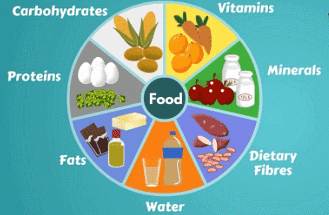 Components of food
Q2: What is Roughage? How does it help us?
Ans: Roughage is the undigested part of plant food. It is found in foods like fruits, vegetables, whole grains and leafy greens. Roughage helps food move easily through our digestive system and prevents constipation. It keeps our stomach and intestines healthy by helping remove waste from our bodies.
Q3: List any four things that are essential for remaining healthy.
Ans: The four things that are essential for remaining healthy are:
- Proper food
- Rest
- Exercise
- Proper sanitation
Q4: What do you understand by a Balanced Diet?
Ans: A diet that contains adequate amounts of different components of food (i.e. Carbohydrates, Proteins, Fats, Vitamins, Minerals) required for the healthy functioning of our body is called a balanced diet. A balanced diet includes foods like cereals, pulses, vegetables, fruits, milk, eggs or other protein sources, and a small amount of fats. It helps us grow well, stay active and resist illnesses.
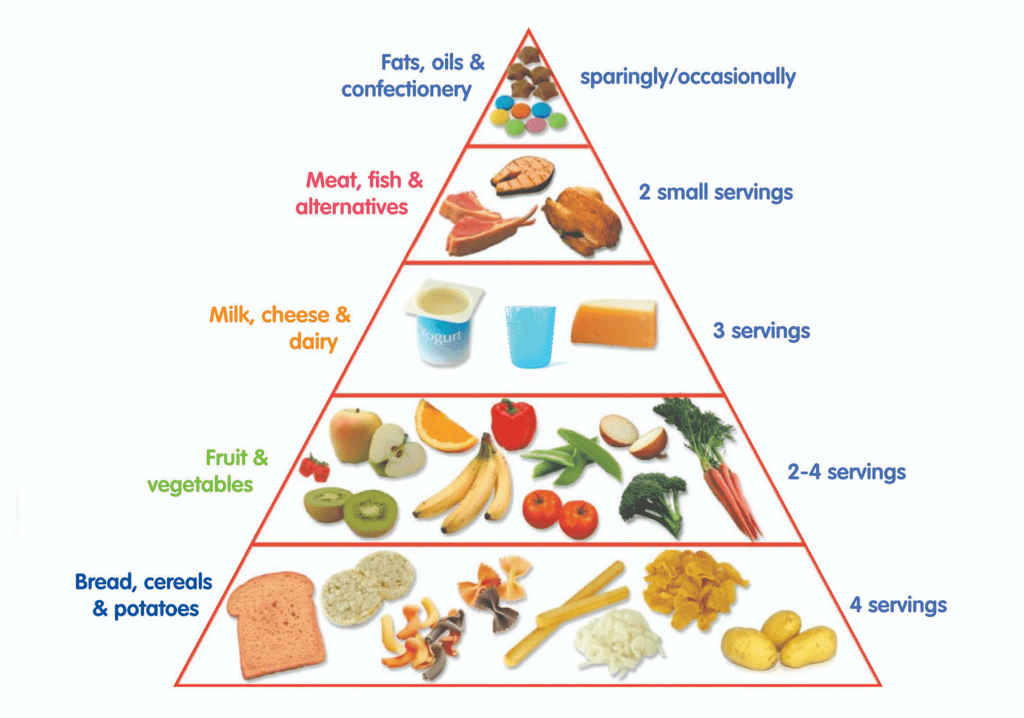 Balanced Diet
Q5: Why do we need food?
Ans: We need food for the following reasons:
- Food is important for keeping the body's immune system healthy, so we can fight infections.
- Food gives us energy to play, study and work.
- Food helps us to grow properly as we become taller and stronger.
- Food repairs the damaged cells of the body and helps wounds to heal.
Q6: Why do we need proper Rest and Exercise?
Ans:
- We need proper rest because lack of rest leads to improper functioning of body organs. Sleep and rest help the body to repair itself and keep the mind fresh.
- Exercise helps us to stay fit and healthy. It improves blood circulation, strengthens muscles and bones, and makes us feel happy and active. Examples of exercise are walking, running, games and playing outdoors.
Q7: Differentiate between Non-Communicable and Communicable Diseases.
Ans: The difference is as follows:
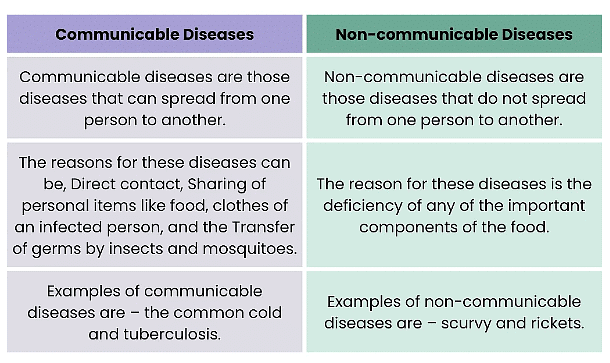 Differences between Communicable and Non-communicable Diseases
Q8: Is it possible to prevent Diseases? Mention any two ways.
Ans: Yes, it is possible to prevent disease.
The two ways are:
- Eating a healthy diet that includes a variety of foods to get all nutrients.
- Maintaining good hygiene such as washing hands before eating, keeping food covered and drinking clean water.
Q9: What are Deficiency Diseases? Discuss any 6 Deficiency Diseases, their cause, and the food that can be eaten to overcome them.
Ans: Deficiency diseases are those diseases that happen because of lack of any one component of food in the diet. These are also called non-communicable diseases.
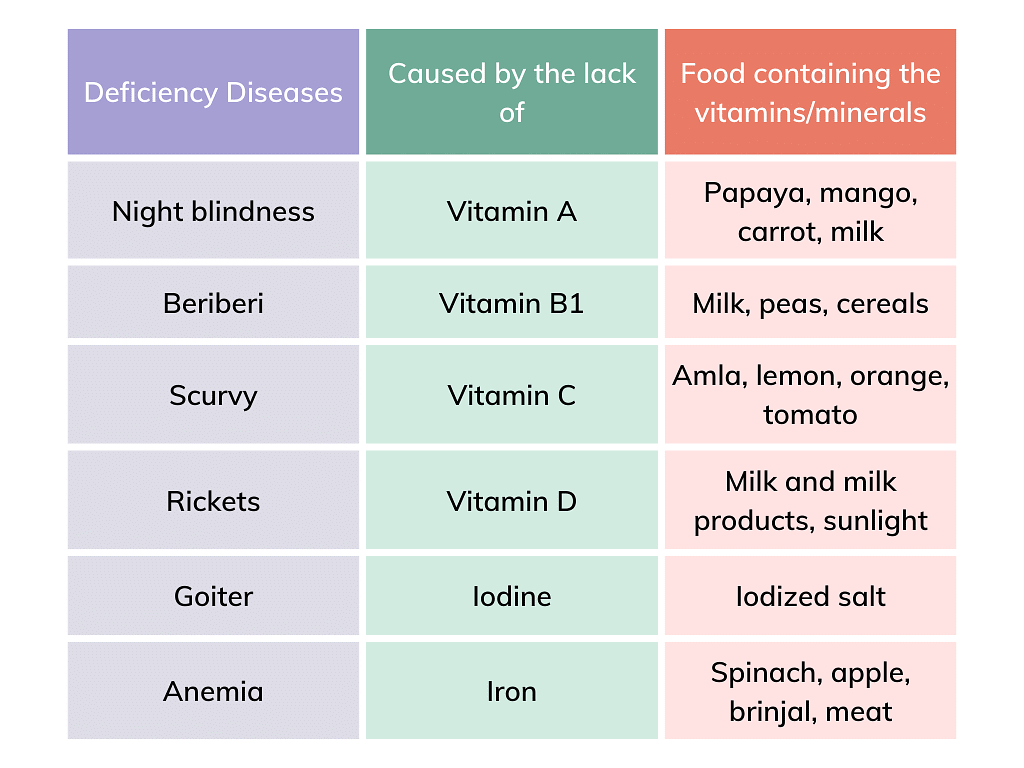 Deficiency Diseases and their cause
 Q10: Describe any two Communicable Diseases.
Ans: Two communicable diseases are: Measles and Malaria
1. Measles
(a) Reason:
- This disease can spread through germs. When an infected person coughs or sneezes, the germs can enter the air and make others sick.
- This disease can also spread by sharing personal items like handkerchiefs, towels or clothes with an infected person.
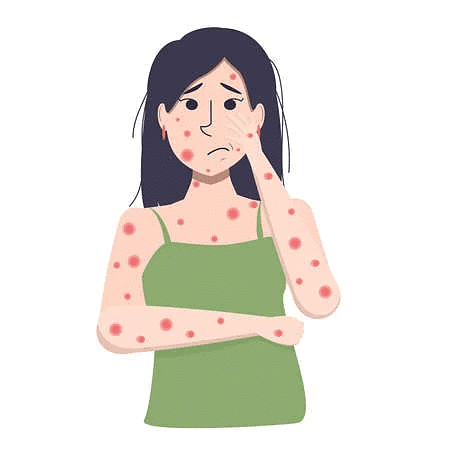 Measles
(b) Symptoms:
High fever and red spots (rash) on the body.
(c) Prevention and cure:
- Avoid direct contact with the infected person.
- Do not share the personal items of the infected person.
- Measles can be prevented by vaccination. With medical care and rest, the illness can be treated and the person will recover.
2. Malaria
(a) Reason:
This disease spreads through a mosquito bite.
(b) Symptoms:
High fever, shivering and vomiting.
(c) Prevention and cure:
- Do not allow water to stagnate near the house (for example in coolers or any open containers) because stagnant water allows mosquitoes to breed.
- Use mosquito nets and keep surroundings clean. Malaria can be cured by taking the right medicines prescribed by a doctor.
Q11: Explain any two Non-Communicable Diseases in relation to their symptoms and preventive measures.
Ans. Non-communicable diseases are scurvy and beriberi.
1. Scurvy
(a) Reason:
Scurvy is caused by a deficiency of vitamin C in the diet.
(b) Symptoms:
Scurvy can cause bleeding gums, loosened teeth and bleeding under the skin.
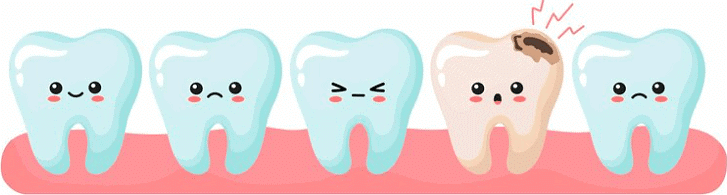 Sick Teeth
(c) Prevention:
We can prevent scurvy by eating foods rich in vitamin C such as citrus fruits (oranges), tomatoes, potatoes and green vegetables like broccoli.
2. Beriberi
(a) Reason:
Lack of vitamin B1 (thiamine) in the diet leads to beriberi.
(b) Symptoms:
Difficulty in walking and loss of feeling (sensation) in the hands and feet.
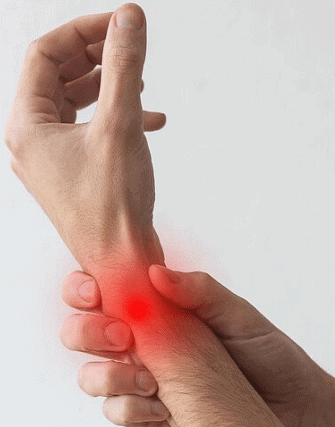 Pain in hand
(c) Prevention:
Eating a balanced diet that includes foods rich in vitamin B1 such as whole grains, nuts, peas and beans helps prevent beriberi.
Q12: Define Hygiene. Mention any five ways to maintain Proper Hygiene.
Ans: Hygiene means taking care of our bodies and keeping ourselves clean and healthy. It involves doing certain things every day to stay fresh and prevent illnesses.
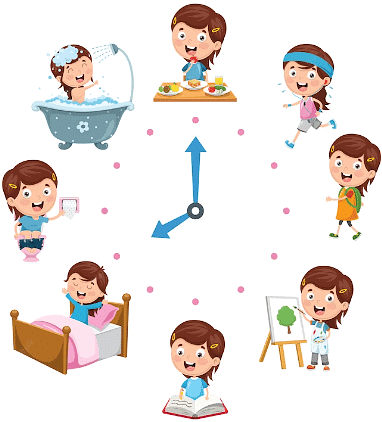 Personal Hygiene Habits
The five ways are:
- We should take a bath daily to keep the body clean.
- We should brush our teeth twice a day to keep our teeth and mouth healthy.
- We should trim our nails regularly to avoid dirt and germs under the nails.
- We should keep our surroundings clean so that germs and pests do not spread.
- We should wear clean clothes to stay healthy and comfortable.
Q13: Define Vaccination.
Ans:
- Vaccination is a way to protect our bodies from getting sick. It involves giving a small and safe amount of a germ or virus, called a vaccine, to our bodies.
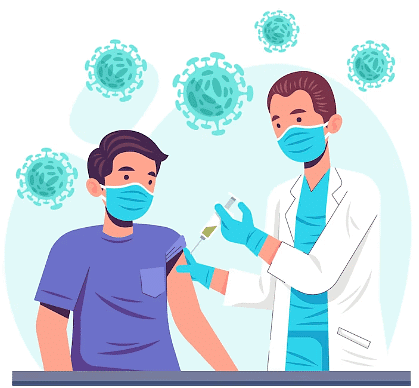 Vaccination
 - The vaccine helps our immune system recognise and remember that germ or virus so that if we meet the real germ later, our body knows how to fight it and keep us healthy. It is like giving our immune system a practice session.
- Vaccinations are given as injections (shots) or sometimes as drops in the mouth. They help prevent many diseases such as measles, polio and chickenpox.
Q14: Define Antibiotic.
Ans:
- Antibiotics are medicines that help our bodies fight against harmful bacteria.
 Medicines
 - Bacteria are tiny organisms that can cause infections in our bodies, making us feel sick.
- When we get sick with a bacterial infection, like a throat infection or a skin infection, antibiotics can help by killing the bacteria or stopping them from growing.
- It is important to take antibiotics only when prescribed by a doctor and to finish the full course so the infection is fully cured.
Q15: What causes diseases like Typhoid and Cholera?
Ans:
- These diseases are caused by consuming contaminated food or water.
- For example, typhoid is usually spread through food or water that contains typhoid bacteria. If we eat or drink such contaminated items, the bacteria enter our stomach and intestines and make us sick.
- Cholera is often spread through contaminated water. Drinking water that contains cholera bacteria can make a person ill. To prevent these diseases, we must drink clean water, wash hands before eating and after using the toilet, and cook food properly.
Q16: Define Allergy.
Ans:
 Sneezing
- An allergy occurs when a person reacts to substances in the environment that are harmless to most people. These substances are known as allergens.
- Allergens can be found in dust, pets, insects and some foods. When a person with an allergy meets an allergen, they may sneeze, have a runny nose, itching or rashes.
FAQs on Important Questions: Food, Nutrition, Health & Diseases
| 1. What are the different types of nutrients and why do we need them for our body? |  |
| 2. How can I tell the difference between healthy food and junk food? | |
| 3. What causes common diseases like cold, cough, and fever and how do we prevent them? | |
| 4. Why is a balanced diet important for Class 5 students during growth and development? | |
| 5. What is malnutrition and what health problems can it cause in children? | |