Practice Questions: Animal - Habitat and Adaptation

Q1: Define Habitat and Adaptation.
Ans:
Habitat: A habitat is the natural home or environment where an animal, plant, or organism lives. It is like their neighbourhood or house. Habitats provide everything a living thing needs to survive, such as food, water, shelter and suitable living conditions.
Adaptation:Special features or habits that help animals survive.. These features may be parts of the body, colours, or habits that make it easier to find food, avoid danger, keep warm or stay safe.
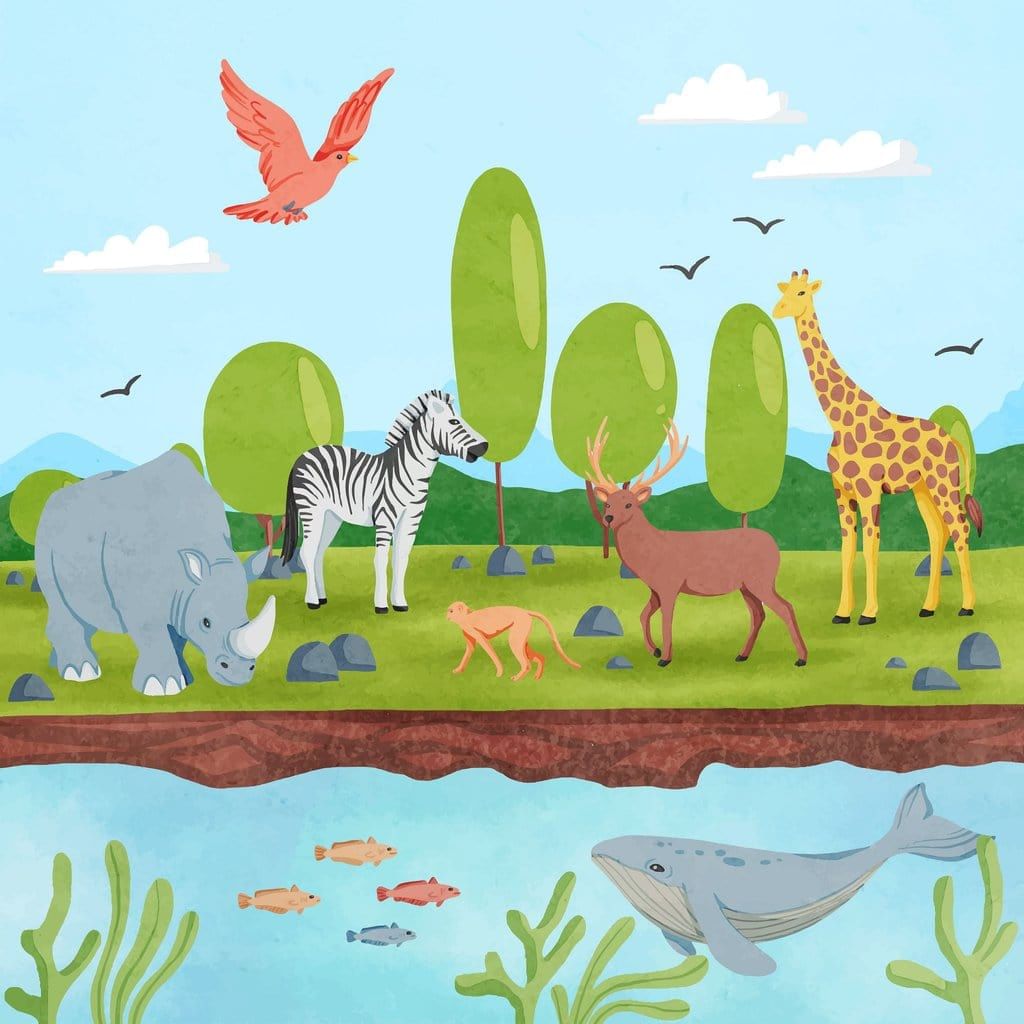 Animal Life
Q2: What does a habitat provide to an animal?
Ans: A habitat is a place where an animal lives. It provides everything an animal needs to survive and grow, such as:
- Shelter: A habitat gives animals a safe place to live and hide from predators. It also protects them from extreme weather like heavy rain, strong sun and cold.
- Food: Habitats supply animals with food. Different habitats have different kinds of food. For example, forests offer fruits, nuts and insects, while oceans provide fish and sea plants.
- Water: Water is essential for animals. Habitats such as lakes, rivers and ponds give animals water to drink and use for cleaning and cooling themselves.
- Oxygen: Just like humans, animals need oxygen to breathe. Habitats such as forests and grasslands have plants that produce oxygen through a process called photosynthesis. Animals inhale this oxygen to stay alive.
- Space: Habitats give animals enough space to move, find food and raise their young. Some animals need large territories to find food or mates, while others live comfortably in smaller areas.
- Suitable climate: Habitats offer the climate that suits the animals living there. Some animals prefer warm places and others are adapted to cold regions.
Q3: Name any three breathing organs in animals.
Ans: The three breathing organs in animals are:
- Lungs: Lungs are the breathing organs found in many land animals such as humans, dogs and birds. Lungs take in oxygen and remove carbon dioxide from the body.
- Gills: Gills are breathing organs found in many aquatic animals such as fish. They are located on the sides of the fish's head, behind the gill covers. They take oxygen dissolved in water and release carbon dioxide back into the water.
- Spiracles and Tracheae: Some insects, like grasshoppers, have a different breathing system. They have small openings called spiracles on the sides of their bodies that lead to tiny tubes called tracheae which carry air directly to the cells.
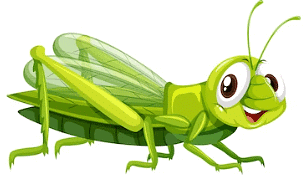 Grasshopper
 - These spiracles connect to a network of tiny tubes called tracheae, which extend throughout the insect's body.
- Air enters the spiracles and travels through the tracheae, delivering oxygen directly to the cells.
Q4: Describe the different types of habitats listing their special features.
Ans: The different types of habitats are:
(i) Forest:
- A forest is a large area covered with many trees and plants. Forests provide shelter and food for a large number of animals.
- For example - lions, tigers, monkeys and many birds live in forests.
(ii) Desert:
- A desert is a dry region that receives very little rainfall. It is usually very hot during the day and cold at night.
- Water is hard to find in deserts. Animals found in deserts include camels, rattlesnakes and ground squirrels, all of which have special features to save water.
(iii) Polar Regions and Mountains:
- The polar regions (Antarctica and the Arctic) and high mountains are extremely cold and often covered with snow and ice.
- Animals such as penguins, seals and walruses are found in polar regions; mountain animals have thick fur or fat to keep warm.
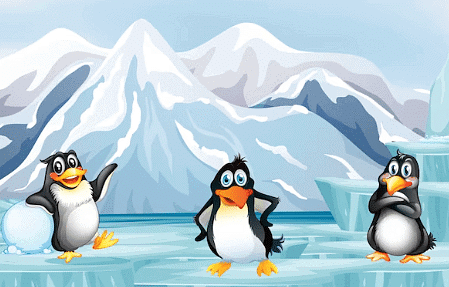 Penguins in Polar regions
(iv) Ocean:
- The ocean is a large continuous body of salt water that covers most of the earth's surface.
- It is the world's largest habitat and is home to many different kinds of life.
- It is divided into the Pacific Ocean, Atlantic Ocean, Indian Ocean, Arctic Ocean and Southern Ocean.
- A wide variety of animals live in the ocean such as whales, octopuses and jellyfish.
(v) Fresh Water:
- Rivers, lakes and ponds are examples of freshwater habitats.
- Many animals live in fresh water, for example fish and shrimp.
- Some animals live both on land and in water; these are called amphibians, for example frogs and salamanders.
Q5: Describe the different body coverings of animals with examples.
Ans: The different body coverings of animals are:
(i) Scales:
- Many fish are covered with flexible, overlapping scales that protect their bodies and help them move through water.
- Reptiles such as snakes, crocodiles and lizards also have scales. Their scales are often hard and help prevent water loss.
(ii) Shell:
- Animals like snails, tortoises and turtles have a hard shell that protects their bodies.
- These animals can often withdraw their head and legs into the shell when they sense danger.
(iii) Wool or Fur:
- Mammals such as sheep and bears have coverings of wool or fur.
- A sheep's wool keeps it warm and a bear's fur keeps it warm and dry in cold places.
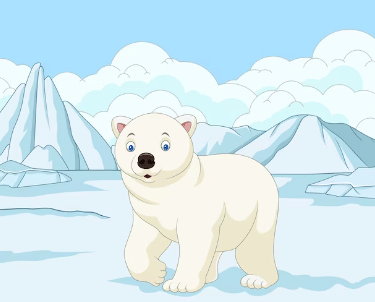 Polar Bear
 (iv) Feathers:
- Birds are covered with feathers.
- Feathers help birds to fly and also protect them from rain and cold.
Q6: Explain how animals are adapted to move in different ways.
Ans: Different animals have special body parts that help them move in ways suited to their habitats:
- Animals like dogs and cats walk and run using their legs, which help them chase food and escape danger.
- Birds use their wings to fly. Wings are adapted for different types of flight, such as soaring or fast flapping.
- Most snakes move by sliding and wriggling, helped by the scales on the underside of their body.
- Fish, dolphins and whales swim using fins or flippers that steer and push them through water.
- Penguins and seals have flippers which help them to swim well in water, though penguins use their legs for walking on land.
- Frogs hop using their strong back legs. Their webbed feet help them to swim faster in water.
Q7: Define Moulting, Camouflage, and spiracles.
Ans:
Moulting:
- Moulting is the process in which animals shed or replace their outer covering, such as feathers, hair or skin, so a new covering can grow.
- It is like putting off old clothes and growing new ones to fit a larger body.
- For example, snakes shed their skin periodically and birds replace old feathers during moulting.
Camouflage:
- Camouflage is a way animals hide by blending in with their surroundings.
- Camouflage allows animals to match the colours, patterns, and textures of their environment, making it difficult for others to see or notice them.
- For example, the chameleon changes its colour to blend with nearby leaves or branches.
Spiracles:
- Spiracles are small openings on the sides of some insects bodies that allow air to enter their respiratory system.
- Air passes through the spiracles into tubes called tracheae, which carry oxygen directly to the insect's cells.
- For example, grasshoppers and many moths breathe using spiracles and tracheae.
FAQs on Practice Questions: Animal - Habitat and Adaptation
| 1. What are the main differences between how a desert animal and a forest animal are adapted to survive? |  |
| 2. How do animals use camouflage and mimicry as survival strategies in their habitats? | |
| 3. What adaptations help aquatic animals like dolphins and fish breathe and move underwater? | |
| 4. Why do some animals hibernate or migrate, and how does this relate to their habitat and seasons? | |
| 5. Can animals adapt to new habitats, and what happens if their environment changes suddenly? | |