Long Questions with Answers - Indian Economy On The Eve Of Independence

Q.1. State the features of the Indian economy at the time of independence.
Ans: At the time of independence, the Indian economy exhibited several distinct and interlinked features. The main ones were as follows:
(A) Rampant Poverty: A very large proportion of the population lived in poverty. Unemployment and under-employment were widespread, literacy levels were low and real per capita income was extremely small, resulting in poor standards of living for the majority.
(B) Unequal Commercialisation of Agriculture: Commercial farming developed only in select, fertile and well-irrigated regions. Many areas remained dependent on traditional, rain-fed agriculture. This created regional disparities in agricultural productivity and income due to uneven access to irrigation, modern inputs and markets.
(C) Semi-Feudal Economic Relations: Land relations were largely feudal in character, with intermediaries like zamindars and jagirdars extracting large shares of the agricultural surplus. The economy was slow and stagnant, and growth in per capita income was negligible (around 0.5% per year).
(D) Poor Infrastructure: Transport, power, communications and other infrastructure were inadequate for broad-based development. Many villages lacked proper roads, electricity and market linkages, which impeded industrialisation and agricultural modernization.
(E) Limited Growth of Consumer Goods Industry: Some industries such as jute, cotton textiles, sugar and matches existed, but they were small in scale and largely oriented to serve colonial interests. Profits and control often rested with British firms rather than Indian entrepreneurs.
(F) Decline of Cottage and Handicraft Industries: Traditional handicrafts and cottage industries, once world-famous, had declined drastically under colonial policies and competition from cheap machine-made British goods. Many skilled artisans lost their livelihoods.
(G) Distorted Foreign Trade: India became primarily an exporter of primary commodities (raw materials) and an importer of finished goods. Trade policies and tariff structures ensured a dominant share of trade went to Britain, limiting India's ability to develop an independent industrial base.
(H) Other Social and Economic Challenges: Public health and education were poorly developed, malnutrition was widespread and population growth was rapid. These social indicators reinforced economic backwardness and limited human capital formation.
Q.2. How did the British exploit the Indian agriculture sector?
Ans:
(A) Agriculture employed about 85 per cent of the population, and the British used it as a source of cheap raw materials for their industries. Farmers were often compelled to grow cash crops (for example, indigo and cotton) rather than food grains, which led to commercialisation oriented towards export.
(B) Despite heavy dependence on agriculture for livelihood, the sector remained stagnant and in many areas deteriorated further under colonial rule.
(C) Defective land tenure systems such as zamindari and jagirdari transferred most of the agricultural surplus away from cultivators and discouraged investment in land improvement.
(D) The British paid little attention to land reforms or policies that might have increased productivity and farmers' incomes.
(E) India, which had earlier exported food grains, began to experience food shortages because emphasis shifted from food crops to cash crops and because productivity remained low.
(F) Low agricultural productivity resulted from limited use of modern technology, poor irrigation coverage and negligible use of chemical fertilisers; the produce of cash crops largely benefited British industries at home.
(G) Partition at independence removed some of the most fertile and well-irrigated tracts (notably large parts of Punjab and Bengal) from India's territory and disrupted raw-material supplies (for example, for jute), further weakening agricultural output.
Q.3. What was the condition of the industrial sector on the eve of independence?
Ans: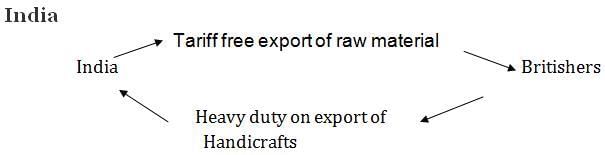
(B) Colonial policy turned India into a supplier of raw materials and a market for British manufactured goods, inhibiting the growth of a diversified domestic industry.
(C) There was a near absence of heavy and capital goods industries; the country depended heavily on imports of machines, engines and spare parts from abroad.
(D) Manufacturing capacity was limited. Modern industry began to appear only in the late nineteenth and early twentieth centuries and remained small relative to the size of the economy.
(E) The first major modern steel plant, TISCO (Tata Iron and Steel Company), began production in 1912 at Jamshedpur, marking an important but isolated instance of industrialisation.
(F) Some industries (sugar, cement, paper) expanded after the Second World War, yet the absence of a broad capital goods base kept the industrial sector's contribution to national income quite low.
Q.4. Explain the factors responsible for the downfall of indigenous handicraft industries during British rule.
Ans: The decline of Indian handicraft industries under British rule resulted from several inter-related causes:
(i) Unfair Tax and Trade Policies: Colonial tariffs and trade regulations favoured British manufacturers. Raw materials could be exported from India cheaply, while Indian finished goods faced heavy duties and restrictions, making them uncompetitive both at home and abroad.
(ii) Competition from Machine-Made British Goods: British mechanised industries produced cheaper and mass-produced goods. These displaced the costlier handmade Indian products in domestic markets, causing many artisans to lose customers and incomes.
(iii) Changing Patterns of Demand: The spread of Western tastes among a section of the Indian elite increased demand for imported British goods and reduced demand for traditional handicrafts.
(iv) Improved Transport Serving Colonial Interests: Railways and improved roads were developed largely to move raw materials and British manufactured products. This facilitated the penetration of cheap foreign goods into interior markets and further eroded local handicraft demand.
Q.5. Write a short note on the volume and composition of Indian trade during British rule.
Ans: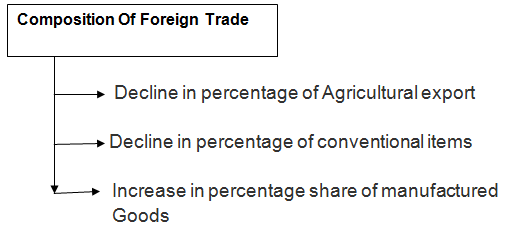
Q.6. Give a brief account of the state of various social development indicators on the eve of Independence.
Ans: Social development indicators at independence were poor and reflected deep human development deficits:
(i) Overall literacy was below 16%, while female literacy was alarmingly low at about 7%.
(ii) Public health infrastructure was inadequate or inaccessible to large sections of the population, which led to widespread communicable diseases.
(iii) Infant mortality was very high, around 218 per 1,000 live births.
(iv) Life expectancy at birth was low, approximately 44 years.
(v) Broad-based poverty prevailed and limited improvements in demographic and social indicators, reinforcing the cycle of underdevelopment.
Q.7. Explain the methods of colonial exploitation of the Indian economy.
Ans: The colonial regime extracted economic benefits from India through a variety of mechanisms. Key methods included:
(A) Treating India as a supplier of cheap raw materials for British industry after the Industrial Revolution, thereby restricting domestic value-addition.
(B) Using India as a captive market for British manufactured goods; infrastructure such as railways was often developed primarily to serve this trade pattern.
(C) Implementing exploitative land-revenue systems that diverted agricultural surplus away from cultivators to intermediaries and the colonial state, causing stagnation in agriculture.
(D) Imposing high administrative and military costs on India and repatriating savings and business surpluses to Britain in the form of remittances and profits.
(E) Imposing discriminatory tariffs and trade policies that destroyed the export markets for Indian handicrafts and favoured British goods.
(F) Neglecting the development of broad-based economic and social infrastructure (for example, power, education and health) that would have supported balanced economic growth and human development.
FAQs on Long Questions with Answers - Indian Economy On The Eve Of Independence
| 1. What were the main features of India's economy before independence in 1947? |  |
| 2. How did British colonial rule impact India's industrial development and manufacturing sector? | |
| 3. What was the condition of India's agricultural sector on the eve of independence? | |
| 4. Why was India's per capita income so low compared to developed nations before 1947? | |
| 5. What infrastructure deficiencies existed in the Indian economy at the time of independence? | |