Short Answer Questions: The Ball Poem

Q1: What do you think the poet means by the following lines?
People will take Balls,
balls will be lost always, little boy.
And no one buys a ball back.
Ans: The poet's lines serve as a reminder that loss is an inevitable part of life, and people must learn to accept it. The message is that one must take responsibility for their losses and not expect anyone else to compensate for them.
Q2: Why is it important for everyone to experience loss to stand up after it?
Ans: Loss is an essential aspect of life that helps individuals learn how to deal with pain and emerge stronger from it. Experiencing loss helps individuals to value their possessions and teaches them how to move forward after losing something they cherish.
Q3: What does the poet mean by "epistemology of loss"?
OR
How important is the learning to "epistemology of loss" for the boy?
Ans: The poet uses the term "epistemology of loss" to refer to understanding the nature of loss and learning how to cope with it. It is the boy's first lesson in realising that losing things is a part of life and that he must emotionally accept such losses instead of expecting that someone will replace what is gone.
Q4: What does 'in the world of possessions' means?
Ans: The phrase means that we live in a world where people own things and are attached to them, and losing such things is inevitable. The poet highlights that the boy is beginning to understand this reality and accept that possessions cannot be held forever.
Q5: How can the boy stand up again? What every man must know one day?
Ans: The boy has to understand the epistemology of loss - the knowledge and nature of the loss. This is not the problem of the boy alone. Everyone has to know it sooner or later that it is useless to weep over the loss of our dearest childhood days. One should move ahead forgetting all such losses. Life has to be lived only by moving ahead in it.
Q6: Express your views on the title of the poem, "The Ball Poem'.
Ans: The title suggests a simple poem about a ball, but the poem explores something deeper. Through the loss of a small object, the poet presents the larger idea of dealing with grief and responsibility. The title is simple, yet it leads into a powerful message about learning to face loss.
Q7: What is the theme of the poem -'The Ball Poem'?
Ans: In this world sometimes we lose things which we love and are attached to. We must not feel disheartened, dejected and desperate but try to stand up and bear the loss through self-understanding as the boy who lost the ball he loved was trying to learn.
Q8: A ball is an easily available, inexpensive thing. Then, why is the boy so sad to lose it?
Ans: No doubt the ball is an easily available and inexpensive item but the ball, the boy has lost is valuable for him. His memories of younger days are associated with it because he had been playing with it for a long time. It was not an ordinary but a special ball for him. No other ball could take its place. So, he is sad to lose it.
Q9: What shows that the ball was valuable for the boy?
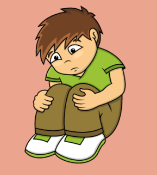
Ans: The ball was valuable for the boy is obvious (clear) from the way he reacts after losing it He was shocked, remained fixed, and trembled with grief staring at the place where the ball had fallen. All this shows that he loved the ball and it was valuable for him.
Q10: Why did the poet not console the boy?
Ans: The poet did not console the boy for two reasons-One, the boy was too shocked and grief-stricken to listen to any sense. Second, the poet also observed that the boy was trying to stand up or bear the loss on his own through self-understanding which is much more reflective and lasting. The poet's or anybody else's consoling would not be that effective.
Q11: Explain the line, "And no one buys a ball back. Money is external".
Ans: This line means that no one can buy something that is lost forever. No one can buy the boy that very ball that he has lost. Money is an external thing. It is a medium of possessing things. But even money cannot compensate for the sense of loss suffered by a person.
Q12: Why does the poet say, "Balls will be lost always"?
Ans: Hem balls are the symbol of man's possessions. We love our things. Some things are dearer to us than others. But nothing is permanent in life. We may lose our dear things. Then we suffer from a sense of loss. This is experienced by everyone in life. That is why, the poet says, "Balls will be lost always".
Q13: What is the main idea of the poem?
Ans The main idea of the poem is 'the sense of loss in life'. The loss is a fact of life. The sooner man learns to tolerate it the better it is. When we lose something for the first time, we feel very sad. But later we learn to live with our loss. In this poem, the boy loses his ball. He is very sad. The poet can buy him another hall. But he does not want to do so. He wants the boy must learn the bitter truth of life that everyone can suffer the loss of something dear.
Q14: How did the poet witness the whole scene of the boy losing his ball?
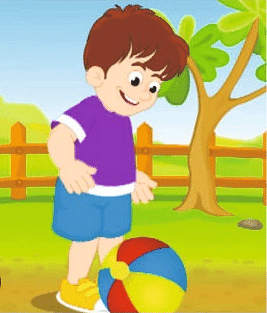
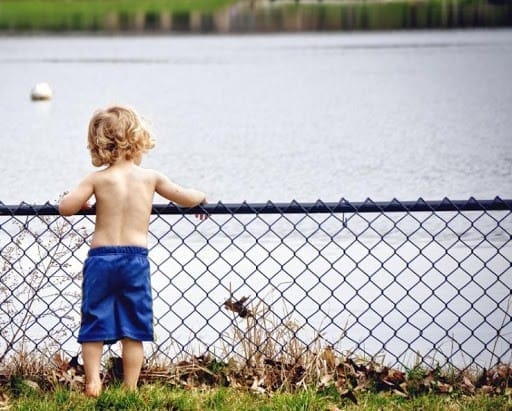
Ans: The poet saw the boy playing with his ball. While he was playing with it, the ball bounced down the street 'merrily'. And then the most unexpected thing happened. Rolling down the street and after taking a few bounces, finally, the ball fell down in the water of the harbor below.
Q15: How did the boy react after his ball fell into the water of the harbor?
Ans: The falling of the ball in the water was quite sudden. Actually, it was an unexpected loss. The boy was completely shaken but couldn't even move a step. He stood there fixed to the ground like a statue. He constantly continued staring at the point where his ball fell into the harbor. It seemed as if he was thinking of his childhood days which had disappeared forever like the lost ball.
Q16: Does the lost ball stand for the metaphor of the boy's lost childhood? How?
Ans: The boy has lost his ball. It has fallen down into the harbor. It will not be found back again. However, through the metaphor of the lost ball, the poet wants to highlight a bigger loss. It is the loss of his childhood. Like the lost ball, the childhood days which he cherishes still now, have been lost forever. This makes the loss inconsolable.
Q17: Why does the poet say: 'No use to say 'O there are other balls'?
Ans: The poet says this because the boy is not upset about losing just any ball; he is grieving over a ball connected with his personal memories. A new ball cannot replace the one he has lost, just as no material wealth can bring back lost moments of childhood.
Q18: Why doesn't the poet want to intrude on 'him'? What does he consider the safest course?
Ans: The poet doesn't want to intrude on the inconsolable boy. There is no gain in telling him that the ball he has lost costs almost nothing. He can buy a new ball easily in a dime. Instead of sermonizing, the poet leaves it on the boy to develop a new sense of responsibility. It will help him in bearing the loss.
Q19: What is the general rule of this 'world of possessions'? Why is money 'external'?
Ans: Getting and losing is a natural cycle. Many boys before him have bought and lost their balls. This process will go on forever. However, no amount of money can buy back the same ball that has been lost forever. Money is external and has its own limitations. Wealth can't compensate such emotional losses such as the loss of one's childhood days.
Q20: What is the message that John Berryman gives to the readers in 'The Ball poem'?
Ans: The poem conveys that gain and loss are natural parts of life. Everyone must learn how to face loss and accept that certain things, once gone, can never be recovered. The poet encourages readers to understand the nature of loss and move forward in life with maturity.
FAQs on Short Answer Questions: The Ball Poem
| 1. What is the theme of "The Ball Poem"? |  |
| 2. Who is the speaker of the poem? | |
| 3. What is the significance of the ball in the poem? | |
| 4. How does the boy feel when he loses the ball? | |
| 5. What is the message conveyed by the poem? | |





