Short Answer Questions: Fog

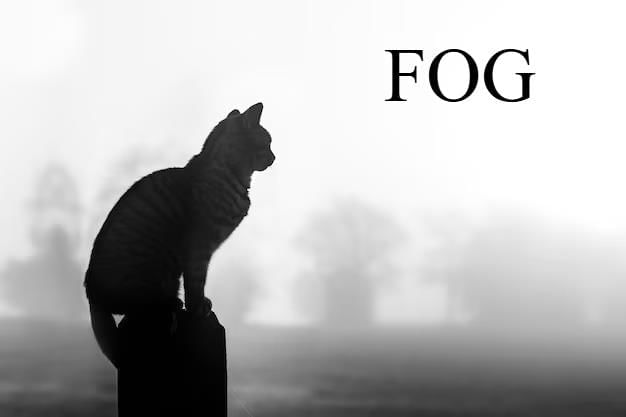
Q1. How does a cat behave?
Ans: A cat behaves quietly and stealthily, moving on its padded feet so that it makes almost no sound. It often sits on its haunches to watch its surroundings, alert and still, and after a while it gets up and moves on without drawing attention.
Q2. How is the fog like a cat?
Ans: The poet compares the fog to a cat because it arrives quietly, much like a cat would. It sits and observes the harbour and city, just as a cat does when it is watching its surroundings. Eventually, the fog moves on, similar to a cat that wanders off to find a new spot. These characteristics make the comparison between the fog and a cat quite fitting.
Q3. How does the fog spread over the harbour and the city?
Ans: The fog comes in quietly and slowly, settling over the harbour and the city without a sound. It lies there for some time as if it is resting or watching, and eventually it lifts and drifts away, leaving the places it covered.
Q4. Describe the similarities that have been mentioned in the poem between the fog and a cat.
Ans: The fog and the cat share several striking similarities. Both arrive suddenly and silently, both appear to sit and observe their surroundings, and both move away just as quietly. The fog, like a cat, seems to wrap itself around the harbour and the city and then vanish when it chooses.
Q5. How does the poet make the fog like a living creature?
Ans: The poet uses a direct comparison - a metaphor - by likening the fog to a cat and so gives it living qualities. By describing its silent arrival, its stillness as it watches, and its graceful departure, the fog is made to seem alive and animal-like.
Q6. Write the central idea of the poem "Fog".
Ans: The central idea is that fog behaves like a living creature; the poet compares it to a cat to show its quiet, sudden arrival, its stillness as it covers the harbour and the city, and its eventual, silent departure. This image highlights the fog's transient and gentle nature.
Q7. The poet actually says that the fog is like a cat", With reference to the poem, 'Fog' explains this statement.
Ans: The poet directly compares the fog to a cat and then supports that comparison by showing similar actions. The fog arrives without sound, settles as if sitting on its haunches to observe the harbour and the city, and then moves away quietly - all actions that recall a cat's behaviour.
Q8. How does the poet make the fog like a living creature?
Ans: The poet makes the fog seem alive by attributing to it cat-like actions: it comes silently, perches as if watching, and then slips away. This use of metaphor turns a natural phenomenon into a familiar, animate image .
Q9. How is the fog like a cat? What three things suggest it?
Ans: Three things suggest that the fog is like a cat: it arrives silently, it sits and watches the harbour and the city as if perched on its haunches, and it moves away quietly after a while.
Q10. How does the poet describe the fog's movements?
Ans: The poet describes the fog's movements as slow and silent: it slips in, settles down, watches for a time, and then rises and drifts away without any noise, just as a cat would move gracefully and quietly.
Q11. How does the poet employ the double imagery of the fog and the cat?
Ans: The poet uses a single compact image to suggest both the fog and the cat together. By describing actions that fit a cat - silent approach, sitting and watching, then moving off - the fog is seen and felt as if it were a small animal; the two images blend so the fog becomes cat-like and the cat takes on the quiet, enveloping quality of fog.
Q12. Describe the similarities that have been mentioned in the poem between the fog and a cat.
Ans: The poem links the fog and the cat by showing how both arrive without sound, both seem to sit and observe their surroundings, and both leave as quietly as they came. Each image emphasises stillness, watchfulness and a brief, passing presence.
Q13. Which aspect of nature Carl Sand-burg present in the poem 'Fog'?
Ans: Carl Sandburg presents the transient and animate aspect of nature. He shows fog as a brief, living visitor that quietly envelops places like the city and the harbour and then disappears, illustrating nature's changing and fleeting character.
Q14. Does the poet actually say that the fog is like a cat? Then how do we know that the fog is like a cat?
Ans: Yes, the poet explicitly compares the fog to a cat. We know this because he describes the fog arriving softly, sitting as if on its haunches to watch the harbour and city, and then leaving silently - all behaviours that match a cat's movements.
Q15. What three things tell us that the fog is like a cat?
Ans: The three things are its silent arrival, its quiet pause while it seems to watch the harbour and the city, and its graceful, noiseless departure. These features together create the cat-like image of the fog.
FAQs on Short Answer Questions: Fog
| 1. What is the central theme and main idea behind the poem "Fog" by Carl Sandburg? |  |
| 2. Why does Carl Sandburg compare fog to a cat in "Fog"-what's the deeper meaning? | |
| 3. What literary devices does Sandburg use in "Fog" and how do they affect the poem's meaning? | |
| 4. How should I interpret the "small shoulders" and "haunches" descriptions in "Fog"-what do these lines suggest? | |
| 5. What makes "Fog" by Carl Sandburg a good example of imagist poetry for Class 10 CBSE students? | |





