Long Answer Questions: Glimpses of India (Part- II) Coorg

 Q1. Describe the rainforests, the river Kaveri and coffee plantations in Coorg.
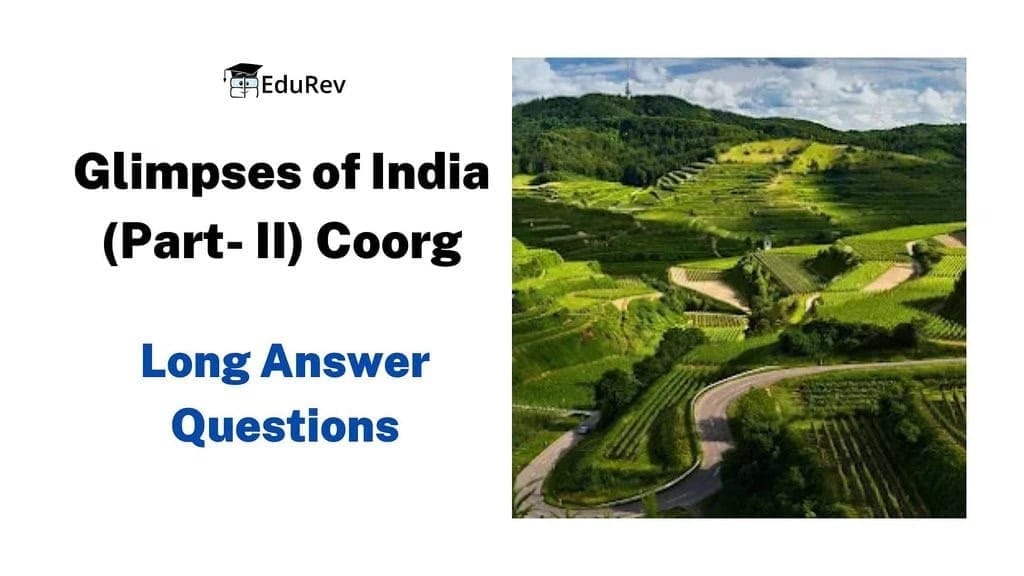
Ans: Coorg, also called Kodagu, is famed for its green, undulating landscape. Its evergreen rainforests cover about thirty percent of the district and receive heavy monsoon rainfall, which keeps the soil fertile and the vegetation dense. These forests support a rich variety of wildlife, including many species of birds, bees, butterflies, Malabar squirrels, langurs and wild elephants. The climate and thick tree cover help conserve water and protect the hills from erosion.
The Kaveri River has its source in Coorg and flows on to water large tracts of Karnataka and Tamil Nadu before joining the Bay of Bengal. Its clear pools and fast-flowing stretches are home to the Mahaseer, a prized freshwater fish popular with anglers and important to river ecology.
Coorg's coffee plantations are a defining feature of the region. The combination of rich red soil, high rainfall and cool hill temperatures produces high-quality coffee beans. Plantations form a patchwork across the slopes, and many estates welcome visitors who can learn about the coffee-making process and taste freshly brewed coffee while enjoying the fragrant, leafy surroundings.
Q2. What does the author say about the people of Coorg?
Ans: The author portrays the people of Coorg as brave, independent and proud of their distinct identity. He notes that they follow special marriage customs, religious practices and martial traditions different from those of many other Indian communities. Two theories about their ancestry are mentioned: one connects them to soldiers of Alexander who may have settled and intermarried here, and the other suggests possible Arab influence reflected in certain styles of dress. The people are known for warm hospitality and valour; the Coorg Regiment has a distinguished record in the Indian Army and General Cariappa, India's first Chief of Army Staff, was a Coorgi. Traditionally, the Kodavus have also been permitted to carry firearms as part of their customs.
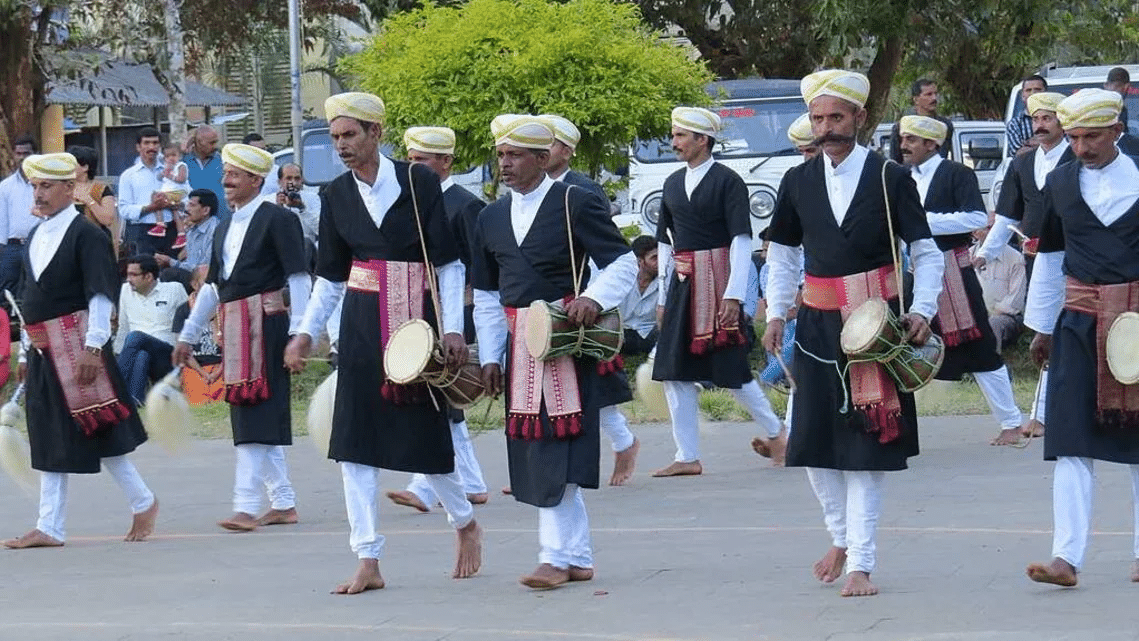 Kodava People
Q3. Describe the physical and geographical features of Coorg.
Ans: Coorg is a small but beautiful district in Karnataka, situated midway between Mysore and the coastal town of Mangalore. It is characterised by rolling hills, thick evergreen rainforests and extensive coffee plantations. Nearly thirty per cent of the district is covered with forests, which support rich wildlife and keep the region cool and green throughout the year. Coorg receives heavy monsoon rainfall, followed by a pleasant season from September to March, making it ideal for sightseeing. The Brahmagiri hills rise in the district and offer scenic views of mist-covered valleys. Tourist places such as the sixty-four-acre island of Nisargadhama provide peaceful surroundings and glimpses of local flora and fauna. All these physical features together give Coorg its natural charm and support its agricultural activities.
Q4. What are popular theories regarding the descent of the people of Coorg?
Ans: There are two widely mentioned theories about the origin of the Coorgi people. One suggests a Greek descent, proposing that soldiers from Alexander's army moved south and settled in the hills, marrying local women and influencing customs and appearance. The other theory proposes Arab origins, noting resemblances in traditional dress - such as the long black coat with an embroidered waist-belt called the kuppia - to garments like the kuffia worn in Arab regions. Both theories aim to explain the distinct culture and customs of the Kodavus, though neither is presented as definitive.
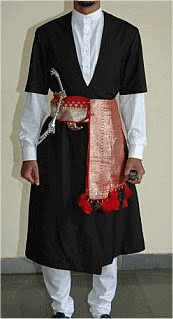 Kuppia
Q5. Which kind of animals are we likely to see at Coorg?
Ans: Coorg's forests and rivers are home to a rich variety of wildlife. Visitors can see many species of birds, bees and butterflies, along with Malabar squirrels and langurs among the trees. Wild elephants are also found in the forested areas. The river Kaveri and its clear pools support fish such as the Mahaseer, which is highly valued by anglers. This diverse fauna adds to the natural charm of Coorg and makes it an attractive destination for nature lovers.
Q6. Why does the author call Coorg 'a piece of heaven' that must have drifted from the kingdom of God?
Ans: The author calls Coorg 'a piece of heaven' because of its extraordinary natural beauty and tranquil atmosphere. The district's rolling hills, mist-covered valleys, and vast stretches of evergreen forest give it an idyllic, almost otherworldly quality. The scent of fresh coffee from plantations, clear streams of the Kaveri where kingfishers and Mahaseer can be seen, playful langurs and squirrels, and the sight of elephants being bathed all add to the impression of a peaceful paradise. Places such as the Brahmagiri hills and Nisargadhama enhance this feeling, making Coorg seem like a small, perfect corner of nature set apart from the rush of everyday life.
FAQs on Long Answer Questions: Glimpses of India (Part- II) Coorg
| 1. Coorg ke prakritik saundarya ke baare mein kya khaas hai? |  |
| 2. Coorg ki sanskritik virasat kya hai? | |
| 3. Coorg mein kaun se pramukh paryatak sthal hain? | |
| 4. Coorg ka mausam kaisa hota hai aur yahan kab jana uchit hai? | |
| 5. Coorg ki khas vyanjan kya hain jo paryatak ko jarur try karna chahiye? | |