Character Sketches: The Sound of Music

Part I - Evelyn Glennie Listens to Sound without Hearing It
Evelyn Glennie was a girl who loved music but slowly lost her hearing. Her hearing loss was first noticed at age eight and confirmed by age eleven. Despite this challenge, she followed her passion and attended the Royal Academy of Music. She learned to open her mind and body to sounds and vibrations, becoming a skilled percussionist with the help of her mentor, Ron Forbes. Evelyn achieved remarkable success, winning the Royal Philharmonic Society's Soloist of the Year Award and inspiring many, especially deaf children. She performed around the world, in places such as prisons and hospitals, and contributed back by mentoring others. Her journey illustrates that determination and passion can lead to great accomplishments and encourages people to believe in their dreams.
Character 1: Evelyn Glennie
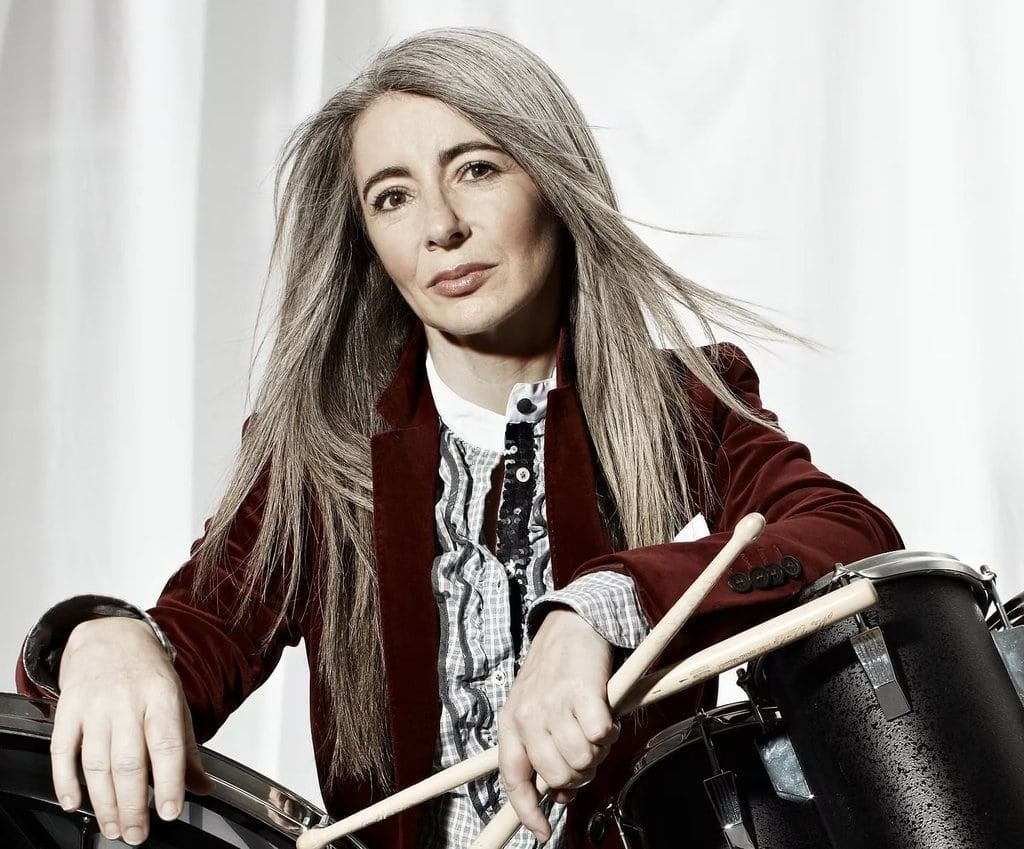 Evelyn Glennie
(a) Character Traits: Evelyn is determined, self-believing, dedicated, courageous and confident. These traits show in her refusal to accept limitations imposed by hearing loss and in her persistent efforts to pursue music.
(b) Role: Evelyn Glennie is the main character of the narrative. Although she began to lose her hearing in childhood, she refused to let her disability define her. She opted not to study at a school for the deaf to live and learn in a "normal" environment, continuing her musical training and social life. Her role is that of an inspiring musician who finds new ways to experience sound and communicates the message that disability need not prevent achievement.
(c) Learning and Method: Evelyn learns to feel sound as vibrations rather than relying only on her ears. She practises sensing musical notes through her skin, hair, fingers and feet. With persistence and specialised training, she gains admission to the Royal Academy of Music in London, where she excels as a percussionist. Her learning process emphasises experimentation and body awareness: she was taught to tune drums and then to notice which parts of her body registered higher or lower vibrations. This practical, tactile approach enabled her to develop exceptional musical skill despite deafness.
(d) Significance and Influence: Evelyn's achievements - performing internationally, winning major awards and mentoring others - make her an inspirational figure, particularly for children and young people with hearing impairment. Her life demonstrates how creative problem-solving, adaptive techniques and supportive mentorship can convert a limitation into a unique strength.
Character 2: Ron Forbes
 Ron Forbes
(a) Character Traits: Ron Forbes is encouraging, perceptive, patient, knowledgeable and supportive. As a teacher, he shows empathy and inventiveness in adapting instruction to Evelyn's needs.
(b) Role: Ron Forbes is Evelyn Glennie's key mentor. He recognises her musical potential and uses practical methods to help her develop sensitivity to sound through vibration. He tunes two large drums to different notes and asks Evelyn to attend to the sensations produced. He prompts her to "not listen through your ears" but to try to sense sound in other ways. Through his guidance she discovers that she can feel the higher drum from the waist up and the lower drum from the waist down. His belief in her ability and his specific, thoughtful teaching methods build her confidence and set her on the path to success.
(c) Importance in the Narrative: Ron Forbes exemplifies the crucial role a mentor plays in nurturing talent. His support is an essential factor in Evelyn's achievement; without such sensitive instruction and encouragement, her particular method of experiencing music might have taken much longer to develop.
(d) Combined Message from Both Characters: Together, Evelyn Glennie and Ron Forbes illustrate how inner determination and external support combine to overcome obstacles. The story stresses resilience, adaptive learning and the value of teachers who recognise and cultivate unusual ability.
Part II - The Shehnai of Bismillah Khan
Ustad Bismillah Khan was a renowned shehnai player from Bihar, born on 21 March 1916 into a respected family of musicians. At the age of three he moved to his maternal uncle's home in Benaras, where he was captivated by watching his uncles play the shehnai. His career began to flourish with radio broadcasts, and he became the first Indian to greet the nation with his shehnai on 15 August 1947 from the Red Fort. Khan performed worldwide and received many awards, including national honours such as the Padma Shri, Padma Bhushan, and Padma Vibhushan. In 2001 he was awarded India's highest civilian honour, the Bharat Ratna. Despite invitations to perform abroad and opportunities to settle elsewhere, he remained deeply connected to Benaras and the Ganga. He famously expressed how he thought of Benaras while away and missed the unique traditions of his native region, thus demonstrating his strong attachment to Indian music and culture.
Character 1: Bismillah Khan
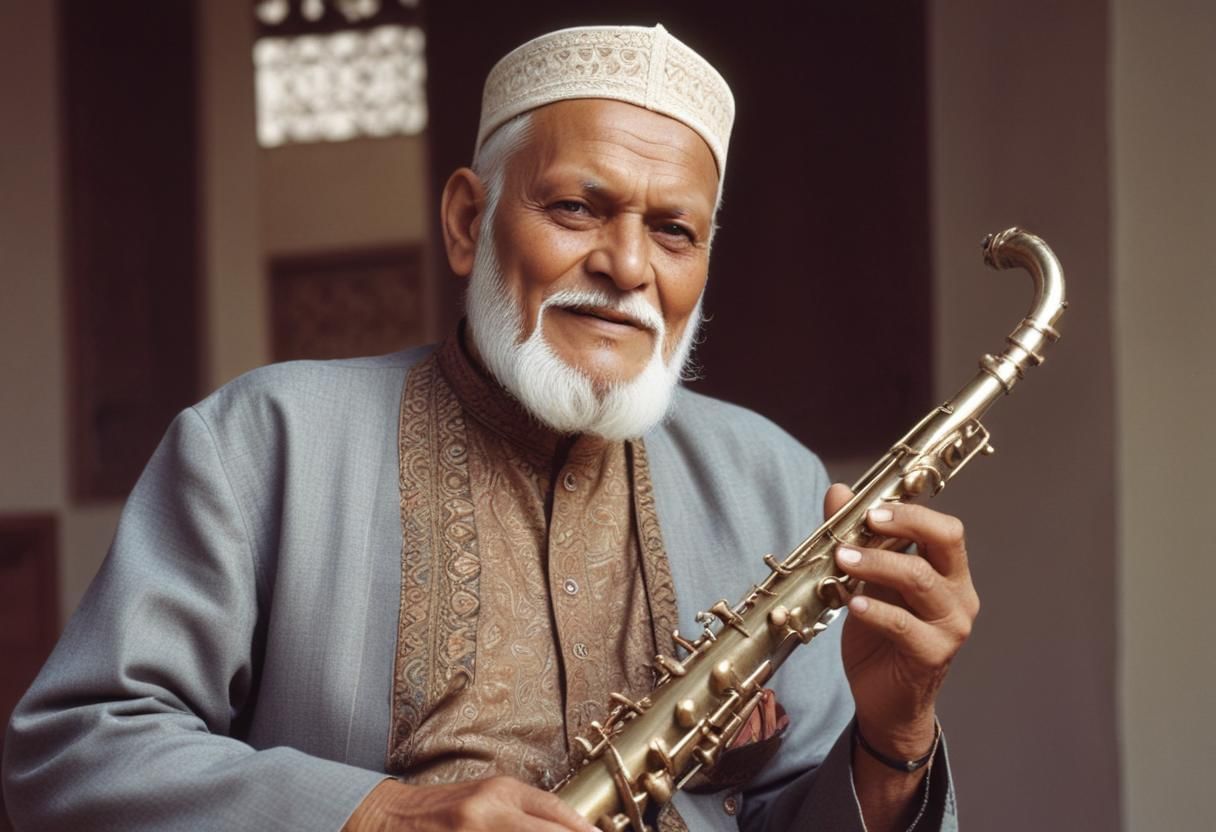 Bismillah Khan
(a) Character Traits: Ustad Bismillah Khan was a great musician, deeply patriotic, respectful of cultural traditions, devout in his own way, and generous in spirit. He combined artistic mastery with humility and broad humanism, showing respect for different faiths and communities.
(b) Role and Life Story: Bismillah Khan is the central figure of this narrative. Born into a family of shehnai players, he inherited musical training from an early age. His life displays gradual progress from local performances to national and international recognition. He improvises on traditional ragas, blends the timbre of the shehnai with the sounds of the Ganga and brings the instrument from temple and court music into public concert halls. On 15 August 1947 he played the shehnai at the Red Fort to mark India's independence, symbolising the instrument's connection to national identity.
- He practised diligently and preserved the traditional repertoire while also introducing creative improvisations.
- His performances on radio and at public concerts popularised the shehnai beyond its earlier ceremonial contexts.
- He received many national honours, culminating in the Bharat Ratna in 2001, in recognition of his lifelong service to Indian music.
- He remained devoted to Benaras (Varanasi) and its culture; his daily association with the Kashi Vishwanath temple is a notable example of his respect for local religious practice, despite belonging to a different faith.
- He refused to permanently settle abroad, emphasising that his music and his identity were rooted in India.
(c) Significance: Bismillah Khan's life bridges religion, culture and music. His art was a form of national expression and cultural continuity, and his personality represented an inclusive spirit that respected Indian traditions while appealing to global audiences.
Other Characters and Contexts
(a) Family of Musicians: Bismillah Khan belonged to a family with a strong musical lineage. His grandfather, Rasool Bux Khan, had played the shehnai in royal courts, and his father, Paigambar Bux, was also a respected musician. This background provided the early training and environment that nurtured his talent.
(b) Students and Admirers: Over the years many students, fellow musicians and admirers supported and promoted Bismillah Khan's career. Admirers invited him to perform abroad and encouraged wider recognition of his art.
(c) Audiences and International Communities: The audiences who heard Bismillah Khan - in India and overseas - appreciated the unique sound of the shehnai and honoured him with invitations to prestigious venues and events. These audiences helped spread the instrument's popularity globally.
(d) Kashi Vishwanath Temple: The temple and its ritual context represent the cultural and religious setting in which Khan regularly performed. His association with the temple highlights his respect for local tradition and his belief that music can connect people across religious boundaries.
Final note: Both character sketches - that of Evelyn Glennie and of Bismillah Khan - show how musicians overcome limitations, preserve traditions, innovate within their art and inspire others. When writing a character sketch for class or exams, present the person's background, main traits, key actions or achievements, relationships (teachers, family or followers), and the wider influence or message they represent. Use clear, descriptive language and give examples from the life or a story to support the points you make.
FAQs on Character Sketches: The Sound of Music
| 1. What is the inspiration behind the character Evelyn Glennie in the article "Evelyn Glennie Listens to Sound without Hearing It"? |  |
| 2. How does Evelyn Glennie perceive and interpret sound without hearing it? | |
| 3. Who is Ron Forbes and what role does he play in Evelyn Glennie's life? | |
| 4. How does Bismillah Khan showcase his musical talent in the article "The Shenai of Bismillah Khan"? | |
| 5. What is the significance of Bismillah Khan's musical legacy in Indian classical music? | |