Summary - If I Were You

Key Points of the Story
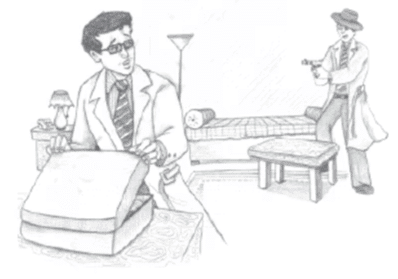
- The scene opens in a small cottage where Gerrard is making a phone call and packing a travelling bag.
- An armed intruder enters the cottage, carrying a revolver, and threatens Gerrard.
- The intruder intends to learn about Gerrard's life, to kill him and assume his identity in order to escape capture.
- Gerrard remains calm and uses his wit and quick thinking to engage and distract the intruder.
- Through their conversation Gerrard discovers that the intruder is a criminal on the run and is frightened of the police.
- Gerrard cleverly persuades the intruder that he too is in trouble and suggests that they might escape together.
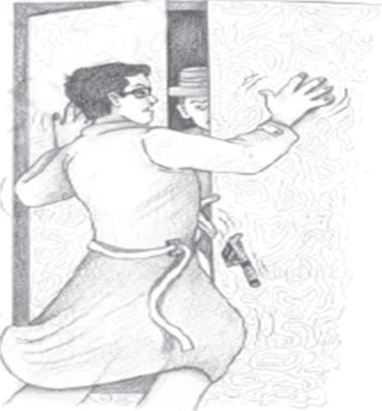
- While the intruder is distracted, Gerrard overpowers him, forces him into a cupboard and locks him inside.
- Gerrard then seizes the intruder's revolver and calls the police, showing his presence of mind and resourcefulness.
- The scene ends with Gerrard calmly talking on the telephone as he waits for help to arrive.
Detailed Summary
Setting
The action takes place in a small, cosy cottage with simple furnishings: a small table, a couple of chairs and a divan on the right. There are two doors (one at the back and one on the left) and a telephone on the table. The stage directions create a modest domestic setting which contrasts with the danger that enters the scene.
Introduction of Gerrard
Gerrard is introduced as a man of medium height, wearing horn-rimmed spectacles, a lounge suit and a great coat. He speaks with a cultured voice. At the opening he is engaged in a telephone conversation and afterwards begins to pack a travelling bag, indicating he is preparing to leave.
Arrival of the Intruder and First Confrontation
Suddenly a man enters who resembles Gerrard in build but differs in dress: he is more flashy and carries a revolver. He bumps against the table as he comes in, making his presence known.

The intruder behaves aggressively, orders Gerrard to raise his hands and demands information. Gerrard keeps his composure and answers in a measured, often ironic manner. He does not panic; instead he uses conversation to unsettle the intruder and to gather information about him.
Cat-and-Mouse Dialogue
The intruder seeks facts about Gerrard and is suspicious of any untruths. Gerrard, while outwardly appearing cooperative, manipulates the dialogue by asking about the intruder's motives and background. It becomes clear that the intruder specialises in stealing jewels and plans to take Gerrard's car and identity to escape the law.
When the intruder speaks of killing Gerrard to assume his identity, Gerrard challenges the logic and morality of that plan. He responds with calm sarcasm and probes the intruder's fears, exposing the criminal's nervousness about being hunted by the police.
Turning Point and Resolution
Gerrard adopts a bold ruse: he pretends to be someone who is also under suspicion and on the run. He suggests that cooperation would be their best chance and even gestures towards the packed bag as evidence of readiness to flee. The intruder, wanting control but also seeking a way out, is persuaded to consider Gerrard's proposition.
At a critical moment Gerrard makes his move. He feigns fear, then physically overcomes the intruder, pushing him into a cupboard and locking it. Gerrard takes the revolver and telephone, and, with a touch of ironic humour, calls the police. He describes the affair in a composed manner and even jokes about including the incident in his next play, showing how composed and resourceful he remains under pressure.
The scene ends with Gerrard waiting for the police, having neutralised the threat without bloodshed and having used intelligence and presence of mind rather than brute force.
Theme and Moral Lesson
The central theme is the importance of presence of mind and a calm temperament in a crisis. Panic tends to worsen dangerous situations, while cool thinking enables one to explore options and exploit an opponent's weaknesses. The play also suggests that even experienced criminals can be outwitted because fear of capture makes them vulnerable to deception. In short, tactful planning, quick reasoning and controlled behaviour can turn the tables on a seemingly stronger opponent.
Character Sketches
Gerrard
Gerrard is intelligent, composed and witty. He appears cultured and understated in appearance, yet he is quick to read the situation and to improvise. His calm speech and ironic remarks unsettle the intruder and help Gerrard regain control. He prefers mental agility to physical confrontation and succeeds by out-thinking his adversary.
The Intruder
The intruder is aggressive, impulsive and anxious. He carries a revolver and attempts to dominate the situation through threats and force. Despite his bluster he is ultimately insecure; his fear of the police and desire to escape make him susceptible to Gerrard's manipulation. He represents the impulsive criminal who lacks strategic patience.
Difficult Words
- Divan: A type of bed or long seating with a mattress or cushions. Example: He sat on the divan and packed his bag.
- Count on: To depend on someone or something. Example: You can count on him to stay calm.
- Flashily: In a way that is showy or brightly attention-seeking. Example: The intruder was dressed flashily.
- Bumps: Hits or knocks against something. Example: He bumped into the table as he entered.
- Intruder: Someone who enters a place unlawfully. Example: The intruder held a revolver.
- Melodramatic: Exaggeratedly emotional or theatrical. Example: His reaction was melodramatic rather than calm.
- Nonchalant: Calm and unconcerned. Example: Gerrard answered in a nonchalant tone.
- Sympathetic: Showing understanding and compassion. Example: A sympathetic voice can calm someone down.
- Inflection: The change in pitch or tone of the voice when speaking. Example: His inflection suggested sarcasm.
- Greengrocer: A trader who sells fruit and vegetables. Example: The greengrocer supplied fresh produce to the village.
- Tradespeople: People who sell or trade goods and services. Example: The tradespeople in the market arrived early.
- Modest: Not boastful about oneself. Example: He was modest about his achievements.
- Plenty: A large or sufficient amount. Example: There is plenty of reason to be cautious.
- The wilds: Sparsely inhabited or remote areas. Example: They fled into the wilds to avoid capture.
- Trifle: A small amount; slightly. Example: He was only trifle upset by the comment.
- Fancy: To imagine or suddenly feel attracted to something or someone. Example: He might fancy leaving at once.
- Sarcasm: Remarks that mean the opposite of what is said, usually to mock. Example: Gerrard's sarcasm irritated the intruder.
- Grave: Serious or solemn. Example: The situation became grave when the gun was shown.
- Hunted: Being pursued, especially by the police. Example: The criminal was hunted by the authorities.
- Gratuitous: Unnecessary or uncalled for. Example: His violent threat seemed gratuitous.
- Melodrama: A dramatic work with exaggerated emotions. Example: The scene avoided melodrama by keeping dialogue sharp.
- Posh: Fashionably elegant or upper-class. Example: He spoke in a posh manner.
- Pantomime: Expressing meaning through gestures rather than words. Example: The intruder's actions were almost pantomime-like.
- Elude: To avoid being caught. Example: He tried to elude the police.
- Dodge: To move quickly to avoid something. Example: Gerrard dodged the intruder's attempt to grab him.
- Luckiest break: A fortunate and unexpected turn of events. Example: Finding the cupboard was the intruder's luckiest break in reverse.
- Cloak: To hide or cover. Example: He tried to cloak his real intention.
- Clear off: To go away. Example: The intruder ordered Gerrard to clear off.
- Disguise: To change one's appearance to avoid recognition. Example: He considered using a disguise to leave the town.
- Slam: To shut with force and a loud noise. Example: The door slammed shut behind him.
- Rattle: A rapid succession of sounds like knocking. Example: A rattle came from the cupboard.
- Sergeant: A rank in the police force. Example: The sergeant took the statement.
- Cultured: Educated and refined in tastes. Example: Gerrard's cultured manner misled the intruder.
- Lounge suit: A man's business suit of jacket and trousers. Example: He wore a smart lounge suit.
- Horn-rimmed: Thick, dark-framed spectacles. Example: His horn-rimmed glasses made him look scholarly.
FAQs on Summary - If I Were You
| 1. What is the main plot of "If I Were You" and who are the main characters? |  |
| 2. Why does the burglar want to swap places with the lawyer in this Class 9 English chapter? | |
| 3. What are the key themes explored in the "If I Were You" summary for CBSE exams? | |
| 4. How does the lawyer's character develop during the story, and what does he learn? | |
| 5. What is the significance of the ending twist in "If I Were You," and what does it reveal about the characters? | |