Summary - Kathmandu

Key Points of the Chapter "Kathmandu"
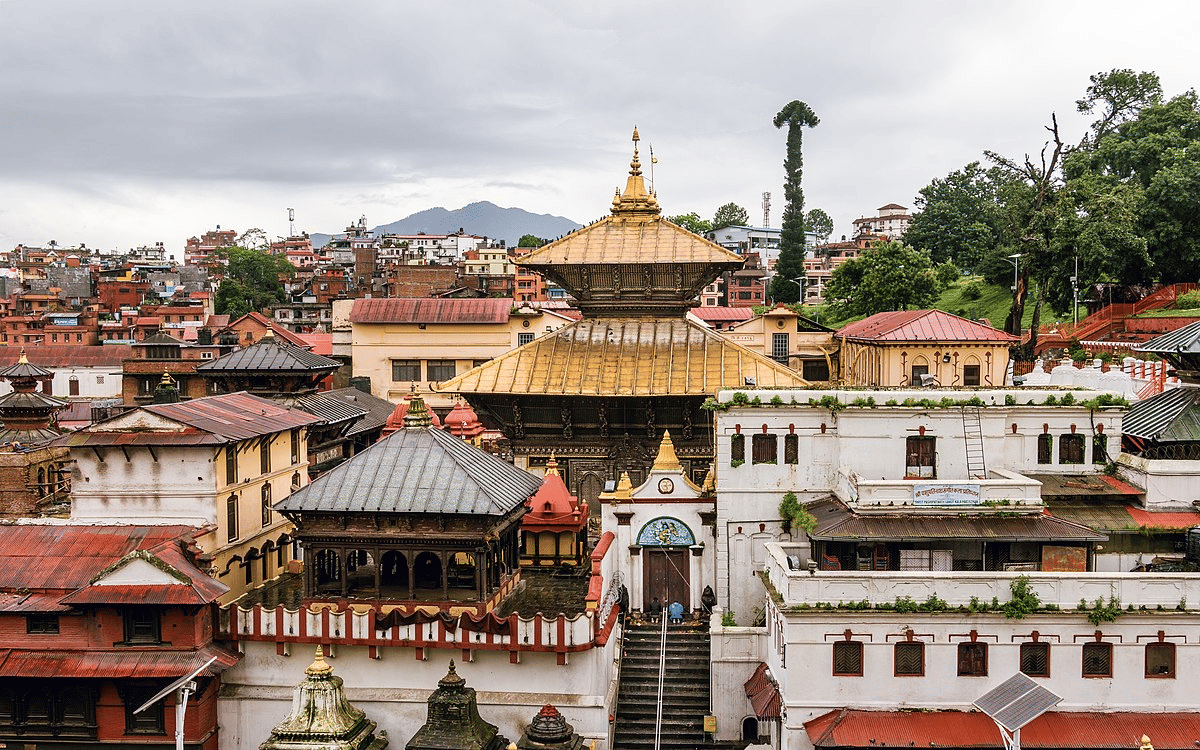
- Visit to Pashupatinath Temple: The narrator describes the Pashupatinath Temple as a crowded, chaotic place where priests, devotees, hawkers and animals jostle for space. Entry to the main shrine is restricted to Hindus, creating moments of tension when non-Hindu visitors attempt to enter. The scene highlights ritual fervour, social bustle and the strict customs that govern access to sacred spaces.
- Scenes at the Bagmati River: The Bagmati flows beside the temple and shows contrasting uses of the river: people wash clothes and bathe, while cremations take place on its ghats. This juxtaposition presents the river as a symbol of both everyday life and death, and as a site of religious offerings and local legend.
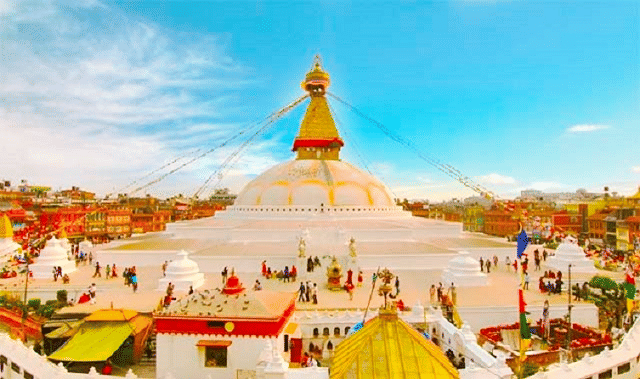
- Visit to Baudhnath Stupa: By contrast with Pashupatinath, the Baudhnath Stupa is calm and hushed. The stupa, with its large white dome and stillness, is surrounded by small shops and the presence of Tibetan immigrants, creating a peaceful devotional atmosphere rather than the feverish activity of the temple area.
- Experience in Kathmandu: The city is portrayed as densely populated, noisy and full of variety. Streets sell traditional and modern goods side by side; sounds of music, vehicle horns and market calls form the city's constant background. The urban scene emphasises contrast between sacred sites and secular everyday life.
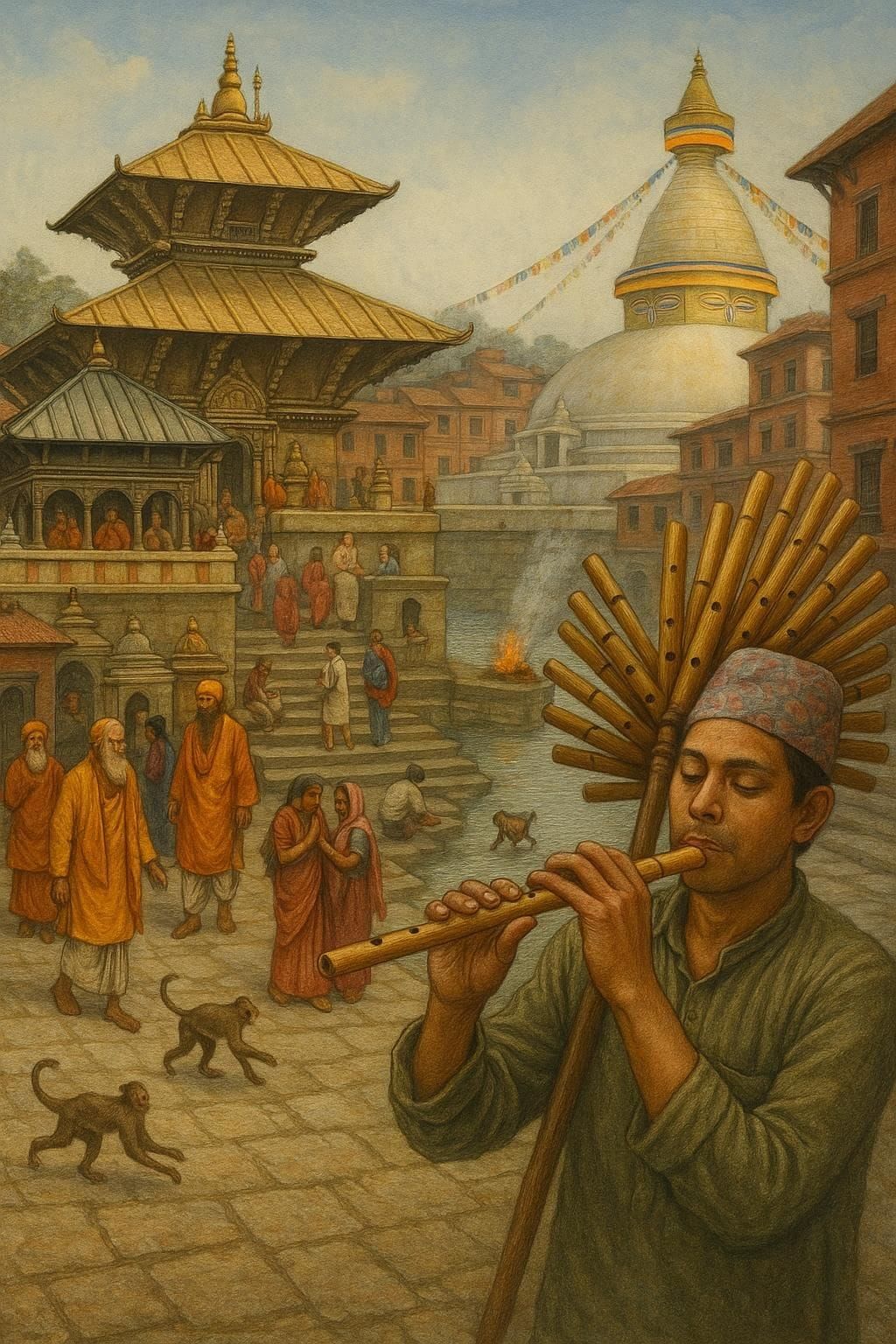
- Reflection on the Flute Seller: Near the narrator's hotel a flute seller plays bamboo flutes. The simple, soothing music rises above the city's din and prompts the narrator to reflect on music as a universal human expression that connects people across cultures and beliefs.
 Flute Seller
Detailed Summary
Preamble: The Visit and the Narrator
- The chapter is a first-person account by the narrator, who visits Kathmandu and records impressions of two major religious sites: the Hindu Pashupatinath Temple and the Buddhist Baudhnath Stupa. The narrative mixes travel description, observation of everyday life, and reflective commentary.
Pashupatinath Temple: Noise, Ritual and Rules
- Pashupatinath is alive with activity: priests conducting rites, devotees pushing to receive blessings, hawkers selling puja items and animals wandering the grounds. The temple precincts are described as febrile - busy and agitated - which underlines how public worship and commerce overlap at such a major pilgrimage site.
- Access rules at the temple are strict: only Hindus are allowed into the inner sanctum. This exclusion is illustrated when a group of Westerners dressed in saffron robes are stopped by policemen. The incident shows how ritual practice and identity regulations operate in the sacred space.
 Pashupatinath Temple
Bagmati River: Life and Death Side by Side
- The Bagmati runs close to the temple and functions as both a practical resource and a religious symbol. Washerwomen wash clothes, children play and people bathe in its waters, showing daily life in the city.
- Alongside these ordinary activities, cremation ceremonies are performed on the river's ghats. The presence of a cremation while children play emphasises the close, lived relationship between life and death in Hindu practice.
- The narrator notices offerings and a partly submerged shrine in the river. Local belief surrounds the shrine with legend, for example that the fully emerging shrine would signal the end of the present dark age (Kaliyug). Such stories deepen the river's sacred status and the sense of mystery.
Baudhnath Stupa: Silence and Devotional Calm
- In contrast to Pashupatinath, Baudhnath Stupa is quiet, composed and meditative. Its large, white dome and quietness create a sense of watchful serenity.
- Small shops around the stupa sell Tibetan handicrafts, felt goods, prints and silver trinkets. These shops are largely run by Tibetan immigrants, and their presence gives the area a distinct cultural character that complements the stupa's devotional environment.
- The stupa's calmness provides a counterpoint to the clamour of the temple area, suggesting that different religious traditions produce different public tones: one noisy and ritualised, the other contemplative and measured.
 Baudhnath Stupa
The Streets of Kathmandu: Commerce, Noise and Mixture
- Kathmandu's streets are full of contrasts. Traditional vendors-fruit-sellers, postcard and flute vendors-operate alongside shops selling Western goods such as cosmetics and chocolates. The city's soundscape includes film songs, vehicle horns and the clatter of bicycles, creating a constant urban hum.
- The blending of modern and traditional lifestyles is visible in dress, goods for sale and the movement of people. This mixture reflects Kathmandu's role as a historic religious centre and a living, changing city.
The Flute Seller: Music and Shared Feeling
- The narrator, preparing to return home, wanders the streets and encounters a flute seller with many bamboo flutes tied together. The seller plays simple, tranquil tunes that seem to cut through the city's noise.
- Listening to the flute prompts the narrator to reflect on the instrument's universality: bamboo flutes or similar wind instruments appear in many cultures, and their music can evoke a private, shared feeling between performer and listener. The flute becomes a motif for human commonality beyond differences of religion, nationality or language.
Theme of the Story
The chapter explores contrasts between chaos and serenity in religious and urban life and emphasises the universality of human experience. Through close observation of ritual, commerce and daily routines, the narrator shows how life and death, noise and silence, exclusion and shared feeling coexist in Kathmandu. The flute functions as a recurring motif: its simple melody embodies a human connection that transcends cultural and religious boundaries.
Difficult Words
- Proclaims: To announce publicly or officially.
- Febrile confusion: A state of hurried, agitated activity; intense, feverish bustle.
- Submerged: Covered or hidden beneath water.
- Haven: A place of safety, refuge or calm.
- Brazier: A metal container used to hold burning coals for warmth or for cooking; an open stove.
- Nauseating: Causing a feeling of sickness or disgust.
- Offhanded: Casual, unconsidered or without careful attention; curt in manner.
Notes for Students
- When studying the chapter, pay attention to contrasts: how the narrator uses setting (temple, river, stupa, streets) to draw out themes of life/death, noise/silence and exclusion/inclusion.
- Observe the use of sensory detail-sight, sound and smell-to make the scenes vivid. These details help reveal social customs, religious practice and the narrator's reflective mood.
- Think about the flute as a literary motif: how a small, simple object can symbolise broader human connections across cultures.
- For comprehension questions, cite specific textual details: names of places (Pashupatinath, Bagmati, Baudhnath), the narrator's actions, and the incidents described (the Western visitors stopped at the temple, the cremation by the river, the flute seller).
In conclusion, the chapter presents Kathmandu as a city of vivid contrasts where sacredness and commonplace life exist side by side, and where simple human expressions, such as music, provide a bridge across difference.
FAQs on Summary - Kathmandu
| 1. What is the main theme of the Kathmandu poem and what does it describe? |  |
| 2. Who is the narrator in Kathmandu and what is their perspective on the city? | |
| 3. What are the key symbols and imagery used in the Kathmandu poem for CBSE Class 9? | |
| 4. How does the Kathmandu poem explore the conflict between tradition and modernity? | |
| 5. What is the significance of describing Kathmandu as a place where time seems to stand still? | |