Legal Terms (I - N)


I
In pari delicto: A Latin phrase meaning equally at fault. It applies where both parties to a transaction or dispute share such equal blame for an unlawful or immoral act that a court will refuse to assist either party. In contract law, it commonly operates to deny relief to a plaintiff who is as culpable as the defendant for the disputed transaction.
In personam: A Latin term meaning against the person. It denotes rights, obligations or judgments directed at a particular individual, enforceable only against that person rather than against the world at large. Examples include personal contracts or orders for specific performance against a named party.
In rem: A Latin phrase meaning against the thing. It denotes rights or remedies that are enforceable against everyone with respect to a particular property or status (for example, ownership of land or title to a ship). An in rem proceeding determines rights in the property itself rather than merely between particular parties.
Incorporeal: Refers to rights or interests that are intangible and have no physical form, such as copyrights, trademarks, easements or other intellectual-property and non-proprietary rights. Incorporeal rights are enforceable by law despite lacking corporeal substance.
Injunction: A court order directing a party to do, or to refrain from doing, a specific act. A prohibitory injunction restrains someone from acting; a mandatory injunction compels a party to take a positive step. Failure to comply can attract contempt proceedings and other sanctions.
Insolvent: Describes a person or entity that cannot pay debts as they fall due. Insolvency is a financial condition that may lead to bankruptcy or winding-up processes under statutory insolvency regimes.
Inter alia: A Latin phrase meaning among other things. It indicates that what is mentioned forms part of a larger list or set of matters not exhaustively specified.
Interim order: A temporary judicial ruling made to preserve the status quo, provide urgent relief, or avoid prejudice to the parties until the final decision is reached. Interim orders are provisional and remain operative only until the case is finally decided or the order is varied.
Interlineation: The insertion of text into a document after it has been executed (signed). Such insertions are generally invalid unless clearly authorised, initialled or signed by the parties, because they can alter the original intention of the parties.
Interlocutory injunction: A form of interim injunction granted during the course of litigation to protect rights pending the final determination of the suit. It is provisional and may be continued, varied or discharged at trial.
Inter vivos: A Latin expression meaning between living persons. It describes gifts, transfers or trusts that take effect during the donor's life, as distinct from those that operate on death (testamentary dispositions).
Intestate: Describes a person who dies without leaving a valid will. Distribution of the deceased's estate then proceeds according to statutory rules of intestate succession.
Invitation to treat: An act that invites others to make offers, rather than being an offer itself. Common examples include advertisements, price displays in shop windows and goods placed on supermarket shelves. A seller making an invitation to treat is not obliged to accept every offer made by customers.
IOU: A brief written acknowledgement of debt, standing for "I owe you." It records the borrower's obligation to repay but generally lacks the formalities and negotiability of instruments such as promissory notes.
Ipso facto: A Latin phrase meaning by the fact itself. It describes legal consequences that follow automatically from a particular fact or event without need for further action (for example, certain contractual clauses that operate ipso facto on insolvency of a party).
J
Joint and several liability: A form of civil liability where two or more persons are each liable both together and individually for the whole obligation. A claimant may recover the entire judgment from any one of the jointly and severally liable defendants, who may later seek contribution from co-liable parties.
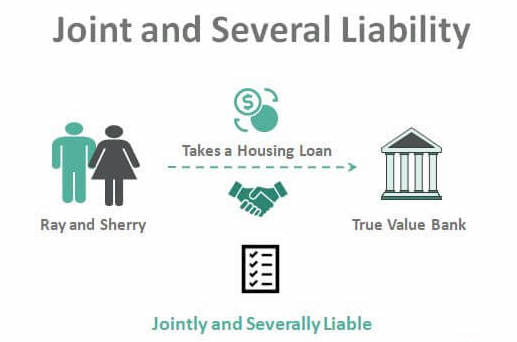 Example of Joint and Several Liability
 Joint tenancy: Ownership of property by two or more people with a right of survivorship. If one owner dies, his share passes to the surviving owners so that, eventually, the entire property is held by one person.
A valid joint tenancy requires the four unities: Unity of interest (each joint tenant must have an identical interest, including equality of duration and extent), unity of title (the interests must arise from the same document), unity of possession (each joint tenant must have an equal right to occupy the entire property) and unity of time (the interests must have arisen at the same time). Married couples and trustees are frequently joint tenants. (Contrast with tenancy-in- common.)
Judicial review: A process by which courts examine the lawfulness of decisions, actions or omissions of public bodies, administrative agencies or tribunals. Grounds for judicial review include illegality, irrationality, procedural unfairness and errors of law. Judicial review remedies can include quashing orders, mandatory orders (to do something), prohibitory orders (to stop something) and declarations.
Junior counsel: A barrister who has not been appointed to the senior bar (has not "taken silk"). The term distinguishes less senior advocates from Queen's/King's Counsel or senior counsel.
Jurisdiction: The authority of a court or tribunal to hear and decide a case. Jurisdiction may be limited by geography, subject-matter, monetary value, or the class of persons over whom the court has power (for example, military courts have jurisdiction over service personnel).
K
Kin: Persons related by blood or descent.
King's Inns: The institution responsible for legal education and training of barristers in Ireland.
Knock-for-knock: An insurance arrangement between companies under which each insurer agrees to indemnify its own insured for loss or damage without seeking recovery from the other insurer. It simplifies claims handling and allocation between insurers.
L
Landlord: The owner of land or buildings who grants a lease or tenancy of the property to another (the tenant or lessee).
Lease: A contract or grant by which a property owner (lessor) gives another person (lessee) the right to occupy or use land or buildings for a specified period, in return for rent or other consideration.
Legal Aid: A statutory or government scheme that provides legal assistance, advice or representation free or at reduced cost to persons who cannot afford private legal services.
Liability: Any legal duty or obligation to pay damages, perform an act, or satisfy a claim. Liability may be civil (compensation) or criminal (punishment), and may be joint, several, or joint and several.
Licence: Permission given by the owner of property to another person to do something on the owner's land which, absent that permission, would amount to trespass. Licences are generally revocable unless coupled with consideration or made irrevocable by contract or estoppel. A simple or bare licence is gratuitous and revocable at will.
Lien: A right to retain possession of property until a debt secured by that property is paid. A lien may be possessory (retention of goods) or registrable (registered against land) and can be enforced by sale of the secured property to satisfy the debt.
Limitation of actions: The Statute of Limitations sets down times within which proceedings must be brought. If no action is taken within the prescribed time limits, any future action is said to be statute- barred. In negligence claims, where there is no personal injury, the limit is six years. Where there is personal injury, the limit is three years (reduced to one year by the introduction of a bill in 2004). In a fatal injury case, it's three years from the date of death. In a claim involving breach of a simple contract (not under seal), the limit is six years. With personal injury arising from breach of contract, it's three years (or three years from the date of death). With a specialty contract (under seal), the period's 12 years, as it is for actions involving land. The maximum period for recovery of arrears of tax or rent is six years.
Liquidation: The process of winding up a company's affairs by selling its assets, paying creditors from the proceeds, and distributing any surplus among shareholders or partners according to their rights.
Locus standi: A Latin term literally meaning place of standing. It denotes the legal right of a person or organisation to bring an action or be heard in court, usually because they are directly affected by the matter in dispute. Rules on locus standi determine who has standing to sue in public-interest and private litigation.
M
Mandamus: A prerogative writ (Latin: we command) issued by a superior court compelling a public authority, tribunal or officer to perform a public or statutory duty which they have failed or refused to perform. Mandamus is not a remedy for private disputes.
Mediation: A consensual, non-binding method of alternative dispute resolution in which an impartial mediator facilitates negotiation between parties to help them reach a mutually acceptable settlement. The mediator does not impose a decision.
Mens rea: A Latin phrase meaning guilty mind. It refers to the mental element or state of mind required for criminal liability-intent, knowledge, recklessness or gross negligence-depending on the offence. Some offences are of strict liability and do not require proof of mens rea.
Minor: A person under the age of majority (commonly 18 years) who lacks full legal capacity to enter into most contracts; exceptions may exist for necessities or agreements for apprenticeship. Marriage or statutory provisions in some jurisdictions can affect minority status.
Misfeasance: The improper or negligent performance of an otherwise lawful act. Misfeasance differs from nonfeasance (failure to perform an act) and malfeasance (doing something unlawfully).
Misjoinder: The incorrect joining of parties or causes of action in a single legal proceeding. Courts can order removal or amendment to correct misjoinder or allow separate proceedings.
Misrepresentation: A false statement of fact made by one party to another, inducing the latter to enter into a contract. If the misrepresentation is material and relied upon, remedies can include rescission of the contract and/or damages (depending on whether the misrepresentation was innocent, negligent or fraudulent).
Mitigation: Circumstances that reduce the culpability, blameworthiness or degree of penalty for wrongful conduct. In sentencing or civil liability assessments, mitigating factors may lessen punishment or damages.
Mitigation of damages: A rule requiring a claimant to take reasonable steps to minimise loss after a breach. Failure to mitigate can reduce the damages recoverable. For example, an employee dismissed without notice should make reasonable efforts to find comparable employment.
Moiety: A legal term meaning half or a portion; in co-ownership it can denote each tenant's share (for example, two joint tenants each hold a moiety where applicable under law).
Mortgage: A security arrangement in which an interest in land or property is charged to secure repayment of a debt. The borrower (mortgagor) grants the lender (mortgagee) rights over the property until the debt is repaid. Mortgages may be legal (conveying legal interest) or equitable, and remedies for default can include sale or possession under statutory or contractual powers.
N
Natural justice: Fundamental principles of fair procedure that underpin judicial and quasi-judicial decision making. The two core rules are audi alteram partem (the right to be heard) and nemo judex in causa sua (no one should be a judge in their own cause). Natural justice requires impartiality, fair notice, and an opportunity to present one's case.
Negligence: A breach of a legal duty to take reasonable care resulting in foreseeable harm or loss. Liability in negligence requires proof of duty of care, breach of that duty (failure to meet required standard), causation (that the breach caused the loss) and actual damage. Professionals are held to standards appropriate to their skill and expertise.
Nemo judex in sua causa: A Latin maxim meaning no one should be a judge in their own case. It is a central rule of natural justice requiring decision-makers to be impartial and free from personal interest affecting the outcome.
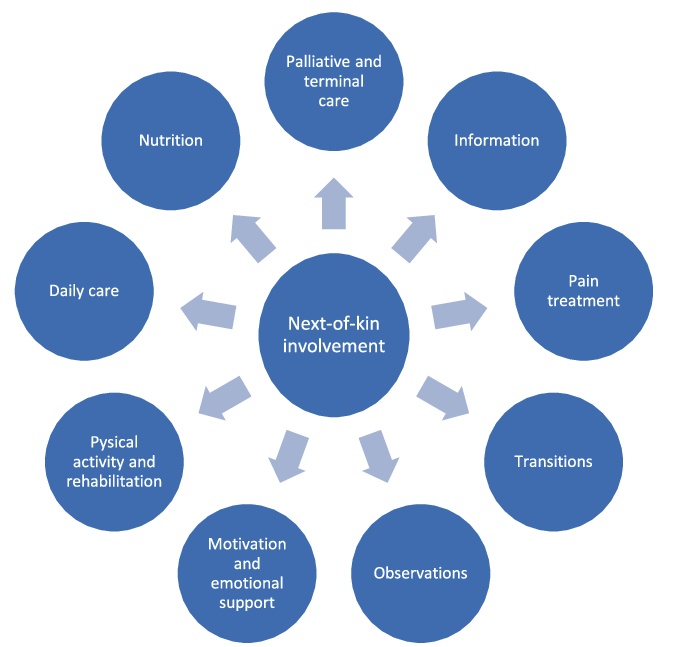
Next of kin: A person's closest living blood relative(s). The term is used in inheritance, notification, and guardianship contexts where family relationship determines priority for matters such as succession or next-of-kin enquiries.
Non est factum: A defence meaning it is not my deed. It allows a signatory to repudiate a document where they were fundamentally mistaken as to the nature of what they signed (for example, being misled about the document's character). Mere negligence in reading does not usually suffice.
Nonfeasance: The omission or failure to perform an act that the law requires. Where a duty to act exists, nonfeasance can give rise to liability if the omission causes loss.
Nudum pactum: A Latin term meaning a bare promise. It describes an agreement lacking consideration and therefore not enforceable as a contract unless executed under seal or falling within an exception.
Nuisance: An unlawful interference with a person's use or enjoyment of land. Nuisance can be private (affecting a particular individual or property) or public (affecting the community). Remedies include damages, injunctions or abatement orders to stop the interference.
Passage for Practice
The Indian legal system places significant emphasis on protecting the rights and welfare of children. The Juvenile Justice (Care and Protection of Children) Act, 2015 is a key statute in this area. It is intended to ensure that children in conflict with the law receive special care, protection and treatment with the objective of rehabilitation and social reintegration.
One important feature of the Act is the establishment of Juvenile Justice Boards (JJBs) at district level. A JJB typically comprises a Metropolitan Magistrate or a Judicial Magistrate of the first class together with two social workers, at least one of whom must be a woman. The JJB's functions include determining the age of the juvenile, inquiring into the circumstances of the offence and deciding whether the child should be sent to a special home, placed on probation, or dealt with by other rehabilitative measures.
The Act draws a clear distinction between a child in conflict with the law and a child in need of care and protection. A child in conflict with the law is one alleged to have committed an offence, whereas a child in need of care and protection is one who is vulnerable, neglected or at risk and therefore requires support and protective services.
For juveniles aged 16-18 who are alleged to have committed heinous offences, the Act prescribes a preliminary assessment by the Juvenile Justice Board to evaluate the child's mental and physical capacity to commit the offence, ability to understand the consequences and the circumstances in which the offence was committed. Depending on the outcome of this assessment, the JJB may order that the case be transferred to the ordinary criminal courts for trial as an adult.
Q1. The Act also places restrictions on the publication of information that could lead to the identification of a juvenile offender. This is done to protect the privacy and future prospects of the child.
What is the primary objective of the Juvenile Justice (Care and Protection of Children) Act, 2015?
(a) To punish child offenders.
(b) To rehabilitate and reintegrate children in conflict with the law.
(c) To remove all forms of violence against children.
(d) To increase the age of criminal responsibility.
Q2. Who constitutes the Juvenile Justice Board (JJB)?
(a) Two Judges.
(b) A Metropolitan Magistrate and two Lawyers.
(c) A Metropolitan Magistrate or Judicial Magistrate of the first class and two Social Workers.
(d) Three Police Officers.
Q3. What is the role of the Juvenile Justice Board (JJB)?
(a)To determine the punishment for juvenile offenders.
(b)To decide whether a child should be sent to a regular prison.
(c)To assess the age and circumstances of the juvenile and make decisions on rehabilitation.
(d)To prosecute child offenders.
Q4. What is the distinction between a "child in conflict with the law" and a "child in need of care and protection"?
(a)There is no distinction; both terms mean the same thing.
(b)A "child in conflict with the law" has committed a crime, while a "child in need of care and protection" is vulnerable or at risk.
(c)A "child in need of care and protection" is more likely to commit crimes.
(d)A "child in conflict with the law" is an adolescent offender.
Q5. What does the term "Need of Care and Protection" refer to under the Juvenile Justice (Care and Protection of Children) Act, 2015?
(a)A child who has committed a serious crime and requires punishment.
(b)A child who is vulnerable or at risk and requires special care and support.
(c)A child who has been convicted of a crime and needs rehabilitation.
(d)A child who is accused of a crime and must be tried as an adult.
FAQs on Legal Terms (I - N)
| 1. What's the difference between "mens rea" and "actus reus" in legal reasoning? |  |
| 2. How do I remember all the legal terms from I to N for my CLAT exam? | |
| 3. What does "injunction" actually mean, and why do CLAT questions ask about it? | |
| 4. Why is understanding "negligence" crucial for CLAT Legal Reasoning? | |
| 5. What's the practical difference between "liability" and "indemnity" that I should know for exams? | |