Famous Temples In India

India has a rich cultural heritage shaped by ancient civilisations and long-standing religious traditions. Temples and sacred monuments built over different periods reflect the artistic skills, architectural styles and cultural values of their time.
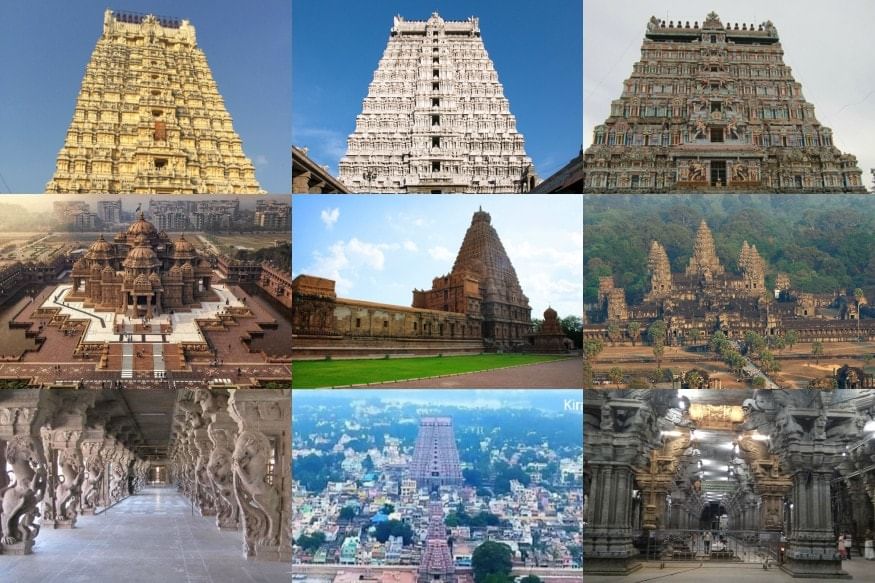 Few famous temples of India
Temples in India
The following table lists well-known temples, shrine complexes and related heritage sites across India. The list preserves the order and names as a national overview, useful for general awareness and for students preparing for technical and competitive examinations.
| Sr. No. | Temple | Location |
|---|---|---|
| 1 | Akshardham Temple | Delhi |
| 2 | Amarkantak Temple | Chhattisgarh |
| 3 | Amarnath Cave Temple | Jammu & Kashmir |
| 4 | Angrabadi Temple | Jharkhand |
| 5 | Annamalaiyar Temple | Tamil Nadu |
| 6 | Badrinath Temple | Uttarakhand |
| 7 | Brihadeeswara Temple | Tamil Nadu |
| 8 | Chennakesava Temple | Karnataka |
| 9 | Durgiana Temple | Punjab |
| 10 | Dwarkadhish Temple | Gujarat |
| 11 | Gangotri Temple | Uttarakhand |
| 12 | Golden Temple | Punjab |
| 13 | Gomateshwara Temple | Karnataka |
| 14 | Hoysaleswara Temple | Karnataka |
| 15 | Iskcon Temple Vrindavan | Uttar Pradesh |
| 16 | Kalighat Mandir | West Bengal |
| 17 | Kamakhya Temple | Assam |
| 18 | Kanaka Temple | Andhra Pradesh |
| 19 | Kanchipuram Temples | Tamil Nadu |
| 20 | Kashi Vishwanath Temple | Uttar Pradesh |
| 21 | Kedarnath Temple | Uttarakhand |
| 22 | Khajuraho Temple | Madhya Pradesh |
| 23 | Konark Sun Temple | Odisha |
| 24 | Kumbakonam Temples | Tamil Nadu |
| 25 | Laxminarayan Temple | Delhi |
| 26 | Lingaraja Temple | Odisha |
| 27 | Lord Jagannath Temple | Odisha |
| 28 | Lotus Temple | New Delhi |
| 29 | Malinithan Temple | Arunachal Pradesh |
| 30 | Manikaran Temple | Himachal Pradesh |
| 31 | Meenakshi Temple | Tamil Nadu |
| 32 | Nellaiappar Temple | Tamil Nadu |
| 33 | Ram Tirath Temple | Punjab |
| 34 | Ramanathaswamy (Rameshwaram) Temple | Tamil Nadu |
| 35 | Ranakpur Temple | Rajasthan |
| 36 | Sabarimala Temple | Kerala |
| 37 | Sanchi Stupa | Madhya Pradesh |
| 38 | Shankaracharya Temple | Jammu & Kashmir |
| 39 | Shirdi Sai Baba Temple | Maharashtra |
| 40 | Shri Digambar Jain Lal Mandir | Delhi |
| 41 | Siddhivinayak Temple | Maharashtra |
| 42 | Somnath Temple | Gujarat |
| 43 | Sree Padmanabhaswamy Temple | Kerala |
| 44 | Thillai Nataraja Temple | Tamil Nadu |
| 45 | Tirupati Balaji | Andhra Pradesh |
| 46 | Vaishno Devi | Jammu & Kashmir |
| 47 | Virupaksha Temple | Karnataka |
| 48 | Yamunotri Temple | Uttarakhand |
Architectural Styles and Characteristic Elements
Indian temple architecture developed into distinct regional styles over many centuries. These styles reflect local traditions, materials and aesthetic preferences.
- Nagara (North Indian) style: Features a square sanctum (garbhagriha) topped by a curvilinear shikhara. Temples often have richly sculpted exterior walls and a relatively compact layout.
- Dravidian (South Indian) style: Characterised by tall, elaborate entrance towers called gopurams, a pyramidal vimana above the sanctum, and large temple complexes with multiple pillared halls (mandapas).
- Vesara (Deccan hybrid) style: Combines elements of both Nagara and Dravidian styles and is commonly associated with temple architecture in parts of Karnataka.
- Kalinga style: Associated with Odisha, this style includes a curving tower over the sanctum and highly detailed stone carvings, as seen in temples such as Konark and Lingaraja.
- Common architectural elements: Most temples include a garbhagriha (sanctum), an antarala (vestibule), one or more mandapas (pillared halls), and vertical elements such as the shikhara, vimana or gopuram.
Conservation issues and practical techniques
Temples face several environmental and human-induced threats. Conservation combines material science, structural repair and preventive maintenance.
- Weathering and biological growth: stone decay, lichen growth and salt crystallisation cause surface loss; cleaning must be gentle and tested.
- Pollution and acid deposition: modern urban pollution accelerates stone deterioration; limiting sources and protective treatments are required.
- Non-invasive survey methods: ground-penetrating radar, ultrasonic testing and 3D scanning give diagnostics without damaging original fabric.
- Intervention principles: minimum intervention, reversibility and use of compatible materials are standard conservation ethics.
Selected temple profiles (history and architecture notes)
Brihadeeswara Temple, Thanjavur (Tamil Nadu)
This Chola-era temple (completed in the early 11th century under Rajaraja Chola I) is a major example of Dravidian architecture. It is built predominantly of granite and features a massive pyramidal vimana rising above the sanctum.
Konark Sun Temple, Odisha
Built in the 13th century, the temple is structured as a colossal chariot with carved stone wheels and sculptures.
Khajuraho Temples, Madhya Pradesh
Khajuraho group of monuments (circa 9th-11th centuries) are famous for sandstone carving and integrated sculpture on load-bearing walls. Conservation work here highlights stone consolidation, repointing of joints and visitor impact mitigation.
Meenakshi Temple, Madurai (Tamil Nadu)
A large temple complex with towering gopurams, richly painted and sculpted. The complex requires integrated structural assessment of tall porches and continuous maintenance of painted surfaces and plaster over stone.
Tirupati Balaji (Tirumala, Andhra Pradesh)
One of India's most visited pilgrimage sites, the temple complex illustrates large-scale visitor logistics, queue management, and robust power and water supply systems to support continuous operations.
Golden Temple (Harmandir Sahib), Amritsar (Punjab)
A central Sikh shrine with a gold-clad sanctum and large sarovar (tank).
Lotus Temple, New Delhi
A modern Bahá'í House of Worship completed in 1986, distinguished by its concrete petals and elegant form.
Akshardham Temple, Delhi
Constructed and opened in the early 21st century, it demonstrates modern temple construction using stone cladding over structural frames, integrated mechanical and electrical services, controlled visitor flows and large-scale landscaping and water features.
Sree Padmanabhaswamy Temple, Thiruvananthapuram (Kerala)
An ancient temple with distinctive Kerala architecture and multiple precincts. Conservation and access management focus on protecting delicate interiors, managing visitor volumes and preserving wooden and stone elements in a humid climate.
Somnath Temple, Gujarat
Located on the Arabian Sea coast, it has been rebuilt periodically. Coastal exposure requires corrosion-resistant fixes, careful stone selection and coastal erosion control measures.
FAQs on Famous Temples In India
| 1. Which are the most important temples in India that appear in bank exams? |  |
| 2. What's the difference between Dravidian and Nagara temple architecture styles? | |
| 3. Why is Varanasi's Kashi Vishwanath Temple so important in Indian culture and exams? | |
| 4. How can I remember all the temple locations and architectural details for my bank exam? | |
| 5. What details about temple construction and renovation should I know for bank exams? | |