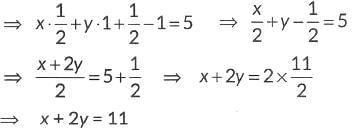
Q7: If x cos60° + ycos0° + sin30° - cot45° = 5, then find the value of x + 2y. (2 Marks)
Solution:
Ans: We have, x cos60° + y cos0° + sin30° - cot45° = 5
Q8: (2 Marks)
Solution:
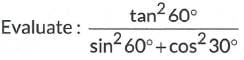
Ans:
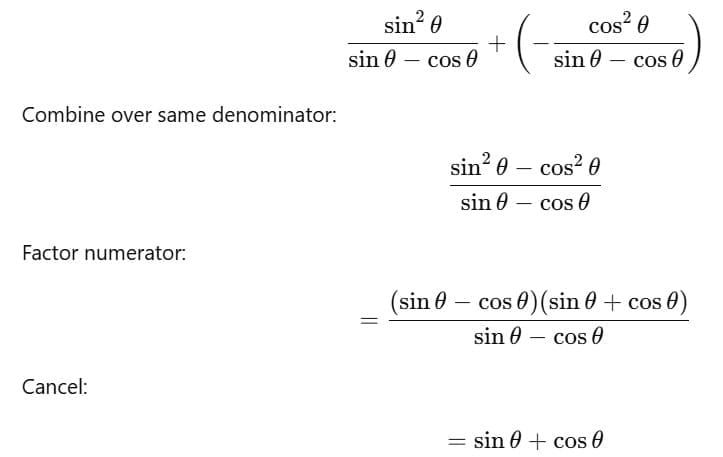
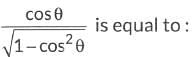
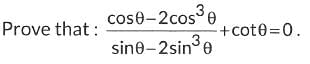
Q9: (1 Mark) (a) cot θ (b) (c) (d) tan θ
Solution:
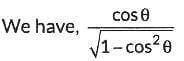
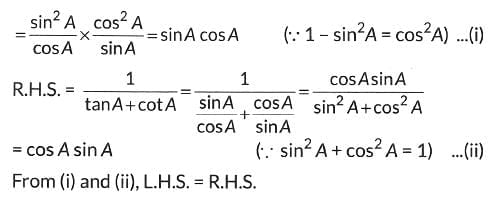
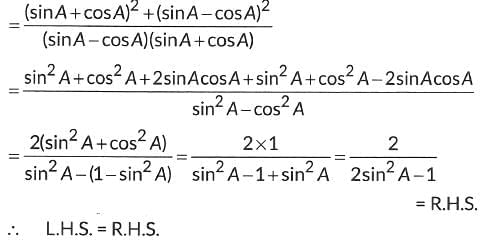
Ans: (a) We have, [∵ 1 - cos2θ = sin2θ]
Q10: The value of (tan A cosec A)2 - (sin A sec A)2 is: (1 Mark) (a) 0 (b) 1 (c) -1 (d) 2
Solution:
Ans: (b) We have, (tan A · cosec A)2 - (sin A . sec A)2 Using identities: tan A = sin A / cos A, cosec A = 1 / sin A, sec A = 1 / cos A. sec² A - tan² A = 1
Ans: (a) We have, cotθ + tanθ cot θ = cos θ / sin θ, tan θ = sin θ / cos θ.
Q12: The value of (1 Mark) (a) 1 (b) 0 (c) -1 (d) 2
Solution:
Ans: (c)
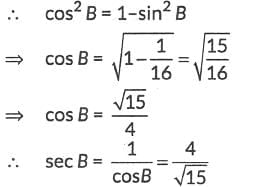
Q13: In a right triangle ABC, right-angled at A, if sin B = 1/4 then the value of sec B is (1 Mark) (a) 4 (b) √15/4 (c) √15 (d) 4/√15
Solution:
Ans: (d) Given, sin B = 1/4
Q14: If a secθ + b tan θ = m and b sec θ + a tan θ = n, prove that a2 + n2 = b2 + m2 (3 Marks)
Solution:
Ans: We have, a sec θ + b tan θ = m and b sec θ + a tan θ = n Taking, m² - n² = (a sec θ + b tan θ)² - (b sec θ + a tan θ)² = a²sec²θ + b²tan²θ + 2ab tan θ sec θ - b²sec²θ - a²tan²θ - 2ab tan θ sec θ = a²(sec²θ - tan²θ) + b²(tan²θ - sec²θ) = a² × 1 + b² × (-1) = a² - b² ∴ m² - n² = a² - b² ⇒ a² + n² = b² + m² Hence, proved.
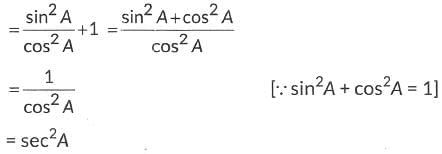
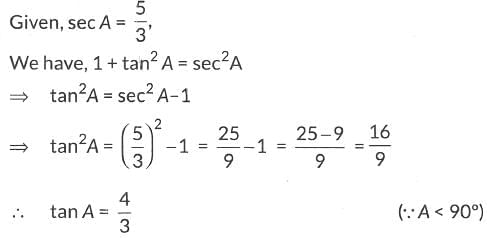
Q15: Use the identity: sin2A + cos2A = 1 to prove that tan2A + 1 = sec2A. Hence, find the value of tan A, where sec A = 5/3, where A is an acute angle. (3 Marks)
Q3: Evaluate 2 sec2θ + 3 cosec2θ - 2 sin θ cos θ if θ = 45° (2 Marks)
Solution:
Ans: Since θ = 45°, sec 45° = √2, cosec 45° = √2, sin 45°= 1/√2 cos 45° = 1/√2 2sec2 θ + 3 cosec2 θ - 2 sin θ cos θ = 2 (√2)2 + 3 (√2)2 - 2 (1√2) × (1√2)
= 2 × 2 + 3 × 2 - 2 × 12
= 4 + 6 - 1
= 9
Q4: Which of the following is true for all values of θ(0o ≤ θ ≤ 90o)? (1 Mark) (a) cos2θ - sin2θ - 1 (b) cosec2θ - sec2θ- 1 (c) sec2θ - tan2θ - 1 (d) cot2θ- tan2θ = 1
Solution:
Ans: (c)
Option (a): cos²θ - sin²θ - 1 Using the identity: cos²θ - sin²θ = cos 2θ, we get cos²θ - sin²θ - 1 = cos 2θ - 1, which is not always true. So, this option is incorrect.
Option (b): cosec²θ - sec²θ - 1 Using the identities cosec²θ = 1 + cot²θ and sec²θ = 1 + tan²θ, we get cosec²θ - sec²θ - 1 = (1 + cot²θ) - (1 + tan²θ) - 1 = cot²θ - tan²θ - 1, which is not always zero. So, this option is incorrect.
Option (c): sec²θ - tan²θ - 1 Using the identity sec²θ = 1 + tan²θ, we get sec²θ - tan²θ - 1 = (1 + tan²θ) - tan²θ - 1 = 0, which is always true. So, this option is correct.
Option (d): cot²θ - tan²θ = 1 Using the identity cot²θ = 1/tan²θ, we get cot²θ - tan²θ = (1/tan²θ) - tan²θ, which is not always equal to 1. So, this option is incorrect.
Q5:If . then find the value of sinθ. cosθ. (2 Marks)
Solution:
Ans:
Given: sinθ + cosθ = √2
Squaring both sides:
(sinθ + cosθ)2 = (√2)2
sin2θ + cos2θ + 2sinθ cosθ = 2
Using identity: sin2θ + cos2θ = 1
1 + 2sinθ cosθ = 2
2sinθ cosθ = 1
sinθ cosθ = 1/2
Q6: If sin α = 1/√2 and cot β = √3, then find the value of cosec α + cosec β. (2 Marks)
Q1: If sin θ = cos θ, then the value of tan2 θ + cot2 θ is (1 Mark) (a) 2 (b) 4 (c) 1 (d) 10/3
Solution:
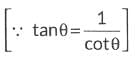
Ans: (a) Sol: We have, sin θ = cos θ or sin θ / cos θ = 1 ⇒ tan θ = 1 and cot θ = 1 [∵ cot θ = 1/tanθ] ∴ tan2 θ + cot2 θ = 12 + 12 = 2 Hence, A option is correct.
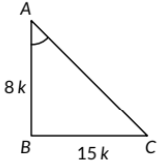
Q2: Given 15 cot A = 8, then find the values of sin A and sec A. (3 Marks)
Solution:
Ans: In right angle ΔABC we have 15 cot A = 8 ⇒ cot A = 8/15 Since, cot A = AB/BC ∴ AB/BC = 8/15 Let AB = 8k and BC = 15k By using Pythagoras theorem, we get AC2 = AB2 + BC2 ⇒ (8k)2 + (15)2 = 64k2 + 225k2 = 289k2 = (17k)2
⇒ AC = √((17k)2) = 17k
∴ sin A = BCAC = 15k17k = 1517
and cos A = ABAC = 8k17k = 817
So, sec A = 1cos A = 178
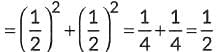
Q3: Write the value of sin2 30° + cos2 60°. (2 Marks)
Solution:
Ans: We have, sin2 30° + cos2 60°
Q4:The distance between the points (a cos θ + b sin θ, 0) and (0, a sin θ - b cos θ) is (1 Mark) (a) a2 + b2 (b) a + b (c) (d)
Solution:
Ans: (c) Sol: Given the point (acos θ + b sin θ , 0), (0 , a sin θ - b cos θ) By distance formula,
The distance of
AB = √(x2 - x1)² + (y2 - y1)²
So,
AB = √(a cos θ + b sin θ - 0)² + (0 - a sin θ + b cos θ)²
= √ a²(sin²θ + cos²θ) + b²(sin²θ + cos²θ)
But according to the trigonometric identity,
sin²θ + cos²θ = 1
Therefore,
AB = √ a² + b²
Q5: 5 tan2θ - 5 sec2θ = ____________. (2 Marks)
Solution:
Ans: We have 5(tan2θ - sec2θ) = 5(-1) = - 5 [By using 1 + tan2θ = sec2 θ ⇒ tan2θ - sec2θ = - 1]
Q6: If sinθ + cosθ = √2, prove that tanθ + cotθ = 2. (2 Marks)
Solution:
Ans: Given: sinθ + cosθ = √2
Squaring both sides:
(sinθ + cosθ)2 = 2
sin2θ + cos2θ + 2sinθ cosθ = 2
1 + 2sinθ cosθ = 2
sinθ cosθ = 1/2
Now,
tanθ + cotθ = (sinθ / cosθ) + (cosθ / sinθ)
= (sin2θ + cos2θ) / (sinθ cosθ)
= 1 / (1/2)
= 2
Q7: If x = a sinθ and y = b cosθ, write the value of (b2x2 + a2y2). (2 Marks)
Solution:
Ans: Given, x = a sin θ and y = b cos θ Putting the values of x and y in (b2x2 + a2y2) We get, = b2(a sin θ)2 + a2(b cos θ)2 = a2b2 [sin2 θ + cos2 θ] [Also, sin2θ + cos2θ = 1] = a2b2 [1] = a2b2
FAQs on Previous Year Questions: Introduction to Trigonometry
1. What are the six trigonometric ratios and how do I remember them for Class 10 CBSE exams?
Ans. The six trigonometric ratios are sine, cosine, tangent, cosecant, secant, and cotangent. Students commonly use the mnemonic "SOH-CAH-TOA" for sine (opposite/hypotenuse), cosine (adjacent/hypotenuse), and tangent (opposite/adjacent). The reciprocal ratios-cosecant, secant, and cotangent-are inverses of sine, cosine, and tangent respectively. Memorising these relationships helps solve previous year questions quickly during board exams.
2. How do I find trigonometric ratios of standard angles like 30°, 45°, and 60° without a calculator?
Ans. Standard angles have fixed trigonometric values that appear repeatedly in CBSE previous year questions. Sin 30° = 1/2, sin 45° = √2/2, sin 60° = √3/2. Cosine values reverse this pattern: cos 30° = √3/2, cos 45° = √2/2, cos 60° = 1/2. Tangent ratios follow from dividing sine by cosine. Creating a table or using flashcards helps memorise these essential values for quick exam calculations.
3. Why does sin²θ + cos²θ always equal 1, and when should I use this trigonometric identity in problem-solving?
Ans. This fundamental identity stems from the Pythagorean theorem applied to a unit circle: opposite² + adjacent² always equals hypotenuse². Use this identity when simplifying complex trigonometric expressions or proving other relationships. It appears frequently in previous year CBSE questions requiring students to verify identities or find unknown trigonometric ratios when one ratio is given, making it essential for scoring higher marks.
4. How do I solve word problems involving angles of elevation and depression in real-world contexts?
Ans. Angles of elevation and depression describe the angle between the horizontal line and the line of sight. Draw a diagram identifying the right-angled triangle, mark the given angle and known side, then apply appropriate trigonometric ratios (sine, cosine, or tangent). Previous year examination questions frequently test this application in scenarios like measuring building heights or distances. Using mind maps to visualise problem setups improves accuracy significantly.
5. What common mistakes do students make when applying trigonometric ratios, and how can I avoid losing marks in board exams?
Ans. Students often confuse opposite and adjacent sides relative to the given angle, leading to incorrect ratio selection. Another frequent error involves using degree mode instead of radian mode, or vice versa. Additionally, forgetting to simplify trigonometric expressions fully costs marks in previous year CBSE board exam questions. Carefully labelling triangle sides and double-checking angle references prevents these costly mistakes during examinations.
Exam, Summary, Previous Year Questions with Solutions, mock tests for examination, Objective type Questions, pdf , ppt, video lectures, Viva Questions, Extra Questions, Previous Year Questions: Introduction to Trigonometry, Previous Year Questions: Introduction to Trigonometry, Free, Previous Year Questions: Introduction to Trigonometry, MCQs, practice quizzes, past year papers, Important questions, Semester Notes, study material, Sample Paper, shortcuts and tricks;



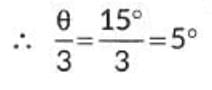
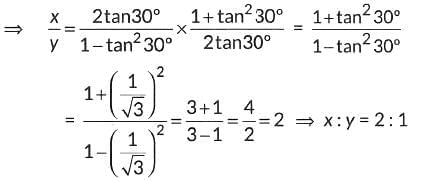
 then x : y = (1 Mark)
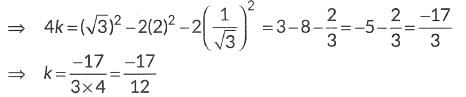
 (2 Marks)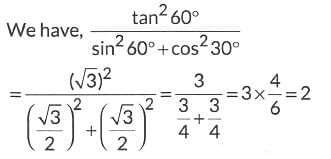
 (1 Mark)

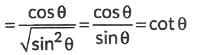 [∵ 1 - cos2θ = sin2θ]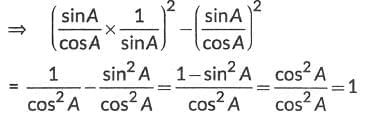
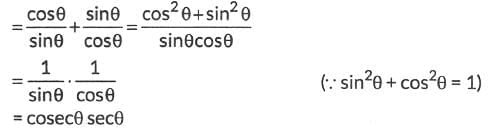
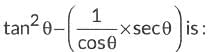 (1 Mark)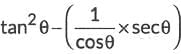

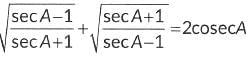 (2 Marks)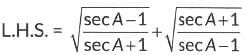
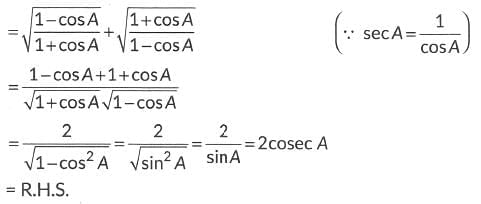
 (2 Marks)
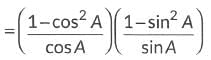
 (2 Marks)
 (3 Marks)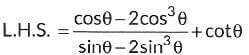
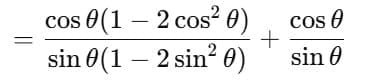

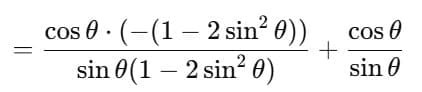
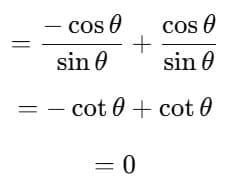
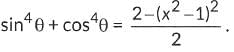 (2 Marks)
 (3 Marks)
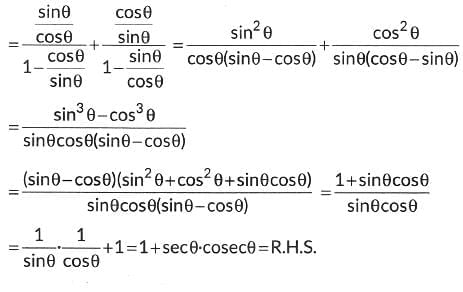
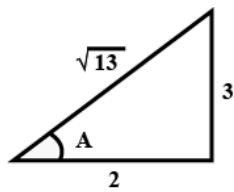
 . then find the value of sinθ. cosθ. (2 Marks)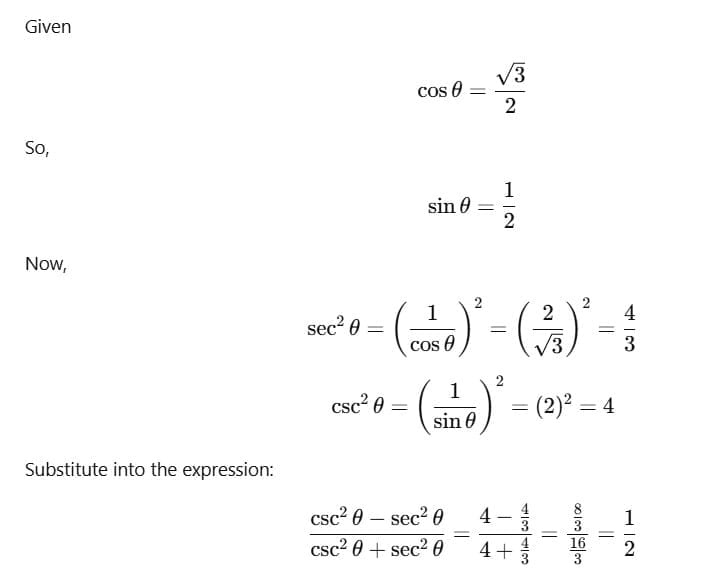
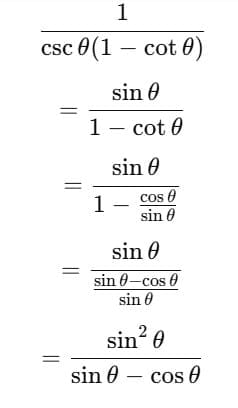 Part 2 simplify
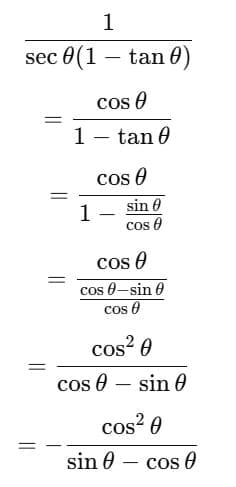 Add both parts: