NEET Previous Year Questions (2014-2025): Moving Charges & Magnetism


2025
Q1: A model for the quantized motion of an electron in a uniform magnetic field B states that the flux passing through the orbit of the electron is n (h/e) where n is an integer, h is Planck's constant and e is the magnitude of the electron's charge. According to the model, the magnetic moment of an electron is its lowest energy state will be (m is the mass of the electron): (NEET 2025)
(a) 
(b) 
(c) 
(d) 
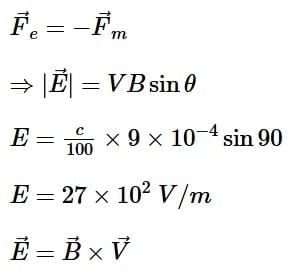
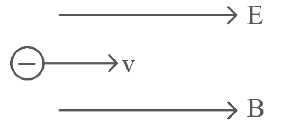
Q2: An electron (mass 9 × 10-31 kg and charge 1.6 × 10⁻¹⁹C) moving with speed c/100 (c=speed of light) is injected into a magnetic field  of magnitude 9 × 10⁻⁴ T perpendicular to its direction of motion. We wish to apply an uniform electric field
  together with the magnetic field so that the electron does not deflect from its path. Then (speed of light c = 3 × 10⁸ ms-1) (NEET 2025)
(a) 
(b) 
(c) 
(d) 
Q3: A 2 amp current is flowing through two different small circular copper coils having radii ratio 1 : 2. The ratio of their respective magnetic moments will be: (NEET 2025)
(a) 2 : 1
(b) 4 : 1
(c) 1 : 4
(d) 1 : 2
2024
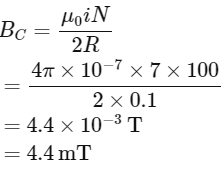
Q1: A tightly wound 100 turns coil of radius
(a) 44 mT
(b) 4.4 T
(c) 4.4 mT
(d) 44 T (NEET 2024)
Q2: A sheet is placed on a horizontal surface in front of a strong magnetic pole. A force is needed to: (NEET 2024)
A. hold the sheet there if it is magnetic.
B. hold the sheet there if it is non-magnetic.
C. move the sheet away from the pole with uniform velocity if it is conducting.
D. move the sheet away from the pole with uniform velocity if it is both, non-conducting and non-polar.
Choose the correct statement(s) from the options given below:
(a) B and D only
(b) A and C only
(c) A, C and D only
(d) C only [2024]
2023
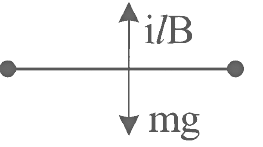
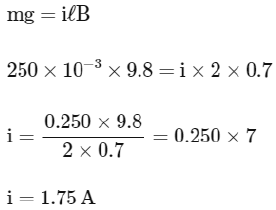
Q1: A long straight wire of length 2 m and mass 250 g is suspended horizontally in a uniform horizontal magnetic field of 0.7 T. The amount of current flowing through the wire will be (g = 9.8 ms-2) (NEET 2023)
(a) 2.45 A
(b) 2.25 A
(c) 2.75 A
(d) 1.75 A
Q2: A uniform electric field and a uniform magnetic field are acting along the same direction in a certain region. If an electron is projected in the region such that its velocity is pointed along the direction of fields, then the electron: (NEET 2023)
(a) will turn towards right of direction of motion
(b) will turn towards left of direction of motion
(c) speed will decrease
(d) speed will increase
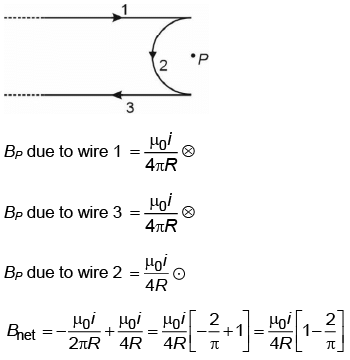
Q3: A very long conducting wire is bent in a semi-circular shape from A to B as shown in the figure. The magnetic field at point P for steady current configuration is given by (NEET 2023)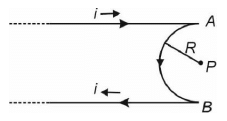 (a)
(a)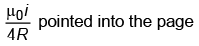
(b)
(c)
(d)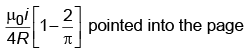
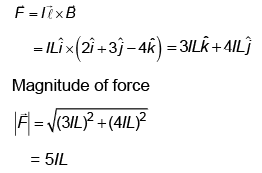
Q4: A wire carrying a current I along the positive x-axis has length L. It is kept in a magnetic field  The magnitude of the magnetic force acting on the wire is (NEET 2023)
(a) 3 lL
(b)√5 lL
(c) 5 lL
(d)√3 lL
2022
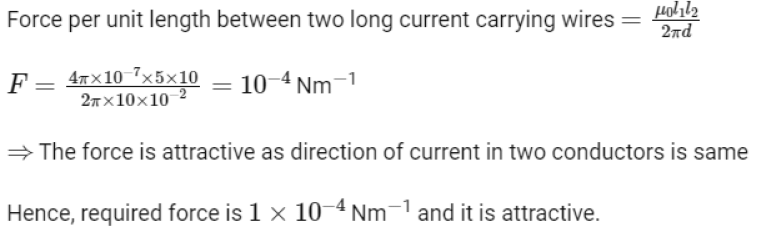
Q1: Two very long, straight, parallel conductors A and B carry current of 5 A and 10 A respectively and are at a distance of 10 cm from each other. The direction of current in two conductors is same. The force acting per unit length between two conductors is : (NEET 2022) 
(a) 1 x 10⁻⁴ Nm-1 and is repulsive
(b) 2 x 10⁻⁴ Nm-1 and is attractive
(c) 2 x 10⁻⁴ Nm-1 and is repulsive
(d) 1 x 10⁻⁴ Nm-1 and is attractive
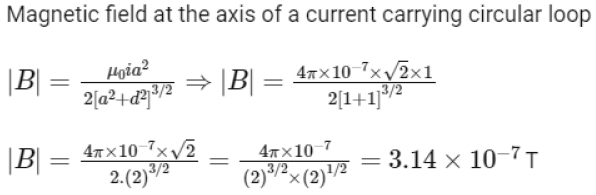
Q2: The magnetic field on the axis of a circular loop of radius 100 cm carrying current I = √2 A, at point 1 m away from the centre of the loop is given by : (NEET 2022)
(a) 6.28 x 10⁻⁴ T
(b) 3.14 x 10⁻⁷ T
(c) 6.28 x 10⁻⁷ T
(d) 3.14 x 10⁻⁴ T
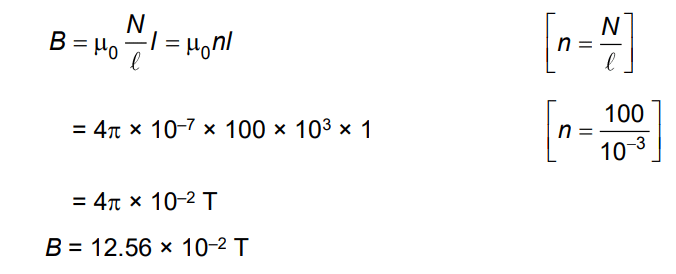
Q3: A long solenoid of radius 1 mm has 100 turns per mm. If 1 A current flows in the solenoid, the magnetic field strength at the center of the solenoid is (NEET 2022)
(a) 12.56 × 10⁻² T
(b) 12.56 × 10⁻⁴ T
(c) 6.28 × 10⁻⁴ T
(d) 6.28 × 10⁻² T
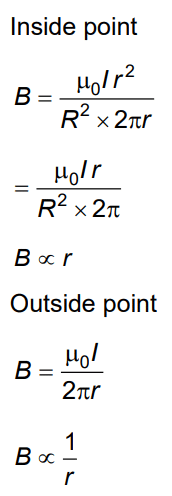
Q4: From Ampere's circuital law for a long straight wire of circular cross-section carrying a steady current, the variation of the magnetic field in the inside and outside region of the wire is (NEET 2022)
(a) A linearly increasing function of distance up to the boundary of the wire and then linearly decreasing for the outside region.
(b) A linearly increasing function of distance r up to the boundary of the wire and then decreasing one with 1/r dependence for the outside region.
(c) A linearly decreasing function of distance up to the boundary of the wire and then a linearly increasing one for the outside region.
(d) Uniform and remains constant for both regions.
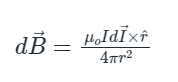
Q5: Given below are two statements (NEET 2022)
Statement I: Biot-Savart's law gives us the expression for the magnetic field strength of an infinitesimal current element (Idl) of a current-carrying conductor only.
Statement II: Biot-Savart's law is analogous to Coulomb's inverse square law of charge q, with the former being related to the field produced by a scalar source, Idl while the latter being produced by a vector source, q. In light of the above statements choose the most appropriate answer from the options given below
(a) Both Statement I and Statement II are incorrect
(b) Statement I is correct and Statement II is incorrect
(c) Statement I is incorrect and Statement II is correct
(d) Both Statement I and Statement II are correct
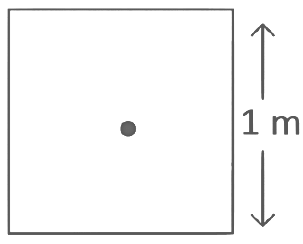
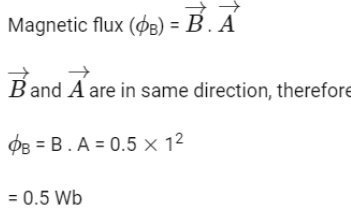
Q6: A square loop of side 1 m and resistance 1 Ω is placed in a magnetic field of 0.5 T. If the plane of loop is perpendicular to the direction of magnetic field, the magnetic flux through the loop is (NEET 2022)
(a) 2 weber
(b) 0.5 weber
(c) 1 weber
(d) Zero weber
2021
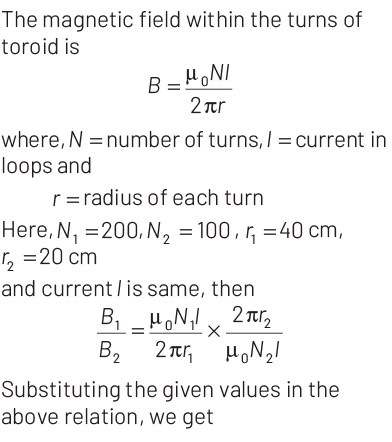
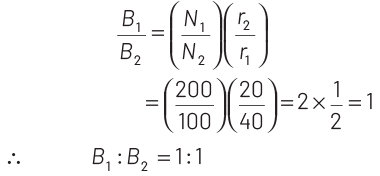
Q1: Two toroids 1 and 2 have total number of turns 200 and 100 respectively with average radii 40 cm and 20 cm respectively. If they carry same current i, the ratio of the magnetic fields along the two loops is
(a) 1 : 1
(b) 4 : 1
(c) 2 : 1
(d) 1 : 2
Q2: A thick current-carrying cable of radius 'R' carries current 'I' uniformly distributed across its cross-section. The variation of magnetic field B(r) due to the cable with the distance 'r' from the axis of the cable is represented by:
A: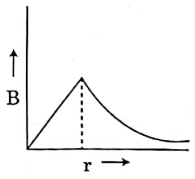
B: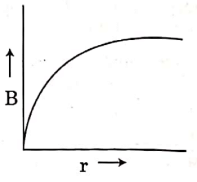
C: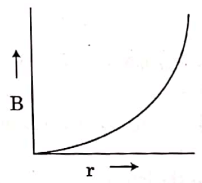
D: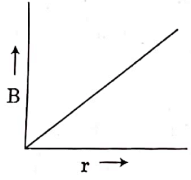
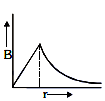 Inside a current-carrying cylindrical conductor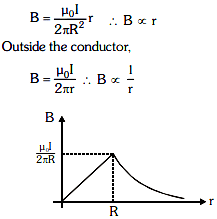
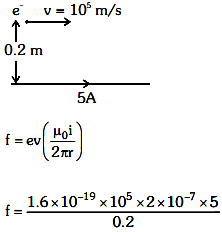
Q3: An infinitely long straight conductor carries a current of 5 A as shown. An electron is moving with a speed of 105 m/s parallel to the conductor. The perpendicular distance between the electron and the conductor is 20 cm at an instant. Calculate the magnitude of the force experienced by the electron at that instant. 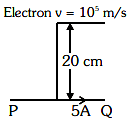
(a) 4π× 10-20 N
(b) 8 × 10-20 N
(c) 4 × 10-20 N
(d) 8π× 10-20 N
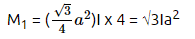
Q4: Uniform conducting wire of length 12a and resistance 'R' is wound up as a current-carrying coil in the shape of,
(i) an equilateral triangle of side 'a'
(ii) a square of side 'a'
The magnetic dipole moments of the coil in each case respectively are:
(a) 3Ia2 and 4Ia2
(b) 4Ia2 and 3Ia2
(c)√3Ia2 and 3Ia2
(d) 3Ia2 and Ia2
Q9. In the product
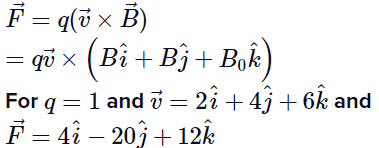
What will be the complete expression for  ?
?
(a)
B:
(c)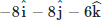
(d)
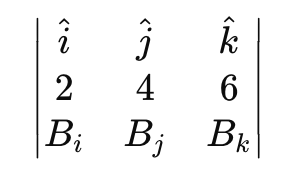 We get three equations: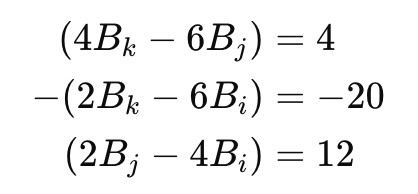
2020
Q1: A long solenoid of 50 cm in length having 100 turns carries a current of 2.5 A. The magnetic field at the center of the solenoid is : (μ0 = 4π × 10-7 Tm A-1)
(a) 6.28×10⁻⁵ T
(b) 3.14×10⁻⁵ T
(c) 6.28×10⁻⁴ T
(d) 3.14×10⁻⁴ T

2019
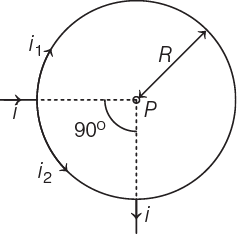
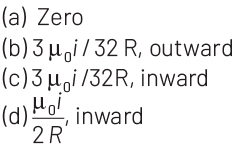
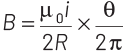
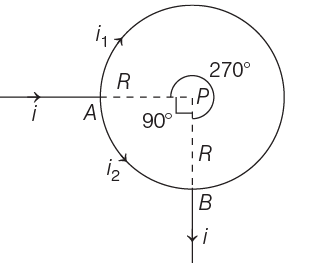
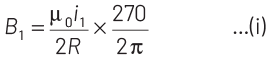
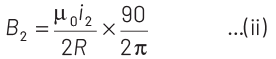
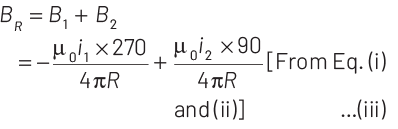
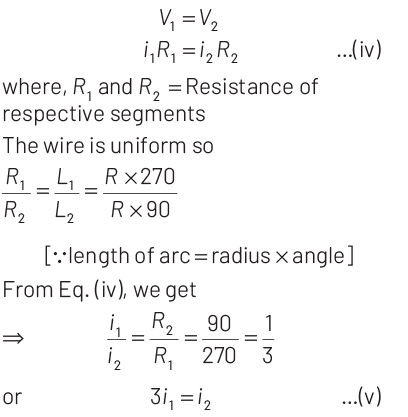
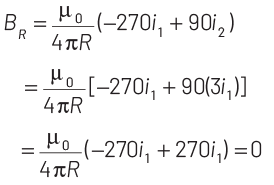
Q1: A straight conductor carrying current i splits into two parts as shown in the figure. The radius of the circular loop is R. The total magnetic field at the centre P at the loop is
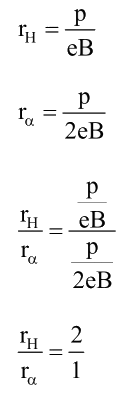
Q2: Ionized hydrogen atoms and? a-particles with the same momenta enter perpendicular to a constant magnetic field, B. The ratio of the radii of their paths will be:
(a) 2:1
(b) 1:2
(c)4:1
(d) 1:4
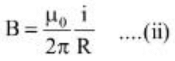
Q3: A cylindrical conductor of radius R is carrying a constant current. The plot of the magnitude of the magnetic field. B with the distance d from the center of the conductor, is correctly represented by the figure :
(a)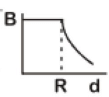
(b)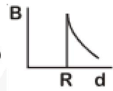
(c) 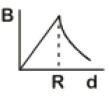
(d)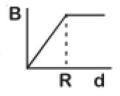
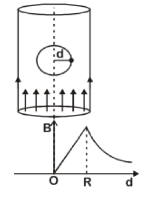
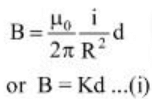 A straight line passing through the origin at the surface (d = R)
 Maximum at surface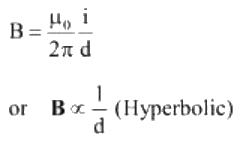
2018
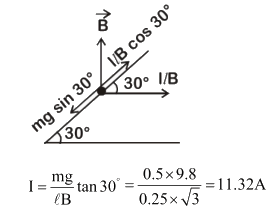
(a) 14.76 A
(b) 5.98 A
(c) 7.14 A
(d) 11.32 A
2017
(a) 4.55 µJ
(b) 2.3 µJ
(c) 1.15 µJ
(d) 9.1 µJ
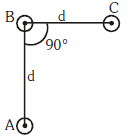
A:

B:

C:

D:

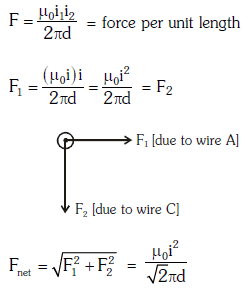
2016
(a) 1/2
(b) 1
(c) 4
(d) 1/4
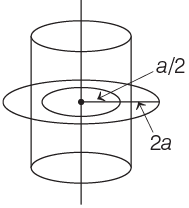
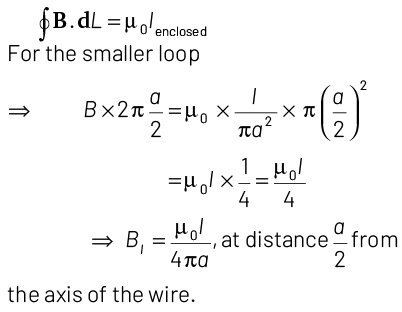
(a) nB
(b) n2B
(c) 2nB
(d) 2n2B
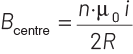
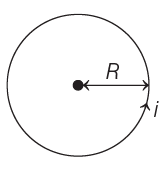
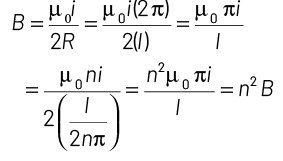
(a) 
(b) 
(c) 
(d) 
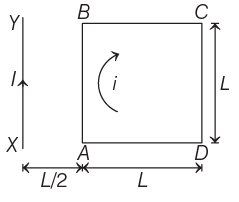
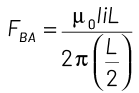
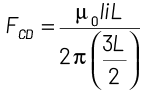
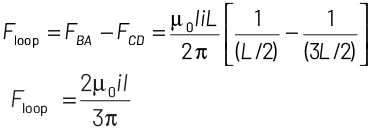
(a) 4
(b) 1/4
(c) 1/2
(d) 1

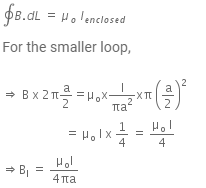
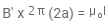
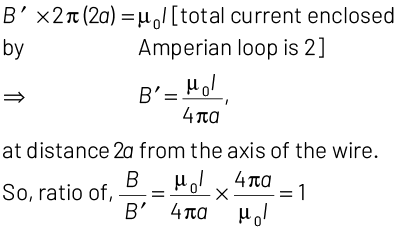
 at a distance 2a from the axis of the wire.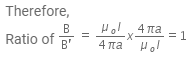
2015
(a)

(b) Zero
(c)

(d)

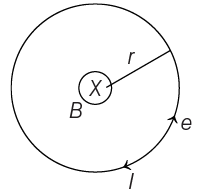

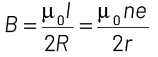
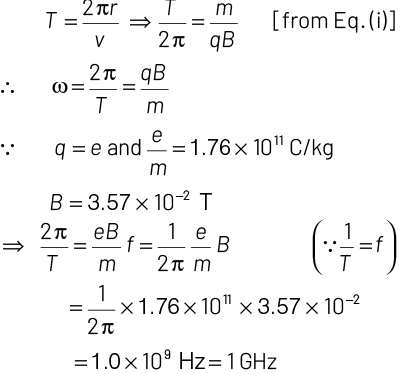
(a) 1 GHz
(b) 100 MHz
(c) 62.8 MHz
(d) 6.28 MHz

FAQs on NEET Previous Year Questions (2014-2025): Moving Charges & Magnetism
| 1. How do I solve moving charges problems with magnetic force in NEET Physics? |  |
| 2. What's the difference between circular and helical motion of charged particles in a magnetic field? | |
| 3. Why do I keep getting the direction of magnetic force wrong on moving charges? | |
| 4. How does the cyclotron frequency formula work for particles moving in magnetic fields? | |
| 5. What should I focus on for magnetic force on current-carrying wires in NEET exams? | |





