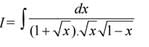
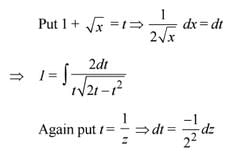
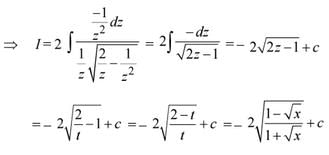
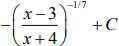
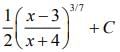
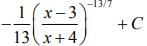
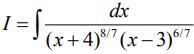
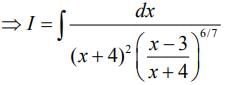
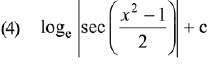
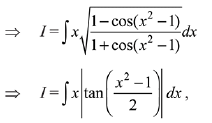
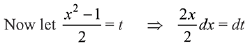
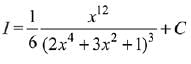
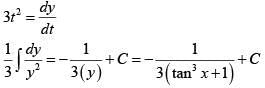
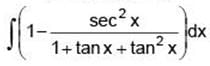
Q.1. The integral is equal to (where C is a constant of integration) (2020) (1) (2) (3) (4) Ans. (1) Let, Let So,
Q.2. If where C is a constant of integration, then the ordered pair (λ, f(θ)) is equal to (2020) (1) (1,1 tan θ) (2) ( 1,1 -tan θ) (3) (-1,1 + tan θ) (4) (1,1 + tan θ) Ans. (3) We have Let tan θ = t ⇒sec2θdθ = dt. Therefore, Hence,
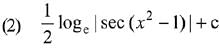
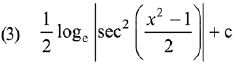
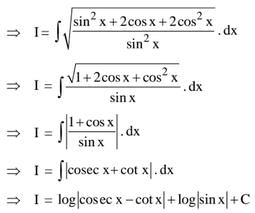
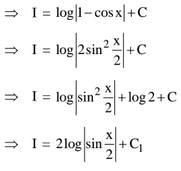
Q.3. For x2 ≠ nπ + 1, n∈N (the set of natural numbers), the integral (2019) (where c is a constant of integration) Ans. (3, 4) Solution. Consider the given integral
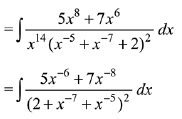
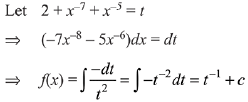
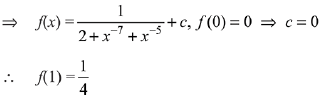
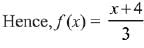
Q.4. and f(0) = 0, then the value of f(1) is: (2019) (3) 1/2 (4) 1/4 Ans. (4) Solution. f(x) =
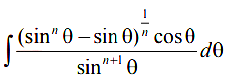
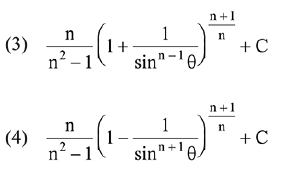
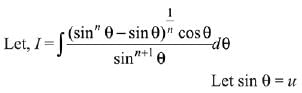
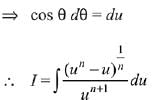
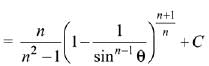
Q.5. Let n ≥ 2 be a natural number and 0 < θ < π/2. Then is equal to (where C is a constant of integration (2019)
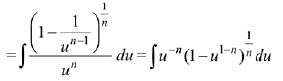
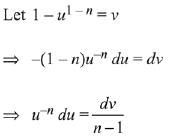
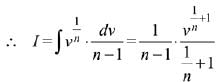
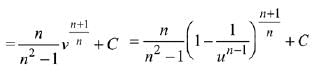
Ans. (1) Solution.
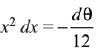
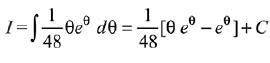
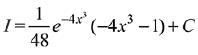
Q.6. where C is a constant of integration, then f (x) is equal to: (2019) (1) - 2x3 - 1 (2) - 4x3 - 1 (3) -2x3 + 1 (4) 4x3+ 1 Ans. (2) Solution. Put -4x3 = θ ⇒ -12x2 dx = dθ ⇒ Then, by comparison f(x) = -4x3 - 1
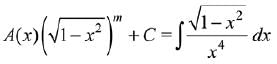
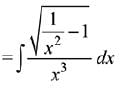
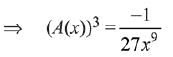
Q.7. for a suitable chosen integer m and a function A (x), where C is a constant of integration, then (A(x))m equals: (2019) Ans. (1) Solution. Comparing both sides,
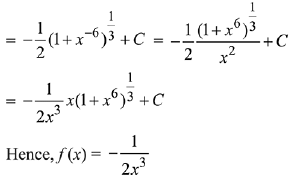
Q.8. where C is a constant of integration, then f(x) is equal to: (2019) (1) (2) (3) (4) Ans. (4) Solution.
Q.9. The integral is equal to: (where C is a constant of integration) (2019) Ans. (3) Solution.
Q.10. The integral is equal to: (where C is a constant of integration) (2019) Ans. (2) Solution.
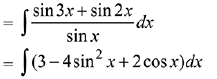
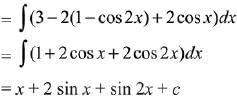
Q.11. is equal to: (where c is a constant of integration.) (2019) (1)2x + sinx + 2 sin2x + c (2)x + 2 sinx + 2 sin2x + c (3)x + 2 sinx + sin2x + c (4)2x + sinx + sin2x + c Ans. (3) Solution. [ ∵ sin 2x = 2 sin x cos x and sin 3x = 3 sin x - 4 sin3x]
Q.12. where C is a constant of integration, then the function f(x) is equal to: (2019) Ans. (4) Solution.
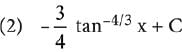
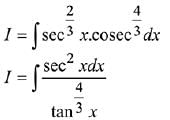
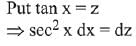
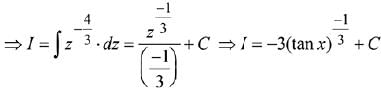
Q.13. The integral ∫ sec2/3 x cosec4/3 xdx is equal to: (1) -3 tan-1/3 x + C (3) -3 cot-1/3 x + C (4) 3 tan-1/3 x + C (Here C is a constant of integration) (2019) Ans. (1) Solution.
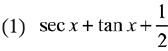
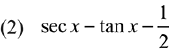
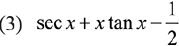
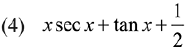
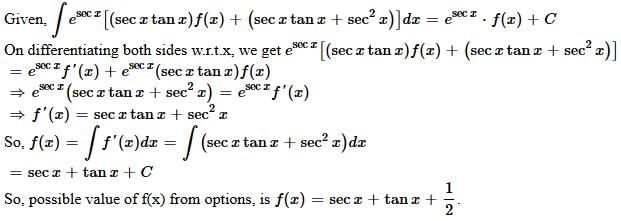
Q.14. If ∫esec x (sec x tan x f(x) + (sec x tan x + sec2 x)) dx = esecx f(x) + C, then a possible choice of f(x) is: (2019) Ans. (1) Solution.
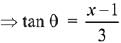
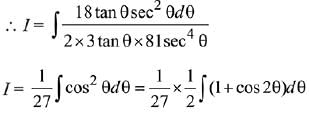
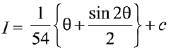
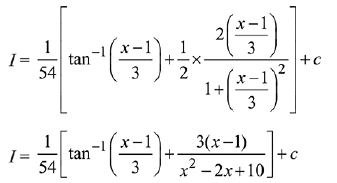
Q.15. where C is a constant of integration, then: (2019) (1) A = 1/54 and f(x) = 3 (x - 1) (2) A = 1/81 and f(x) = 3 (x - 1) (3) A = 1/27 and f(x) = 9 (x - 1) (4) A = 1/54 and f(x) = 9 (x - 1)2 Ans. (1) Solution. Let (x - 1)2 = 9 tan2 θ ....(1) After differentiating equation ...(1), we get 2 (x - 1) dx = 18 tan θ sec2θ dθ we get: A = 1/54 and f(x) = 3 (x - 1)
Q.16. If where c is a constant of integration, then g(-1) is equal to: (2019) (1) -1 (2) 1 (3) (4) Ans. (3) Solution.
Q.17. The integral is equal to: (2019) (Here C is a constant of integration) Ans. (3) Solution.
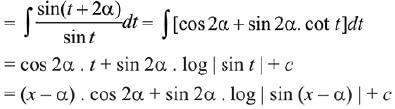
Q.18. Let α ∈ (0, π/2) be fixed. If the integral A(x) cos2α+B(x) sin2α+C, where C is a constant of integration, then the functions A(x) and B(x) are respectively: (2019) (1) x + α and loge|sin(x + α)| (2)x - α and loge|sin(x - α)| (3)x - α and loge |cos(x - α)| (4)x + α and loge |sin(x - a)| Ans. (2) Solution.
Q.19. The integral is equal to: (2018) (1) (2) (3) (4) Ans. (2) Solution.
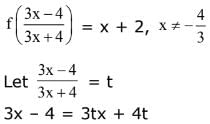
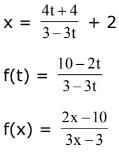
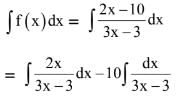
Q.20. If f = 2x + 1, (x ∈ R - {1, -2}), then ∫ f(x)dx is equal to: (where C is a constant of integration) (2018) (1) 12 loge |1 - x| - 3x + C (2) - 12 loge |1 - x| + 3x + C (3) - 12 loge |1 - x| - 3x + C (4) 12 loge |1 - x| + 3x + C Ans. (3) Solution. = 3 {-4ℓn|1-x - x| + C = -12ℓn |1-x| - 3x + C
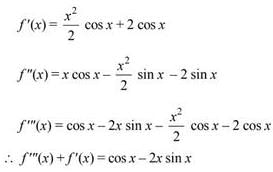
Q.22. If (C is a constant of integration), then the ordered pair (K, A) is equal to (2018) (1) (2, 1) (2) (2, 3) (3) (-2, 1) (4) (-2, 3) Ans. (2) Solution. I = =
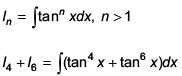
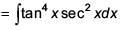
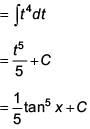
Q.23. Let In = ∫tann xdx,(n > 1). If I4 +I6= a tan5 x + bx5 + C, where C is a constant of integration, then the ordered pair (a, b) is equal to (2017) (1) (-1/5 , 0) (2) (-1/5 , 1) (3) (1/5, 0) (4) (1/5, -1) Ans. (3) Solution. Let tanx = t sec2x dx = dt
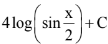
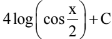
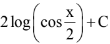
Q.24. The integral is equal to: (where C is a constant of integration) (2017) (1) (2) (3) (4) Ans. (1) Solution.
Q.25. If and then the ordered pair (A,B) is equal to :(where c is a constant of integration) (2017) (1) (2) (3) (4) Ans. (2) Solution.
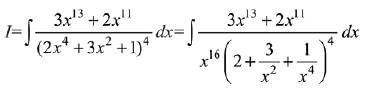
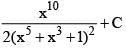
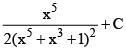
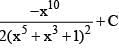
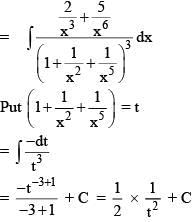
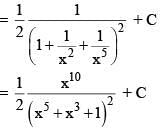
Q.26. The integral dx is equal to: (2016) (1) (2) (3) (4) Ans. (2) Solution.
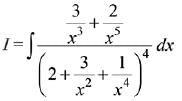
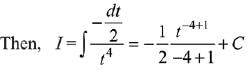
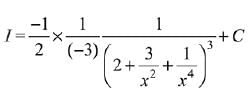
Dividing numerator and denominator by x15 we get,
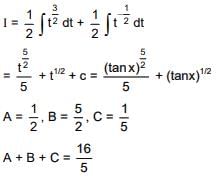
Q.27. If , where k is a constant of integration, then A + B + C equals (2016) (1) 15/5 (2) 21/5 (3) 7/10 (4) 27/10 Ans. (1) Solution. tan x = t
Q.28. The integral is equal to (where C is a constant of integration) (2016) (1) (2) (3) (4) Ans. (2) Solution.
FAQs on JEE Main Previous Year Questions (2016-2026): Indefinite Integrals
1. What are the main types of indefinite integral problems asked in JEE Main exams?
Ans. JEE Main indefinite integrals focus on substitution methods, integration by parts, partial fractions, trigonometric integrals, and rational function decomposition. Students encounter polynomial integrals, exponential-logarithmic combinations, and inverse trigonometric results. Previous year question analysis reveals that substitution technique and u-substitution appear most frequently, accounting for 30-40% of integral problems in competitive exams since 2016.
2. How do I identify which integration technique to use for tricky indefinite integral questions?
Ans. The key is recognizing function patterns: use substitution for composite functions, integration by parts when products of different function types appear, and partial fractions for rational expressions. Students should examine whether the derivative of one part exists in the expression-if yes, substitution works best. Practice with previous year solved papers helps develop pattern recognition for selecting the fastest method during timed JEE Main exams.
3. Why do students make mistakes with indefinite integral constants of integration in JEE problems?
Ans. The constant of integration (C) is mandatory in indefinite integrals-forgetting it costs marks. Many students skip C when solving previous year questions or assume it cancels out. Unlike definite integrals with fixed bounds, indefinite integrals represent entire families of curves. JEE evaluators strictly check for C inclusion; omitting it during exam conditions leads to lost marks despite correct integration technique.
4. What's the difference between solving indefinite integrals and definite integrals in JEE Main?
Ans. Indefinite integrals yield a function plus constant (antiderivative), while definite integrals produce numerical values using limits. For JEE preparation, indefinite integral questions require the constant C and focus on integration techniques. Definite integrals apply upper and lower bounds using the Fundamental Theorem. Previous year papers show indefinite integral problems test conceptual strength in technique selection and algebraic manipulation more heavily.
5. How can I practice indefinite integral problems effectively using previous year JEE Main questions?
Ans. Work through JEE Main papers from 2016-2026 chronologically to identify recurring patterns and evolving difficulty. Group problems by technique-substitution, parts, partial fractions-rather than solving randomly. Use EduRev's compiled previous year solved papers with detailed step-by-step solutions, flashcards highlighting key integration formulas, and MCQ tests for self-assessment. This structured approach builds speed and accuracy for exam conditions.
mock tests for examination, Free, past year papers, Extra Questions, shortcuts and tricks, Sample Paper, JEE Main Previous Year Questions (2016-2026): Indefinite Integrals, JEE Main Previous Year Questions (2016-2026): Indefinite Integrals, video lectures, Semester Notes, practice quizzes, study material, Objective type Questions, JEE Main Previous Year Questions (2016-2026): Indefinite Integrals, Previous Year Questions with Solutions, pdf , Important questions, Viva Questions, Summary, MCQs, ppt, Exam;

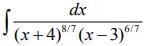 is equal to (where C is a constant of integration) (2020)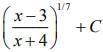


 where C is a constant of integration, then the ordered pair (λ, f(θ)) is equal to (2020)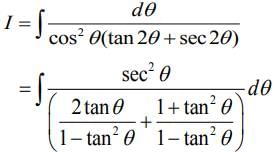
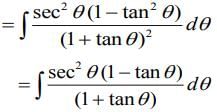


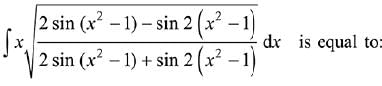 (2019)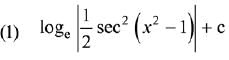




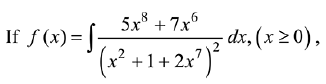 and f(0) = 0, then the value of f(1) is: (2019)

 is equal to (where C is a constant of integration (2019)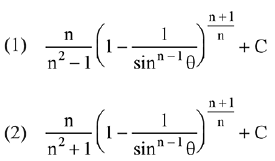
 where C is a constant of integration, then f (x) is equal to: (2019)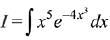
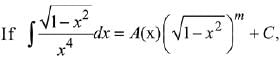 for a suitable chosen integer m and a function A (x), where C is a constant of integration, then (A(x))m equals: (2019)


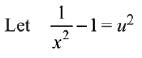
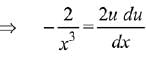


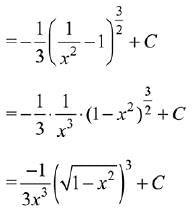
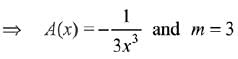
 where C is a constant of integration, then f(x) is equal to: (2019)


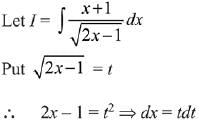
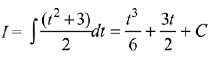
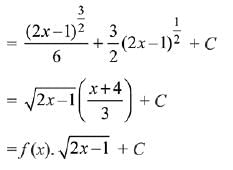
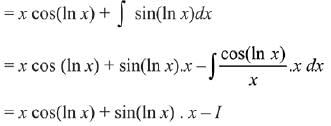
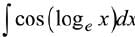 is equal to:







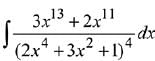 is equal to: (where C is a constant of integration) (2019)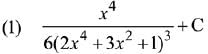
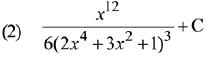
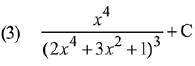
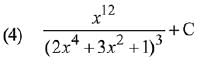

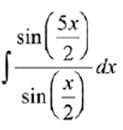 is equal to: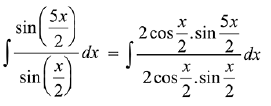
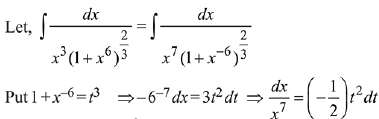
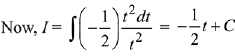
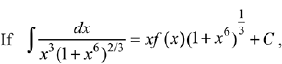 where C is a constant of integration, then the function f(x) is equal to: (2019)


 where C is a constant of integration, then: (2019)

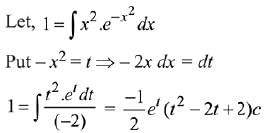
 where c is a constant of integration, then g(-1) is equal to: (2019)


 is equal to: (2019)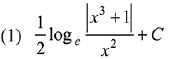
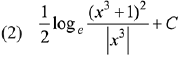
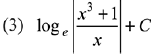
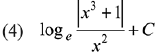

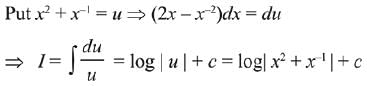
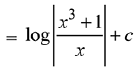
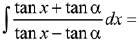 A(x) cos2α+B(x) sin2α+C, where C is a constant of integration, then the functions A(x) and B(x) are respectively: (2019)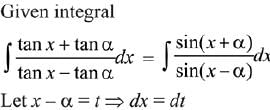
 is equal to: (2018)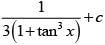
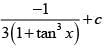



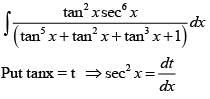
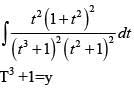
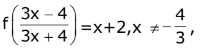
 = 2x + 1, (x ∈ R - {1, -2}), then ∫ f(x)dx is equal to: (where C is a constant of integration) (2018)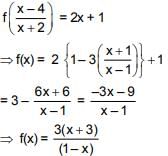

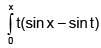 dt then: (2018)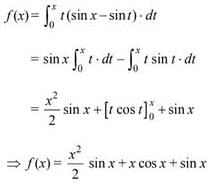
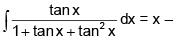
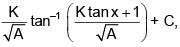 (C is a constant of integration), then the ordered pair (K, A) is equal to (2018)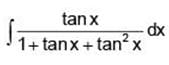




 is equal to: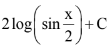

 and
and  then the ordered pair (A,B) is equal to :(where c is a constant of integration) (2017)



 dx is equal to: (2016)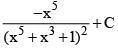
 , where k is a constant of integration, then A + B + C equals (2016)
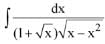 is equal to (where C is a constant of integration) (2016)