Worksheet: Wake Up


Q1: Fill in the Blanks
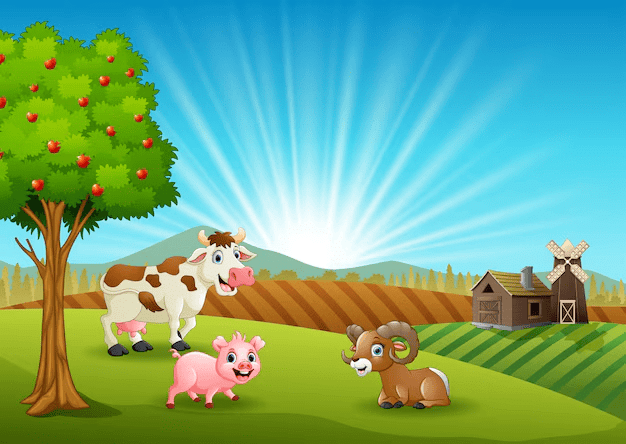
(i) The birds are singing in _________.(ii) And you _______ the buzzing bees.
(iii) It's much too late to __________ in _____.
(iv) So hurry up, you sleepy ______.
(v) The _____, the ________, the _______ and the_____, the _______chicken.
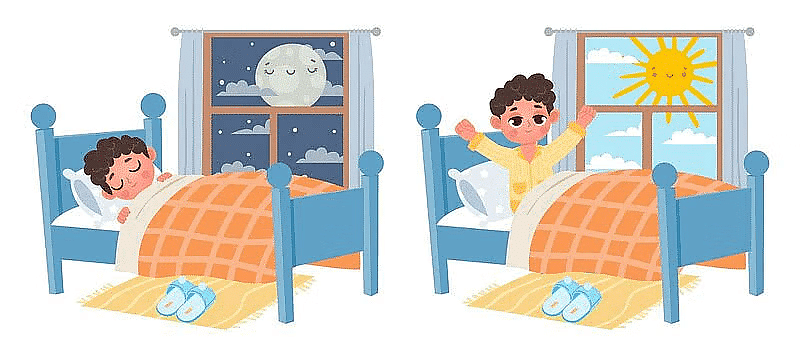 Wake up!
Q2: Mark the following as True (T) or False (F)
(i) The poet says it is too early to rise from bed.(ii) It is time to come out and play.
(iii) It is a very dull day.
(iv) Everyone is out and about.
(v) The poet tells the cows, horses, ducks, sheep and chickens to get up.
Q3: Correct and Rewrite
These sentences are incorrect. Rewrite them correctly based on the poem.
(i) The cows are barking in the trees.
(ii) It's too early to get up, so stay in bed.
(iii) Ducks are meowing by the pond.
(iv) The chickens are roaring loudly.
(v) The poem says it's okay to sleep all day.
Q4: Very Short Question Answer
(i) Who are singing and where are they singing?
(ii) What is the name of the poem?
(iii) What is the name of the author?
(iv) Who is saying cheep-cheep-cheep?
Q5:Text based Questions
Read the extract given below and answer the following question.
Wash and dress
And come on out
Everyone is up and about.
The cow, the horses, the ducks
And the sheep,
The tiniest chicken
Cheep-cheep-cheep
Wake up!
(i) What is everyone doing?
(ii) What does the poet want us to do?
(iii) Which word in the extract means the same as 'to take a bath'?
(a) come on (b) dress (c) wash (d) cheep
(iv) Which of the following is used as an adjective?
(a) dress (b) up and about (c) cheep (d) tiniest
Q6: Answer the following Questions
(i) When you wake up, what is the first sound you hear?
(ii) What is the first thing you see when you open your eyes?
(iii)
'Wake up! Wake up!
It's a lovely day,
Oh! Please get up
And come and play.'
(a) With whom does the poet want to play?
(b) What is the weather of the day like?

(iv) Why does the poet want us to hurry up?
(v) Which creatures wake up in the morning before the child does?
(vi) What type of day is it?
(vii) What sounds do the bees and birds make on waking up?
Q7: HOTS Question Answer
Early to bed and early to rise makes a man healthy, wealthy and wise. Discuss.Q8: Value-Based Question
Suppose your brother has a bad habit of getting up late. How can you help them improve this habit? You can find Worksheet Solutions here: Worksheet Solutions: Wake Up
FAQs on Worksheet: Wake Up
| 1. What are the main activities and exercises in the Wake Up worksheet for Class 4? |  |
| 2. How can I improve my answers to the Wake Up worksheet questions? | |
| 3. What vocabulary words should I focus on while solving the Wake Up worksheet? | |
| 4. What types of questions appear in the Wake Up worksheet exercise section? | |
| 5. How should I manage time while completing the Wake Up worksheet activities? | |


