Worksheet Solutions: Going To School - 1

Q1: Fill in the Blanks
(i) People make _____ to cross a river.
Ans: People make bridges to cross a river.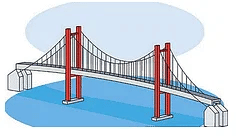
(ii) In Rajasthan. _____ is used to pull the carts.
Ans: In Rajasthan, camel cart is used to pull the carts.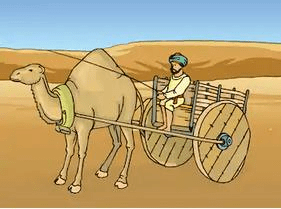
(iii) In mountain areas of Uttarakhand, children travel on _____ and _____ paths to reach school.
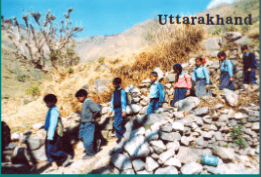
Ans: In mountain areas of Uttarakhand, children travel on rocks and uneven paths to reach school.
(iv) A pukka bridge is made up of _____ and _____.
Ans: A pukka bridge is made up of bricks and iron rods.
Q2: Multiple Choice Questions
(i) Bridges are built over:
(a) River
(b) Railway lines
(c) Canals
(d) All
Ans: (d)
(ii) Name the transport by which you can cross a river.
(a) Boat
(b) Donga
(c) Ferry
(d) All
Ans: (d)
(iii) Which is the longest bridge in India:
(a) Howrah Bridge
(b) Bhupen Hazarika Setu
(c) Sea link bridge
(d) All
Ans: (d)
Bhupen Hazarika Setu is the longest bridge connecting Assam and Arunachal Pradesh.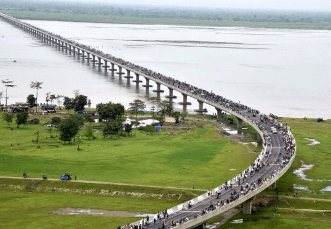
(iv) Where do you see 'jugads':
(a) Gujarat
(b) Rajasthan
(c) UP
(d) MP
Ans: (a)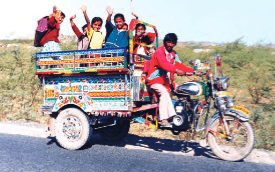
(v) Where are the camel carts used:
(a) Desert
(b) Green land
(c) Forest
(d) All
Ans: (a)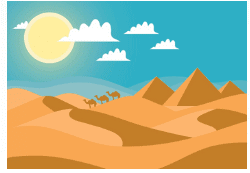
Q3: Short Answer TypeQuestions
(i) In many remote areas, students have to travel through many difficult paths to reach school.
Ans:
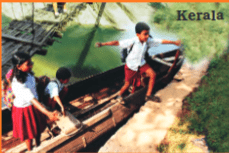 The given statement is true as students have to cross rivers or use vallam to reach school. In deserts, students cross areas covered with sand as well.
(ii) The government should try to make pukka roads where possible so that children can reach schools easily.
Ans: The given statement is true.
(iii) How do children go to school in desert areas of Rajasthan?
Ans: In desert areas of Rajasthan, people use camel carts to travel from one place to another.
(iv) What is a bullock cart?
Ans: Bullock cart is a vehicle pulled by the bulls in village areas. It is used to carry goods and people from one place to another.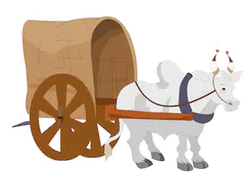
(v) How do children usually go to school in Gujarat?
Ans: Children in Gujarat usually travel on jugads.
(vi) Why do children going to school in snow areas hold each other's hands?
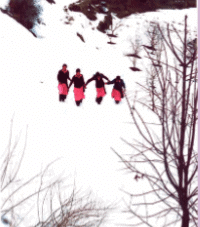
Ans: Children walking in snow areas hold each other's hands so that they may not slip or fall in the snow. Also, holding each other's hands protects children from sinking into the soft snow.
(vii) How can we avail easy education to the students in remote areas?
Ans: We can avail easy education in remote areas by building more schools and by building pukka roads so that the children may travel easily.
(viii) Punishment is necessary for the students to study.
Ans: The given statement is false. Punishment is a crime and no child should be punished at school.
(ix) More schools should be made in remote areas to promote education.

Ans: The given statement is true.
(x) We use an umbrella while going to school if it is too sunny or raining outside the house.
Ans: The given statement is true.
(xi) What is vallam?
Ans: Vallam is a boat made of wood and is used in areas like Kerala to cross the rivers.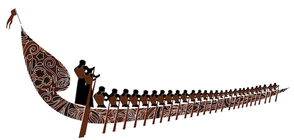
(xii) How do students reach school on long roads?
Ans: On long roads, students use bicycles to travel between home and school.
(xiii) What is jugad? How does it look like?
Ans: A jugad is a vehicle generally used in Gujarat to carry goods and people from one place to another. It is basically a motorcycle, which carries a cart at its back to carry people and goods.
(xiv) How do people cross the paths which have big gaps between two paths?
Ans: People build bridges to cross the paths which have big gaps between them.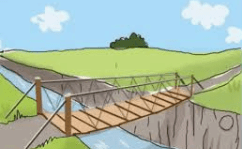
(xv) Where do we use trolleys?
Ans: We use trolleys to cross the paths between two mountains. Trolleys are generally used in mountain areas of Ladakh.
FAQs on Worksheet Solutions: Going To School - 1
| 1. What are the different ways students go to school in India? |  |
| 2. Why is it important to follow safety rules while going to school? | |
| 3. How should students behave on school transport or buses? | |
| 4. What should students carry in their school bag daily? | |
| 5. How can students prepare the night before going to school? | |