Worksheet - Verbs

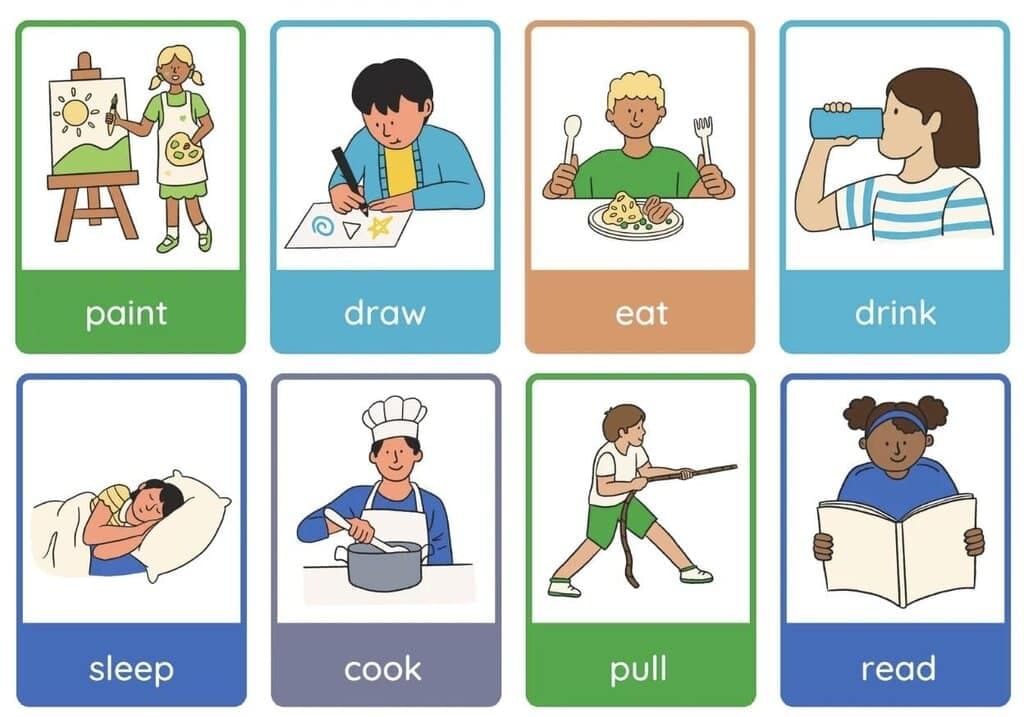
Q1. Underline the verbs in the sentences.
A verb is a word that shows an action (what someone or something does) or a state (how someone or something is). To find a verb, ask "What is happening?" or "What does the subject do?" In these sentences underline the verb that tells the action or state.
Example:
The man was late; his wife waited for him by the door.
The man was late; his wife waited for him by the door.
- James remembered to make his bed this morning.
- Last night, Mom baked a cake and a dozen cookies.
- Jenna picked up the ball and threw it to Sophia.
- The students ran outside when the bell rang.
- After recess, everyone returned to class.
- Melissa and her brother played at the park until supper.
- First, you measure the flour, then pour it into a bowl.
- Saturday, we vacuumed the living room and washed the kitchen floor.
- Matthew folded his sweater and put it in his closet.
- The grandmother rocked the baby until she fell asleep.
Ans.
1. James remembered to make his bed this morning.
2. Last night, Mom baked a cake and a dozen cookies.
3. Jenna picked up the ball and threw it to Sophia.
4. The students ran outside when the bell rang.
5. After recess, everyone returned to class.
6. Melissa and her brother played at the park until supper.
7. First, you measure the flour, then pour it into a bowl.
8. Saturday, we vacuumed the living room and washed the kitchen floor.
9. Matthew folded his sweater and put it in his closet.
10. The grandmother rocked the baby until she fell asleep.
Q2.
(a) Circle the verbs.
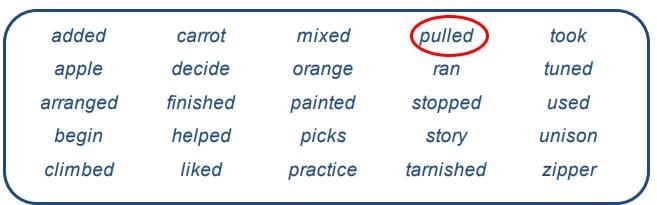
Ans.
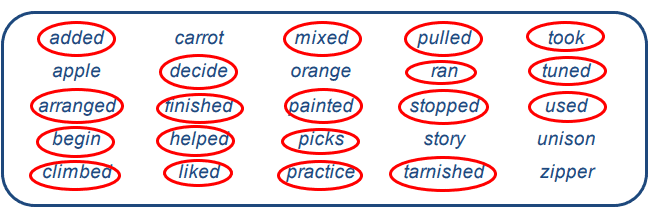
(b) Now, use the verbs to complete the sentences.
Example:
The sailors _______ on the ropes and the sails extended.
The sailors pulled on the ropes and the sails extended.
- The firefighters put on their suits, drove to the fire and ______ the tall ladder.
- The hair stylist ______ his scissors to cut the woman's hair.
- The baker ______ the flour and the water together before adding the eggs.
- The florist cut the flowers and ______ them into a nice bouquet.
- The chef stirred his soup carefully, then ______ more salt.
- The artist ______ a beautiful portrait of his subject.
- The bus driver ______ to let more people on the bus.
- The doctor ______ her patient's pulse before listening to his heart.
- The coach ______ the players learn a new strategy.
- Every time the secretary ______ up the phone, the line cuts off.
- The musician ______ her guitar before she began to play.
Ans.
1. The firefighters put on their suits, drove to the fire and climbed the tall ladder.
2. The hairstylist used his scissors to cut the woman's hair.
3. The baker pulled the flour and the water together before adding the eggs.
4. The florist cut the flowers and arranged them into a nice bouquet.
5. The chef stirred his soup carefully, then added more salt.
6. The artist painted a beautiful portrait of his subject.
7. The bus driver stopped to let more people on the bus.
8. The doctor took her patient's pulse before listening to his heart.
9. The coach helped the players learn a new strategy.
10. Every time the secretary picks up the phone, the line cuts off.
11. The musician tuned her guitar before she began to play.
Q3. Underline the main verbs and circle the helping verbs.
Some verbs are the main action words in a sentence. Other verbs help the main verb to show tense, mood or voice; these are helping (auxiliary) verbs. Common helping verbs include is, are, was, were, have, has, had, do, does, did, will, would, can, could, shall, should, may, might. Circle the helping verb(s) and underline the main verb in each sentence.
Example:
You should finish your homework tonight.
Youfinishyour homework tonight.

- It might rain tomorrow.
- Have you seen my keys?
- Where will you move to?
- They are thinking about a change in venue.
- We would like to go with you tomorrow.
- He is working at the mall this week.
- I do not want you to get sick.
- Could you help him with that?
- He might listen to you.
- We have done our best.
- She can borrow this book.

Ans.
1. It rain tomorrow.
2. you seen my keys?
3. Where you move to?
4. They thinking about a change in venue.
5. We like to go with you tomorrow.
6. He working at the mall this week.
7. I not want you to get sick.
8. you help him with that?
9. He listen to you.
10. We done our best.
11. She borrow this book.
Q4. Write if the sentence is in the past, present or future.
Every verb shows time. This is called tense. A simple way to identify tense is:
Present - something that happens now or regularly.
Past - something that already happened.
Future - something that will happen.
Example:
They climbed that hill easily.
They climbed that hill easily. (Past)
- We will travel to Europe next summer.
- They play soccer in the sunshine.
- The children ate their vegetables.
- You will see your best friend next weekend.
- She brushes her teeth every night.
Ans.
1. We will travel to Europe next summer. (Future)
2. They play soccer in the sunshine. (Present)
3. The children ate their vegetables. (Past)
4. You will see your best friend next weekend. (Future)
5. She brushes her teeth every night. Present
FAQs on Worksheet - Verbs
| 1. What are action words and how do I identify them in sentences for Class 3 English? |  |
| 2. What's the difference between present tense and past tense verbs in Class 3 grammar worksheets? | |
| 3. How do I use helping verbs like is, am, are, was, and were correctly? | |
| 4. What are the common mistakes students make with verb agreement in CBSE Class 3 English? | |
| 5. How should I practise identifying and using different types of verbs for better performance? | |