Shankar IAS Summary: Terrestrial Ecosystem


Terrestrial Ecosystem
The type of ecosystems which are predominantly found on land are called the terrestrial ecosystems. Terrestrial ecosystems cover approximately 140 to 150 million km2, which is about 25 to 30 percent of the total earth surface area.
- The interrelations between organisms and the environment on the land constitute "Terrestrial Ecology".
- The most important limiting factors of terrestrial ecosystems are moisture and temperature.
- There are different types of terrestrial ecosystems, which are widely distributed around the geological zones. They include:
- Tundra
- Forest Ecosystem
- Grassland Ecosystem
- Desert Ecosystem
1. Tundra
The word tundra means a "barren land" since they are found where environmental conditions are very severe.
There are two types of tundra:
- Arctic
- Alpine
 Arctic tundra (in blue) and Alpine tundra (in grey)
Distribution of Arctic & Alpine Tundra
- Arctic tundra extends as a continuous belt below the polar ice cap and above the tree line in the northern hemisphere. It occupies the northern fringe of Canada, Alaska, European Russia, Siberia, and the island group of the Arctic Ocean.
- On the south pole, tundra is very small since most of it is covered by the ocean. Alpine tundra occurs at high mountains above the tree line. Since mountains are found at all latitudes therefore alpine tundra shows day and night temperature variations.
Flora and Fauna of Arctic & Alpine Tundra
- Typical vegetation of arctic tundra is cotton, grass, sedges, dwarf heath, willows, birches, and lichens. Animals of tundra are reindeer, musk ox, arctic hare, caribous, lemmings, and squirrel.
- They are protected from chillness by the presence of thick cuticle and epidermal hair. Mammals of the tundra region have large body sizes and small tail and ear to avoid the loss of heat from the surface. The body is covered with fur for insulation.
2. Forest Ecosystem
A forest ecosystem is a functional unit or a system which comprises of soil, trees, insects, animals, birds, and man as its interacting units. A forest is a large and complex ecosystem and hence has greater species diversity
- Includes a complex assemblage of different kinds of biotic communities. Optimum conditions such as temperature and ground moisture are responsible for the establishment of forest communities.
- Forests may be evergreen or deciduous. Distinguished on the basis of the leaf into broad-leafed or needle-leafed coniferous forests in the case of temperate areas are
Classified into three major categories:
(i) Coniferous forest
(ii) Temperate forest
(iii) Tropical forest
Try yourself: Reindeer is mostly found in which ecosystem?
Types & Characteristics of Forests
Coniferous Forest (Boreal Forest)
- Cold regions with high rainfall, strong seasonal climates with long winters and short summers evergreen plant species such as spruce, fir and pine trees, etc. and by animals such as the lynx, wolf, bear, red fox, porcupine, squirrel, and amphibians like Hyla, Rana, etc.
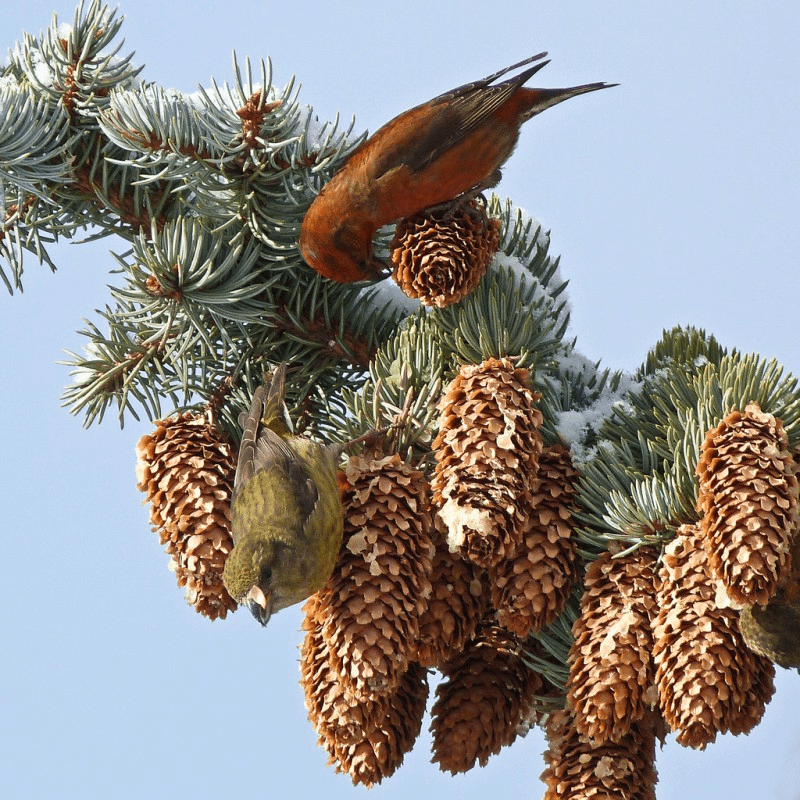 Conifers are a group of trees and Shrubs that produce Cones
- Boreal forest soils are characterized by thin podzols and are rather poor. Both because the weathering of rocks proceeds slowly in cold environments and because the litter derived from conifer needle (leaf is decomposed very slowly and is not rich in nutrients).
- These soils are acidic and are mineral deficient. This is due to the movement of a large amount of water through the soil, without a significant counter-upward movement of evaporation, essential soluble nutrients like calcium, nitrogen, and potassium are sometimes leached beyond the reach of roots.
- This process leaves no alkaline-oriented cations to encounter the organic acids of the accumulating litter. The productivity and community stability of a boreal forest are lower than those of any other forest ecosystem.
Temperate Deciduous Forest
- The temperate forests are characterized by a moderate climate and broad-leafed deciduous trees, which shed their leaves in fall, are bare over winter, and grow new foliage in the spring.
- The precipitation is fairly uniform throughout. Soils of temperate forests are podzolic and fairly deep.
Temperate Evergreen Forest
- Parts of the world that have the Mediterranean type of Climate are characterized by warm, dry summers and cool, moist winters.
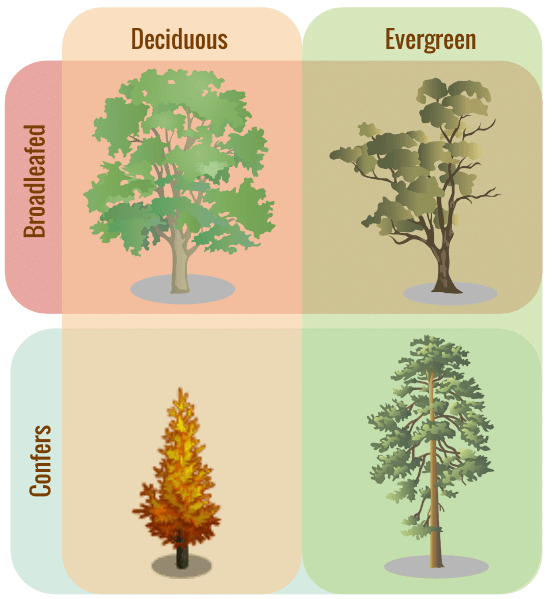 Trees and Their Leaves: Broad Leafed Evergreen Trees are shown in the upper right-hand corner of the image.
- Low broad-leafed evergreen trees. Fire is an important hazardous factor in this ecosystem and the adaptation of the plants enables them to regenerate quickly after being burnt.
Temperate Rain Forests
- Seasonality with regard to temperature and rainfall.
- Rainfall is high, and fog may be very heavy. It is an important source of water rather than rainfall itself.
- The biotic diversity of temperate rain forests is high as compared to other temperate forest. The diversity of plants and animals is much lower than compared to the tropical rainforest.
Tropical Rain Forests
- Near the equator.
- Among the most diverse and rich communities on the earth. Both temperature and humidity remain high and more or less uniform. The annual rainfall exceeds 200 cm and is generally distributed throughout the year.
- The flora is highly diversified. The extremely dense vegetation of the tropical rain forests remains vertically stratified with tall trees often covered with vines, creepers, lianas, epiphytic orchids, and bromeliads.
- The lowest layer is an understory of trees, shrubs, herbs, like ferns and palms. The soil of tropical rainforests are red latosols, and they are very thick.
Tropical Seasonal Forests
- Also known as monsoon forest occur in regions where total annual rainfall is very high but segregated into pronounced wet and dry periods.
- This kind of forest is found in South East Asia, central and south America, northern Australia, western Africa and tropical islands of the Pacific as well as in India.
Subtropical Rain Forests
- Broad-leaved evergreen subtropical rain forests are found in regions of fairly high rainfall but less temperature differences between winter and summer.
- Epiphytes are common here.
- Animal life of the subtropical forest is very similar to that of tropical rainforests.
Try yourself: In which of the following climate will you find Temperate Evergreen Forests?
Indian Forest Types
Forest types in India are classified by Champion and Seth into sixteen types.
(a) Tropical Wet Evergreen Forests
- Are found along the Western Ghats, the Nicobar and Andaman Islands, and all along the northeastern region.
- It is characterized by tall, straight evergreen trees. The trees in this forest form a tiered pattern: Beautiful fern of various colours and different varieties of orchids grow on the trunks of the trees.

(b) Tropical Semi-Evergreen Forests
- Found in the Western Ghats, Andaman and Nicobar Islands, and the Eastern Himalayas. Such forests have a mixture of wet evergreen trees and moist deciduous trees. The forest is dense.
(c) Tropical Moist Deciduous Forests
- Found throughout India except in the western and the northwestern regions.
- The trees are tall, have broad trunks, branching trunks, and roots to hold them firmly to the ground. These forests are dominated by sal and teak, along with mango, bamboo, and rosewood.
(d) Littoral and Swamp
- Found along the Andaman and Nicobar Islands and the delta area of the Ganga and the Brahmaputra.
- They have roots that consist of soft tissue so that the plant can breathe in the water.
(e) Tropical Dry Deciduous Forest
- The northern part of the country except in the North-East. It is also found in Madhya Pradesh, Gujarat, Andhra Pradesh, Karnataka, and Tamil Nadu. The canopy of the trees does not normally exceed 25 metres.
- The common trees are the sal, a variety of acacia, and bamboo.
(f) Tropical Thorn Forests
- This type is found in areas with black soil- North, West, Central, and South India. The trees do not grow beyond 10 metres. Spurge, caper, and cactus are typical of this region.
(g) Tropical Dry Evergreen Forest
- Dry evergreens are found along with Tamil Nadu Andhra Pradesh and the Karnataka coast. It is mainly hard-leaved evergreen trees with fragrant flowers, along with a few deciduous trees.
Try yourself: Tropical semi evergreen forests are not found in which of the following region?
(h) Sub-tropical Broad-leaved forests
- Broad-leaved forests are found in the Eastern Himalayas and the Western Ghats, along the Silent Valley. There is a marked difference in the form of vegetation in the two areas.
- In the Silent Valley, the poonspar, cinnamon, rhododendron, and fragrant grass are predominant. In the Eastern Himalayas, the flora has been badly affected by the shifting cultivation and forest fires. There are oak, alder, chestnut, birch, and cherry trees. There are a large variety of orchids, bamboo and creepers.
(i) Sub-tropical Pine forests
- Found in Shivalik Hills, Western and Central Himalayas, Khasi, Naga, and Manipur Hills.
- The trees predominantly found in these areas are the chir, oak, rhododendron, and pine as well as sal, amla, and laburnum are found in the lower regions.
(j) Sub-tropical Dry evergreen forests
- Hot and dry season and a cold winter. It generally has evergreen trees with shining leaves that have a varnished look, found in the Shivalik Hills and foothills of the Himalayas up to a height of 1000 metres.
(k) Montane Wet temperate forests
- In the North, found in the region to the east of Nepal into Arunachal Pradesh, receiving a minimum rainfall of 2000 mm. In the North, there are three layers of forests: the higher layer has mainly coniferous, the middle layer has deciduous trees such as the oak and the lowest layer is covered by rhododendron and champa.
- In the South, it is found in parts of the Niligiri Hills, the higher reaches of Kerala.
- The forests in the northern region are denser than in the South. Rhododendrons and a variety of ground flora can be found here.
(l) Himalayan Moist temperate Forest
- This type spreads from the Western Himalayas to the Eastern Himalayas. The trees found in the western section are broad-leaved oak, brown oak, Walnut, rhododendron.
- Eastern Himalayas, the rainfall is much heavier and therefore the vegetation is also more lush and dense. There are a large variety of broad-leaved trees, ferri, and bamboo.
(m) Himalayan Dry temperate Forest
- This type is found in Lahul, Kinnaur, Sikkim, and other parts of the Himalayas.
- There are predominantly coniferous trees, along with broad-leaved trees such as the oak, maple, and ash. At higher elevation, fir, juniper, deodar, and chilgoza are found.
(n) Sub Alpine forest
- Subalpine forests extend from Kashmir to Arunachal Pradesh between 2900 to 3500 metres. In the Western Himalayas, the vegetation consists mainly of juniper, rhododendron, willow, and black currant.
- In the eastern parts, red fir, black juniper, birch, and larch are the common trees. Due to heavy rainfall and high humidity, the timberline in this part is higher than that in the West. Rhododendron of many species covers the hills in these parts.
(o) Moist Alpine scrub
- Moist alpines are found all along the Himalayas and on the higher hills near the Myanmar border. It has a low scrub, dense evergreen forest, consisting mainly of rhododendron and birch. Mosses and ferns cover the ground in patches. This region receives heavy snowfall.
(p) Dry Alpine scrub
- Dry alpines are found from about 3000 meters to about 4900 meters. Dwarf plants predominate, mainly the black juniper, the drooping juniper, honeysuckle, and willow.
3. Grassland Ecosystem
Grassland Ecosystem is an area where the vegetation is dominated by grasses and other herbaceous (non-woody) plants.
- Found where rainfall is about 25-75 cm per year, not enough to support a forest, but more than that of a true desert. Vegetation formations are generally found in temperate climates.
 Grassland Ecosystem
 - In India, they are found mainly in the high Himalayas. The rest of India's grasslands are mainly composed of steppes and savannas. Steppe formations occupy large areas of sandy and saline soil, in western Rajasthan, where the climate is semi-arid.
- The major difference between steppes and savannas is that all the forage in the steppe is provided only during the brief wet season whereas in the savannas forage is largely from grasses that not only grow during the wet season but also from the smaller amount of regrowth in the dry season.
Types of Grasslands
(i) Semi-arid zone (The Sehima-dichanthium type)
- It covers the northern portion of Gujarat, Rajasthan (excluding Aravallis), western Uttar Pradesh, Delhi and Punjab.
- The topography is broken up by hill spurs and sand dunes. Senegal, Calotropis gigantea, Cassia auriculata, Prosopis cineraria, Salvadora oleoides and ziziphus Nummularia which make the savanna rangeland look like scrub.
(ii) Dry subhumid zone (The Dichanthium- cenchrus- lasiurus type)
- It covers the whole of peninsular India (except Nilgiri). The thorny bushes are Acacia catechu, Mimosa, Zizyphus (ber) and sometimes fleshy Euphorbia, along with low trees of Anogeiss us latifolia, Soymida febrifuga and other deciduous species.
- Sehima (grass is more prevalent on gravel and the cover maybe 27%. Dichanthium (grass) flourishes on level soils and may cover 80% of the ground.
(iii) Moist subhumid zone (The Phragmites- saccharum-imperata type)
- It covers the Ganga alluvial plain in Northern India.
- The topography is level, low lying, and ill-drained.
- Bothriochloa pertusa, Cypodon dactylon and Dichanthium annulatum are found in transition zones.
- The common trees and shrubs are Acacia arabica, hogeissus, latifolia, Butea monosperma, Phoenic sylvestris and Ziziphus nummularia. Some of these are replaced by Borassus sp in the palm savannas especially near Sunderbans.
(iv) The Themeda Arundinella type
- This extends to the humid montane regions and moist sub-humid areas of Assam, Manipur, West Bengal, Uttar Pradesh, Punjab, Himachal Pradesh and. Jammu and Kashmir.
- The savanna is derived from the humid forests on account of shifting cultivation and sheep grazing. Indian Grasslands and Fodder Research Institute, Jhansi and Central Arid Zone Research Institute, Jodhpur.
Role of fire
- Fire plays, an important role in the management of grasslands.
- Under moist conditions, fire favors grass over trees, whereas in dry conditions the fire is often necessary to maintain grasslands against the invasion of desert shrubs.
- Burning increases the forage yields.
Example: Cynodon dactylon
Try yourself: Which of the following state does not come under Semi-Arid Zone?
4. Desert Ecosystem
A desert is a barren area of landscape where little precipitation occurs and, consequently, living conditions are hostile for plant and animal life.
- Deserts are formed in regions with less than 25 cm of annual rainfall, or sometimes in hot regions where there is more rainfall, but unevenly distributed in the annual cycle.
 Desert Ecosystem
 - Lack of rain in the mid-latitude is often due to stable high-pressure zones, deserts in temperate regions often lie in "rain shadows", which is where high mountains block off moisture from the seas.
- The climate of these biomes is modified by altitude and latitude. At high, at a greater distance from the equator, the deserts are cold and hot near the equator and tropics.
- As the large volume of water passes through the irrigation system, salts may be left behind that will gradually accumulate over the years until they become limiting, unless, means of avoiding this difficulty are devised.
Adaptations
These plants conserve water by the following method:

- They are mostly shrubs.
- Leaves are absent or reduced in size.
- Leaves and stems are succulent and water-storing.
- In some plants, even the stem contains chlorophyll for photosynthesis.
- The root system is well developed and spread over a large area. The annuals wherever present germinates, bloom and reproduce only during the short rainy season, and not in summer and winter.
- They are fast runners. They are nocturnal in habit to avoid the sun's heat during day time.
- They conserve water by excreting concentrated urine. Animals and birds usually have long legs to keep the body away from the hot ground.
- Lizards are mostly insectivorous and can live without drinking water for several days. Herbivorous animals get sufficient water from the seeds which they eat. Mammals as a group are poorly adapted to deserts.
Indian Desert: Thar Desert (Hot)

- The climate of this region is characterized by excessive drought, the rainfall being scanty and, irregular. The winter rains of northern India rarely penetrate into the region.
The proper desert plants may be divided into two main groups
- Depending directly upon rain.
- Those depending on the presence of subterranean water.
1. The first group consists of two types:
(ii) The rain perennials
- The ephemera's are delicate annuals, apparently free from any xerophilous adaptations, having slender stems and root systems and often large Flowers.
- They appear almost immediately after rain, develop flowers and fruits in an incredibly short time, and die as soon as the surface layer of the soil dries up.
- The rain perennials are visible above the ground only during the rainy season but have a perennial underground stem.
2.The second group
- Depending on the presence of subterranean water by far the largest number of indigenous plants are capable of absorbing water from deep below the surface of the ground by means of a well-developed root system, the main part of which generally consists of a slender, woody taproot of extraordinary length.
- Generally, various other xerophilous adaptations are resorted to such as reduced leaves, thick hairy growth, succulence, coatings of wax, thick cuticle protected stomata, etc. all having for their object of reduction of transpiration.
Fauna
- It is home to some of India's most magnificent grasslands and sanctuary for a charismatic bird, the Great Indian Bustard. Among the mammal fauna, the blackbuck, wild ass, chinkara, caracal, Sandgrouse, and desert fox inhabit the open plains, grasslands, and saline depressions.
- The nesting ground of Flamingoes and the only known population of Asiatic wild Ass lies in the remote part of Great Rarm, Gujarat. It is the migration flyway used by cranes and flamingos.
- Some endemic flora species of the Thar Desert include Calligonum Polygonoides, Prosopis cineraria, Tecomella undulate, Cenchrus biflorus, and Sueda fruticosa, etc.
Cold Desert/ Temperate Desert
- The cold desert of India includes areas of Ladakh, Leh, and Kargil of Kashmir and Spiti valley of Himachal Pradesh, and some parts of northern Uttaranchal and Sikkim. Lies in the rain shadow of Himalayas.
- Oak, pine, deodar, birch, and rhododendron are the important trees and bushes found there. Major animals include yaks, dwarf cows, and goats.
- Severe arid conditions:Dry Atmosphere Mean annual rainfall less than 400mm.
» Soil type- Sandy to sandy loam.
» Soil pH - neutral to slight alkaline.
» Soil nutrient - Poor organic matter content, low water retention capacity.
Bio-Diversity
- Cold desert is the home of highly adaptive, rare endangered fauna, such as Asiatic Ibex, Tibetan Argali, Ladakh Uriyal, Bharal, Tibetan Antelope (chiru), Tibetan Gazelle, Wild Yak, Snow Leopard, Brown Bear, Tibetan Wolf, Wild Dog, and Tibetan Wild Ass ('Kiang' a close relative of the Indian wild ass), Woolly hare, Black Necked Crane, etc.
- India as a signatory to United Nations Convention to Combat Desertification (UNCCD).
Deforestation
Deforestation is the process of clearing or removing large expanses of forests, usually by cutting down trees, resulting in the transformation of forested areas into non-forest land.
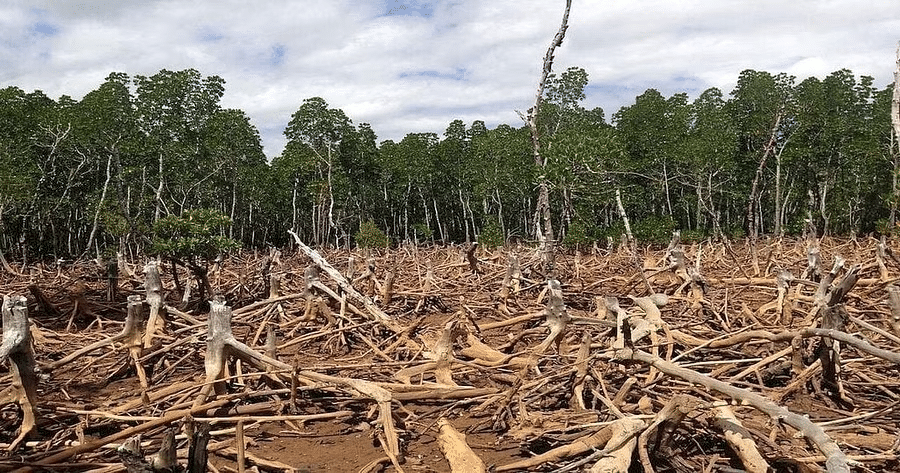
Causes
The following are the causes of deforestation:
- Shifting Cultivation -
- In this method, a piece of land is cleared, and the vegetation is burned. The ash is then mixed with the soil, providing nutrients.
- This land is used to cultivate crops with modest yields for two to three years. Afterward, the area is abandoned to regain fertility, and the same practice is repeated elsewhere on a fresh piece of land. This approach requires only simple tools and does not involve high levels of mechanization.
- Development Projects -
- With a significant increase in the human population and their needs, development projects such as hydroelectric facilities, large dams, reservoirs, and the construction of railway lines and roads are crucial but come with various environmental challenges.
- Many of these projects necessitate extensive deforestation.
- Fuel Requirements - The growing demand for firewood, driven by the expanding population, puts substantial pressure on forests, leading to an increased intensity of deforestation.
- Raw Material Requirements -
- Various industries rely on wood as a raw material for products like paper, plywood, furniture, matchsticks, boxes, crates, and packing cases.
- Additionally, industries obtain raw materials from plants for drugs, scents, perfumes, resin, gums, waxes, turpentine, latex, rubber, tannins, alkaloids, and beeswax.
- This places tremendous pressure on forest ecosystems, and their uncontrolled exploitation for various raw materials is the primary cause of forest ecosystem degradation.
- Other Causes - Deforestation is also a result of overgrazing, agricultural practices, mining operations, urbanization, fire, pests, diseases, defense activities, and communication projects.
How it affects?
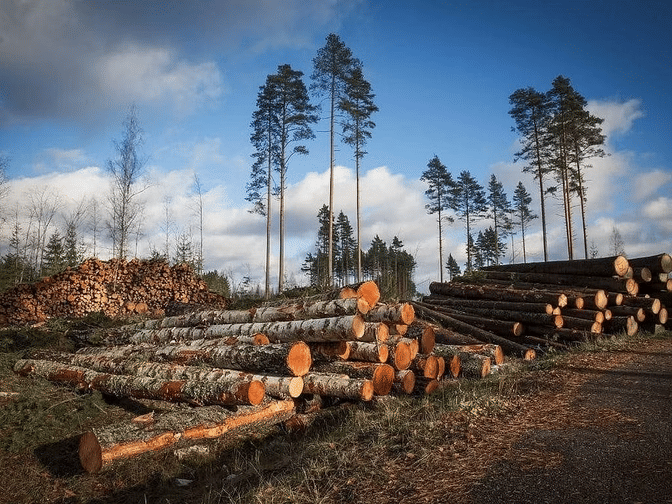
- Impact on Forests:
- The reduction of closed forests, distinguished by a complete canopy, is a consequence of deforestation.
- This leads to an increase in the prevalence of degraded forests. The loss of closed forests alters the landscape and the composition of plant and animal species that depend on these ecosystems for their survival.
- This change in forest structure can have cascading effects on biodiversity and ecological balance.
- Water Cycle Disruption:
- Forests play a crucial role in the water cycle by recycling moisture through a process called transpiration.
- Trees absorb water from the soil and release it into the atmosphere. This moisture eventually condenses and falls back to the ground as rain.
- Deforestation disrupts this natural cycle, resulting in an immediate decline in groundwater levels and a long-term reduction in precipitation. The loss of trees also leads to increased runoff, reducing the ability of the land to absorb and retain water.
- Mining and Soil Erosion:
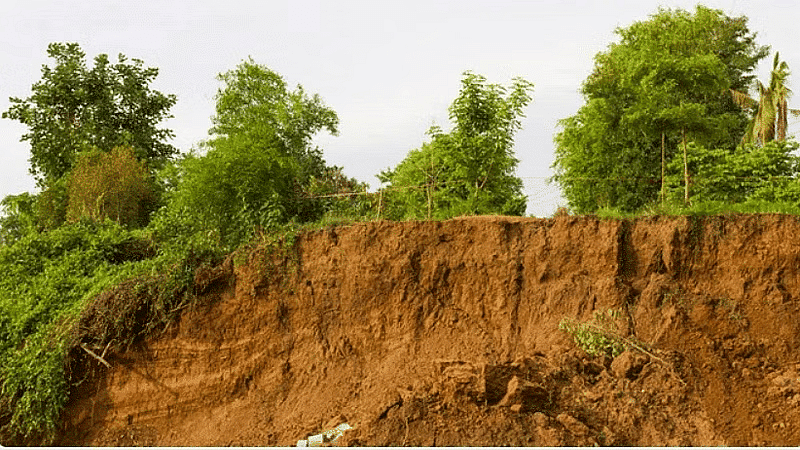
- Many mining activities, particularly in forested regions like India, contribute to deforestation and soil erosion.
- The extraction of minerals often requires clearing large areas of forests, impacting the biodiversity and ecosystem services that these forests provide.
- In addition, underground mining operations exacerbate deforestation, as timber is commonly used to support mine galleries. The removal of trees for this purpose further contributes to habitat loss and ecosystem degradation.
- Abandoned Mines and Habitat Degradation:
- The aftermath of mining operations, particularly abandoned mines, poses a threat to the environment.
- Abandoned mines often fall into disrepair and contribute to extensive gully erosion, negatively impacting the surrounding habitat. This erosion can lead to the degradation of ecosystems, affecting both flora and fauna.
- The altered landscape and disrupted soil structure make it challenging for the ecosystem to recover, exacerbating the negative consequences of deforestation.
Hence, deforestation has multifaceted impacts, including changes in forest composition, disruptions to the water cycle, soil erosion from mining activities, and habitat degradation associated with abandoned mines. These consequences highlight the interconnectedness of ecosystems and the importance of sustainable practices to maintain the balance of natural systems.
Desertification
Desertification refers to the process by which fertile land becomes increasingly arid, unproductive, and eventually transforms into desert-like conditions. This phenomenon is primarily driven by a combination of natural and human-induced factors, leading to the degradation of soil quality and loss of vegetation.
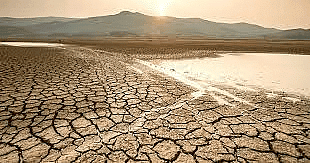 Desertification
Desertification is a significant problem in regions near deserts, such as parts of Rajasthan, Gujarat, Punjab, and Haryana.
Causes
- Population Pressure: A growing human population puts pressure on land and resources for housing, agriculture, and infrastructure. As more people need land for settlement and food production, there is an increased likelihood of overexploiting and degrading the land. This pressure contributes to the process of desertification, particularly in regions where the land is already vulnerable.
- Increase in Cattle Population, Overgrazing: The expansion of the cattle population, combined with overgrazing, can accelerate desertification. Overgrazing occurs when livestock excessively consume vegetation, leaving the soil exposed and vulnerable to erosion. The removal of vegetation cover reduces the land's ability to retain water, leading to soil degradation and making it more susceptible to desertification.
- Increased Agriculture:
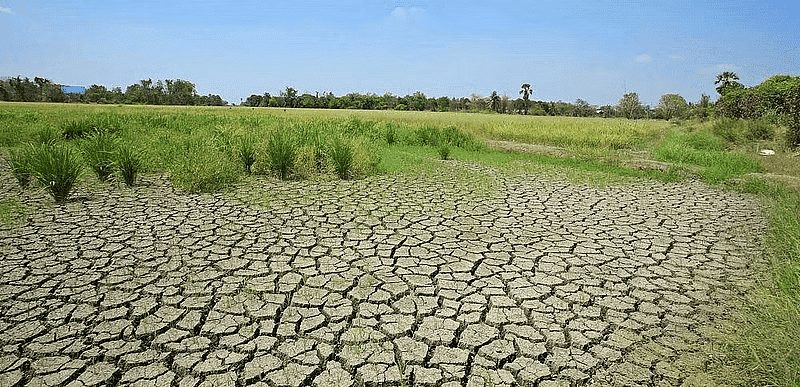 The expansion of agriculture, often driven by the need to feed a growing population, can contribute to desertification. Large-scale clearing of land for farming, particularly in arid and semi-arid regions, disrupts natural ecosystems. The removal of vegetation for agriculture reduces the land's ability to capture and retain water, leading to soil erosion and increased aridity, ultimately facilitating desertification.
 - Development Activities: Various development projects, such as the construction of roads, dams, and urban areas, can alter the landscape and contribute to desertification. These activities often involve the removal of vegetation and disruption of natural water flow, leading to increased soil erosion. The conversion of natural landscapes for development can accelerate the transformation of fertile land into degraded areas prone to desertification.
Deforestation:
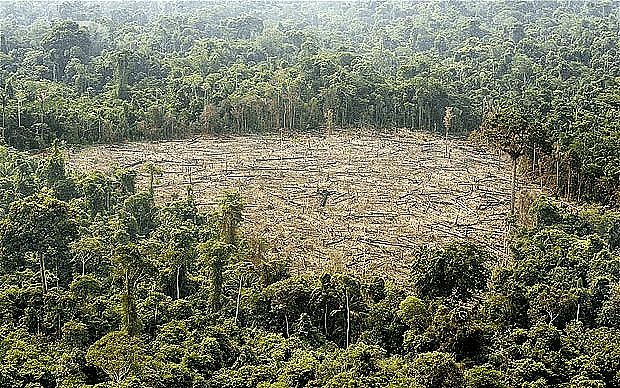 The widespread clearing of forests, either for timber or to make way for other land uses, significantly contributes to desertification. Forests play a crucial role in maintaining soil fertility and regulating water cycles. Deforestation disrupts these processes, leading to reduced water retention, increased soil erosion, and ultimately, the transformation of land into arid or semi-arid conditions conducive to desertification.
Afforestation
Afforestation refers to the deliberate and planned act of establishing and growing forests in areas where there were previously no trees or significant tree cover. It involves planting trees or allowing them to regenerate naturally, to create a new forest or increase the existing forest cover in a specific area.
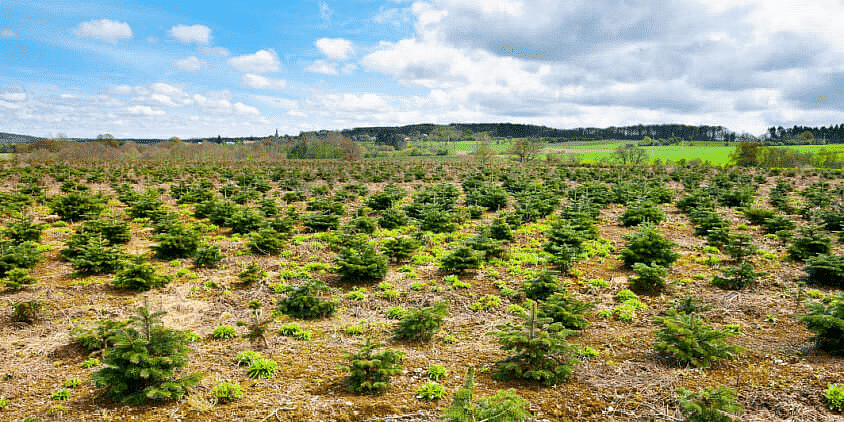
In places like the deserts of Rajasthan, Gujarat, Haryana, Punjab, and the Trans-Himalayan regions, there is not much vegetation. People in these areas need firewood, timber, and fodder for their homes and animals.
So, planting trees in the desert is necessary to change the climate, prevent desertification, and meet the needs of the people living there.
State of the World's Forests 2022
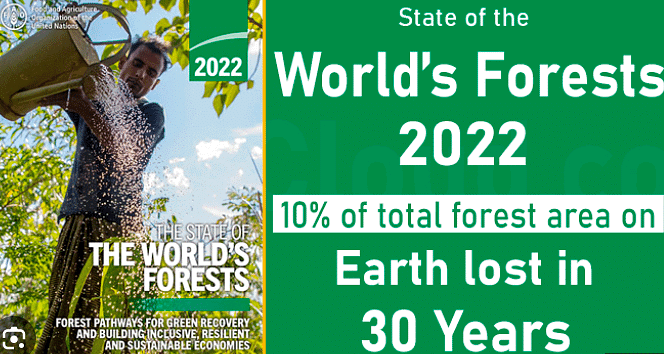
The 2022 edition of the State of the World's Forests (SOFO) was released at the World Forestry Congress. According to the report, the world lost 420 million hectares of forests in the last 30 years (1990-2020) due to deforestation, approximately 10.34% of the total forest area, which is 4.06 billion hectares (31% of the Earth's geographical area).
Although the rate of deforestation is declining, 10 million hectares of forests were lost every year between 2015 and 2020. More than 700 million hectares of forest (48% of the total forest area) are in legally established protected areas, but forest biodiversity remains under threat from deforestation and forest degradation.
Unless additional action is taken, an estimated 289 million hectares of forests would be deforested between 2016 and 2050 in the tropics alone.
(a) Diseases: SOFO 2022 revealed that 15% of 250 emerging infectious diseases are linked to forests. Additionally, 30% of new diseases reported since 1960 can be attributed to deforestation and land-use change, especially in the tropics, leading to an increase in infectious diseases like dengue fever and malaria.
(b) Fuel: Around 124 million more people fell into extreme poverty after COVID-19, impacting wood-based fuel use. Evidence suggests increased reliance on wood-based fuel in some countries during the pandemic, highlighting potential longer-term consequences.
(c) Population: The report stated that the world population is expected to reach 9.7 billion by 2050, intensifying competition for land. The demand for food is projected to rise by 35 to 56 percent by the 2050s. Global consumption of all-natural resources is anticipated to more than double from 92 billion tonnes (2017) to 190 billion tonnes (2060) due to population growth and affluence.
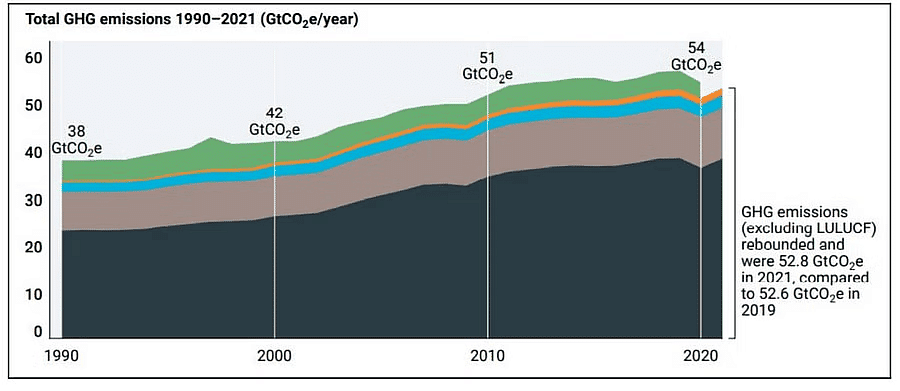
SOFO 2022 emphasizes the significant role that restoration efforts can play in addressing climate change. It estimates that implementing measures like afforestation (planting trees in areas where there were none before) and reforestation (replanting trees in deforested areas) could effectively remove between 0.9 to 1.5 gigatons of carbon dioxide equivalent (GtCO2e) per year from the atmosphere. This is crucial because carbon dioxide is a major greenhouse gas that contributes to global warming. By restoring degraded land, these actions not only enhance biodiversity and ecosystems but also help mitigate the impacts of climate change by capturing and storing carbon.
The report highlights the global commitment to address deforestation and promote sustainable forestry practices. Over 140 countries, as part of the Glaspow Leaders' Declaration on Forests and Land Use, have pledged to eliminate forest loss by the year 2030. This commitment emphasizes the urgency of protecting and restoring forests to maintain ecological balance. To support these goals, an additional six billion dollars have been allocated. This financial commitment is intended to assist developing countries in implementing strategies for forest conservation, restoration, and the adoption of sustainable forestry practices.
Recent Developments
Land Degradation (India)
- India's total degraded land is estimated at 97.84 million hectares, as per the Desertification and Land Degradation Atlas (2018-19), and no newer atlas has been released as of 2025.
- Under the Bonn Challenge, India has committed to restoring 26 million hectares of degraded land by 2030.
- The concept of Land Degradation Neutrality (LDN) remains a key global focus, aiming to balance land degradation with restoration efforts.
SOFO 2024 (State of the World's Forests)
- The SOFO 2024 report focuses on innovation in forest restoration, climate finance, and sustainable forestry technologies.
- It highlights the role of AI-driven monitoring systems and the importance of conserving genetic diversity in forests.
- The report also emphasises Nature-Based Solutions (NbS) as a central strategy for climate change mitigation.
Global Forest Loss Trends
- In 2023, tropical primary forest loss declined by approximately 9% compared to 2022, amounting to around 37,000 square kilometres.
- However, in 2024, global forest loss increased sharply to 6.7 million hectares, marking the highest level in the last two decades.
- The main drivers of forest loss include Amazon deforestation due to policy reversals in Brazil and land-use conversion in Southeast Asia.
Familial Forestry - India (UNCCD Recognised)
- The Familial Forestry initiative in Rajasthan involves planting trees as 'family members' within household compounds.
- The programme has achieved large-scale participation, with over 2 million saplings planted by more than 2 million families.
- It has been recognised by the UNCCD as an innovative bottom-up afforestation model.
- This initiative is significant because it addresses desertification while promoting community ownership and participation in conservation.
Forest Landscape Integrity Index (FLII)
- India is placed in the moderate category in the Forest Landscape Integrity Index, indicating significant anthropogenic pressures on forests.
- Major challenges include forest fragmentation in the North-East and Central India.
- This fragmentation disrupts wildlife corridors and leads to an increase in human-wildlife conflict.
Policy & Funding Updates
- Following the G20 Summit (2023) and COP28 (Dubai, 2023), there has been an expansion of financial mechanisms for afforestation and REDD+ initiatives in developing countries.
- In India, climate finance has supported mangrove restoration in the Sundarbans (West Bengal) and coastal ecosystem conservation in Gujarat.
- At COP29 (Baku, 2024), a new climate finance target of $300 billion per year by 2035 was proposed for developing nations.
- Additionally, the implementation of REDD+ (Reducing Emissions from Deforestation and Forest Degradation) has been strengthened in India's forest-rich states.
Kunming-Montreal Global Biodiversity Framework (KM-GBF), 2022
- The Kunming-Montreal Global Biodiversity Framework (KM-GBF) was adopted at the CBD COP15 held in Montreal in December 2022, and it is considered the most important biodiversity agreement since the 1992 Convention on Biological Diversity.
- A key target of the framework is the "30×30" goal, which aims to conserve 30% of land, inland water, coastal areas, and marine ecosystems by 2030.
- India is in the process of developing a National Biodiversity Strategy and Action Plan (NBSAP) aligned with the KM-GBF.
- Under Mission 3, the framework aims to restore 30% of degraded terrestrial, inland water, coastal, and marine ecosystems by 2030, including forests, grasslands, and wetlands.
- This framework is highly relevant for terrestrial ecosystem conservation, particularly in the context of forests, grasslands, and wetlands.
- The "30×30" target is one of the most important biodiversity goals for UPSC Prelims, and it should be studied in comparison with the Aichi Targets (2010-2020), which were largely unmet.
FAQs on Shankar IAS Summary: Terrestrial Ecosystem
| 1. What are the main characteristics of different terrestrial ecosystems and how do they differ? |  |
| 2. How do biotic and abiotic factors work together in shaping terrestrial ecosystem structure? | |
| 3. What is succession in terrestrial ecosystems and why does it matter for UPSC preparation? | |
| 4. How do energy flow and nutrient cycling operate differently across forest and grassland ecosystems? | |
| 5. What are the key adaptation strategies plants and animals use to survive in extreme terrestrial environments? | |





