UPSC Exam > UPSC Notes > History CSE > Old NCERT Summary (RS Sharma): Rise and Growth of the Gupta Empire
Old NCERT Summary (RS Sharma): Rise and Growth of the Gupta Empire


The Rise and Growth of The Gupta Empire
Background
- After the break-up of the Maurya Empire, two large regional powers-the Satavahanas in the Deccan and the Kushans in the north-dominated large parts of India. The Satavahanas stabilised the Deccan and south, deriving prosperity from coastal and overseas trade (including contacts with the Roman world). The Kushans played a similar role in north India. Both powers declined by the mid-third century A.D.
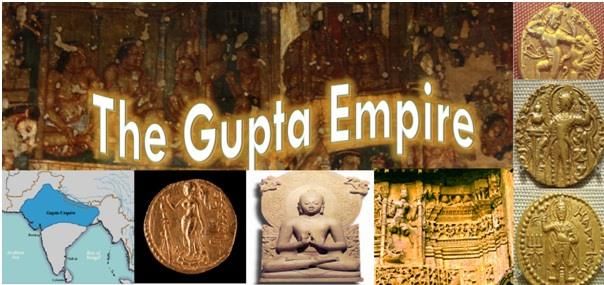
- On the remnants of the Kushan and other post-Mauryan polities arose the Gupta family. The Gupta Empire consolidated large parts of north India and, though smaller than the Mauryan state territorially, provided a long period of political unity in the north from about A.D. 319-320 to c. A.D. 550.
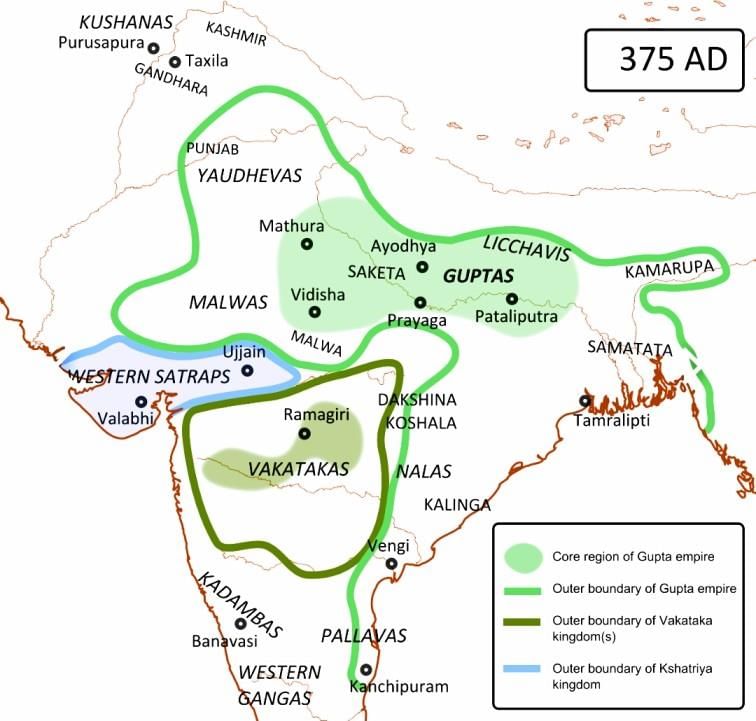
- The original Gupta domain lay in the middle Ganga basin-modern Uttar Pradesh and Bihar-at the end of the third century A.D. Finds of early Gupta coins and inscriptions are particularly concentrated in Uttar Pradesh, which suggests it was the principal centre of Gupta power. The Guptas probably operated from the plains around Prayag (modern Allahabad) and spread outwards.
- In many parts of eastern Uttar Pradesh and Bihar, Kushan remains are succeeded stratigraphically and archaeologically by early Gupta antiquities. It is likely that the Guptas had earlier been local chiefs or feudatories under Kushan overlordship and succeeded them without long interruption.
- The Guptas appear to have adopted and benefitted from technological and military practices associated with the northern steppe and Kushan milieu-use of the saddle, reins, certain styles of clothing (buttoned coats, trousers, boots) and a strong emphasis on horsemen. Cavalry, rather than chariots or elephant contingents, became the decisive arm in warfare for the Guptas.
- The geographical advantages of the Gupta core were important: the fertile plains of Madhyadesha (the middle Gangetic basin), iron ore deposits of central India and south Bihar, and proximity to overland and maritime trade routes (including silk trade with the Byzantine Empire) contributed to economic strength.
- On the strength of these advantages the Guptas extended control over important towns and regions such as Anuganga (the middle Ganga basin), Prayag (Allahabad), Saketa (Ayodhya) and Magadha, eventually building an empire that reached well beyond its early heartland.
- The collapse of Kushan authority in north India occurred around A.D. 230. The Murundas (possibly related to the Kushans) controlled parts of central India until about A.D. 250. By the late third century, around A.D. 275, the Guptas had begun to emerge as a distinct ruling dynasty in the Gangetic region.
Chandragupta I (A.D. 319-334)
- Chandragupta I is the first Gupta ruler who attains clear historical importance. He strengthened the dynasty politically by marrying a Lichchhavi princess-most probably linking the Guptas with the prestigious Lichchhavi lineage (likely from the region of Nepal). This alliance gave the Guptas higher social standing and wider political influence.
- Chandragupta I is credited with founding the Gupta era, dated to A.D. 319-320, a regnal era later used in many inscriptions. The institution of a new era indicates the consolidation of his rule and the emergence of the Gupta polity as a significant power.
Samudragupta (A.D. 335-380)
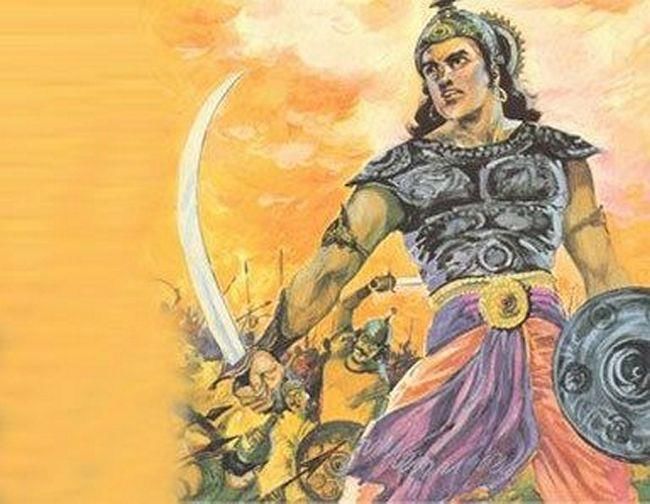
- Samudragupta, son and successor of Chandragupta I, expanded the Gupta kingdom greatly and is celebrated as the outstanding conqueror of the early Gupta period. He was the opposite of Ashoka. Ashoka believed in a policy of peace and non-aggression, but Samudragupta delighted in violence and conquest. His court poet Harishena composed the inscription now known as the Allahabad (Prayag) inscription that records Samudragupta's campaigns and achievements.
- The Allahabad inscription-engraved on the same pillar that carries some of Ashoka's edicts-lists peoples and rulers subdued by Samudragupta and is the principal source for his military activity. The inscription is eulogistic but provides a structured account of his expansion.
- The regions and polities Samudragupta confronted may be grouped broadly in five categories:
- Ganga-Yamuna doab rulers: Local princes of the fertile doab who were defeated and whose territories were incorporated into the Gupta kingdom.
- Eastern Himalayan and frontier states: Rulers of regions such as parts of Nepal, Assam, Bengal and neighbouring frontier polities who were made to submit or accept Gupta overlordship; several republican oligarchies in the northwest that persisted after the Mauryas were also overcome.
- Atavika (forest) kingdoms: Forest-dwelling polities in the Vindhya region and other tribal forest kingdoms were subdued and brought under Gupta influence.
- Deccan and southern rulers: Samudragupta's campaigns extended into the eastern Deccan and south India; about a dozen southern princes are named as defeated, and the inscription suggests that many southern rulers accepted Gupta suzerainty while remaining nominally independent. His influence is said to have reached Kanchipura (Kanchi).
- Shakas and Kushans: Samudragupta's military reach included regions formerly occupied by Shaka and Kushan rulers, including some polities in western and northwestern areas and parts of what is now Afghanistan.
- Contemporary and later sources, including some Chinese records, attest to the prestige of Samudragupta's court. A Chinese account records that Meghavarman, a Sri Lankan ruler, requested permission (and received facilities) to build a Buddhist establishment at Gaya, indicating Samudragupta's influence extended to religious and cultural patronage beyond India's immediate frontiers.
- Although the Allahabad inscription is eulogistic and should be read critically, it does indicate that Samudragupta succeeded in forcibly unifying a very large area of northern and parts of central India under his authority. His combination of military skill and administration earned him the epithet often compared to great commanders of history.
Chandragupta II (A.D. 380-412)
- Chandragupta II (also called Vikramaditya) raised the Gupta Empire to its greatest extent and cultural heights. He pursued expansion by both diplomacy and war.
- He used marriage alliances effectively: his daughter Prabhavati married a prince of the Vakataka family (a brahmana ruling family in central India). When the Vakataka prince died, Prabhavati played a prominent role in governance on behalf of her minor son-this alliance established close Gupta influence over central India.
- Chandragupta II conquered western Malwa and Gujarat, displacing the Shaka Kshatrapas who had controlled these regions for centuries. The acquisition of the western sea-coast increased access to maritime trade and enriched the empire economically. The city of Ujjain became a prominent political and economic centre and is often regarded as a second capital.
- Chandragupta II adopted the title of Vikramaditya, which had been first used by a Ujjain ruler in 57 B.C. as a mark of victory over the Shaka Kshatrapas of western India The court of Chandragupta II at Ujjain was adorned by numerous scholars including Kalidasa and Amarasimha. It was in Chandragupta's time that the Chinese pilgrim Fahien (399-414) visited India and wrote an elaborate account of the life of its people.
Administration and Political Structure
- The Gupta polity combined central authority with a system of subordinate rulers and governors. Provincial administration often rested on governors, local chiefs and feudatories who exercised considerable autonomy but acknowledged Gupta suzerainty.
- Feudatory relationships were a significant feature. The Guptas appointed governors and accepted the loyalties of local dynasts (for example, the Vakatakas). Over time some of these governors acquired greater independence, weakening central control in later years.
- The army emphasised cavalry and mounted archers; horsemen were an important military element, enhancing mobility and rapid campaigning over the plains and frontier regions.
Fall of the Empire
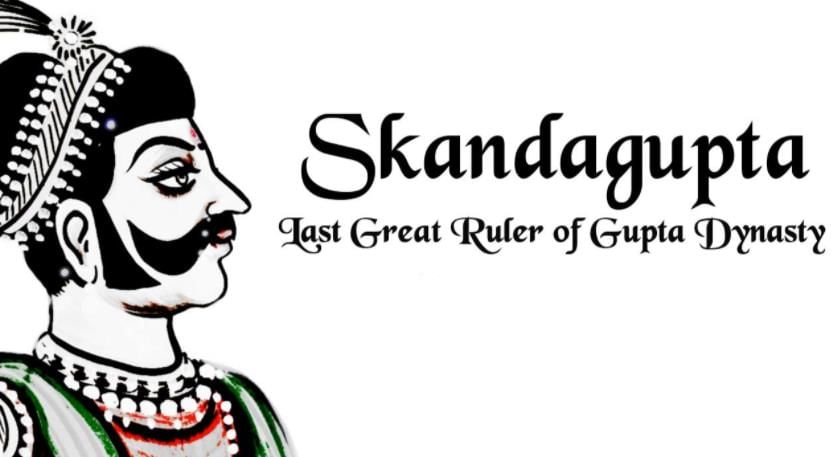
- The later Gupta rulers faced intensified pressure from external invaders and internal disintegration. In the second half of the fifth century A.D. invasions by the Hunas (a Central Asian nomadic group) seriously challenged Gupta power. Skandagupta resisted the Hunas effectively for a time, but later rulers were less able to meet this threat.
- By about A.D. 485 Huna presence is attested in eastern Malwa and large swathes of central India; they also affected regions such as Punjab and Rajasthan. Huna success owed much to superior horsemanship and mobile mounted archery; the use of stirrups (possibly of metal) increased cavalry effectiveness.
- The Huna advance was briefly checked by Yashodharman of Malwa, a powerful regional ruler of the Aulikara family, who around A.D. 532 erected victory pillars commemorating defeats of invading forces. However, Yashodharman's own rule was short-lived and did not restore long-term unity.
- Internal factors undermined Gupta authority: the rise of powerful feudatories and governors, the increasing decentralisation of political power, and the fragmentation of territorial control reduced imperial cohesion. Bengal, Samatata (southeast Bengal), parts of Bihar and the north-western provinces witnessed the emergence of independent or semi-independent dynasts issuing land grants in their own name (even while dating in the Gupta era).
- Economic strains also contributed to decline: excessive land grants to religious and non-productive groups reduced state revenues; a decline in foreign trade diminished customs and commercial income. Evidence of/or attempts at coin debasement indicate fiscal pressure. By the mid-sixth century the imperial glory of the classical Gupta line had largely vanished, although successor polities and local Guptas persisted regionally.
Legacy and Conclusion
- The Gupta period left a durable legacy: administrative models combining central monarchy with local intermediaries; a revival and standardisation of Sanskrit culture and literature; religious developments that shaped later Hinduism; and a distinctive artistic idiom exemplified by Gupta sculpture and mural painting.
- The political unity achieved under strong rulers such as Samudragupta and Chandragupta II fostered economic growth and cultural exchange across a broad region. The later fragmentation and external incursions mark the end of classical imperial rule in much of north India, but the intellectual and artistic achievements continued to influence subsequent centuries.
The document Old NCERT Summary (RS Sharma): Rise and Growth of the Gupta Empire is a part of the UPSC Course History for UPSC CSE.
All you need of UPSC at this link: UPSC
FAQs on Old NCERT Summary (RS Sharma): Rise and Growth of the Gupta Empire
| 1. Who were the key rulers of the Gupta Empire and what were their contributions? |  |
Ans. The key rulers of the Gupta Empire include Chandragupta I, Samudragupta, and Chandragupta II. Chandragupta I is credited with establishing the empire and expanding its territory through strategic marriages and military conquests. Samudragupta is often referred to as the "Indian Napoleon" for his extensive military campaigns that expanded the empire's influence across northern India. Chandragupta II, also known as Vikramaditya, further consolidated the empire and is celebrated for his patronage of arts and literature, as well as his military victories against the Shakas.
| 2. What factors contributed to the rise of the Gupta Empire? | |
Ans. The rise of the Gupta Empire can be attributed to several factors, including strategic marital alliances, military conquests, and effective administration. The Gupta rulers employed a decentralized system of governance, allowing local rulers to maintain control over their territories while paying tribute to the empire. Additionally, the flourishing trade and cultural exchanges during this period, along with advancements in science, mathematics, and the arts, contributed to the empire's prosperity.
| 3. What led to the decline of the Gupta Empire? | |
Ans. The decline of the Gupta Empire was caused by a combination of internal strife and external invasions. The empire faced challenges such as political fragmentation, succession disputes, and economic difficulties. Additionally, invasions by the Huns in the 5th century played a significant role in weakening the Gupta Empire. The loss of territories and the subsequent weakening of central authority contributed to the empire's eventual fall.
| 4. How did the Gupta Empire contribute to art and culture in ancient India? | |
Ans. The Gupta Empire is often regarded as the "Golden Age" of ancient India due to its significant contributions to art and culture. This period saw the emergence of classical Indian art, including intricate sculptures and cave paintings, as well as advancements in literature, with notable works such as Kalidasa's plays and poetry. The Gupta period also witnessed developments in science and mathematics, including the concept of zero and advancements in astronomy.
| 5. What was the significance of the Gupta Empire in the context of Indian history? | |
Ans. The Gupta Empire holds great significance in Indian history as it marked a period of political stability, economic prosperity, and cultural advancements. The empire facilitated trade and communication across vast regions, promoting cultural exchanges. The achievements in various fields, including mathematics, science, philosophy, and the arts, laid the foundation for future developments in Indian civilization. The Gupta period also influenced the social and religious landscape of India, leading to the consolidation of Hinduism and the establishment of significant cultural practices.
About this Document

1.5K Views

4.90/5 Rating

Apr 30, 2026 Last updated
Related Exams
Document Description: Old NCERT Summary (RS Sharma): Rise and Growth of the Gupta Empire for UPSC 2026 is part of History for UPSC CSE preparation. The notes and questions for Old NCERT Summary (RS Sharma): Rise and Growth of the Gupta Empire have been prepared according to the UPSC exam syllabus. Information about Old NCERT Summary (RS Sharma): Rise and Growth of the Gupta Empire covers topics like and Old NCERT Summary (RS Sharma): Rise and Growth of the Gupta Empire Example, for UPSC 2026 Exam. Find important definitions, questions, notes, meanings, examples, exercises and tests below for Old NCERT Summary (RS Sharma): Rise and Growth of the Gupta Empire.
Introduction of Old NCERT Summary (RS Sharma): Rise and Growth of the Gupta Empire in English is available as part of our History for UPSC CSE for UPSC & Old NCERT Summary (RS Sharma): Rise and Growth of the Gupta Empire in Hindi for History for UPSC CSE course. Download more important topics related with notes, lectures and mock test series for UPSC Exam by signing up for free. UPSC: Old NCERT Summary (RS Sharma): Rise and Growth of the Gupta Empire
Description
Old NCERT Summary (RS Sharma): Rise & Growth of the Gupta Empire of History - covers all the important topics from the book, explained in easy language for better understanding. Free PDF available for download.
Information about Old NCERT Summary (RS Sharma): Rise and Growth of the Gupta Empire
In this doc you can find the meaning of Old NCERT Summary (RS Sharma): Rise and Growth of the Gupta Empire defined & explained in the simplest way possible. Besides explaining types of Old NCERT Summary (RS Sharma): Rise and Growth of the Gupta Empire theory, EduRev gives you an ample number of questions to practice Old NCERT Summary (RS Sharma): Rise and Growth of the Gupta Empire tests, examples and also practice UPSC tests



Related Searches
Old NCERT Summary (RS Sharma): Rise and Growth of the Gupta Empire, Old NCERT Summary (RS Sharma): Rise and Growth of the Gupta Empire, practice quizzes, Objective type Questions, Exam, study material, Old NCERT Summary (RS Sharma): Rise and Growth of the Gupta Empire, video lectures, Viva Questions, past year papers, Free, Previous Year Questions with Solutions, MCQs, shortcuts and tricks, Semester Notes, Sample Paper, ppt, Extra Questions, Important questions, Summary, pdf , mock tests for examination;