UPSC Exam > UPSC Notes > History CSE > Mind Map: Prehistoric Period
Mind Map: Prehistoric Period

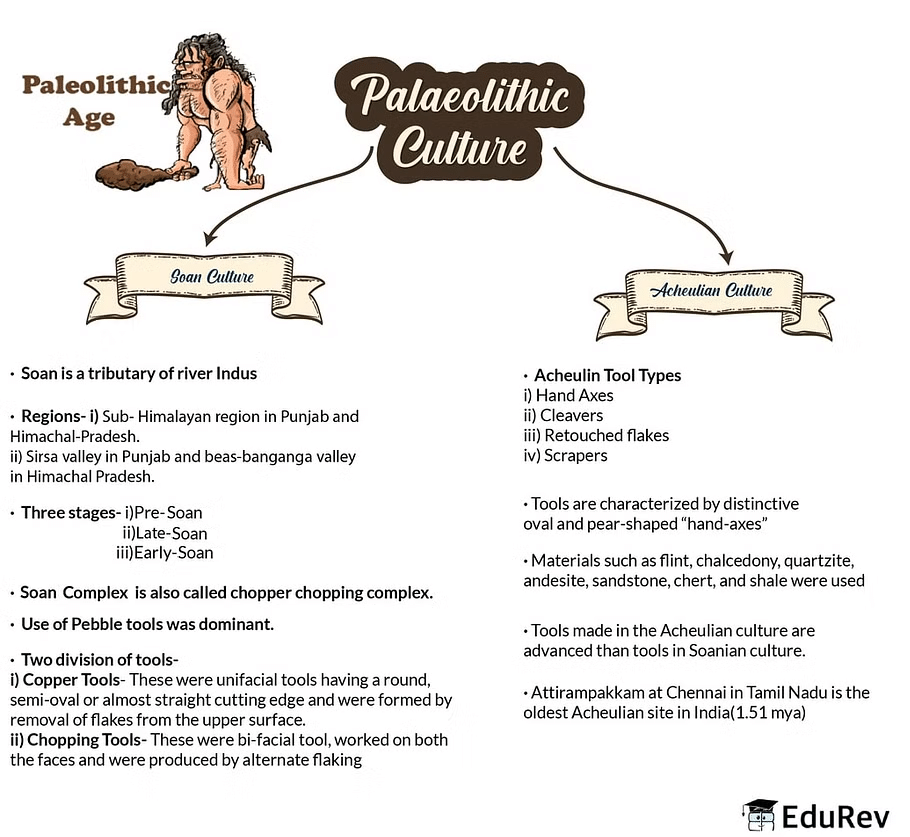
Paleolithic Age
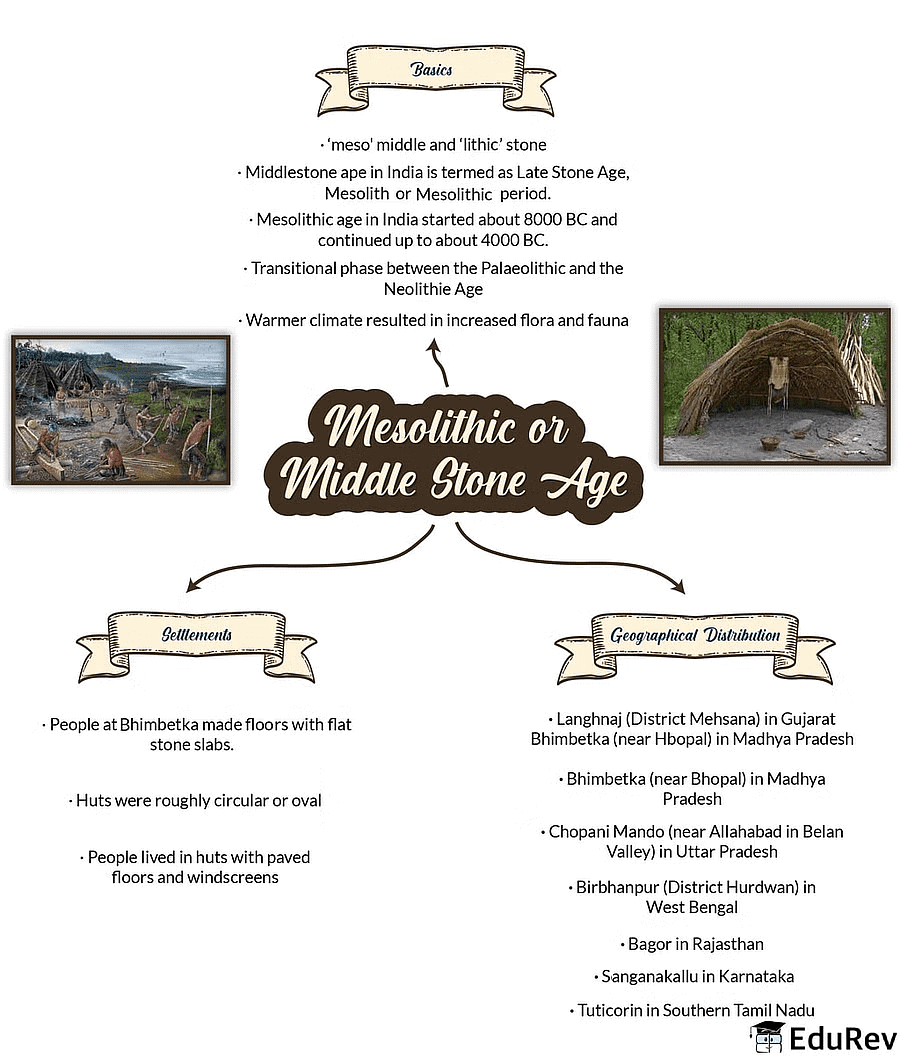
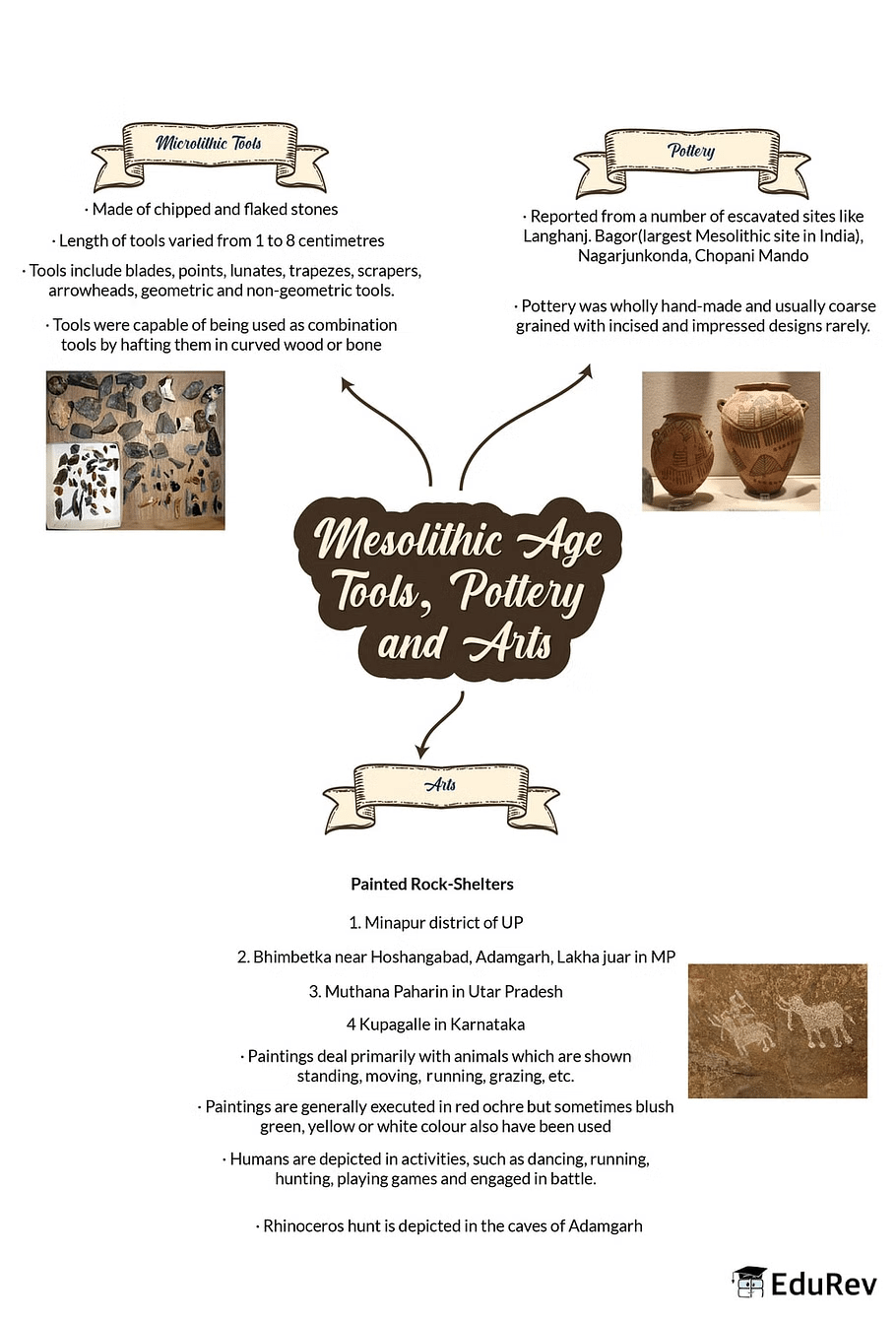
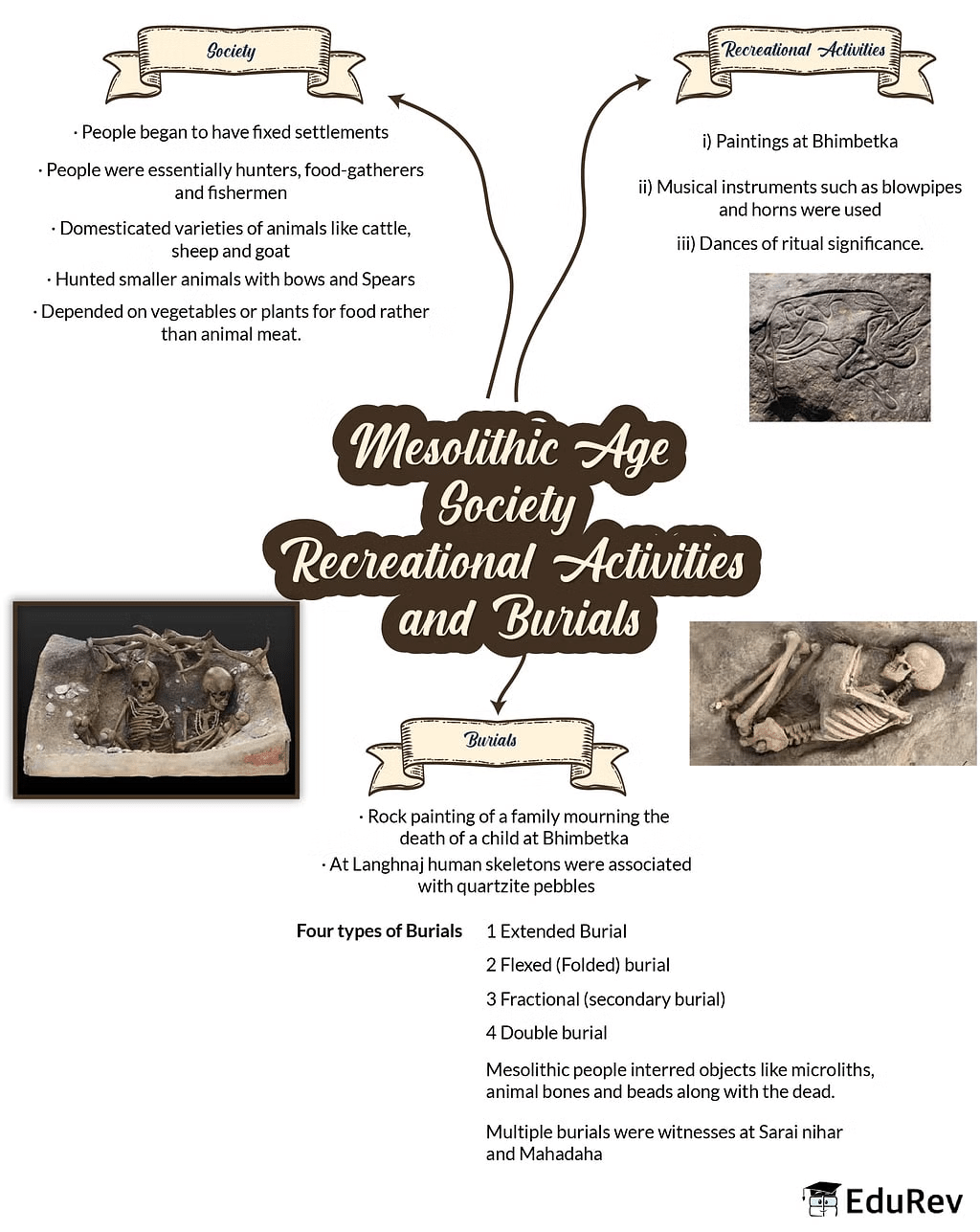
Mesolithic Age
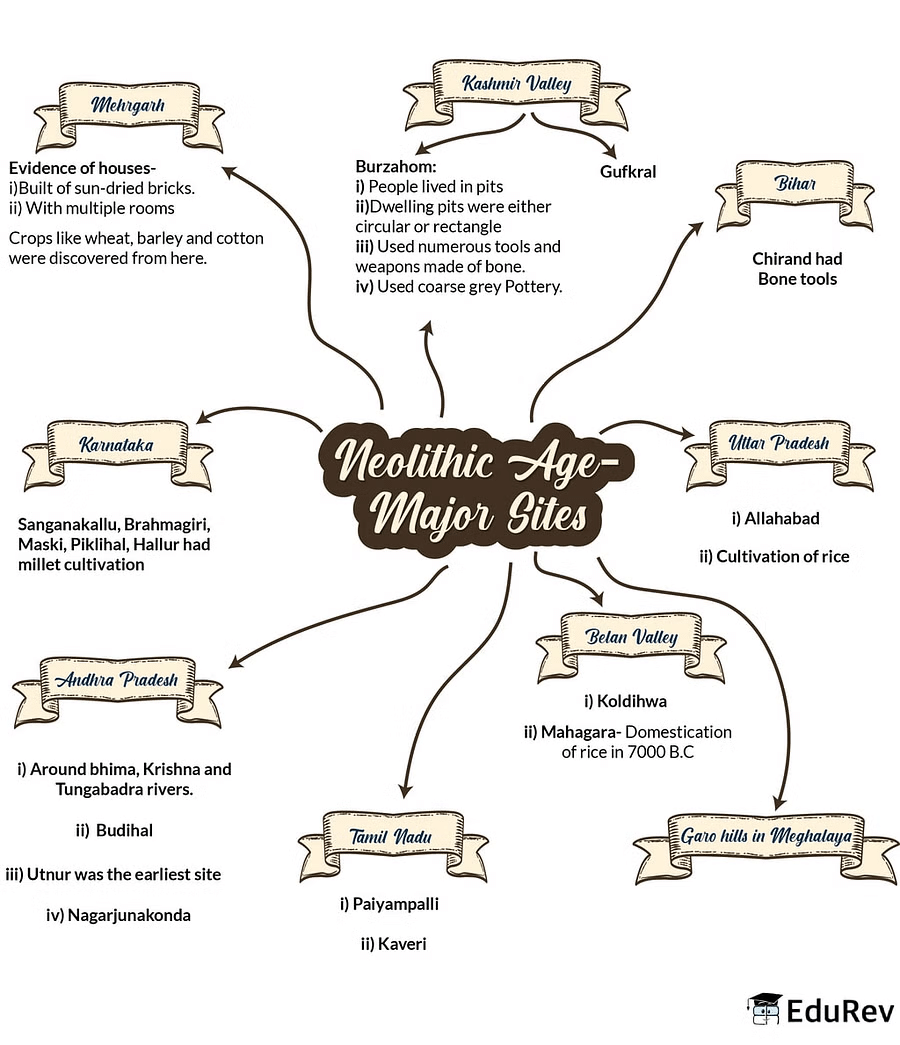
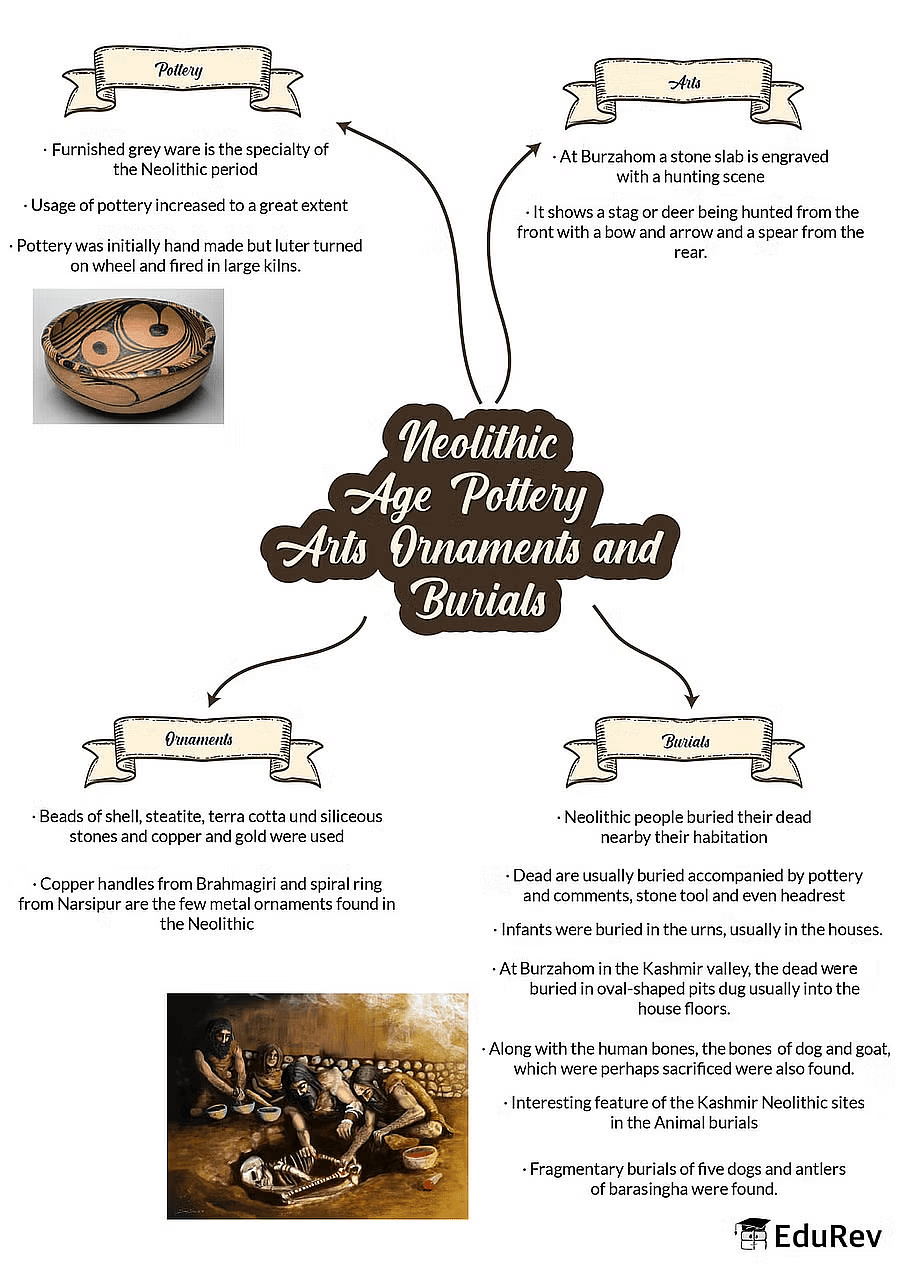
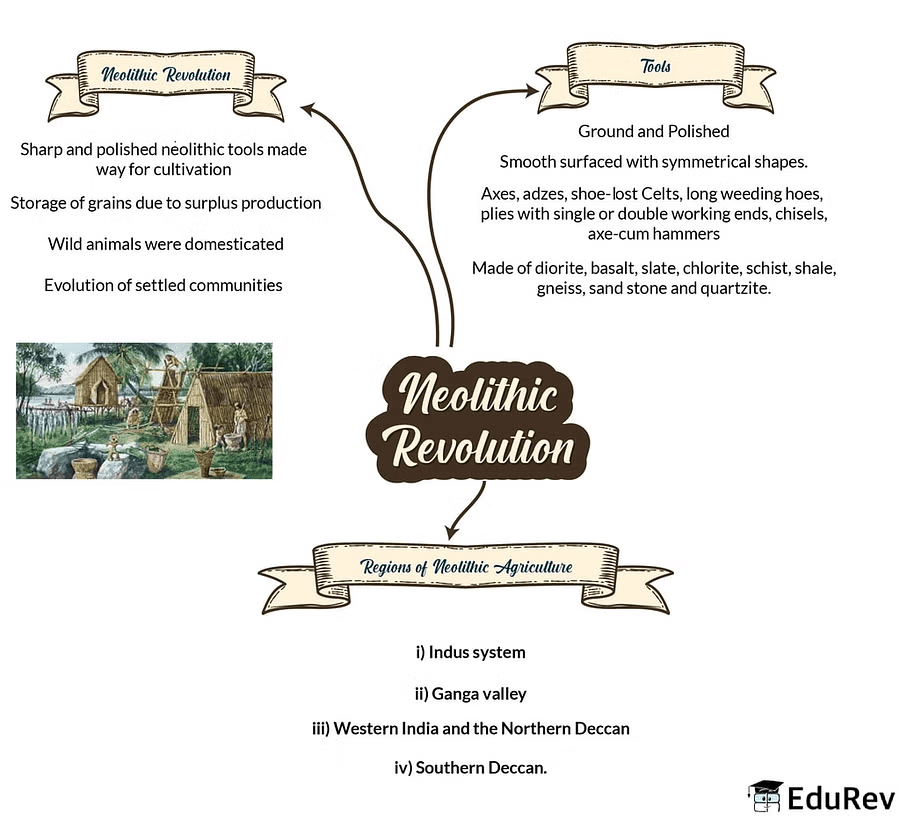
Neolithic Age
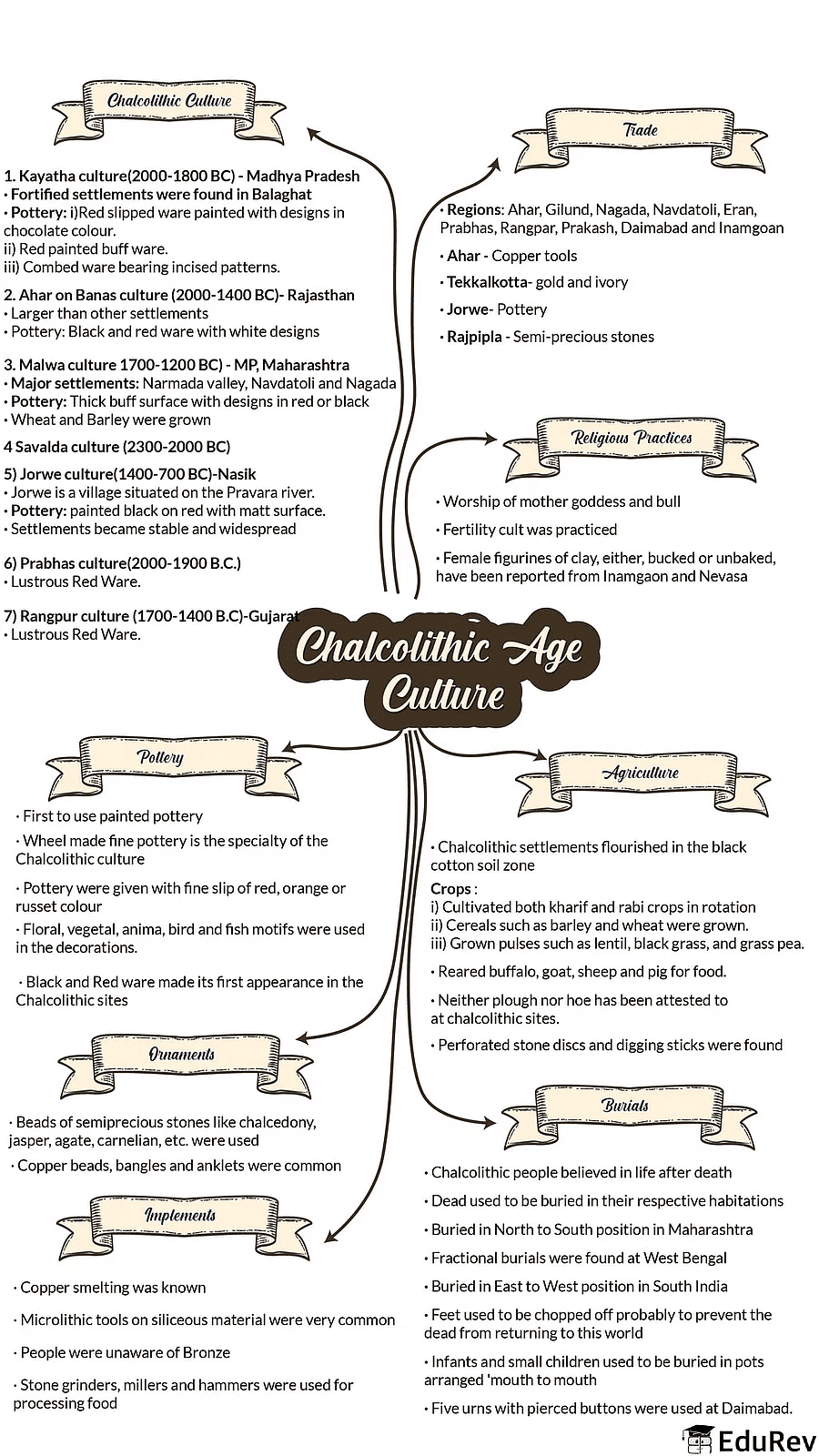
Chalcolithic Age
The document Mind Map: Prehistoric Period is a part of the UPSC Course History for UPSC CSE.
All you need of UPSC at this link: UPSC
FAQs on Mind Map: Prehistoric Period
| 1. What are the main stages of the prehistoric period and how do they differ from each other? |  |
Ans. The prehistoric period divides into three main stages: the Palaeolithic (Old Stone Age), Mesolithic (Middle Stone Age), and Neolithic (New Stone Age). The Palaeolithic featured hunter-gatherers using basic stone tools; the Mesolithic saw improved hunting techniques and smaller settlements; the Neolithic introduced agriculture, domestication, and permanent settlements. Each stage represents a leap in human technological advancement and social organisation.
| 2. What tools did early humans use during the Stone Age and why were they important? | |
Ans. Early humans crafted stone implements like hand axes, scrapers, and blades for hunting, cutting, and processing food. These prehistoric tools marked humanity's first technological innovations, enabling survival in harsh environments. Stone tool development demonstrates cognitive evolution and problem-solving abilities. The progression from crude choppers to refined implements shows increasing sophistication in prehistoric societies across thousands of years.
| 3. How did the transition from hunting-gathering to agriculture change human civilisation? | |
Ans. The Neolithic Revolution shifted humans from nomadic hunter-gatherer lifestyles to settled agricultural communities. Agriculture enabled population growth, permanent settlements, and social hierarchies. This transition marks the foundation of civilisation itself, introducing food surplus, specialised labour, and complex social structures. The shift from prehistoric subsistence hunting to farming fundamentally reshaped human society, economy, and culture permanently.
| 4. What evidence do archaeologists use to understand prehistoric human life and settlements? | |
Ans. Archaeologists analyse fossil remains, stone tools, pottery fragments, and settlement patterns to reconstruct prehistoric life. Carbon dating and stratigraphic analysis help establish timelines. Cave paintings and rock art reveal symbolic thinking and cultural practices. These archaeological discoveries provide insights into prehistoric diet, shelter construction, social organisation, and artistic expression. Physical artefacts form the primary basis for understanding ancient human civilisations.
| 5. Why is the Neolithic period considered more advanced than the Palaeolithic in prehistoric human development? | |
Ans. The Neolithic period introduced agriculture, animal domestication, and permanent settlements-revolutionary advances over Palaeolithic nomadic hunting. Neolithic communities developed pottery, more sophisticated tools, and organised societies with labour specialisation. Agricultural surplus supported population growth and social complexity. These developments mark humanity's transition from survival-focused prehistoric societies to civilisation-building cultures with structured communities and cultural achievements.
About this Document

11.6K Views

4.92/5 Rating

Apr 19, 2026 Last updated
Related Exams
Document Description: Mind Map: Prehistoric Period for UPSC 2026 is part of History for UPSC CSE preparation. The notes and questions for Mind Map: Prehistoric Period have been prepared according to the UPSC exam syllabus. Information about Mind Map: Prehistoric Period covers topics like and Mind Map: Prehistoric Period Example, for UPSC 2026 Exam. Find important definitions, questions, notes, meanings, examples, exercises and tests below for Mind Map: Prehistoric Period.
Introduction of Mind Map: Prehistoric Period in English is available as part of our History for UPSC CSE for UPSC & Mind Map: Prehistoric Period in Hindi for History for UPSC CSE course. Download more important topics related with notes, lectures and mock test series for UPSC Exam by signing up for free. UPSC: Mind Map: Prehistoric Period
Description
Mind Map: Prehistoric Period of History provides you one-page visual summary of the chapter covering all the important topics. Download the PDF from EduRev.
Information about Mind Map: Prehistoric Period
In this doc you can find the meaning of Mind Map: Prehistoric Period defined & explained in the simplest way possible. Besides explaining types of Mind Map: Prehistoric Period theory, EduRev gives you an ample number of questions to practice Mind Map: Prehistoric Period tests, examples and also practice UPSC tests



Related Searches
ppt, pdf , Semester Notes, Free, study material, Summary, mock tests for examination, Important questions, Viva Questions, video lectures, Mind Map: Prehistoric Period, Exam, Objective type Questions, past year papers, shortcuts and tricks, Previous Year Questions with Solutions, Extra Questions, practice quizzes, Sample Paper, Mind Map: Prehistoric Period, MCQs, Mind Map: Prehistoric Period;