RD Sharma Solutions: Exponents of Real Numbers- 1

RD Sharma Solutions Exercise 2.1 Exponents Of Real Numbers
Q.1. Simplify the following:(i) 3(a4b3)10 × 5(a2b2)3
(ii) (2x-2y3)3
(iii)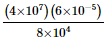
(iv)
(v)
(vi)
Proof: (i)
3(a4b3)10×5(a2b2)3
=3×a40×b30×5×a6×b6
=15×a40×a6×b30×b6
=15×a40+6×b30+6 [am×an=am+n]
=15a46b36
(ii)
(2x-2y3)3
=23×(x-2)3×(y3)3
=8×x-6×y9
=8x-6y9
(iii)
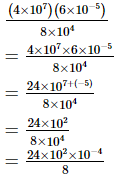
=3×10²+(-4)
=3×10-2
=
(iv)
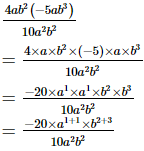
=-2×a2×b5×a-2×b-2
=-2×a2+(-2)×b5+(-2)
=-2×a0×b3
=-2b3
(v)
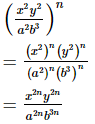
(vi)
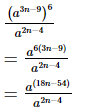
=a(18n-54)×a-(2n-4)
=a18n-54×a-2n+4
=a18n-54-2n+4
=a16n-50
Q.2. If a=3 and b=-2, find the values of:
(i) aa+bb
(ii) ab+ba
(iii) (a+b)ab
Proof: (i) aa+bb
Here, a=3 and b=-2.
Put the values in the expression aa+bb.
33+(-2)-2
=27+1/(-2)2
=27+1/4
=108+1/4
=
(ii) ab+ba
Here, a=3 and b=-2.
Put the values in the expression ab+ba.
3-2+(-2)3
=(1/3)2+(-8)
=1/9 - 8
=1-72 / 9
=
(iii) (a+b)ab
Here, a=3 and b=-2.
Put the values in the expression (a+b)ab.
[3+(-2)]3(-2)
=(1)-6
=1
Q.3. Prove that:
(i)
(ii)
Proof:
(i)
Consider the left hand side:


=x(a3-b3)×x(b3-c3)×x(c3-a3)
=x(a3-b3+b3-c3+c3-a3)
=x0
=1
Left hand side is equal to right hand side.
Hence proved.
(ii)
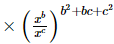
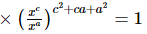
Consider the left hand side:
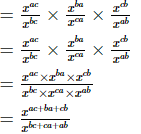
= 1
Left hand side is equal to right hand side.
Hence proved.
Q.4. Prove that:
(i)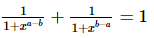
(ii) 
Proof: (i) Consider the left hand side:
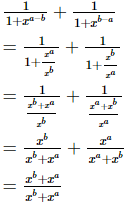
= 1
Therefore left hand side is equal to the right hand side. Hence proved.
(ii)
Consider the left hand side:





=1
Therefore left hand side is equal to the right hand side. Hence proved.
Q.5. Prove that:
(i)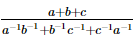 = abc
= abc
(ii) (a-1+b-1)-1=
Proof: (i) Consider the left hand side:
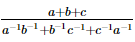
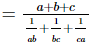


= abc
Therefore left hand side is equal to the right hand side. Hence proved.
(ii)
Consider the left hand side:
(a-1+b-1)-1


Therefore left hand side is equal to the right hand side. Hence proved.
Q.6. If abc = 1, show that = 1
= 1
Proof: Consider the left hand side:


 (abc=1)


=1
Hence proved.
Q.7. Simplify the following:
(i)
(ii)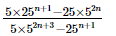
(iii)
(iv)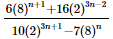
Proof: (i)

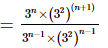
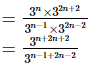

=33n+2-3n+3
=35
=243
(ii)
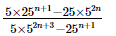
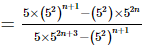
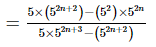
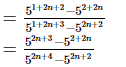

=4/24
=1/6
(iii)


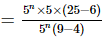

= 19
(iv)
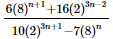
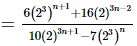
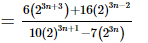
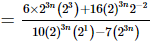


= 4
Q.8. Solve the following equations for x:
(i) 72x+3=1
(ii) 2x+1=4x-3
(iii) 25x+3=8x+3
(iv) 42x=1/32
(v) 4x-1×(0.5)3-2x=(1/8)x
(vi) 23x-7=256
Proof: (i)
72x+3=1
⇒72x+3=70
⇒2x+3=0
⇒2x=-3
⇒x=-3/2
(ii)
2x+1=4x-3
⇒2x+1=(22)x-3
⇒2x+1=(22x-6)
⇒x+1=2x-6
⇒x=7
(iii)
25x+3=8x+3
⇒25x+3=(23)x+3
⇒25x+3=23x+9
⇒5x+3=3x+9
⇒2x=6
⇒x=3
(iv)
42x=1/32
⇒(22)2x=1/25
⇒24x×25=1
⇒24x+5=20
⇒4x+5=0
⇒x=-5/4
(v)
4x-1×(0.5)3-2x=(1/8)x
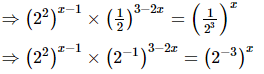
⇒22x-2×22x-3=2-3x
⇒22x-2+2x-3=2-3x
⇒24x-5=2-3x
⇒4x-5= -3x
⇒7x= 5
⇒x= 5/7
(vi)
23x-7=256
⇒23x-7=28
⇒3x-7=8
⇒3x=15
⇒x=5
Q.9. Solve the following equations for x:
(i) 22x-2x+3+24=0
(ii) 32x+4+1=2.3x+2
Proof: (i)
22x-2x+3+24=0
⇒(2x)2-(2x×23)+(22)2=0
⇒(2x)2-2×2x×22+(22)2=0
⇒(2x-22)2=0
⇒2x-22=0
⇒2x=22
⇒x=2
(ii)
32x+4+1=2.3x+2
⇒(3x+2)2-2.3x+2+1=0
⇒(3x+2-1)2=0
⇒3x+2-1=0
⇒3x+2=1=30
⇒x+2=0
⇒x=-2
Q.10. If 49392=a4b2c3, find the values of a, b and c, where a, b and c are different positive primes.
Proof: First find out the prime factorization of 49392.
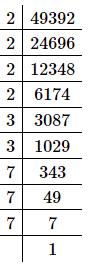
It can be observed that 49392 can be written as 24×32×73, where 2, 3 and 7 are positive primes.
∴49392 = 243273 = a4b2c3
⇒a=2, b=3, c=7
Q.11. If 1176=2a3b7c, find a, b and c.
Proof: First find out the prime factorization of 1176.
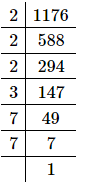
It can be observed that 1176 can be written as 23×31×72.
1176 = 233172 = 2a3b7c
Hence, a = 3, b = 1 and c = 2.
Q.12. Given 4725=3a5b7c, find
(i) the integral values of a, b and c
(ii) the value of 2-a3b7c
Proof: (i) Given 4725=3a5b7c
First find out the prime factorization of 4725.
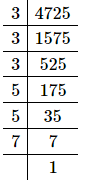
It can be observed that 4725 can be written as 33×52×71.
∴4725 = 3a5b7c = 335271
Hence, a = 3, b = 2 and c = 1.
(ii)
When a = 3, b = 2 and c = 1,
2-a3b7c = 2-3×32×71 = 1/8 × 9 × 7=63/8
Hence, the value of 2-a3b7c is
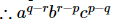
Q.13. If a = xyp-1,b = xyq-1 and c = xyr-1, prove that aq-rbr-pcp-q = 1.
Proof: It is given that a = xyp-1,b = xyq-1 and c = xyr-1
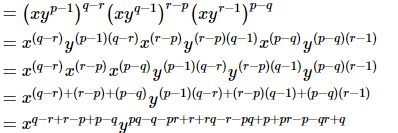
=x0y0
=1
FAQs on RD Sharma Solutions: Exponents of Real Numbers- 1
| 1. What are exponents and how are they used in real numbers? |  |
| 2. How do you simplify expressions with exponents in real numbers? | |
| 3. What is the meaning of a negative exponent in real numbers? | |
| 4. How do you simplify expressions with negative exponents in real numbers? | |
| 5. Can exponents be applied to all real numbers? | |





