CBSE Class 7  >  Class 7 Notes  >  अनुवाद - सुभाषितानि | Explanation - Subhashitani

अनुवाद - सुभाषितानि - Explanation - Subhashitani

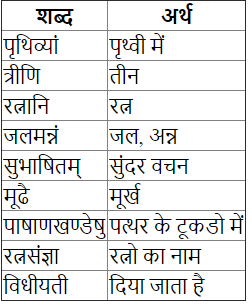
(क) पृथिव्यां त्रीणि रत्नानि जलमन्नं सुभाषितम् ।
मूढै: पाषाणखण्डेषु रत्नसंज्ञा विधीयते ।।1।।

सरलार्थ: पृथ्वी पर तीन रत्न है - जल, अनाज और सुंदर कथन। परंतु मूर्खों द्वारा पत्थर के टुकड़ों को रत्नों का नाम दिया गया है। अर्थात मूर्ख लोग पत्थर के टुकड़ों को रत्न समझते हैं जबकि असली रत्न को जल और सुंदर कथन हैं।
अनुवाद - सुभाषितानि | Explanation - Subhashitani
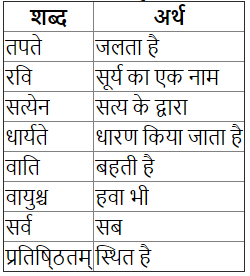
(ख) सत्येन धार्यते पृथ्वी सत्येन तपते रविः ।
सत्येन वाति वायुश्च सर्वं सत्ये प्रतिष्ठितम् ।। 2 ।।

सरलार्थ: सत्य से पृथ्वी धारण करती है, सत्य से ही सूर्य तपता है। सत्य से ही हवा बहती है। सब कुछ सत्य में ही निहित है।
अनुवाद - सुभाषितानि | Explanation - Subhashitani
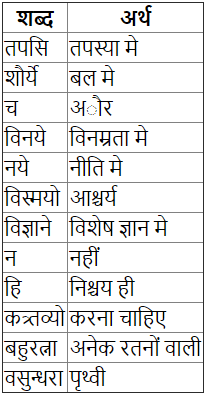
(ग) दाने तपसि शौर्ये च विज्ञाने विनये नये ।
विस्मयो न हि कर्त्तव्यो बहुरत्ना वसुन्धरा ॥3॥

सरलार्थ: दान में, तपस्या में, वीरता में, विज्ञान में, विनम्रता में और नीति में आश्चर्य नहीं करना चाहिए। क्योंकि पृथ्वी में निश्चित रूप से अनेक रत्न हैं। अर्थात पृथ्वी पर बहुत सारी अद्भुत वस्तुएं हैं। इसीलिए दान, तपस्या आदि कुछ ही वस्तुओं पर आश्चर्य करना उचित नहीं है।
अनुवाद - सुभाषितानि | Explanation - Subhashitani
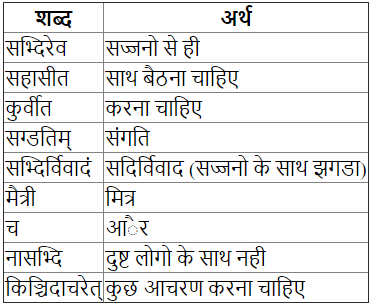
(घ) सद्भिरेव सहासीत सद्भिः कुर्वीत सङ्गतिम् ।
सद्भिर्विवादं मैत्रीं च नासद्भिः किञ्चिदाचरेत् ॥4॥

सरलार्थ: सज्जनों के साथ ही बैठना चाहिए, सज्जनों के साथ ही संगति करनी चाहिए। सज्जनों के साथ ही तर्क-वितर्क और मित्रता करनी चाहिए। दूर्जनों के साथ कुछ भी व्यवहार नहीं करना चाहिए।
अनुवाद - सुभाषितानि | Explanation - Subhashitani
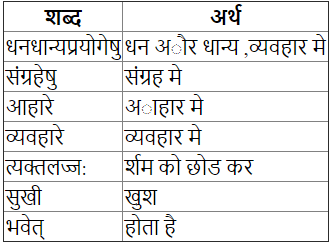
(ङ) धनधान्यप्रयोगेषु विद्यायाः संग्रहेषु च ।
आहारे व्यवहारे च त्यक्तलज्जः सुखी भवेत् ॥5॥

सरलार्थ: धन-धान्य के प्रयोग में, विद्या को ग्रहण करने में, भोजन में और व्यवहार में जो व्यक्ति संकोच नहीं करता वह सुखी रहता है।
अनुवाद - सुभाषितानि | Explanation - Subhashitani
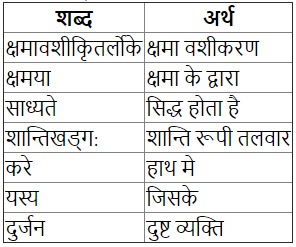
(च) क्षमावशीकृतिर्लोके क्षमया किं न साध्यते ।
शान्तिखड्गः करे यस्य किं करिष्यति दुर्जनः ॥6॥

सरलार्थ: इस संसार में क्षमा करना सबसे बड़ा वशीकरण है। समाज से क्या नहीं साधा जा सकता? जिस व्यक्ति के हाथ में शांति रूपी तलवार है दुष्ट व्यक्ति उसका क्या करेगा। अर्थात क्षमा से हर कार्य संभव है और जो व्यक्ति शांत रहता है उसका कोई कुछ भी नहीं बिगाड़ सकता।
अनुवाद - सुभाषितानि | Explanation - Subhashitani

The document अनुवाद - सुभाषितानि | Explanation - Subhashitani is a part of Class 7 category.
All you need of Class 7 at this link: Class 7

FAQs on अनुवाद - सुभाषितानि - Explanation - Subhashitani

1. What exactly are Subhashitani and why do we study them in Class 7 Sanskrit?
Ans. Subhashitani are Sanskrit moral verses or wise sayings that contain ethical teachings and life lessons condensed into poetic form. Students study them to understand ancient Sanskrit literature, improve translation skills, and learn timeless wisdom about virtues, friendship, and human behaviour. These aphorisms develop both linguistic competence and cultural awareness in CBSE Sanskrit curriculum.
2. How do I translate Sanskrit subhashitani accurately without losing the meaning?
Ans. Accurate translation of subhashitani requires understanding the grammatical structure, identifying key Sanskrit words, and grasping the underlying philosophy before converting it to Hindi or English. Focus on word-by-word analysis first, then construct meaningful sentences that preserve the moral essence. Refer to mind maps and flashcards available on EduRev to clarify difficult Sanskrit terms and their contextual meanings.
3. What are the main themes in Class 7 subhashitani and how do they relate to daily life?
Ans. Subhashitani typically explore themes like courage, friendship, knowledge, hard work, humility, and moral integrity. Each verse offers practical wisdom applicable to real situations-managing relationships, facing challenges, and making ethical choices. Understanding these themes helps students connect ancient Sanskrit philosophy to contemporary life experiences and personal growth.
4. Why is Sanskrit grammar so important when translating subhashitani into Hindi?
Ans. Sanskrit grammar-including case endings, verb conjugations, and sentence construction-directly determines meaning. Ignoring grammatical forms leads to incorrect translations and misunderstood teachings. Mastering declensions and conjugations ensures students accurately extract the intended message from subhashitani, preventing misinterpretation of the moral lessons embedded in each verse's structure.
5. What's the difference between memorising subhashitani and actually understanding their deeper meaning?
Ans. Memorisation reproduces text verbatim but offers no comprehension; understanding demands analysing the Sanskrit vocabulary, recognising metaphors, and internalising the ethical principle. True learning of subhashitani involves translating contextually, reflecting on applicability, and applying wisdom to real situations. This deeper engagement with Sanskrit aphorisms develops critical thinking alongside linguistic skills.
Download as PDF

Top Courses for Class 7

Related Searches
practice quizzes, past year papers, Free, Semester Notes, Sample Paper, ppt, Viva Questions, Previous Year Questions with Solutions, Exam, अनुवाद - सुभाषितानि | Explanation - Subhashitani, अनुवाद - सुभाषितानि | Explanation - Subhashitani, Extra Questions, video lectures, pdf , mock tests for examination, अनुवाद - सुभाषितानि | Explanation - Subhashitani, Objective type Questions, Important questions, Summary, shortcuts and tricks, MCQs, study material;
