Computer Science Engineering (CSE) Exam > Computer Science Engineering (CSE) Notes > Operating System > Resource Allocation Techniques for Processes
Resource Allocation Techniques for Processes

Introduction
The Operating System allocates resources when a program need them. When the program terminates, the resources are de-allocated, and allocated to other programs that need them. Now the question is, what strategy does the operating system use to allocate these resources to user programs?
Resource allocation Techniques
There are two Resource allocation techniques:
- Resource partitioning approach
In this approach, the operating system decides beforehand, that what resources should be allocated to which user program. It divides the resources in the system to many resource partitions, where each partition may include various resources - for example, 1 MB memory, disk blocks, and a printer.
Then, it allocates one resource partition to each user program before the program's initiation. A resource table records the resource partition and its current allocation status (Allocated or Free).- Advantages:
a) Easy to Implement
b) Less Overhead - Disadvantages:
a) Lacks flexibility: if a resource partition contains more resources than what a particular process requires, the additional resources are wasted.
b) If a program needs more resources than a single resource partition, it cannot execute (Though free resources are present in other partitions).
An example resource table may look like: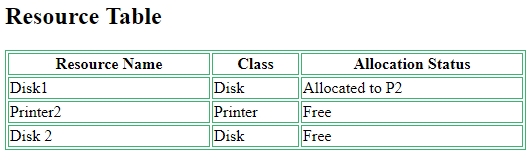
- Advantages:
- Pool based approach
In this approach, there is a common pool of resources. The operating System checks the allocation status in the resource table whenever a program makes a request for a resource. If the resource is free, it allocates the resource to the program.- Advantages:
a) Allocated resources are not wasted.
b) Any resource requirement can be fulfilled if the resource is free (unlike Partitioning approach) - Disadvantages:
Overhead of allocating and de-allocating the resources on every request and release.
- Advantages:
The document Resource Allocation Techniques for Processes is a part of the Computer Science Engineering (CSE) Course Operating System.
All you need of Computer Science Engineering (CSE) at this link: Computer Science Engineering (CSE)
About this Document

4.85/5 Rating

Apr 30, 2026 Last updated
Related Exams
Document Description: Resource Allocation Techniques for Processes for Computer Science Engineering (CSE) 2026 is part of Operating System preparation. The notes and questions for Resource Allocation Techniques for Processes have been prepared according to the Computer Science Engineering (CSE) exam syllabus. Information about Resource Allocation Techniques for Processes covers topics like and Resource Allocation Techniques for Processes Example, for Computer Science Engineering (CSE) 2026 Exam. Find important definitions, questions, notes, meanings, examples, exercises and tests below for Resource Allocation Techniques for Processes.
Introduction of Resource Allocation Techniques for Processes in English is available as part of our Operating System for Computer Science Engineering (CSE) & Resource Allocation Techniques for Processes in Hindi for Operating System course. Download more important topics related with notes, lectures and mock test series for Computer Science Engineering (CSE) Exam by signing up for free. Computer Science Engineering (CSE): Resource Allocation Techniques for Processes
Description
Resource Allocation Techniques for Processes of Operating System covers all the important topics, helping you prepare for the Computer Science Engineering (CSE) exam on EduRev.
Information about Resource Allocation Techniques for Processes
In this doc you can find the meaning of Resource Allocation Techniques for Processes defined & explained in the simplest way possible. Besides explaining types of Resource Allocation Techniques for Processes theory, EduRev gives you an ample number of questions to practice Resource Allocation Techniques for Processes tests, examples and also practice Computer Science Engineering (CSE) tests
 | Explore Courses for Computer Science Engineering (CSE) exam |  |
 | Get EduRev Notes directly in your Google search | |
Related Searches
ppt, Resource Allocation Techniques for Processes, MCQs, Resource Allocation Techniques for Processes, Free, Objective type Questions, Important questions, Resource Allocation Techniques for Processes, mock tests for examination, video lectures, Exam, Extra Questions, Sample Paper, Semester Notes, pdf , practice quizzes, study material, Viva Questions, shortcuts and tricks, Previous Year Questions with Solutions, past year papers, Summary;